









Barnton
BARNTON: Temporary Landing Ground (Aka BRAEPARK, CRAMOND BRIG and CRAMOND BRIDGE)
Operated by: A pilot from RFC MONTROSE (Later renamed RNAS MONTROSE)
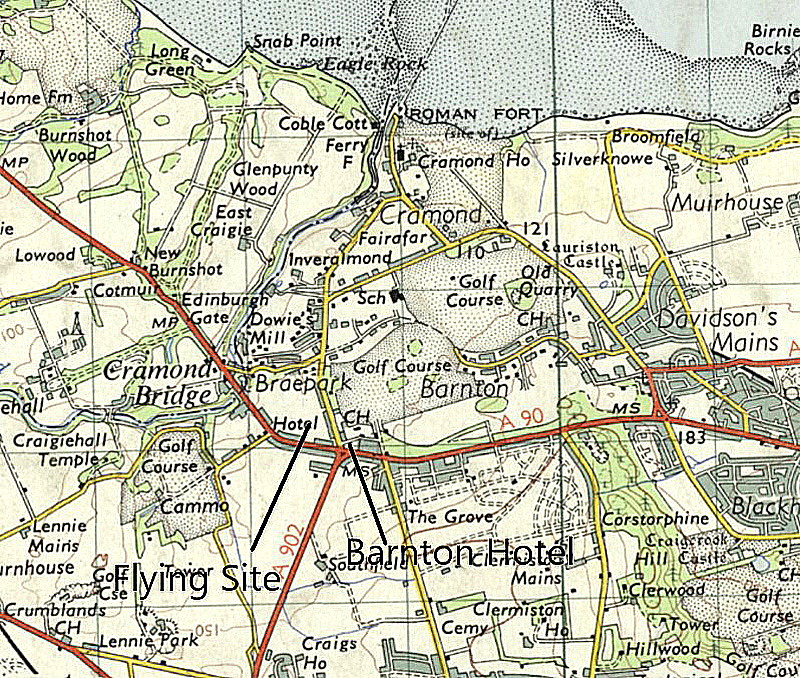
Location: Just N of the A90, just W of BARNTON, roughly 4.5nm WNW of Edinburgh city centre
Period of operation: 7th to 9th February 1914
NOTES: It is perhaps not much appreciated today that pilots in the Royal Flying Corps prior to WW1, and in the RAF between the wars in the 1920s and 1930s, could often use their squadron aircraft for private purposes, such as visiting friends and relatives, or indeed just for a 'jolly' exploring the local area and beyond. This being just such an example. Other examples are also given in this 'Guide', including during WW2!
The Royal Aircraft Factory B.E.2, No.226, was delivered to RFC MONTROSE in the later months of 1913 and a pilot stationed there decided to use it to visit two pilot friends boarding at the Barnston Hotel whilst serving at RNAS PORT LAING on the other side of the Firth of Forth. What I find rather interesting is that this was during February and it must have been picketed outside! No hangar being available. But of course, in those days military aircraft were viewed as being dispensable, as were aircrews especially so during WW1, and that remained the case during WW2 and to some extent beyond.
Before being posted to Amiens in northern France in August 1914, No.2 Squadron did a lot of flying around eastern Scotland.
A MICHAEL T HOLDER GALLERY
We have Mike Holder, a great friend of this 'Guide', to thank for both discovering this location and providing the maps and photos etc.
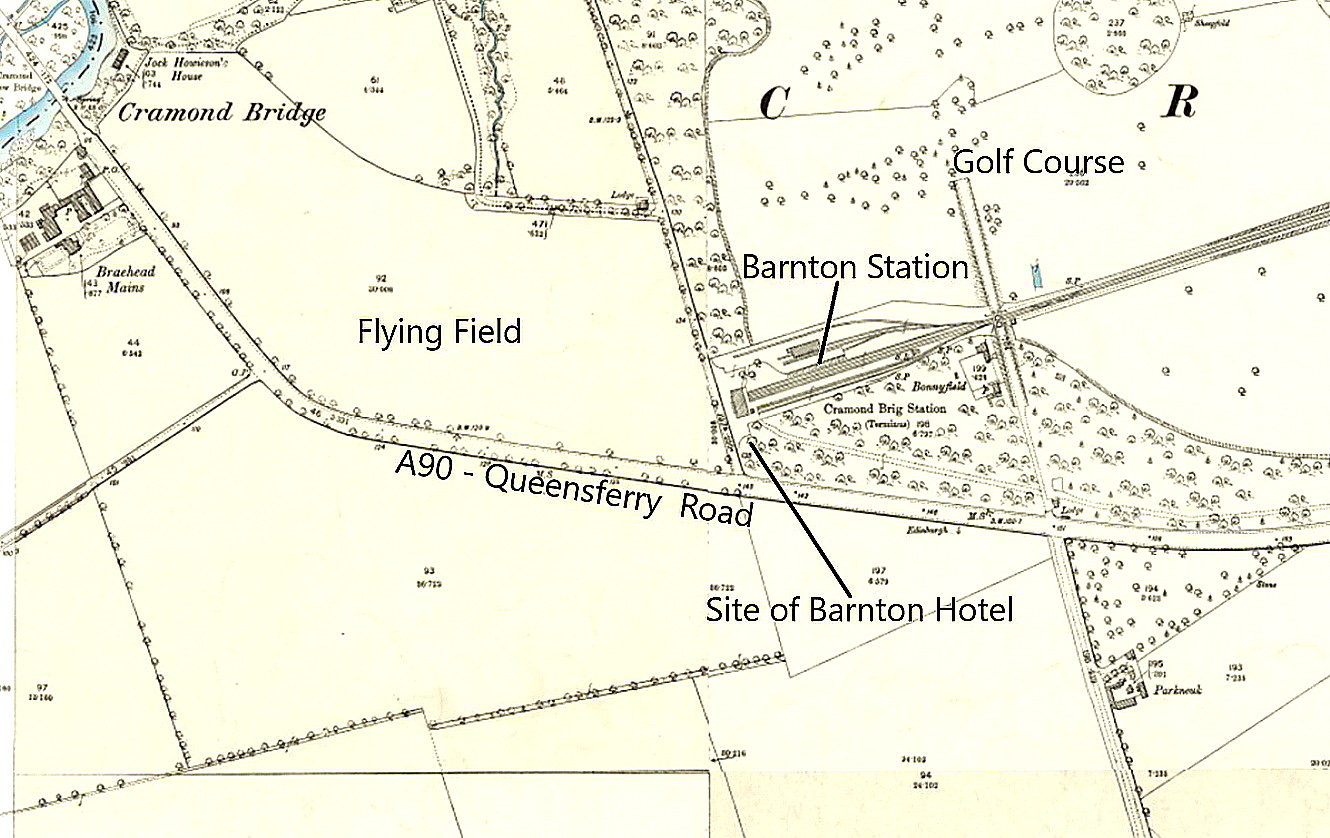
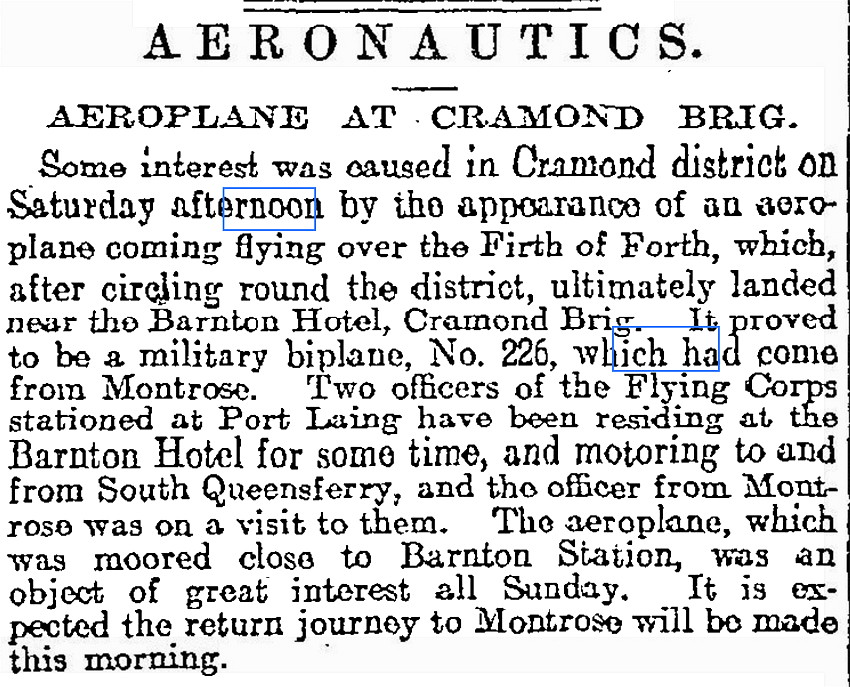
The article was published in The Scotsman on the 9th February 1914.
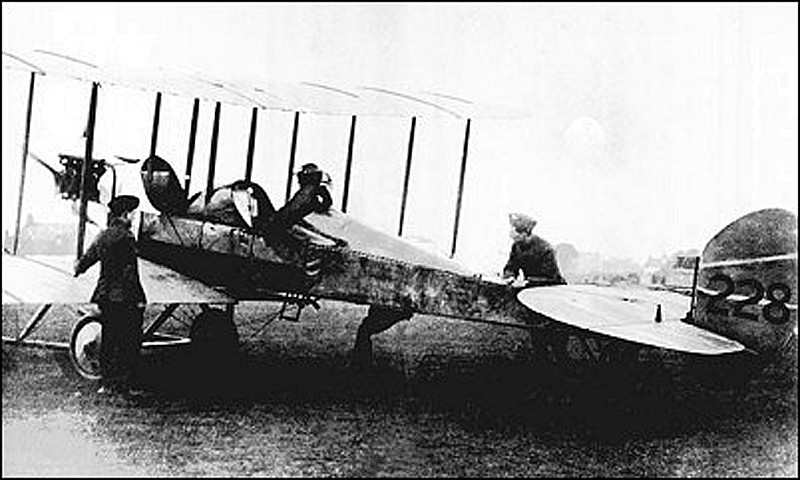
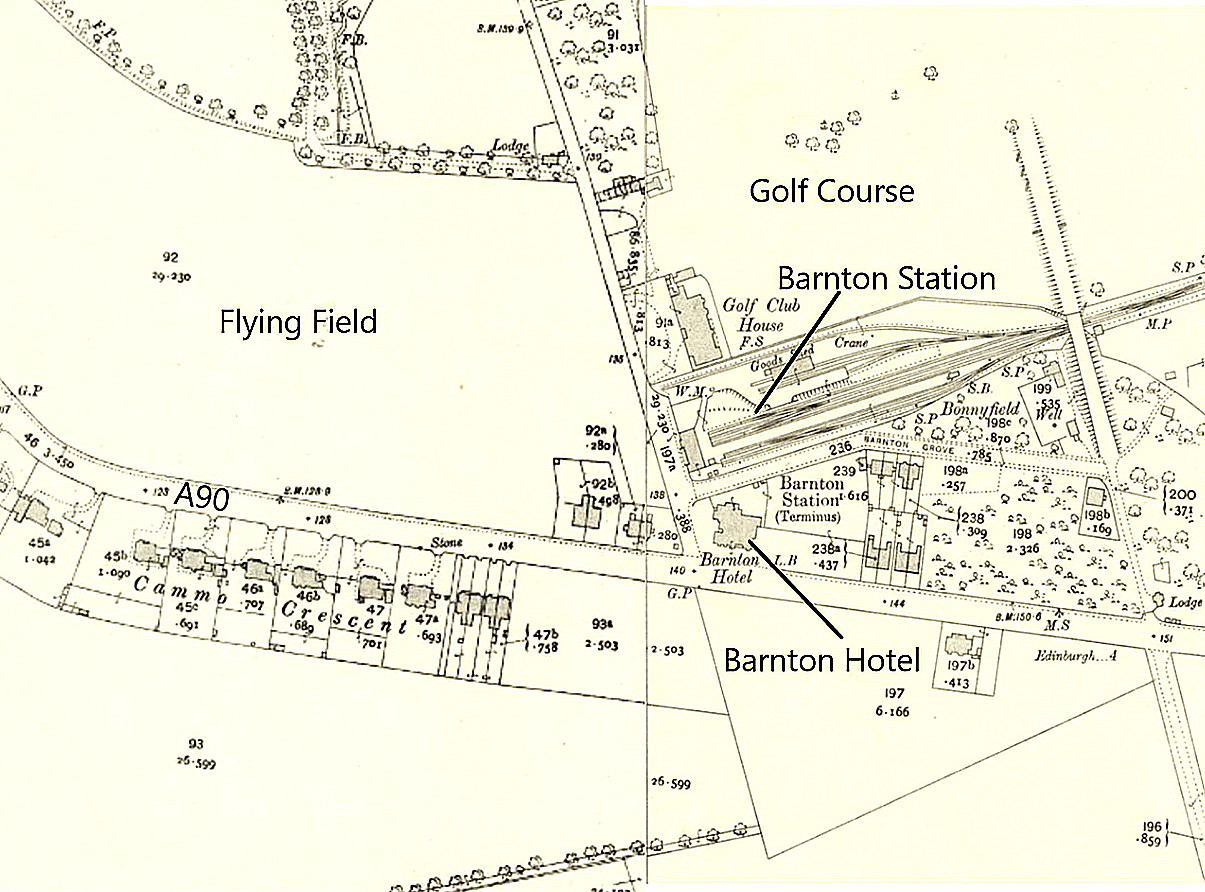
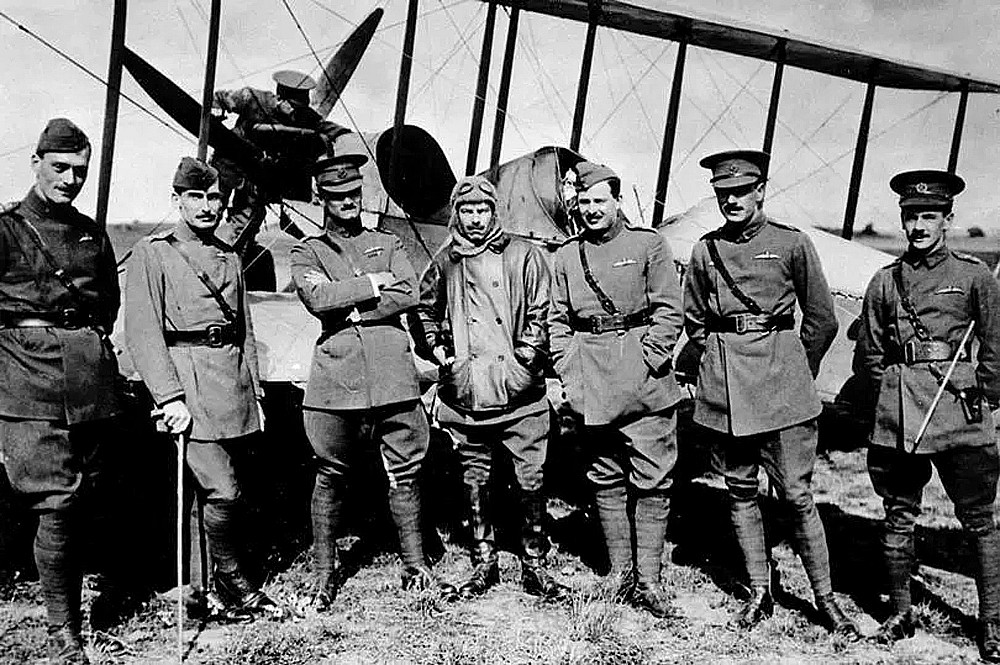
Photo One of the B.E.2, No.228, was obtained from Aviastar.org
Photo Two of pilots with a B.E.2 in August 1914 was obtained from the Atlas Photo Archive.
URBAN SPRAWL
Mike Holder, bless him, is not one to leave any 'turn unstoned'. And has generously provided these items to illustrate how this area has developed over the years. It has been a constant theme in producing this 'Guide' to find that so many of the flying sites listed have since become housing estates. And of course, a trend that continues today. In most of Europe planners tend to limit the size of towns and cities, making people as often as not, seek their homes in large multi-storey apartments, often with community facilities incorporated.
Not so for us very often. The ideal being to have a house and garden, which I must confess I have, albeit in a part of west London that was developed in the late 19th century. How sustainable this concept might be, is I think, now open to debate? But, this said, we do still live in a mostly rather sparsely populated country, compared to Belgium and The Netherlands.
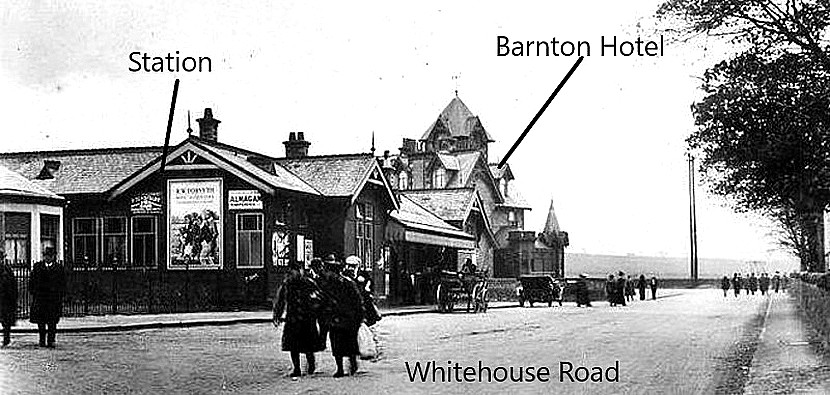
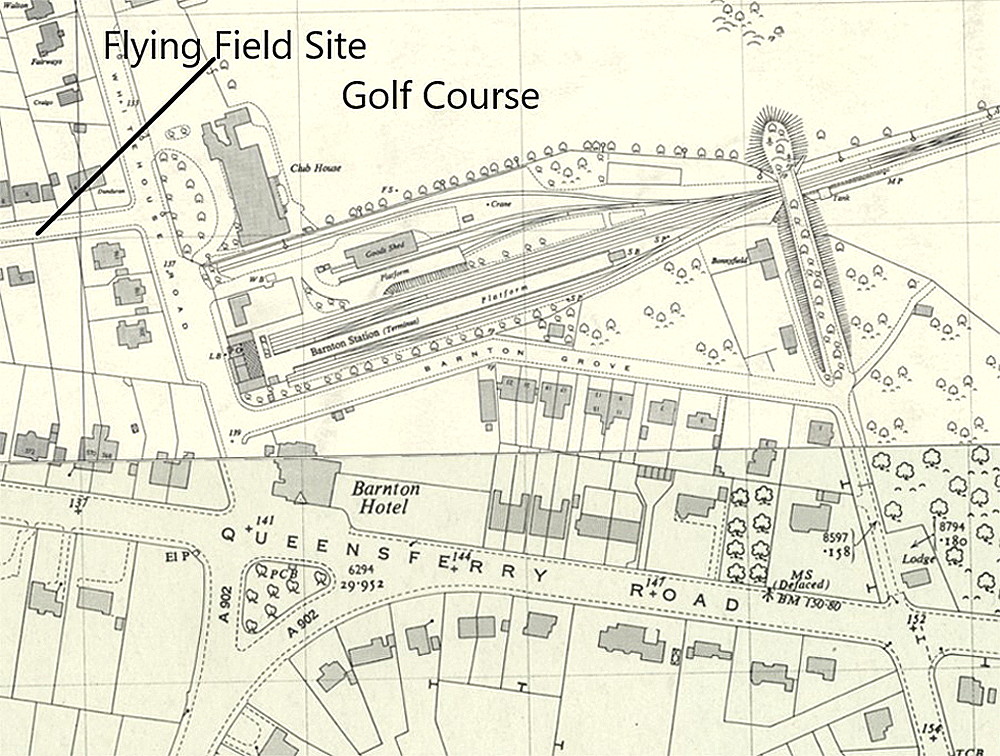
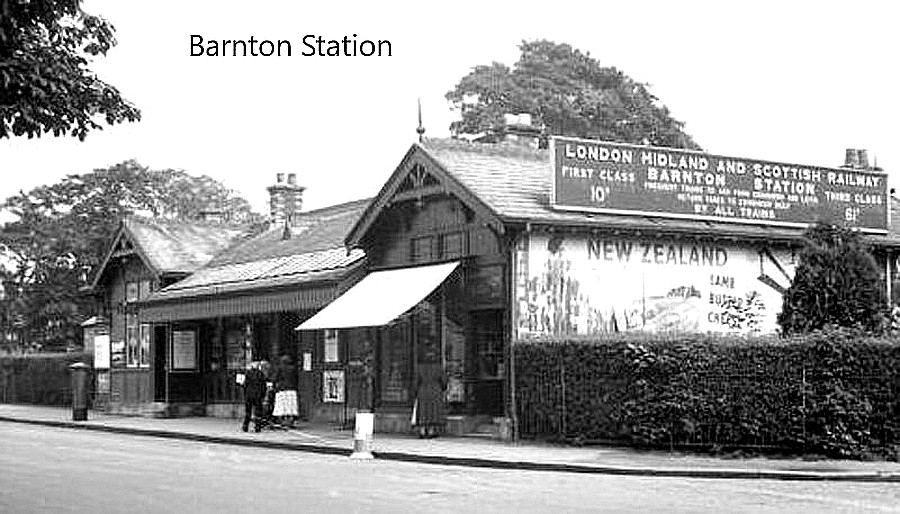
Photo Three and Photo Four were both obtained from Tour Scotland Old Photographs.
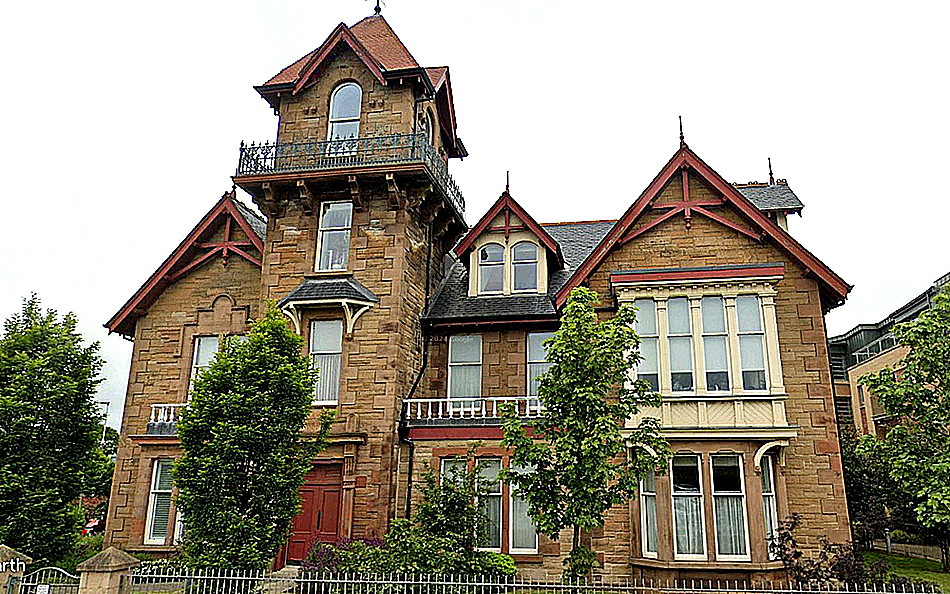
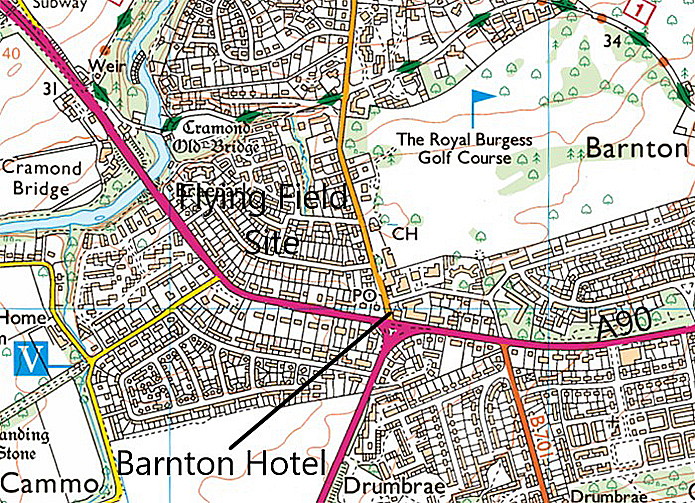
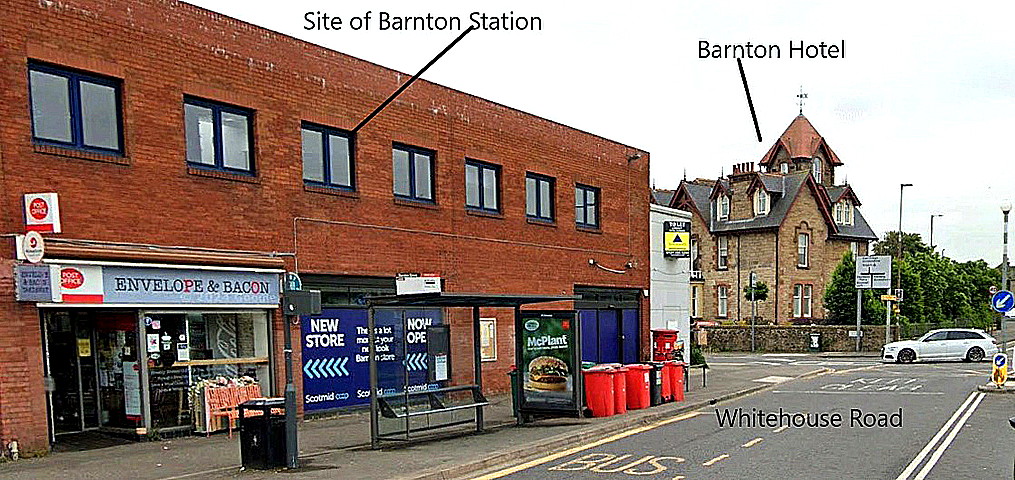

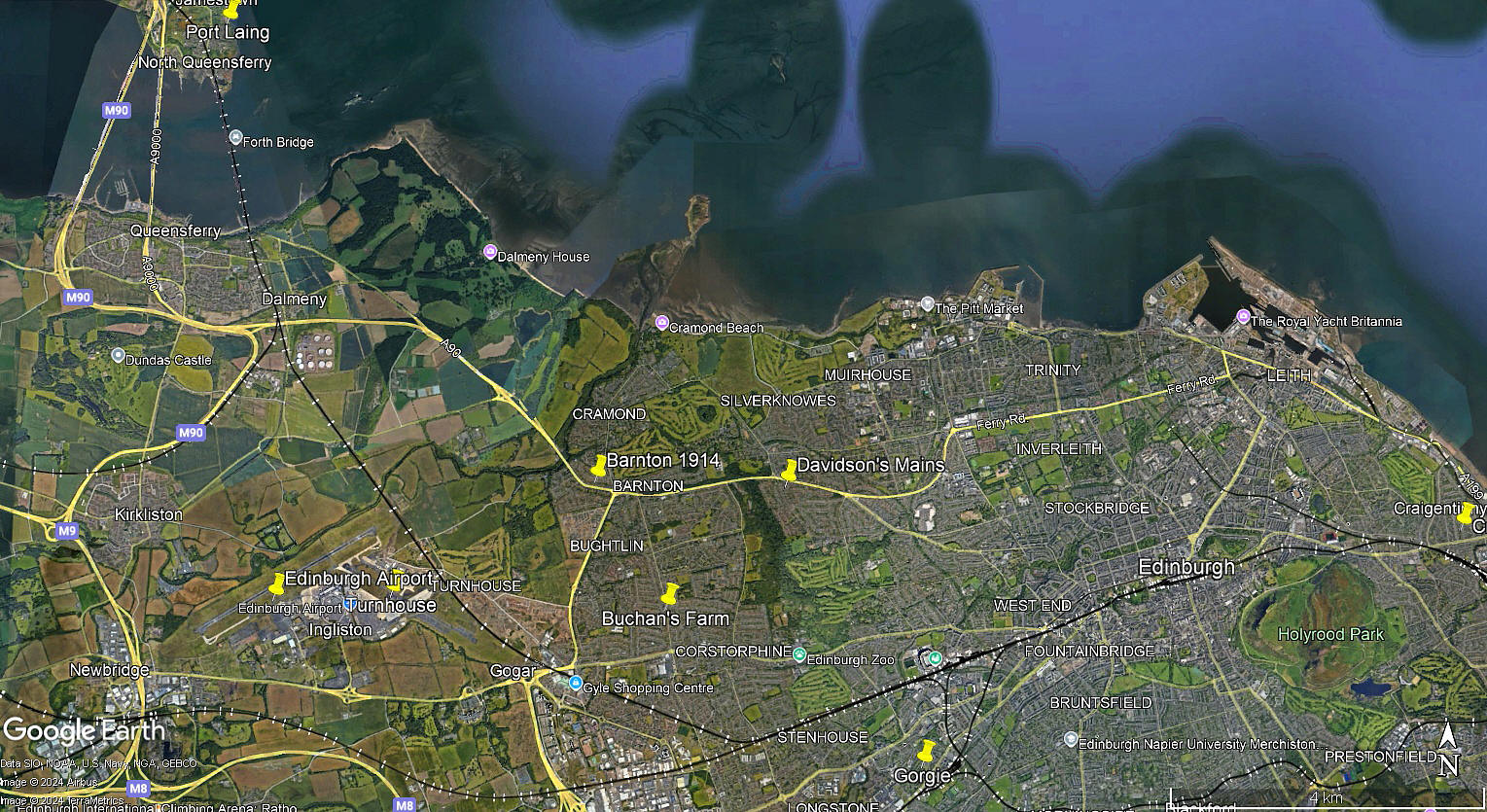
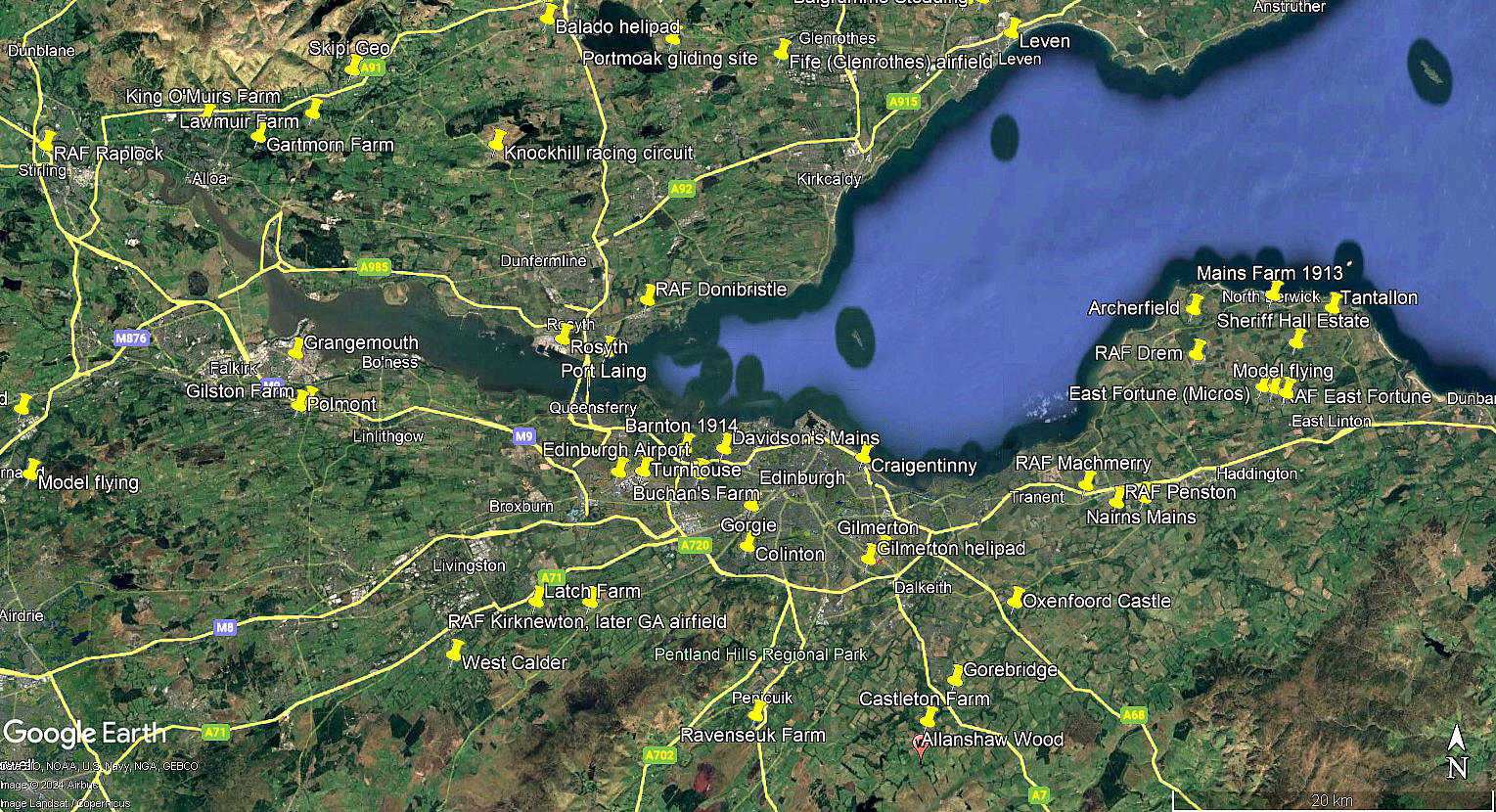
The local area and area views are from my Google Earth © derived database.
EXTRA NOTES
There are two very important aspects that are not generally understood regarding our population of England especially. The best way to appreciate this is to take a flight in a light aircraft which is quite easy to arrange. The massive expansion of our towns and cities occurred during the industrial revolution with mostly minimal accommodation being provided, which soon became slums in the 20th century.
Clearly, especially towards town and city centres, every square inch has been exploited, cramming in as much as possible. However, the general trend adopted by planners has been to allow ribbon development alongside the main roads, which can extend for many miles. Giving the impression of over-population. When I was flying, taking people up for their first flight in a light aircraft, usually around the Home Counties, as often as not after landing, my passengers remarked -"Where have all the houses gone?"
We'd love to hear from you, so please scroll down to leave a comment!
Leave a comment ...
Copyright (c) UK Airfield Guide