





Bay of Houton
BAY of HOUTON: WW1 flying boat and seaplane base. Later temporary landing site
Note: Known in WW1 as RAF HOUTON BAY and RNAS HOUTON
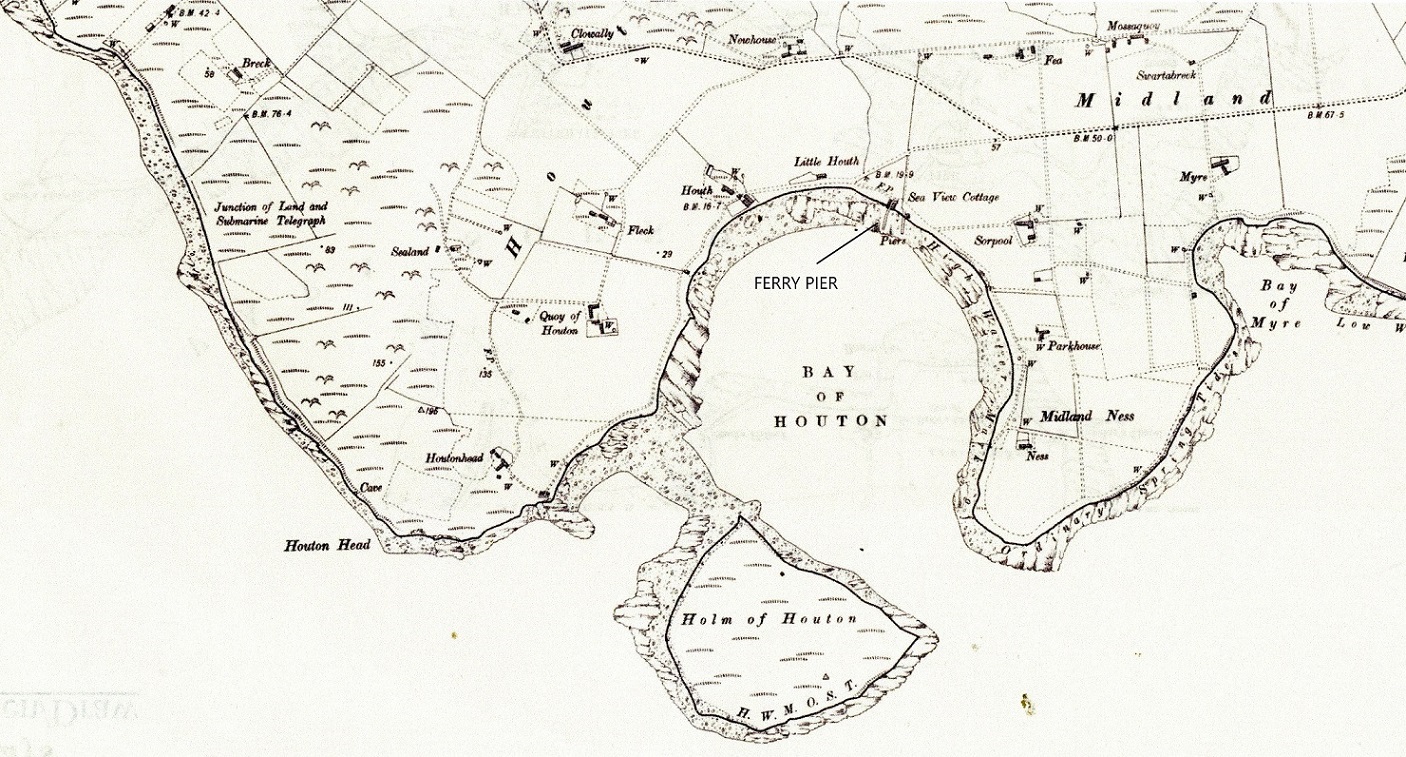
Local map
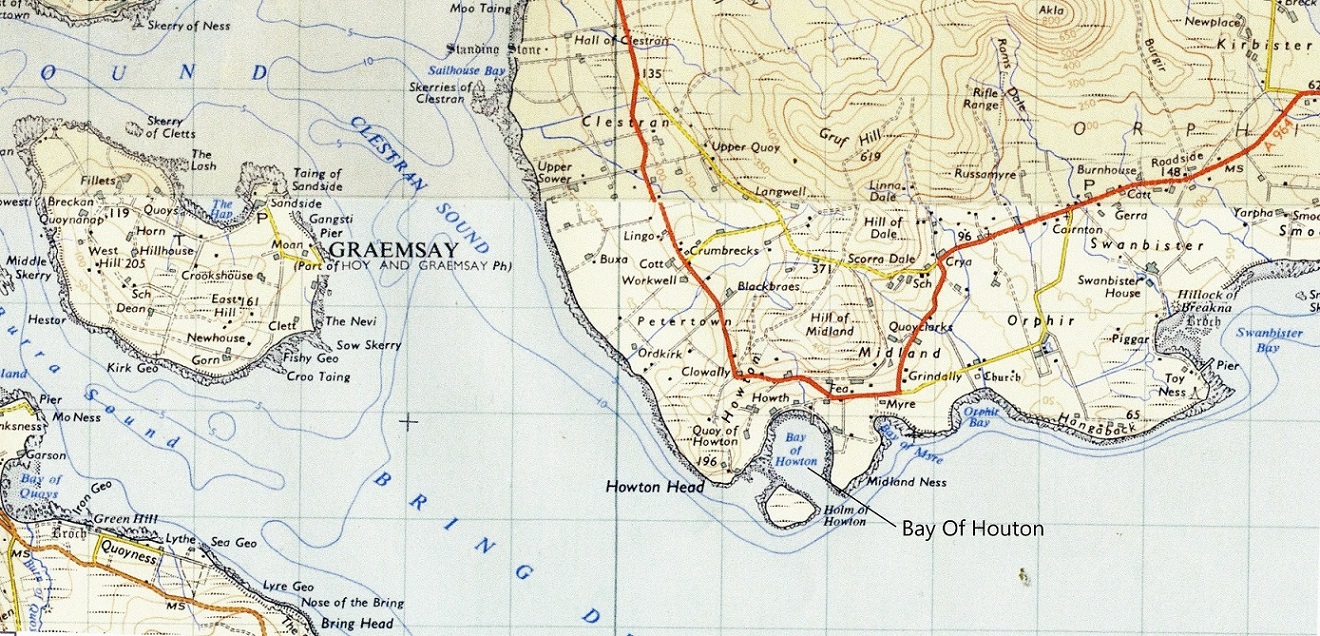
Area map
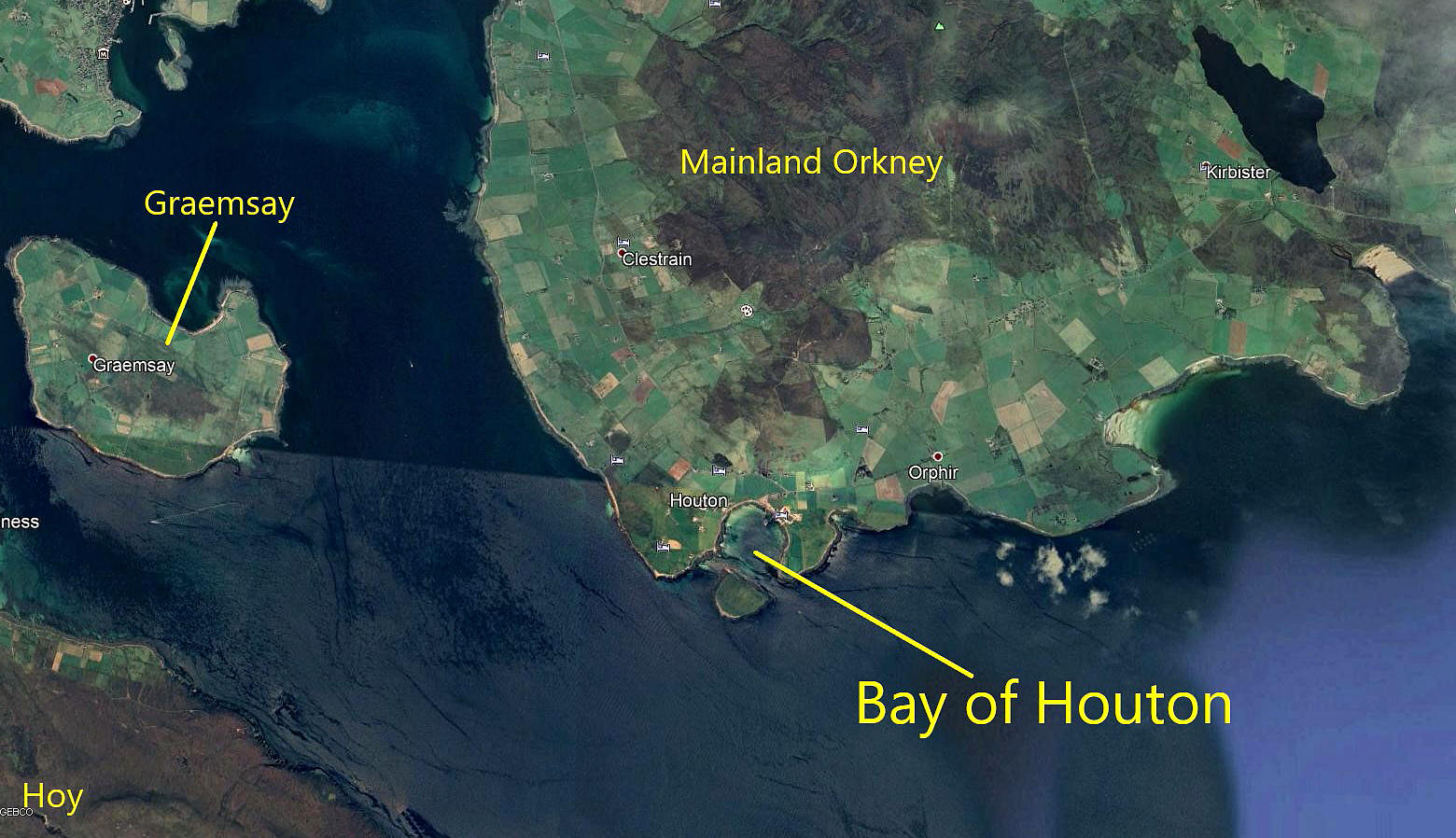
Local area
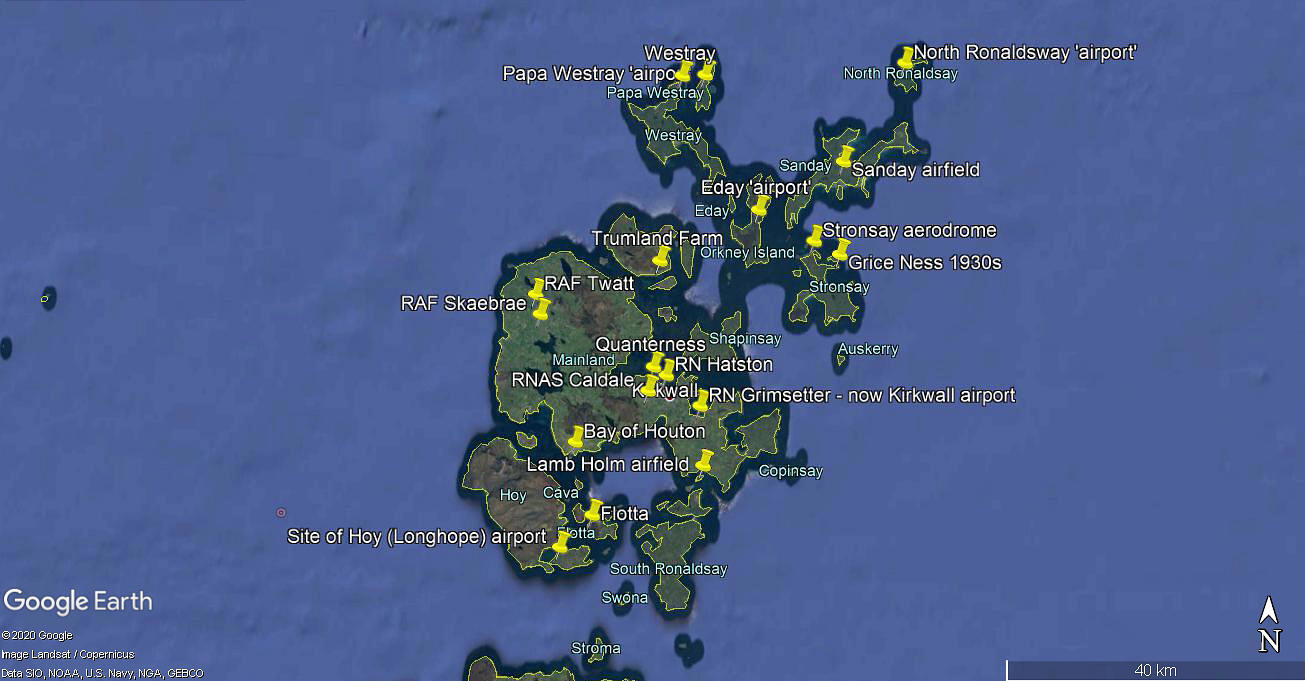
Area view
Note: The first three pictures were kindly supplied by Mr Michael T Holder. The fourth was obtained from Google Earth ©
Military users: WW1: RNAS (Royal Naval Air Service) and RAF (Royal Air Force)
Presumably RNAS? No. 306 Sqdn (Flying Boat), No.430 (Seaplane), and 'F' Boat Seaplane Training Flights
Period of operation: 1917 to 1920
NOTES:
On the 6th April 1924, four Douglas World Cruisers of the U.S. Army Air Service, departed from Seattle for a round-the-world flight. In those days a most extraordinary undertaking. There is a lot of information about this project on the inter-web, and it is well worth looking into.
The series of flights with 74 stops lasted 175 days, covered about 27,000 miles and visited 22 countries. Only two of the four aircraft made it back to Seattle. But, it appears, they didn't lose one crew member along the way.
Arriving in Plymouth the three World Cruisers were converted from float-planes to having an undercarriage fitted so that they could arrive at CROYDON. They then flew to BROUGH in YORKSHIRE to be refitted with floats. I have found a couple of accounts stating that they departed BROUGH to fly across the Atlantic. This is incorrect - they then flew to the BAY-of-HOUTON.
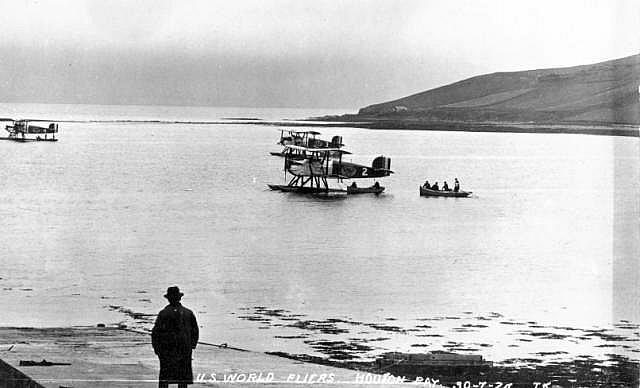
Moored in the Bay of Houton
Note: This picture dated the 10th July 1924 was kindly supplied by Mike Holder.
Quite why the BAY of HOUTON was chosen as the departure point for crossing the Atlantic seems unknown? It was certainly a safe haven, but so far no information seems to exist to say the WW1 facilities existed as operational beyond 1920?
I cannot take any credit for finding this location, all I had was a note that they had departed from a location in northern Scotland. And was quite pleased to have found this out! All credit goes to Mike Holder who has been a great friend of this web-site for tracking this down.
Just a small observation. See the maps above, the BAY of HOUTON was also known as the BAY of HOWTON.
We'd love to hear from you, so please scroll down to leave a comment!
Leave a comment ...
Copyright (c) UK Airfield Guide