





Bournemouth Air Show
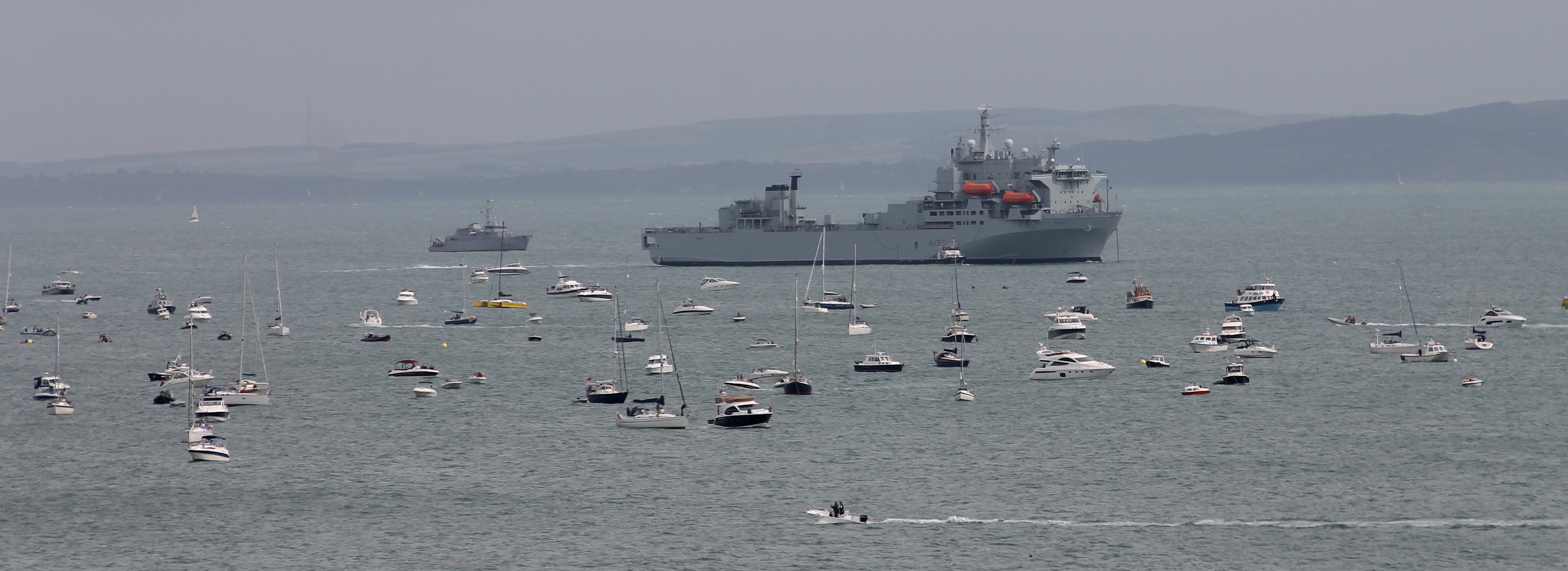
Unlike most airshows, a huge amount of boats, (and a few ships), assemble directly beneath the display area.
Note: Pictures by the author unless specified.
BOURNEMOUTH AIR SHOW
An air show along the sea front has been held here, in recent times from 2007? In 2014 it was a four day event, titled as the "Bournemouth Air Festival 2014" and taking place in August from Thursday 28th to Sunday 31st. It is now claimed that 1.2 million people attended this event. By comparison, it appears, only around 150,000 to 160,000 people travelled to witness the huge display of military prowess at the RIAT (Royal International Air Tattoo) at RAF Fairford in Gloucestershire in 2013. I have tried to get figures for the public attendance at Farnborough in recent years - so far without success. But, I expect the figures are roughly similar?
NOTE: It is of course a matter of taste, I suppose, but I have included several images, worked on, which deliberately lack a degree of sharpness and some are grainy. In other words attempting to produce 'graphic' images rather than always presenting crystal clear photographs - but I was an art student many, many years ago. The idea being to replicate the kind of old photographic images I love looking at. Please let me know your opinions regarding this approach.
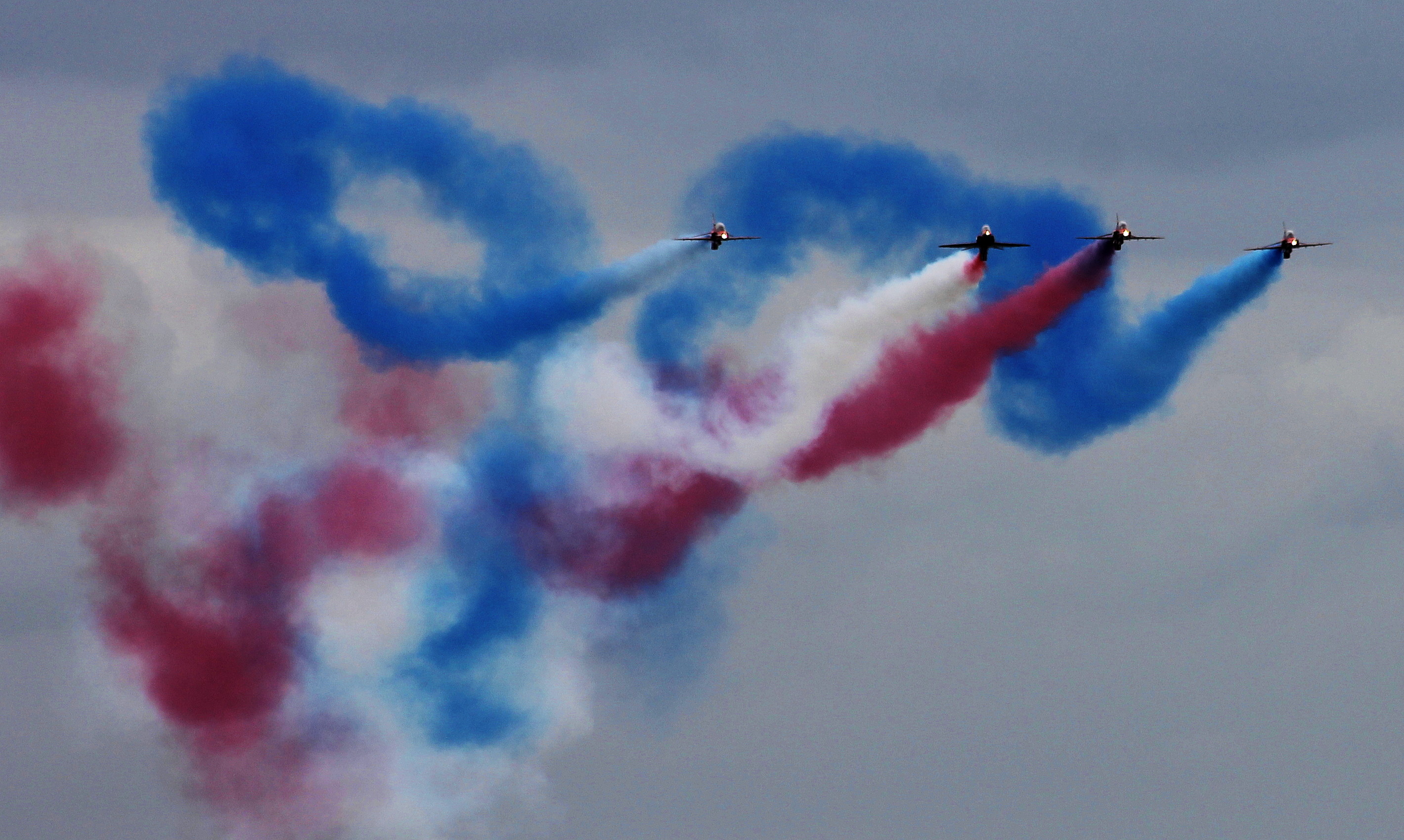
In 2014, for the first time, on the Saturday I decided to take a look at it, viewed from Alum Chine, which is about a mile west of the Air Show datum point. The datum point was placed roughly halfway between the piers at Boscombe and Bournemouth. The reason for selecting Alum Chine was mainly to avoid the throngs of spectactors who had arrived in massive numbers. As it turned out the viewpoint from Alum Chine had a couple of great advantages. Firstly, most of the aircraft arrived to display very close to this position, and secondly, it afforded a side-on view (most unusual) to the 'display line', especially for the Red Arrows display. This quite unexpected 'advantage' allowed me to capture aspects of their display not normally seen or published? And, taking advantage of the overcast conditions, I trust you will agree the results are somewhat unusual.
I have to own up here. Despite researching the subject for fifteen years or so, and concentrating on more permanent sites, I had no idea just how popular this Air Show has become over the years. It is claimed that for the first time, in 2014, spectator numbers exceeded one million, (I.2 million claimed), for the entire event, with some 448,000 attending on the Saturday.
I found this hard to comprehend, given the close proximity of Bournemouth (Hurn) airport,
as surely a few aerobatic aircraft could have been based there to fill in the gaps? Indeed, (and I feel fairly certain many pilots would be delighted to contribute at little if no cost), three seperate aerobatic displays could be held simultaneously to delight the assembled spectators. One in front of the main display area between the piers at Bournemouth and Boscombe, another taking care of the 'east wing' towards Christchurch, and a third entertaining the crowds to the west along to Sandbanks. Just an idea for the future.

Arguably the best Allied heavy bomber in WW2. The wooden twin-engine DH Mosquito could carry the bomb load.
THE BATTLE OF BRITAIN MEMEMORIAL FLIGHT
The BBMF have been, and quite rightly so, a great favourite feature of Air Shows for many years. Elsewhere in this 'Guide' you can find quite a lot about their history, starting from BIGGIN HILL (KENT) in the 1950s. We must of course ignore 'popular' history to quite a large extent, as there was never a 'Battle of Britain' worth talking about. In fact most of the action took place in southern England. It is also worth bearing in mind that photo-reconnaissance during this period revealed that there was no threat of an invasion - the Germans had started to assemble an invasion fleet, but had quickly abandoned the idea. However, just the threat of an invasion was a massive boost to the propaganda machine.
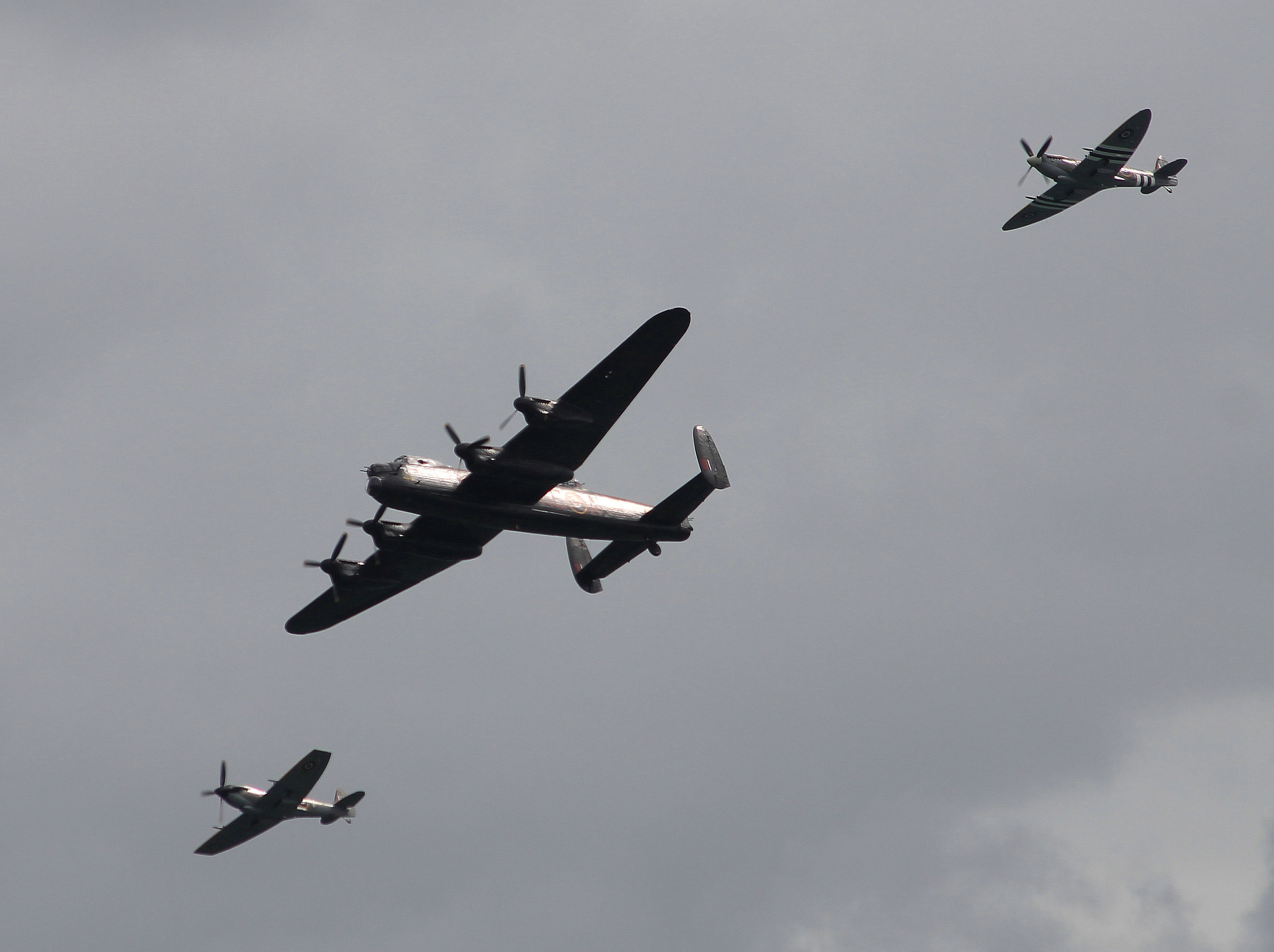
However, these carps aside, it is such a great privilege to see the 'classic' Lanc plus two fighter formation in our skies. And, situated at Alum Chine, they arrived quite close by producing, with six Merlins pounding away, (and obviously with no bias on my part), arguably the most glorious sound that the human race has ever heard - quite astounding. If any sound can bring a tear to the eye, given the historical reasonance, then surely this must be it? (Actually I think one of the Spitfires had a Griffon engine)
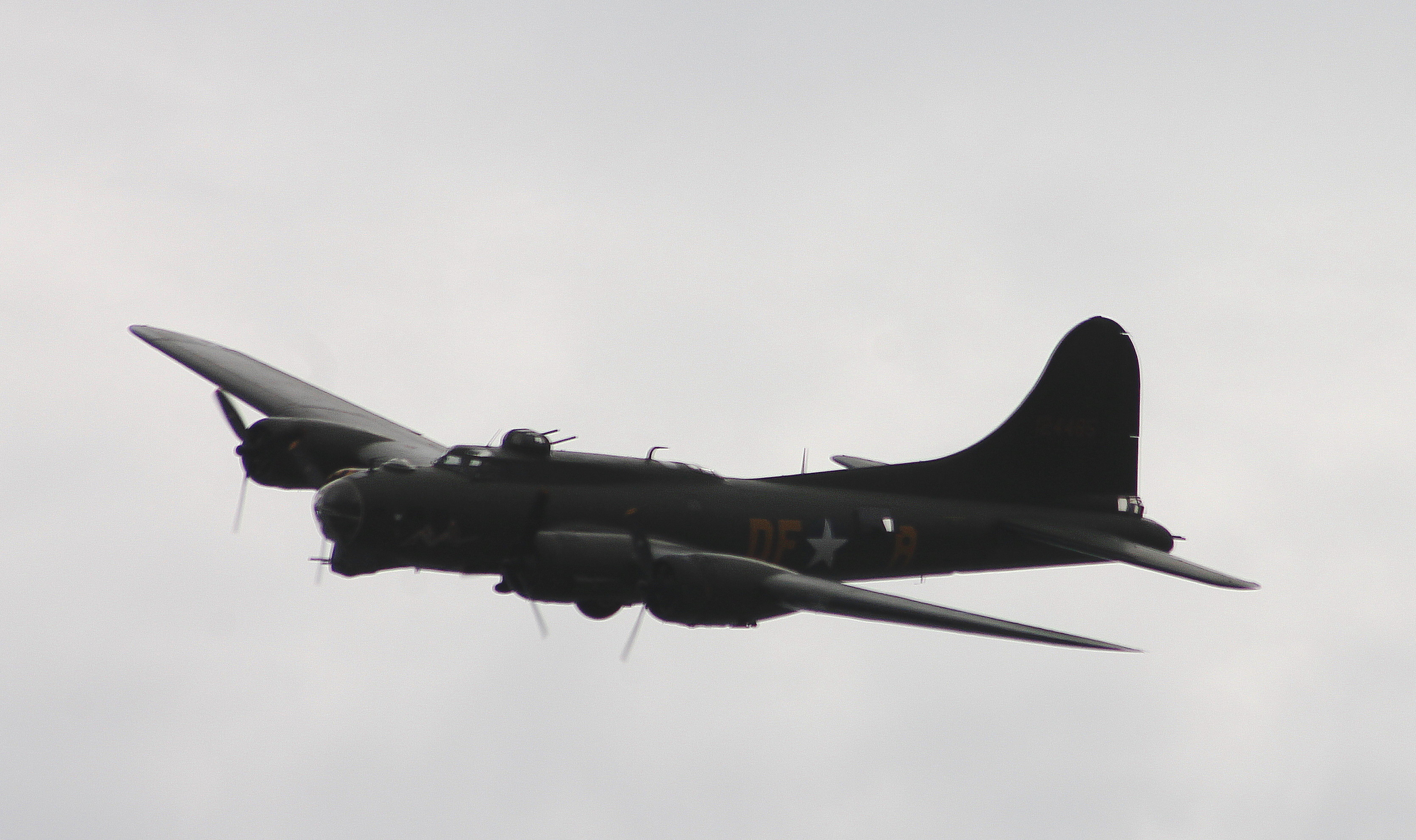
THE BOEING B-17G FORTRESS, 'SALLY B'.
The 'Sally B' (G-BEDF) first arrived in the UK in around 1976, and was an instant success. I saw it at a few air shows but the low level display at Booker (Wycombe Air Park) in the late 70s (?) was sensational as we had never seen such a large aircraft displayed with such elan and visual impact. The monumental task of keeping this fabulous example flying for nearly forty years beggers the imagination and is a huge credit to those involved, the project always being inspired as a memorial to the thousands of airmen who died in WW2 flying the type, especially from airfields in the UK.
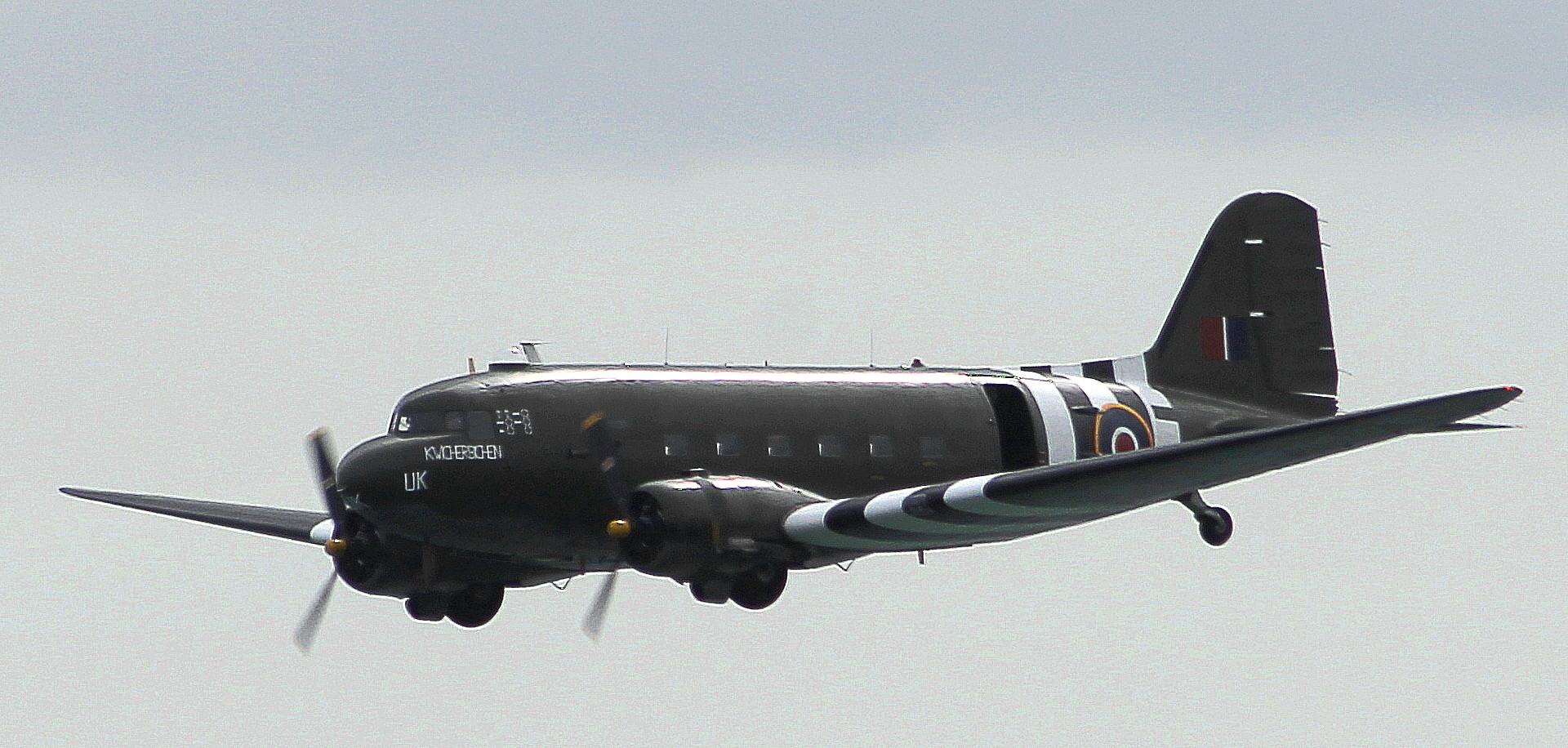
The DC-3/C-47 is arguably the best ever transport aircraft?
THE BBMF 'DAKOTA'
In my mind adding a Douglas DC-3/C-47 to the BBMF fleet was both a very generous gesture and in so small part very imaginative. The 'Dakota' played a very significant part in Allied operations during WW2, and, is arguably by far the most successful transport aircraft ever built. Developed from the DC-2 the DC-3 pioneered long distance air travel across the USA, often with overnight 'sleeper' versions capable of very long distances, such as coast-to coast services. When WW2 broke out the DC-3 was transformed into a military version, the C-47 (Skytrain), and quickly became the workhorse for an amazing variety of duties except for dropping bombs (?). It also held the record for having been produced in the largest numbers for a transport type, some 16,079 according to experts. The variants, as you might well imagine, are too numerous to mention here. It was built under 'license' in Russia and China and the British military named it the 'Dakota'.
Probably I'm showing my age, but surely the 'Dakota' is the classic airliner of all time. It looks so good and sounds so good, and seems to encapsulate the 'Golden Age' of such designs in both civil and military guises. For at least three decades it was the transport mainstay of many air forces and the dominant type in many airlines and chater operations. For the sheer diversity of the duties the type has performed in its various versions, (often severely modified), surely nothing else comes close?
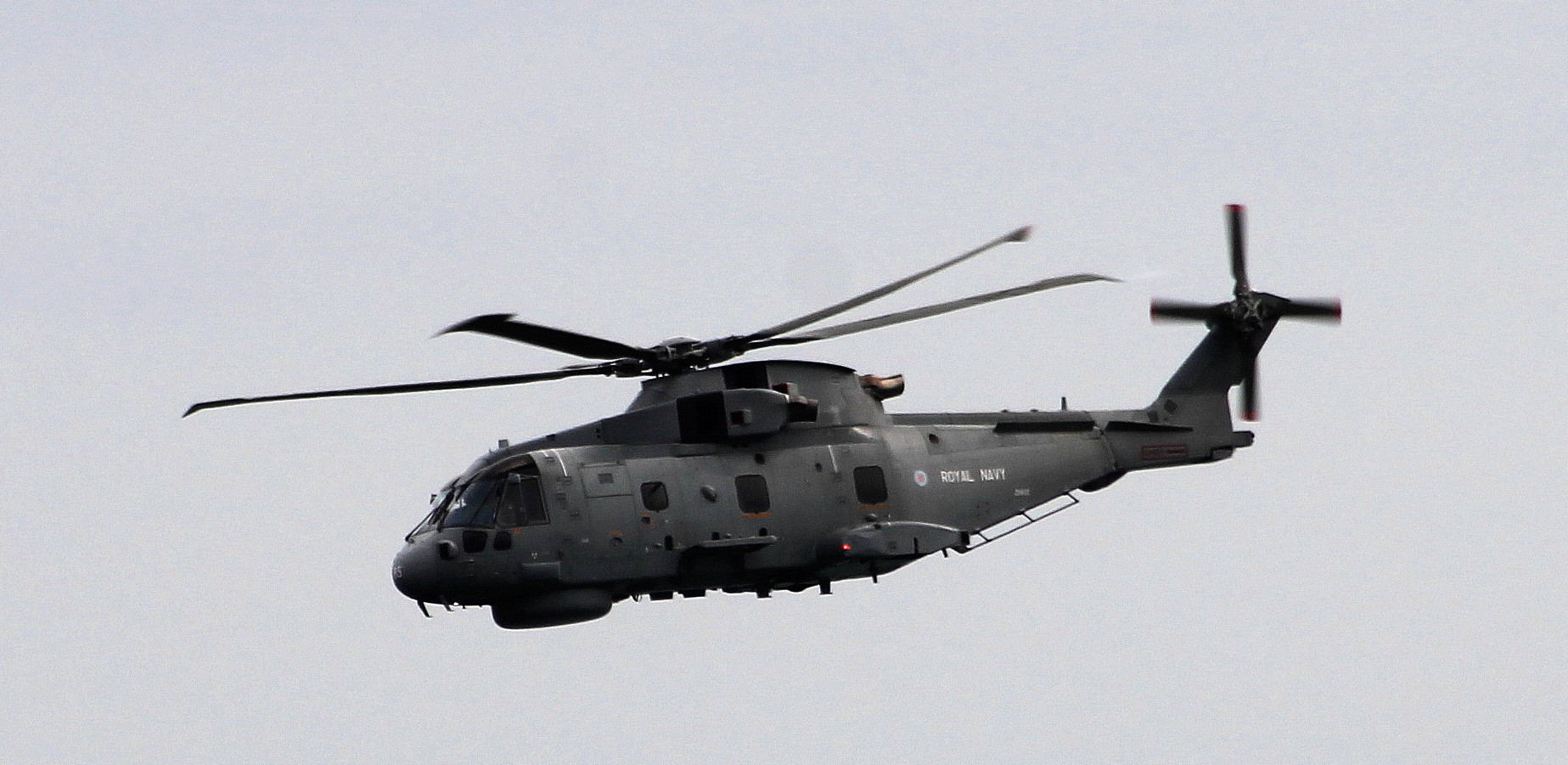
HELICOPTERS
Right from the start when they first appeared, helicopters were a major attraction at air shows after WW2, and the way in which they are displayed today invariably shows how far their capabilities have been greatly developed. To a quite unbelievable degree to someone like me. Of the three helicopter displays by a Chinook, an Army Lynx and the Agusta-Westland Merlin HM1, the latter appeared very staid by comparison. Is it because this type is not very manouevrable in flight? The display by the Army Lynx helicopter was remarkable, but the display by the RAF Chinook HC2 was sensational. It was hard to believe that a helicopter of this size could perform in this way.
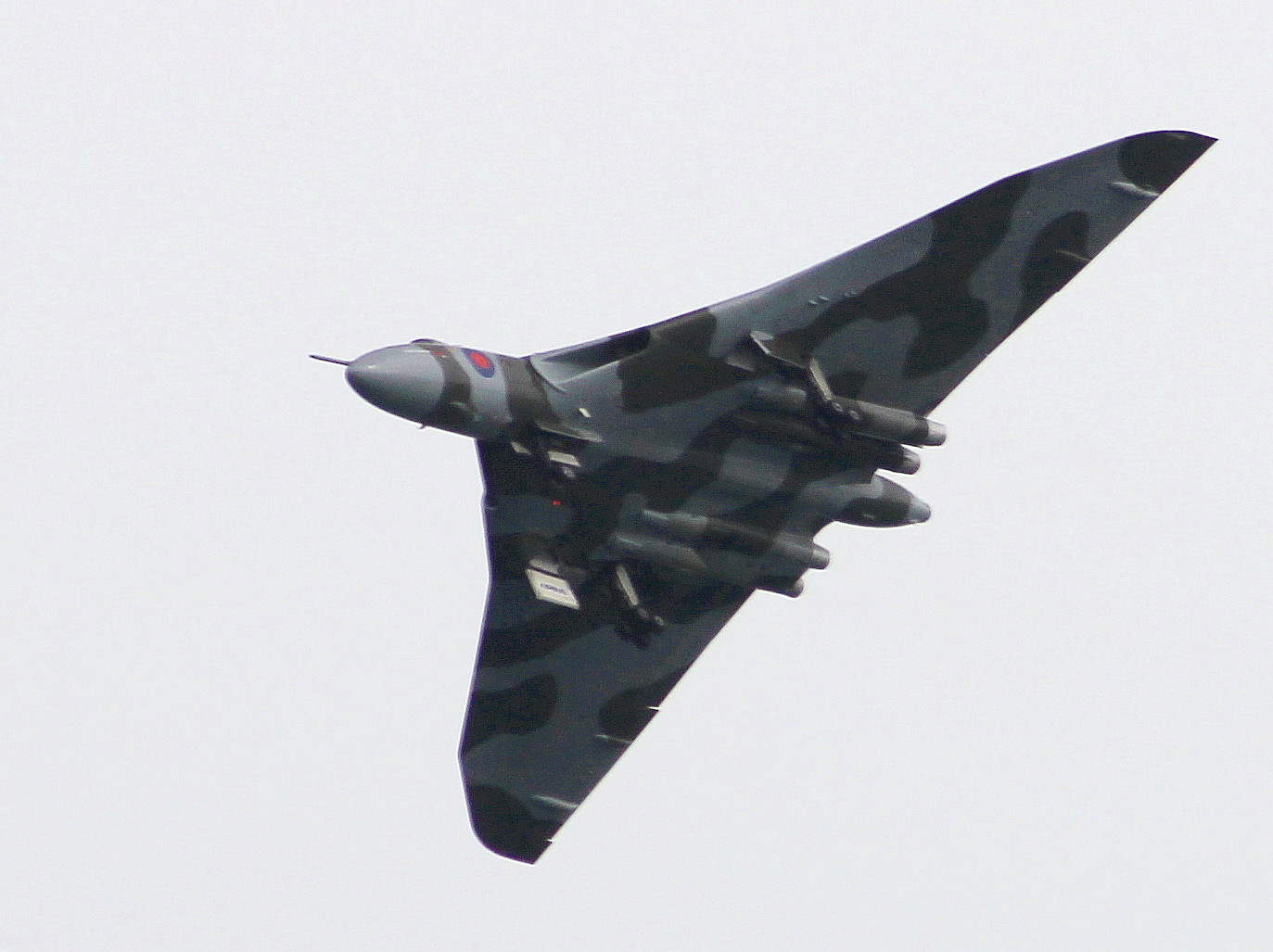 The Vulcan with its 'cart' down, as when coming into land |
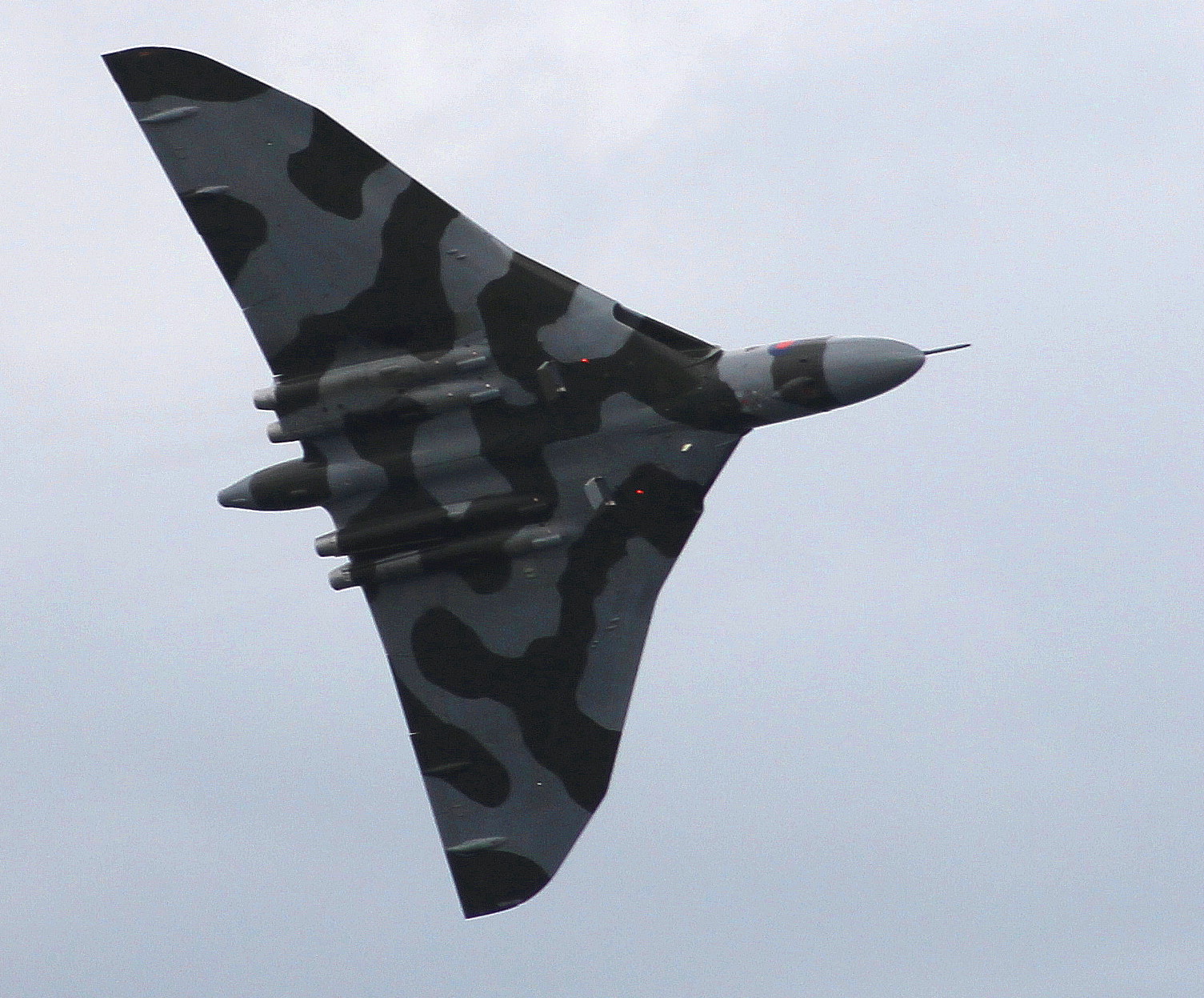 Vulcan plan view from below |
THE VULCAN DISPLAY The Air Show was a great event despite the huge disappointment of the Canadian Lancaster not arriving due, apparently, to engine issues. One of the major highlights for me being the Avro Vulcan display. It is, surely, almost miraculous that a determined group of enthusiasts managed to get a Vulcan flying again. I had expected a staid level fly-past of the Vulcan and would have been absolutely delighted for the privilege of witnessing this. Instead the Vulcan performed a 'classic Vulcan' display routine which really was sensational. I am not too sure most of the younger spectators would have appreciated this display? |
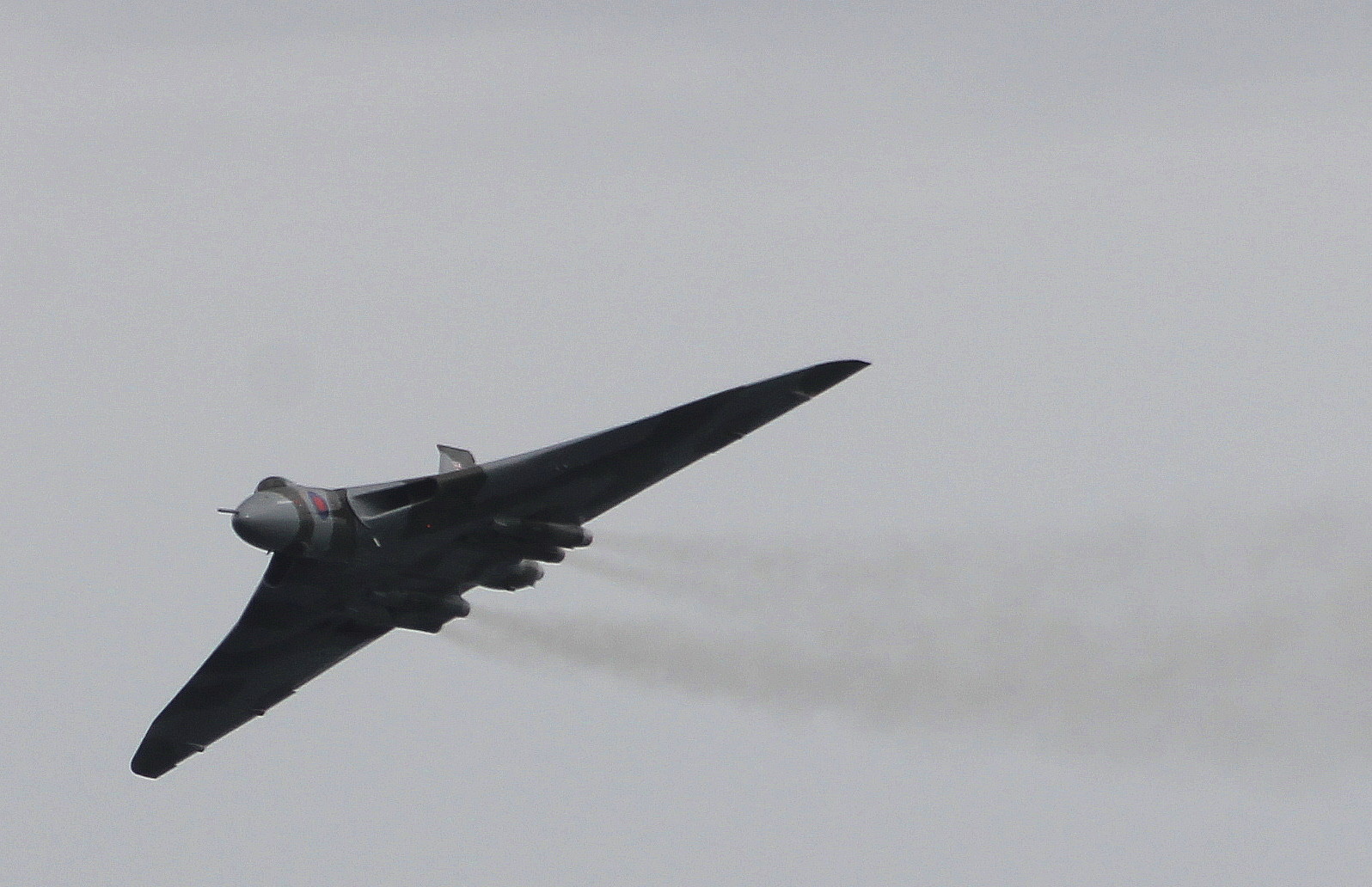 The Vulcan trails smoke as power is applied |
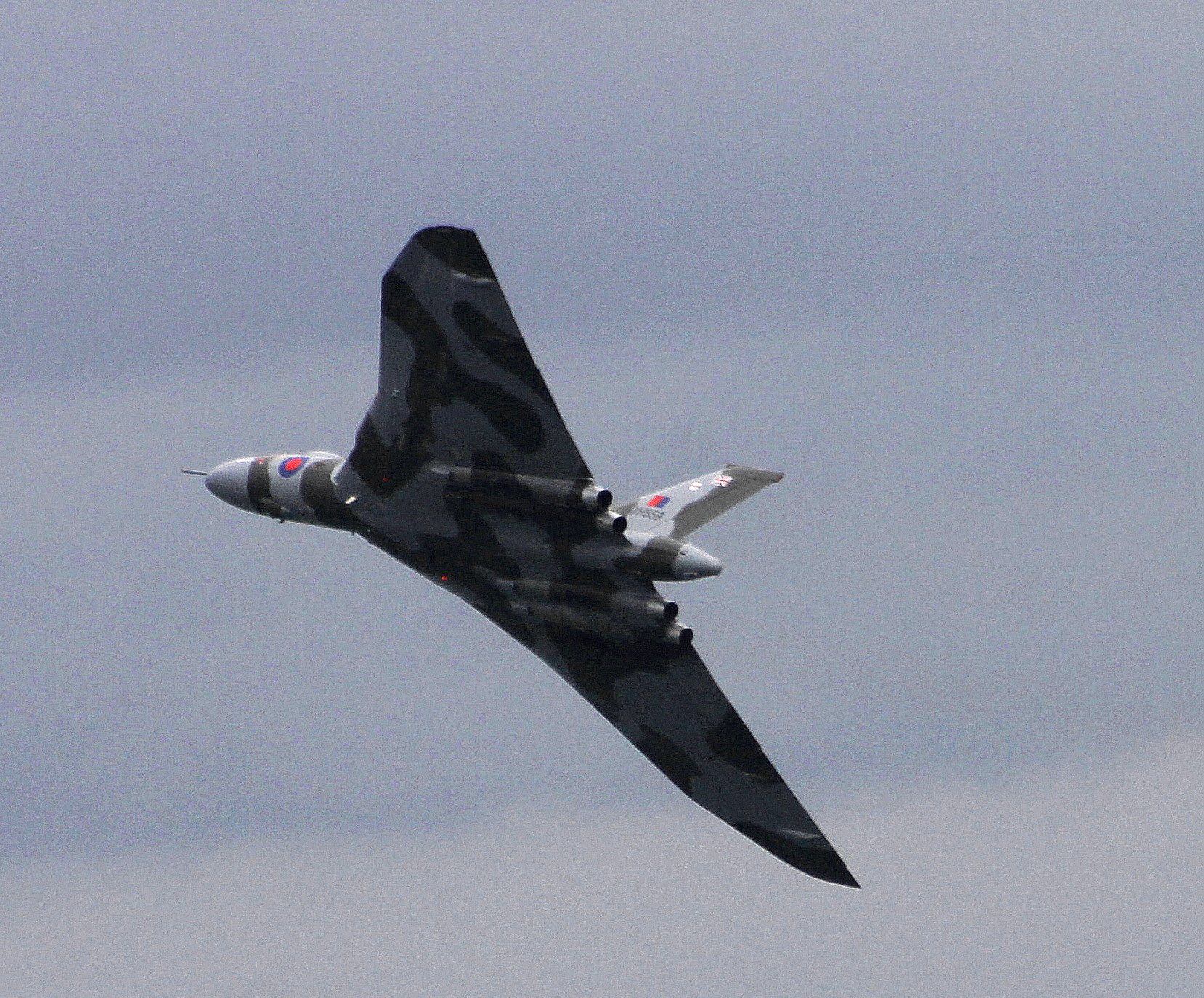 Another view of the Vulcan |
The Avro Vulcan was the star performer of the three 'Cold War' British 'V' bombers; the Valiant, Vulcan and Victor - and all three were brilliant designs, albiet plagued with serious problems throughout their operational life. It is often overlooked that when introduced into service the first 'V' bomber, the Vickers Valiant, could outperform the RAFs front-line fighter, the Hawker Hunter, especially in high altitude manouevres. But, the Vulcan was simply sensational in all respects. Going out on a limb, perhaps (?), nothing I can think of has been produced since, of equivalent size and weight, that can equal the stunning performance of a Vulcan in its heyday? |
When employed to fly across to the USA to partake in 'war games' with the USAF, the Vulcan invariably won. And the Americans were astonished by just how incredibly capable both the Vulcan, and of course the RAF crews, were. Despite their huge wealth, talent and resources, the Americans had nothing even remotely comparable (?). But, we mustn't get too dewy eyed - Avro did also produce a few abysmal designs - the Avro Tudor airliner being possibly the worst example?
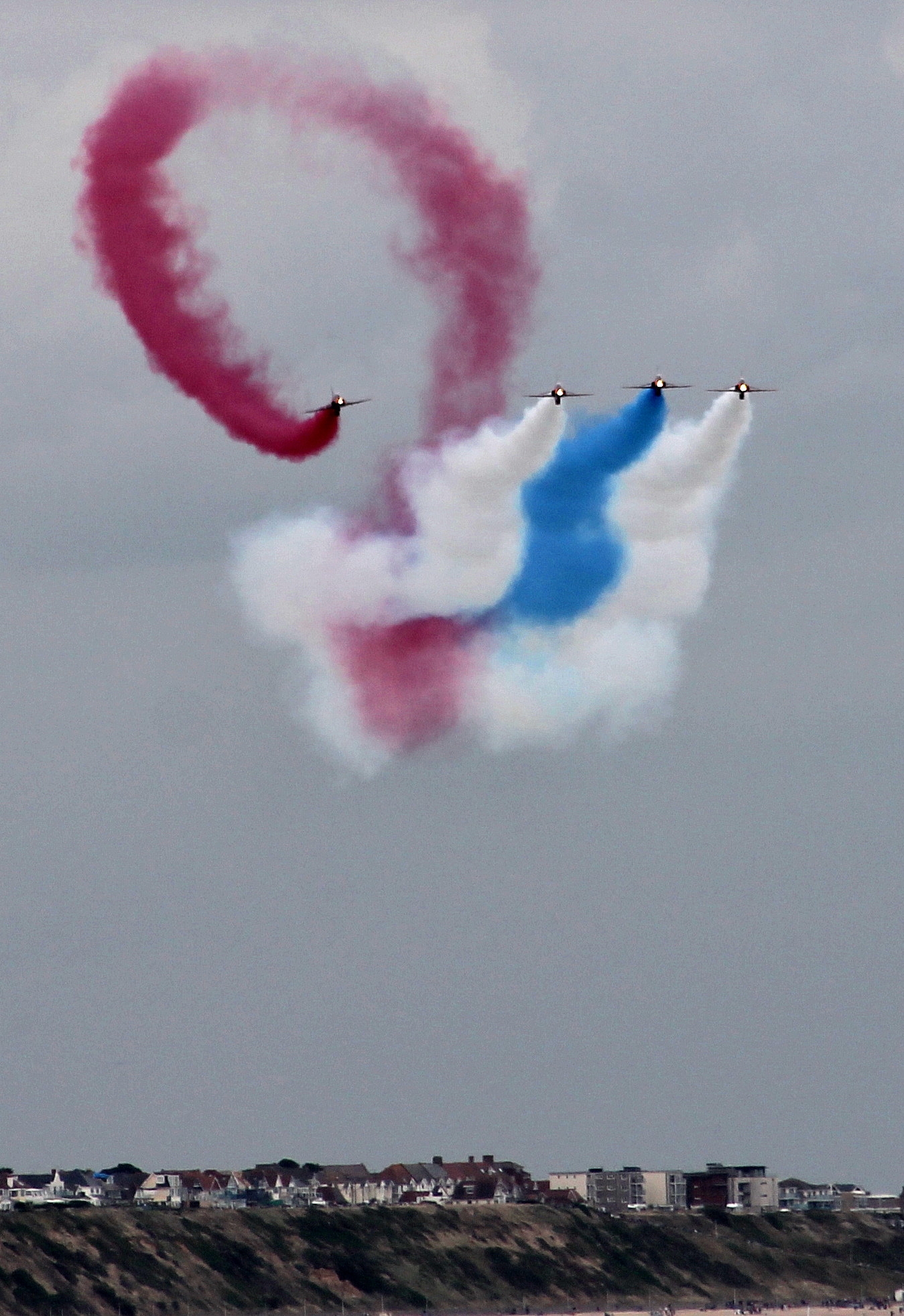
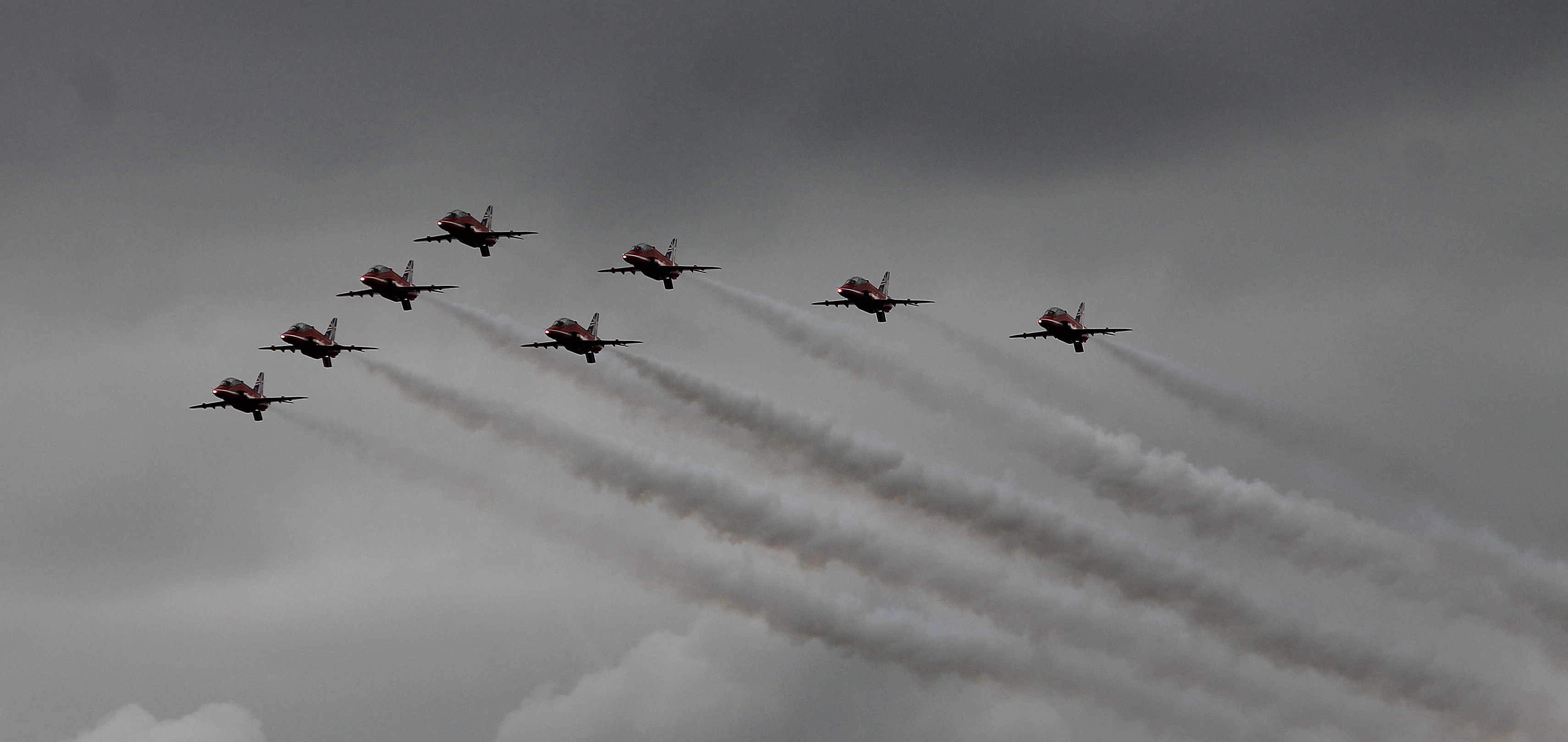
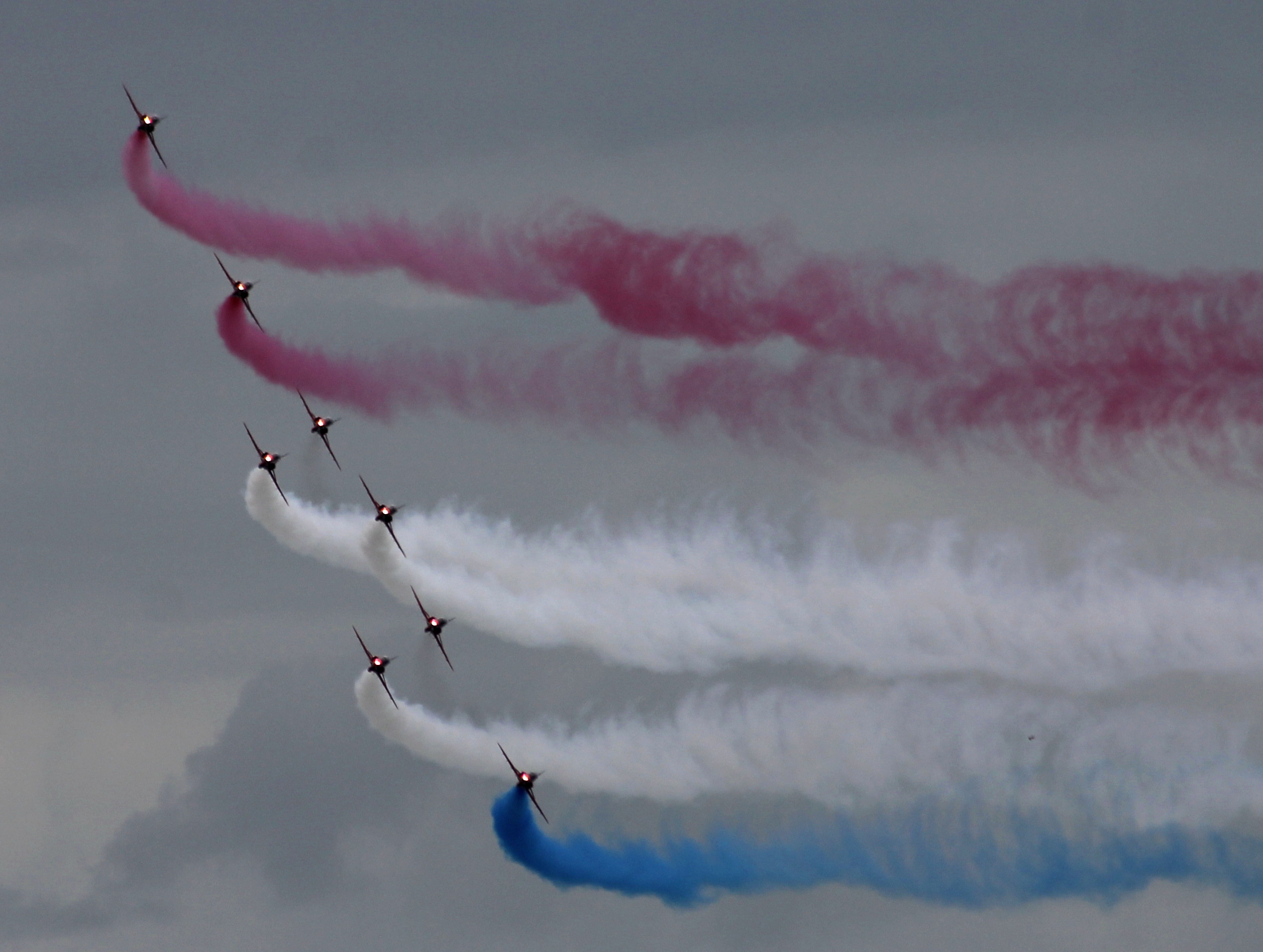
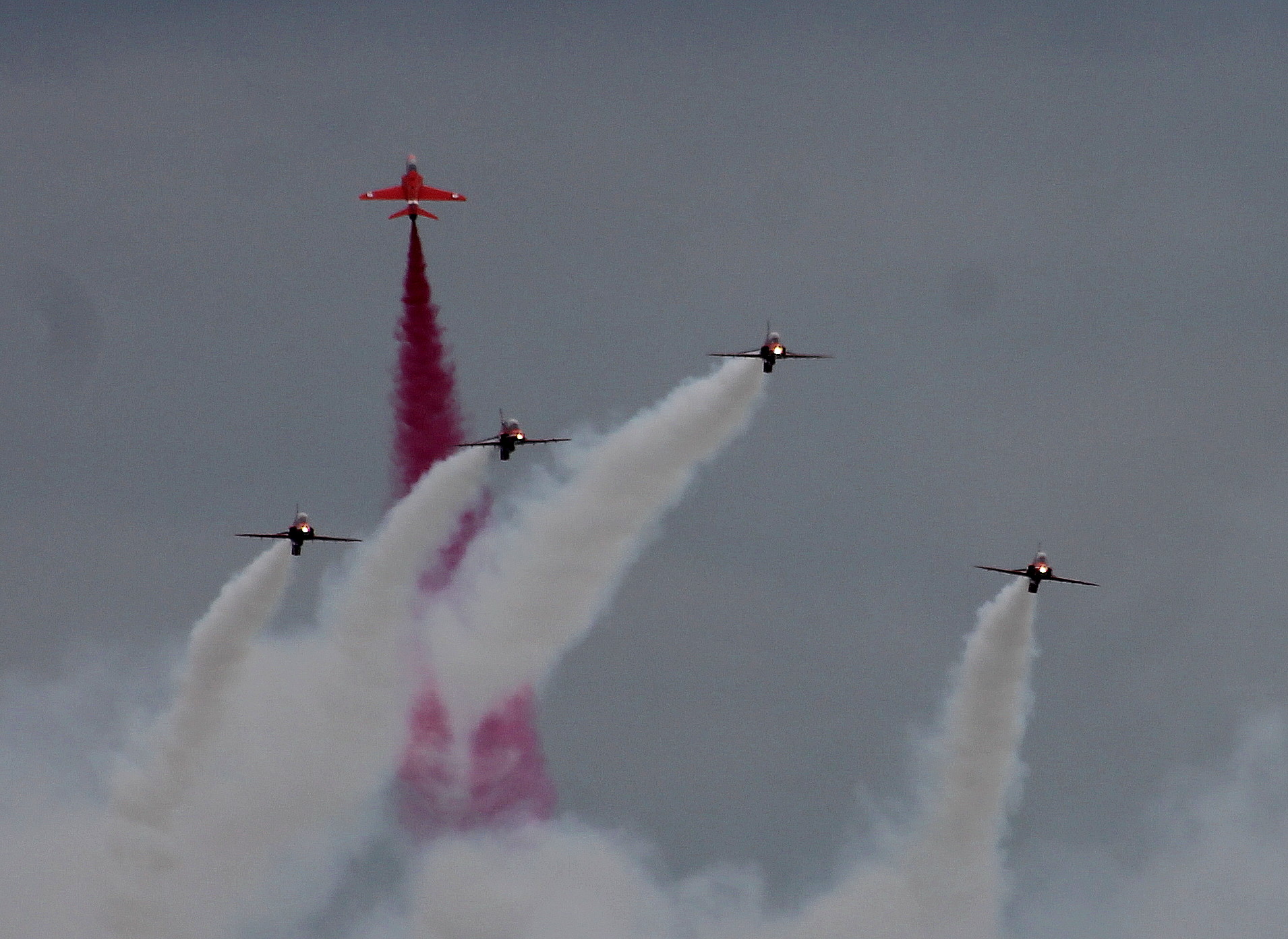
It was certainly a shame that the 'Red Arrows' had an aircraft missing in their formation, (due apparently to one of the pilots wives about to give birth), spoiling the 'plan' view aspects of their display. However, having watched many, many of their displays over the years, I reckon their 2014 repetoire was the best ever. And, unless I have got this seriously wrong, the sort of display they can perform at sites such as Bournemouth 'sea shore' do not have to comply with the usual 'Air Display' regulations set down by the CAA for air shows at airfields, or indeed the rules set down in 'Air Law' in the UK. The result was spectacular! They overflew the crowd line, ignored the "500 ft" rule, and in effect produced the sort of display I had witnessed at Farnborough air shows in the 1960s.
There can surely be nothing much better to experience, in these circumstances, to be shocked, surprised (and probably alarmed?) by a fast jet very suddenly coming in at very low level, from behind you.
We'd love to hear from you, so please scroll down to leave a comment!
Leave a comment ...
Copyright (c) UK Airfield Guide