






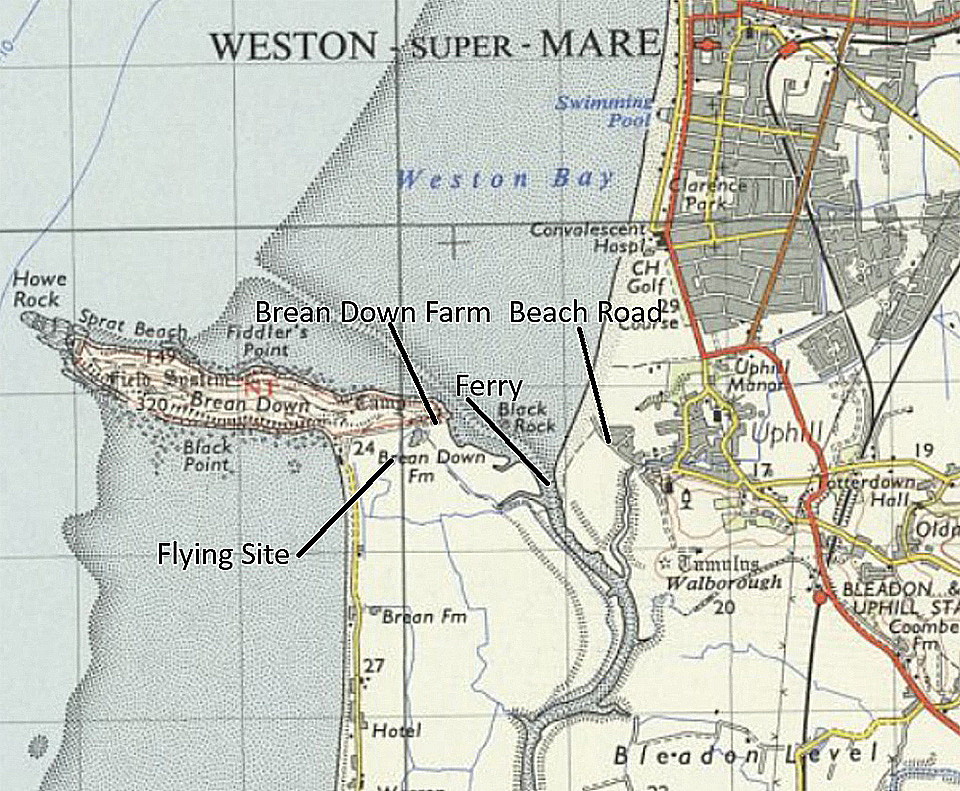
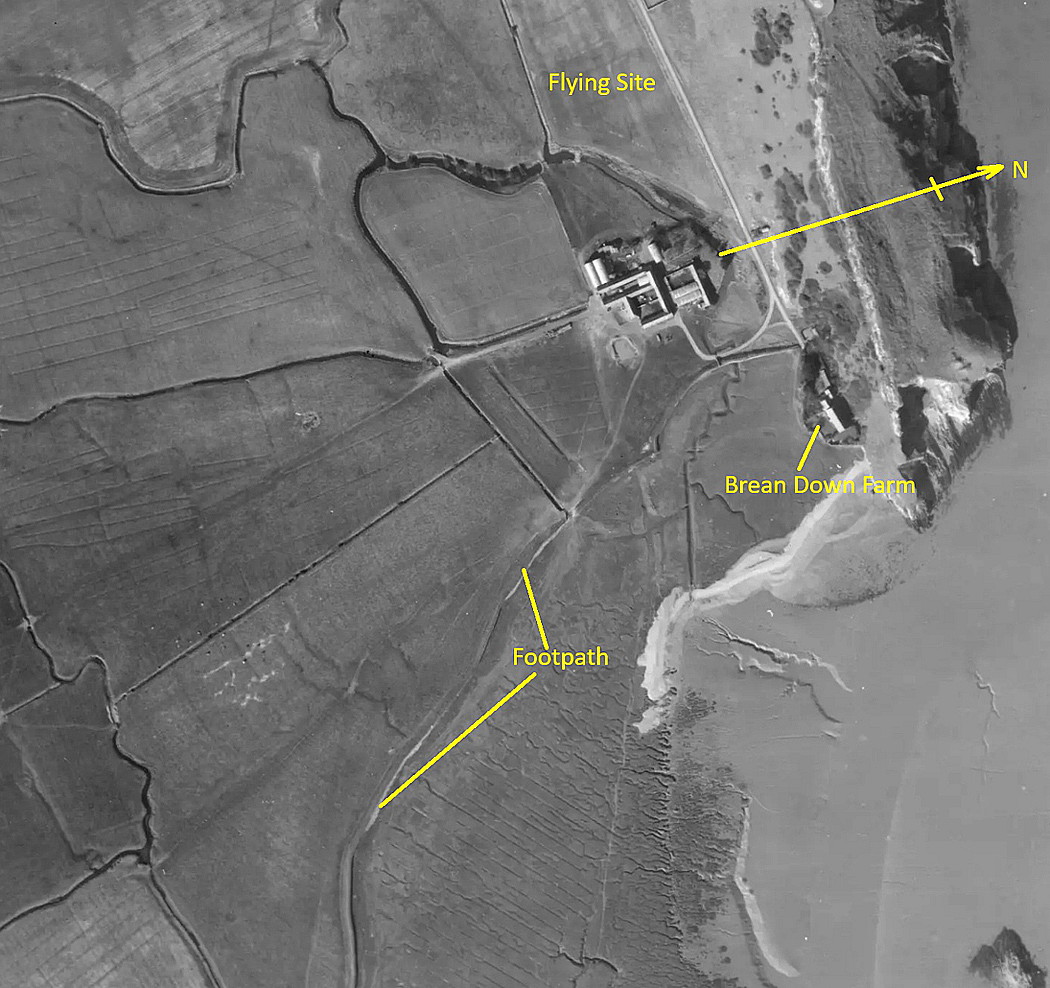
Brean Down Farm
BREAN DOWN FARM: Seasonal Landing Ground

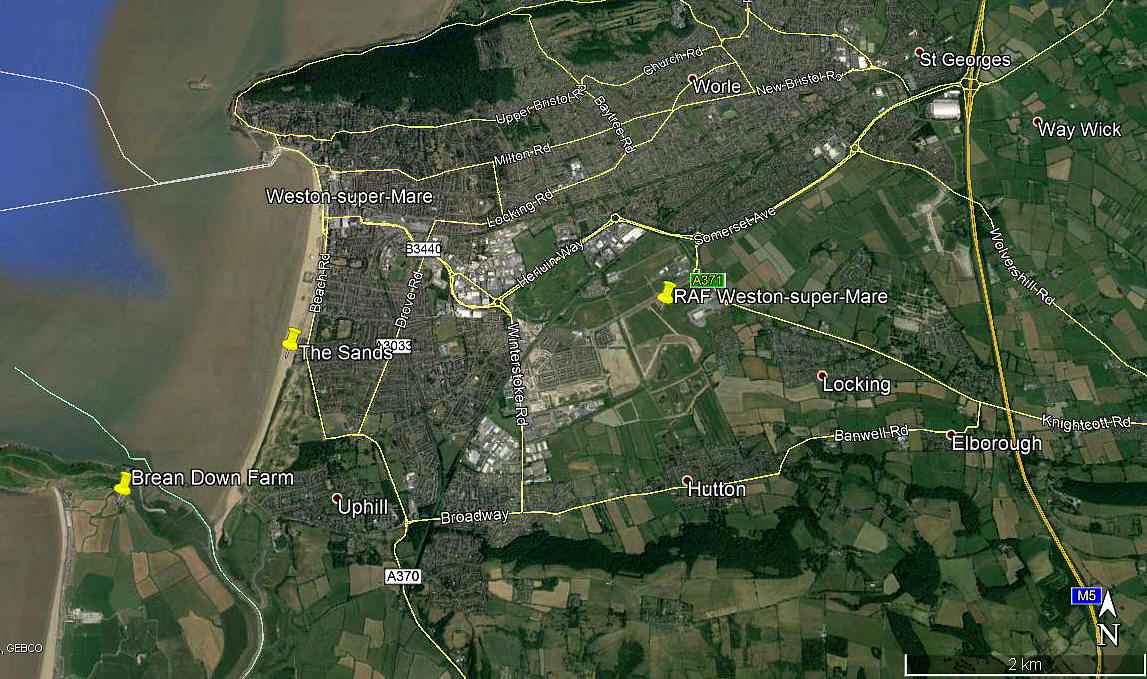
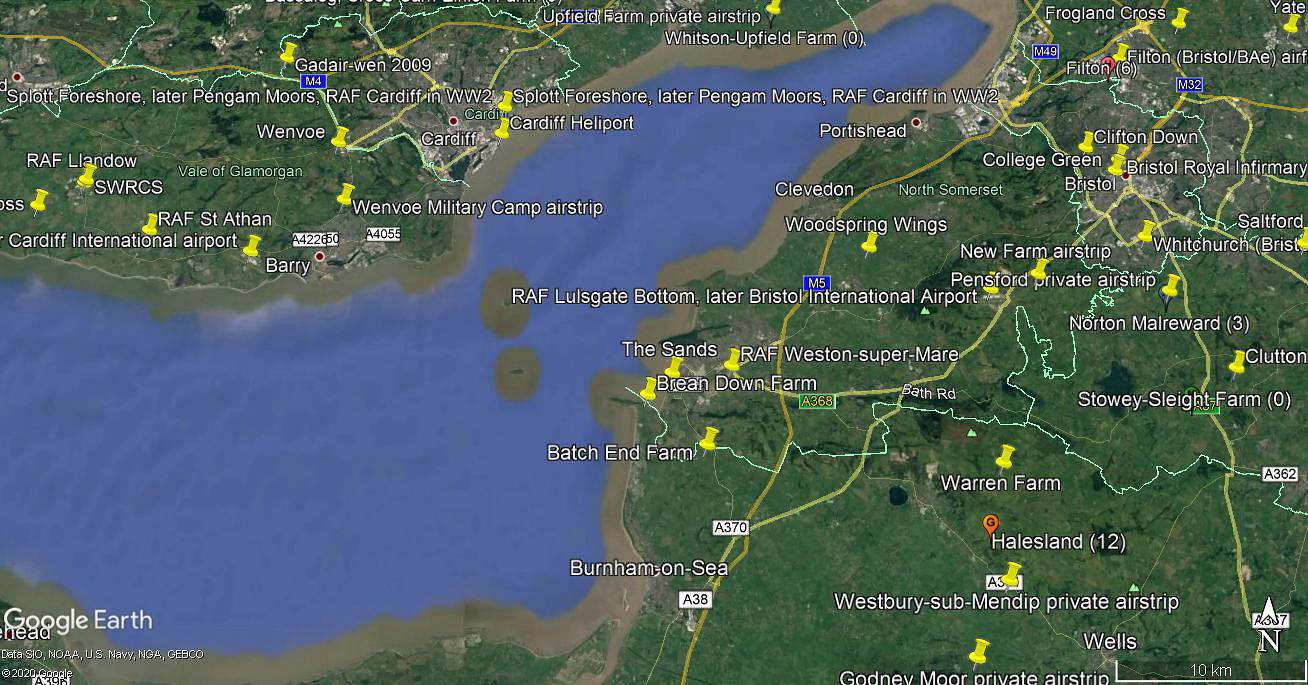
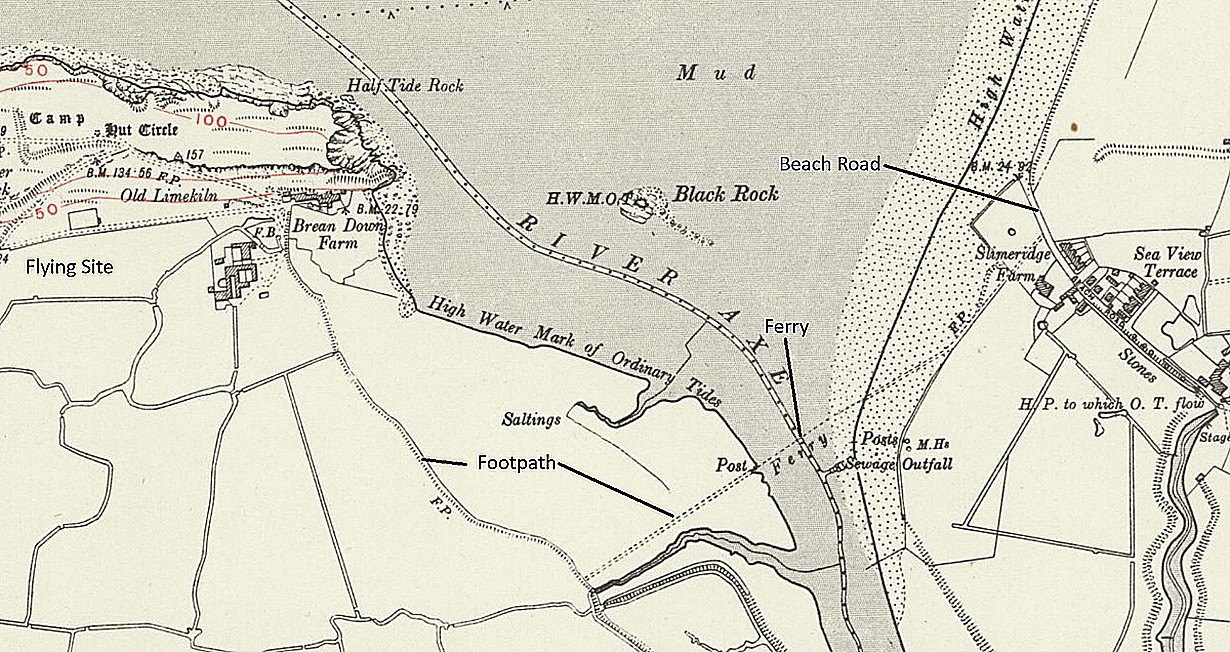
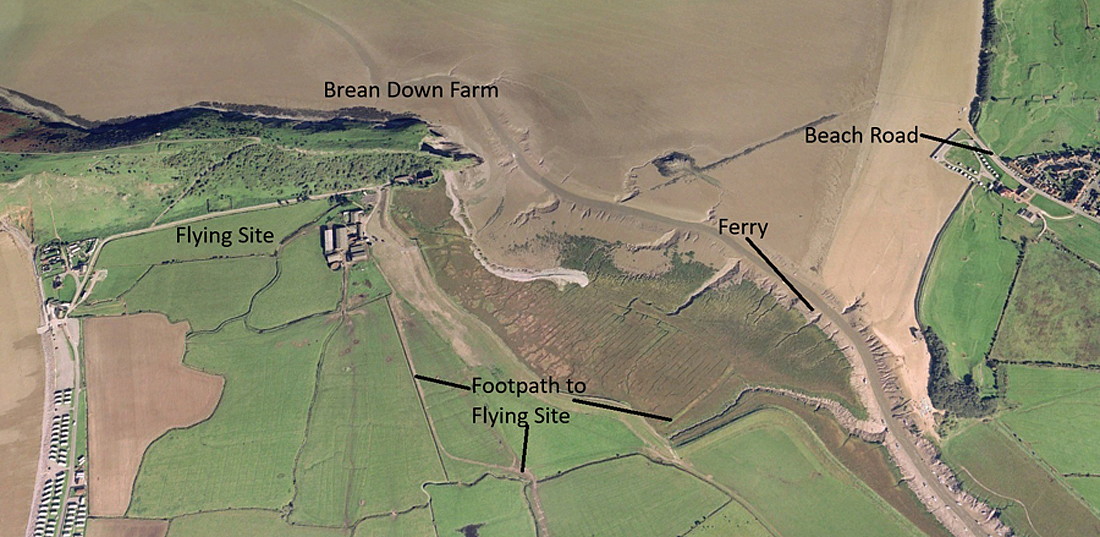
Note: These three pictures were obtained from Google Earth ©
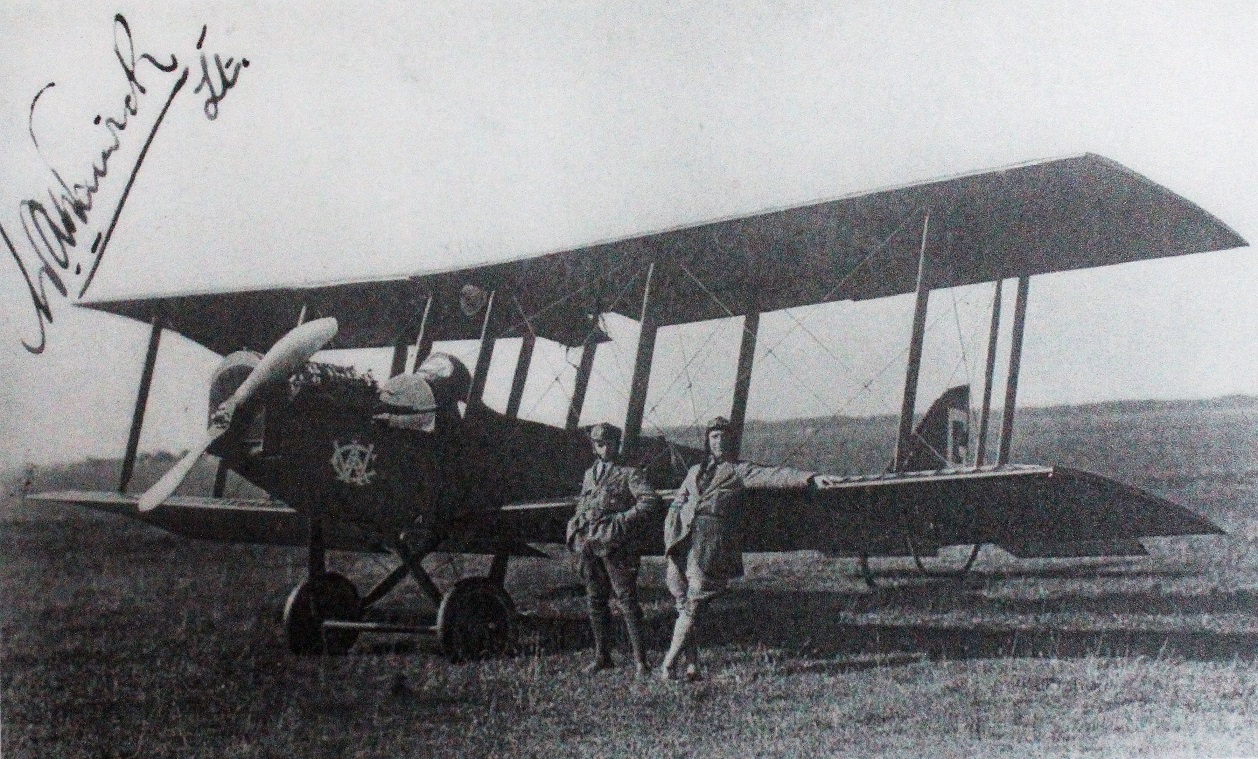
Note: This rare picture is on display at the Heritage Centre adjacent to 'The Helicopter Museum' in Weston-super-Mare. It shows one of the two Airco DH.6s being operated by the Warwick Aviation Company in 1919.
Operated by: Warwick Aeroplane Company (1919), Lieut. A R Vanden Bergh (1920)
Taxiplanes Ltd (1928)
Location: Roughly 2.5nm SSW of Weston-super-Mare town centre
Period of operation: Summer of 1919 and 1920. Later 1928
A MICHEAL T HOLDER GALLERY
In February 2026, Mike Holder who is a great friend of this 'Guide', decided to investigate if anything else is known about this location, and found and also produced the following items to illustrate the listing.
A SEASONAL ATTRACTION IN 1920 FOR WESTON-super-MARE
The following three items were all published in the Weston-super-Mare Gazette during the 1920 summer season. But, for some operators at least, not without initial problems locally as the Short article One illustrates. This being, I suppose, why the far from ideal location at BREAN FARM was eventually selected. Plus, I imagine, similar problems arose in 1919, which would certainly explain why Warwick Aviation first used this location.
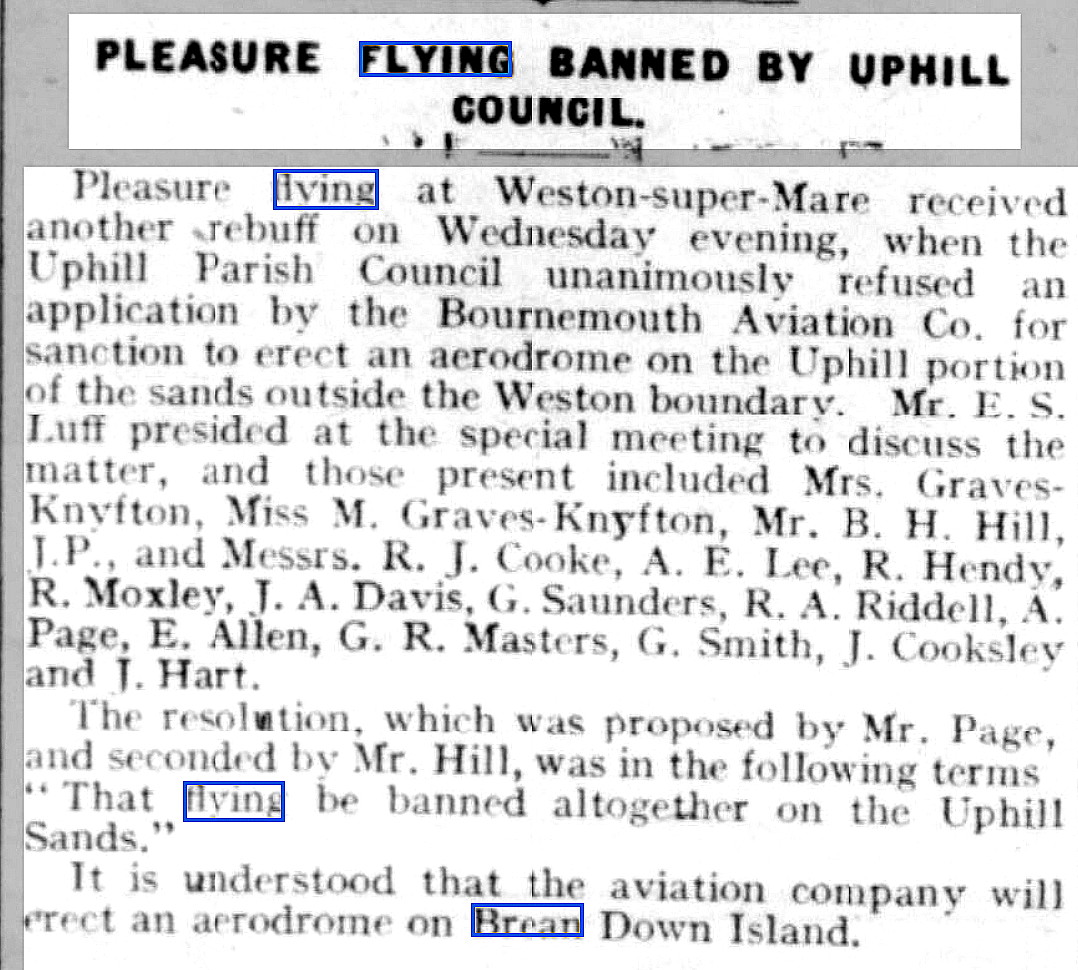
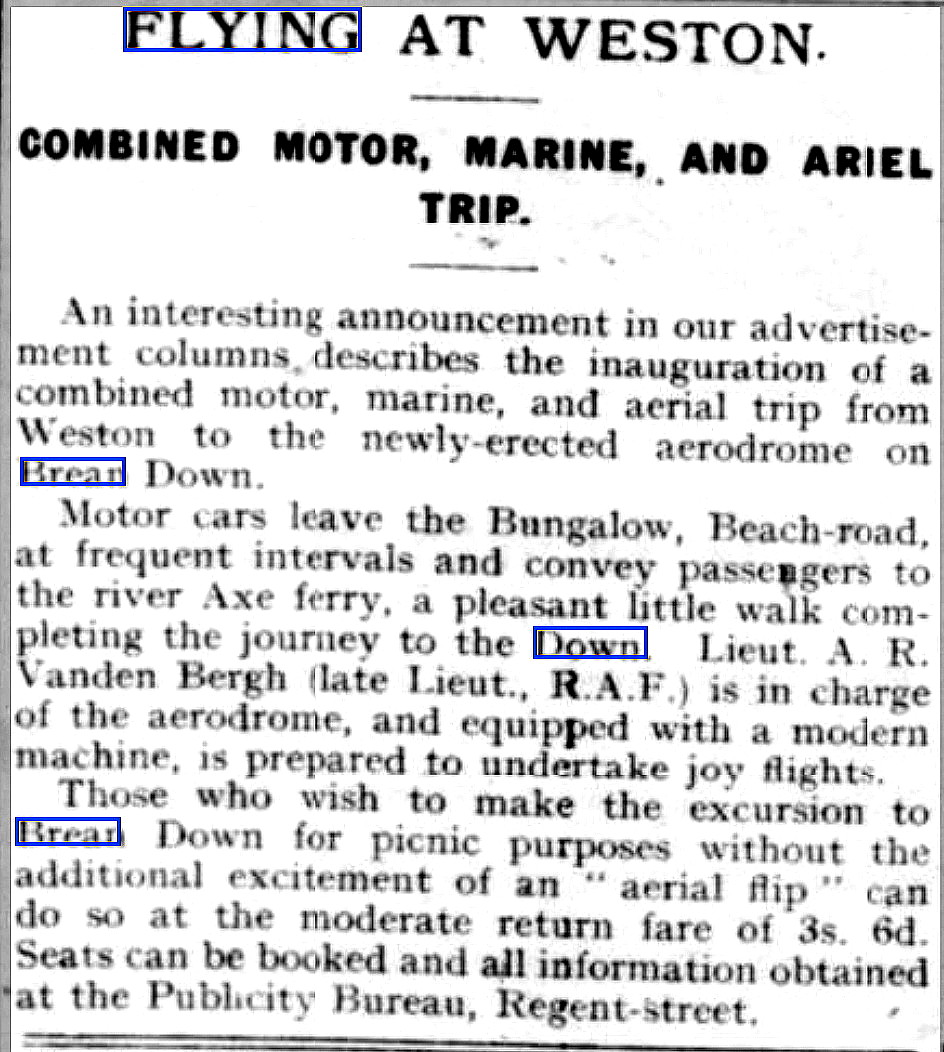
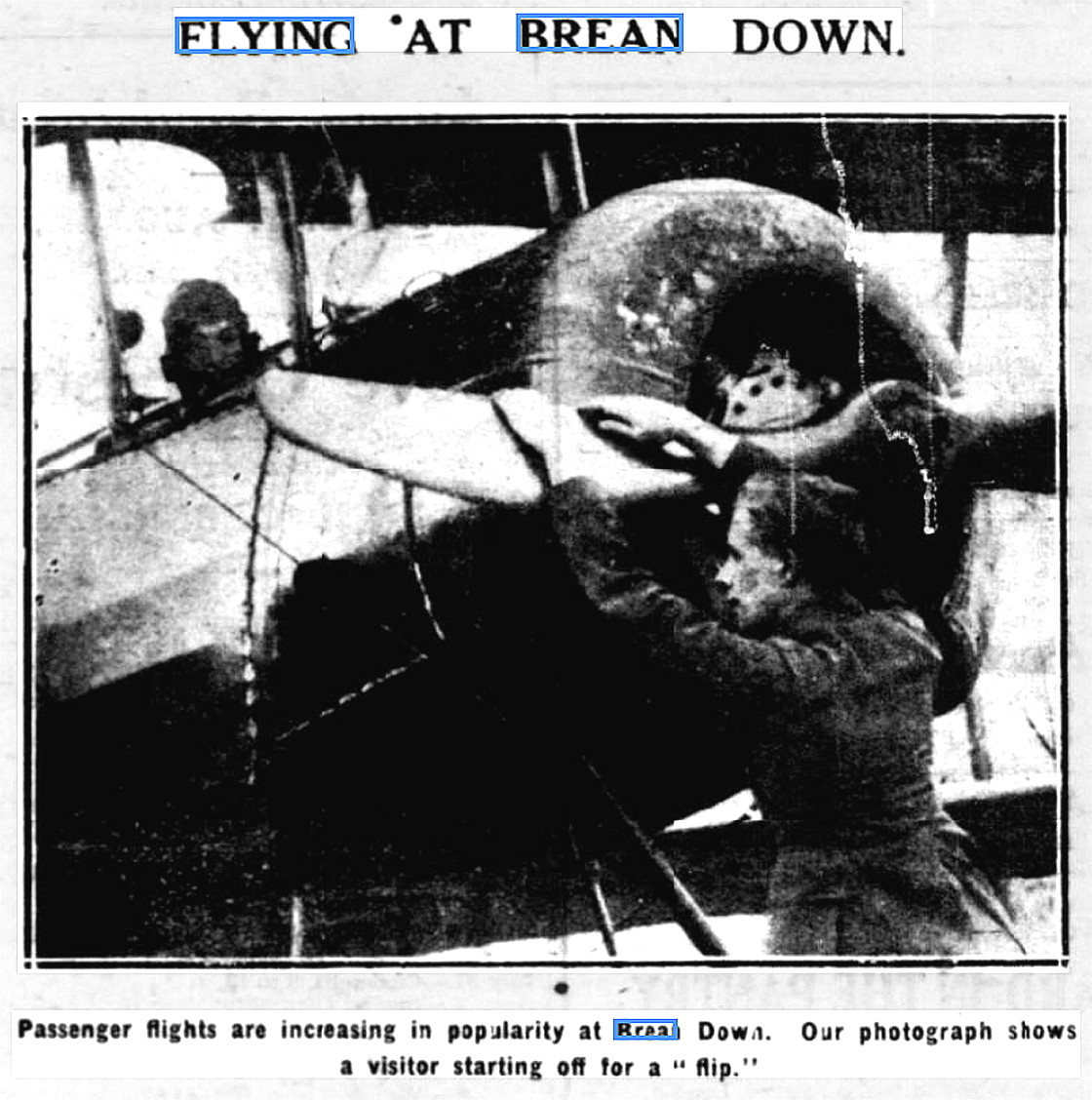
The Short article One was published on the 29th May 1920, followed by Short article Two on the 26th June. Photo One appeared in the 31s July edition.
The type is certainly an Avro 504, probably a 504K or 504N version. Does anybody know the registration?
THREE ITEMS FROM FLIGHT MAGAZINE
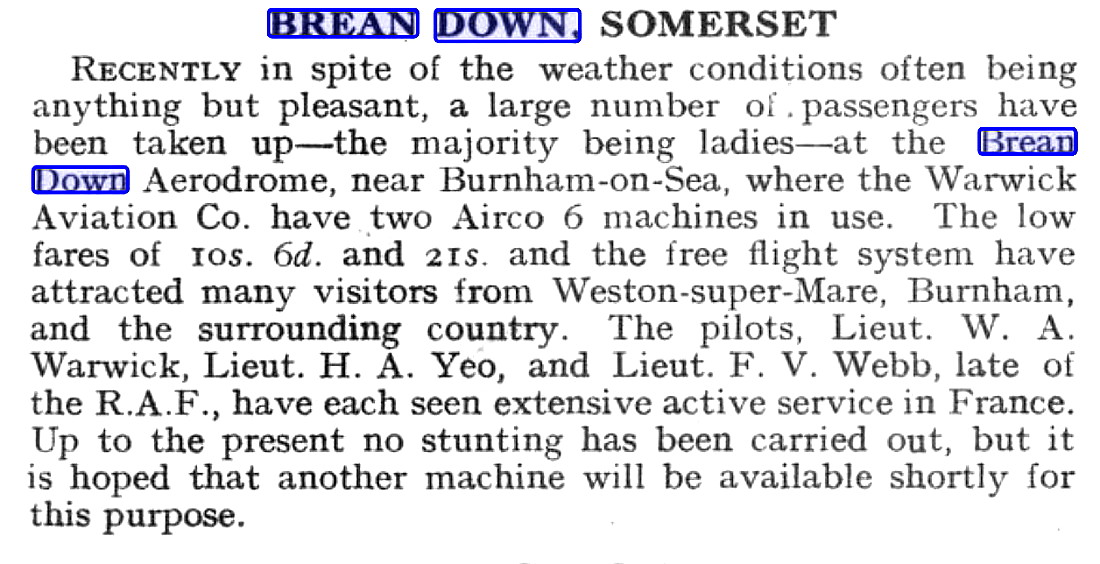
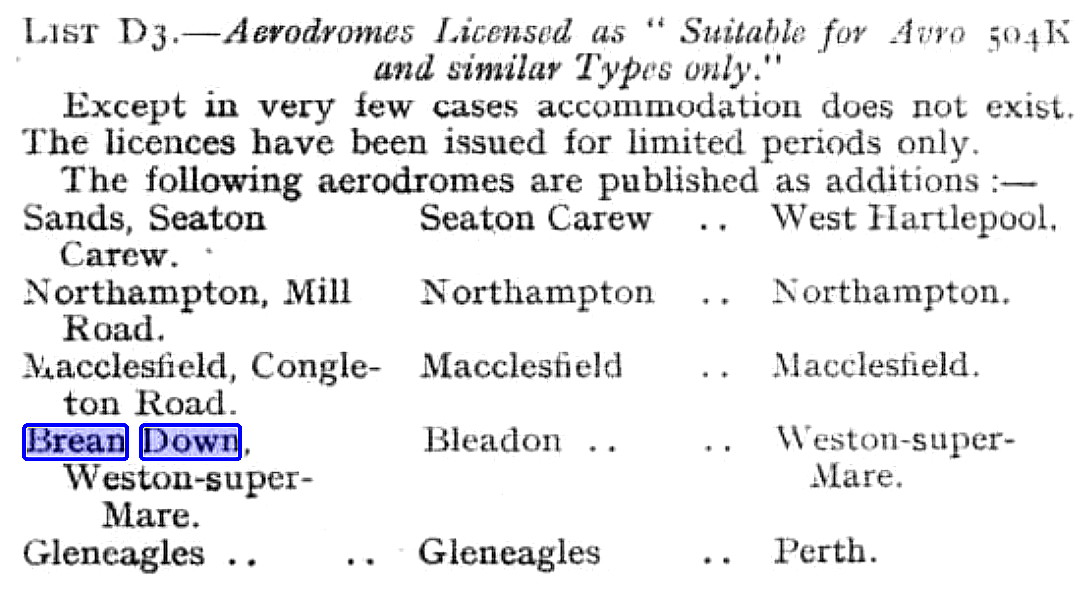
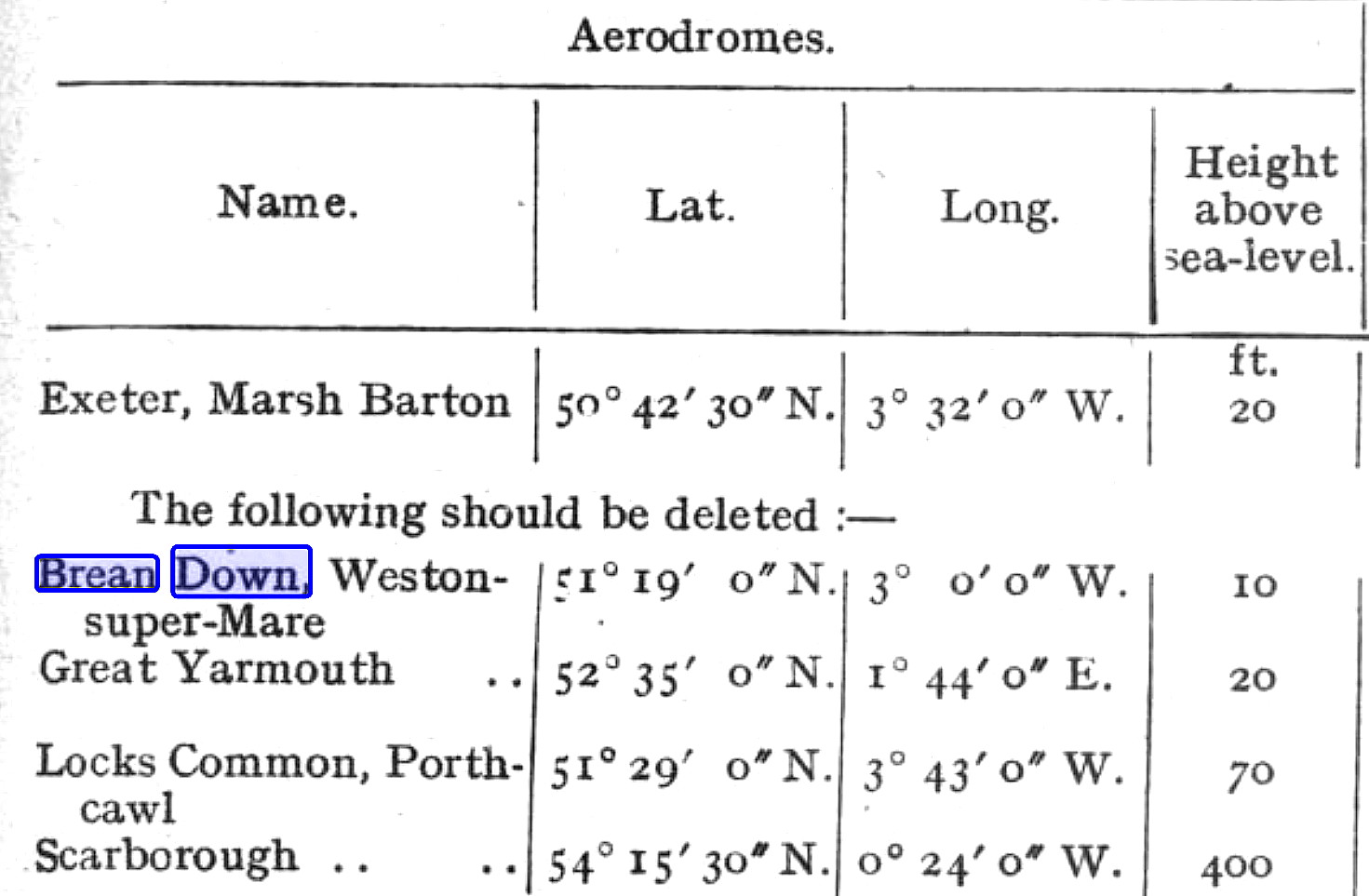
Short article Three published 11th September 1919. Notice One on the 3rd June 1920 and Notice Two on the 11th November 1920.
LAST BUT CERTAINLY NOT LEAST
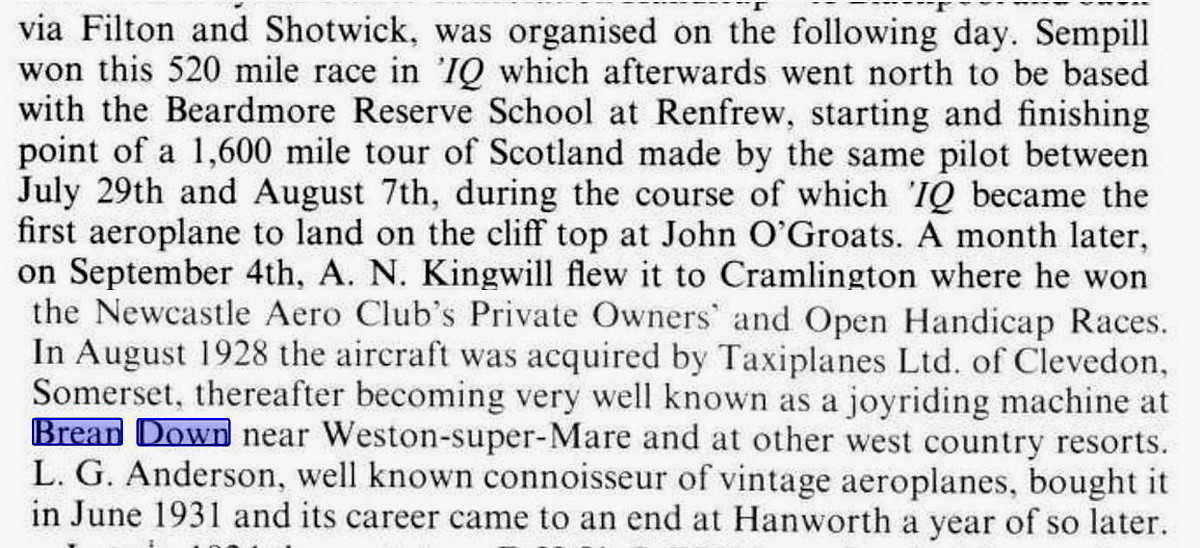
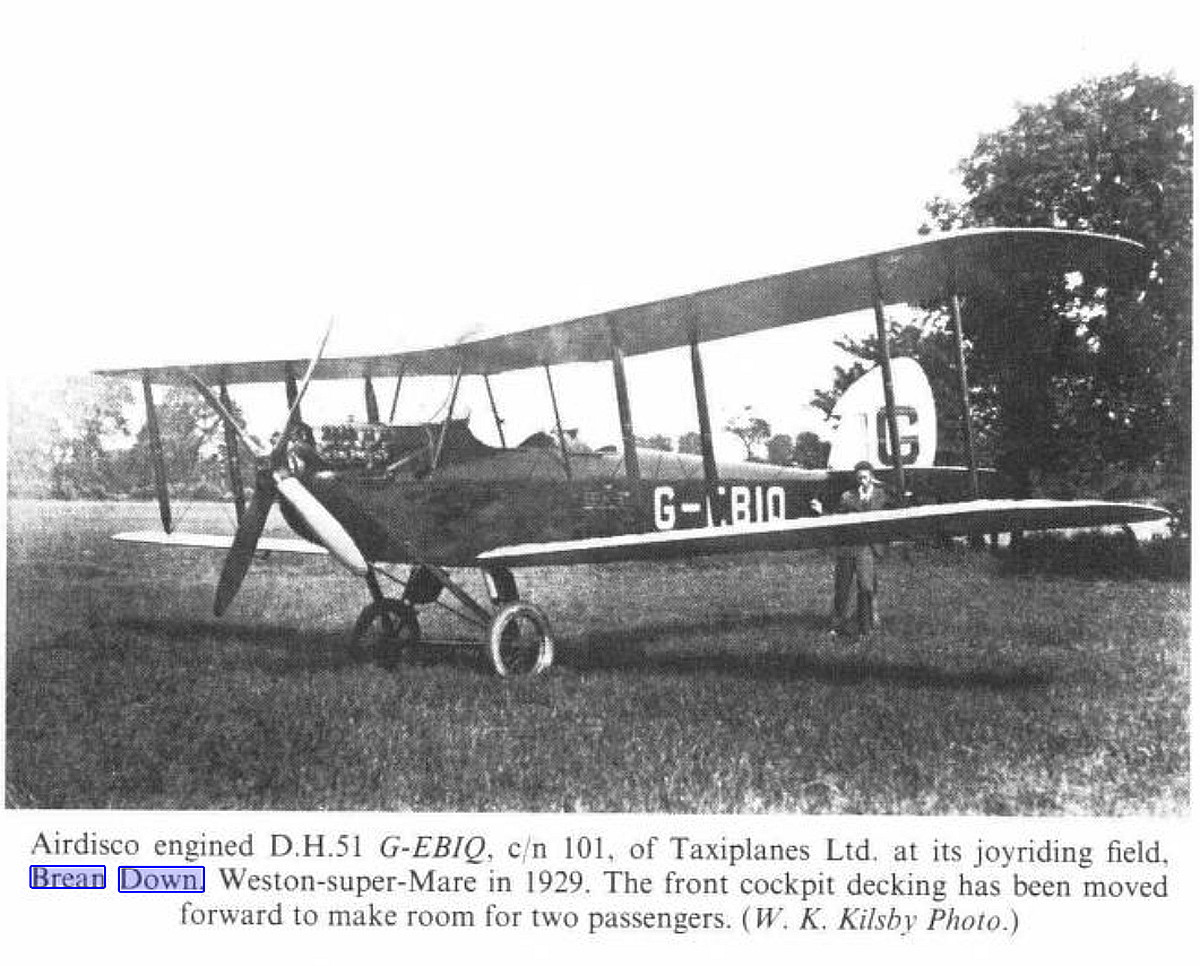
The excerpt and Photo Two are from De Havilland Aircraft by A Jackson.
The de Havilland DH51 was a very 'rare bird' and only three were built, G-EBIQ being the only one on the British Civil Aircraft Register. One example survives and is with the Shuttleworth Collection at OLD WARDEN.
NOTES: There was clearly some competition amongst companies vying for joy-riding business in Weston-super-Mare around this period after WW1. As there was in most seaside resorts - in England especially.
Many years ago I made this comment: "BREAN DOWN FARM seems a bit out of the way, but I suspect, as was common practice up until WW2, they may well have had a car, (and office?), on or near the seafront in Weston-super-Mare?" As it turns out, thanks to Mike Holder, it now appears they did, at least in 1920.
Three main factors made this type of seasonal business popular and viable - at least for one season. Firstly, WW1 brought about the cult of the 'Flying Ace', which greatly enhanced the appeal of flying to the general public. The second was that there was a glut of pilots, still with a love for flying, and eager to earn their living by flying. Thirdly, the country was then awash in aeroplanes, which could be bought at 'knock-down' prices.
Few operators managed to make enough money to survive the winter. But several did.
We'd love to hear from you, so please scroll down to leave a comment!
Leave a comment ...
Copyright (c) UK Airfield Guide