





Bruichladdich
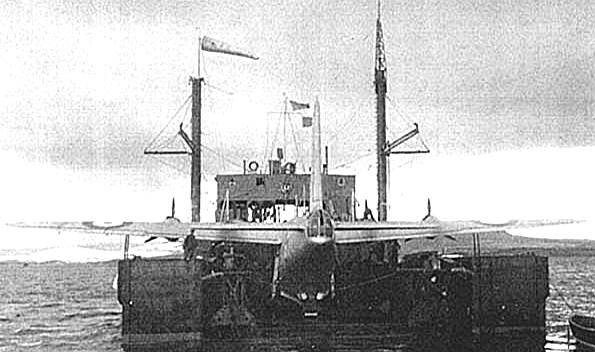
BRUICHLADDICH: Flying boat floating dock
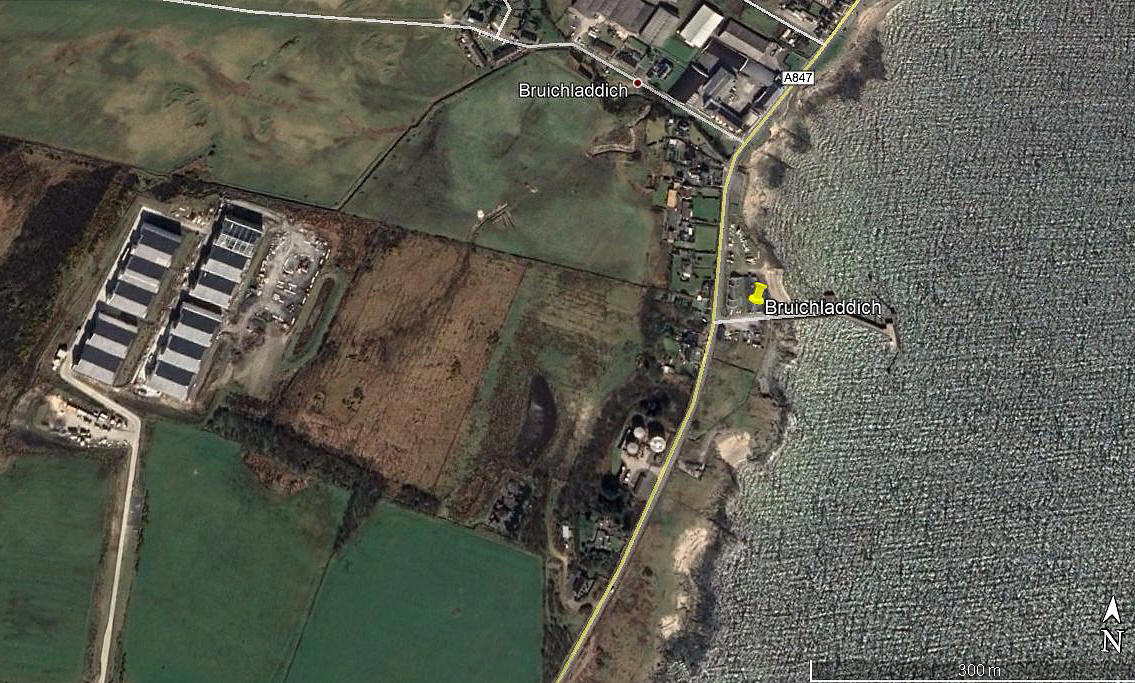
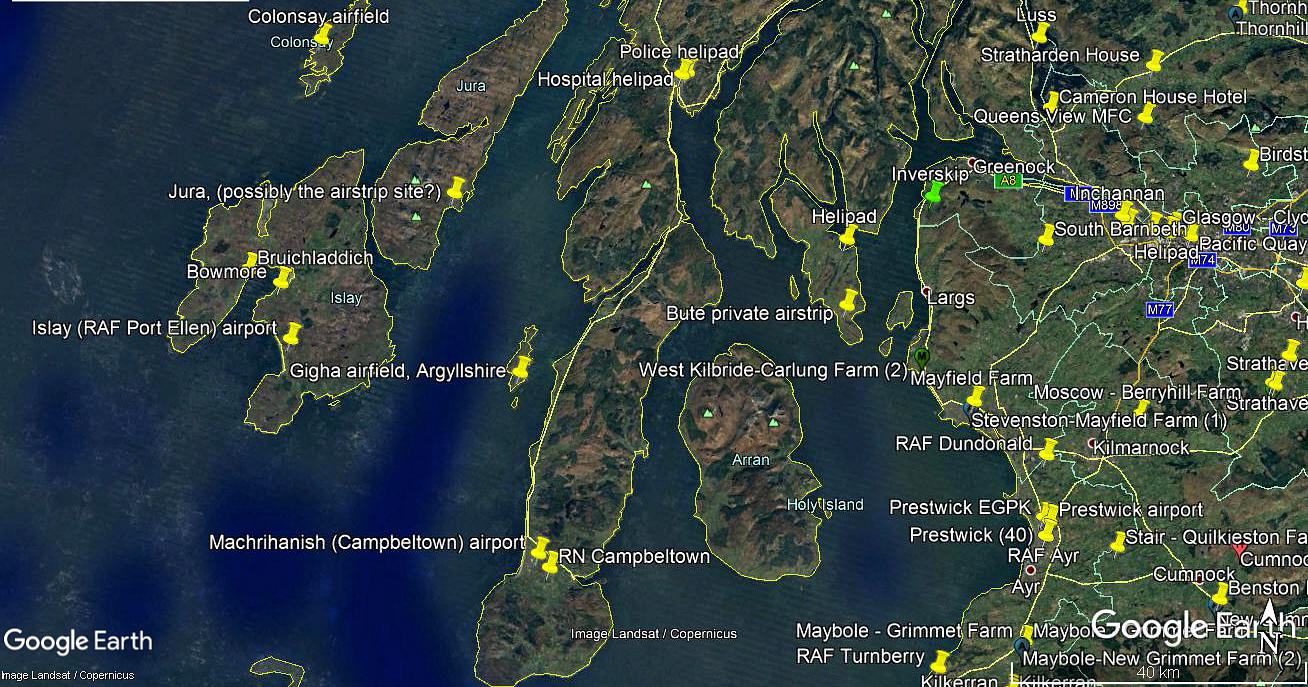
Note: The photo was kindly sent by Mr Graham Frost, the other two pictures were obtained from Google Earth ©
Location: On the top east side of Loch Indaal, on the west side of Islay
Period of operation: Unknown? Presumably between 1941 and 1943?
NOTES: In August 2020 Graham Frost kindly sent me the photo asking if a floating dock might be included in this 'Guide'. The answer just had to be "Yes", especially because I loved the idea of including it as it raises so many questions. And of course, if anything, the very nature of this 'Guide' does, probably, raise as many questions as answers.
Graham had come across a report of a teenager asking a much older resident of Islay about his WW2 memories, and he told of the 'dry harbour' moored at Bruichladdich. The most obvious question is - why? The Sunderlands of 246 and 422 (RCAF) Squadrons were based at RAF BOWMORE on the other side of Loch Indaal. Possibly having a moveable 'dispersal' area had some attraction at the time?
Looking at the picture one has to wonder just how they got the Sunderland on board? The clearance between the propellers and the sides of the vessel seems minimal to say the least - noting that all four of the three-bladed propellers are positioned with the lower blades giving the best clearance possible. This vessel also has a large windsock which, I suppose, indicates that in a semi-submerged state, and pointing into wind, the Sunderland might have been taxied into position?
One aspect is very certain, I have never seen anything like this for use by flying boats. Amongst so many questions, who built this 'floating dock' and where and when? As always in this 'Guide' any advice will be much appreciated.
We'd love to hear from you, so please scroll down to leave a comment!
Leave a comment ...
Copyright (c) UK Airfield Guide