





Burrough Court
BURROUGH COURT: Private airstrip
We have Mr Graham Frost, a great friend of this 'Guide' to thank for pointing out this location, of which at the time I had never heard of. But, from the information he had found, clearly a bit of extra delving was required. This is the result so far.
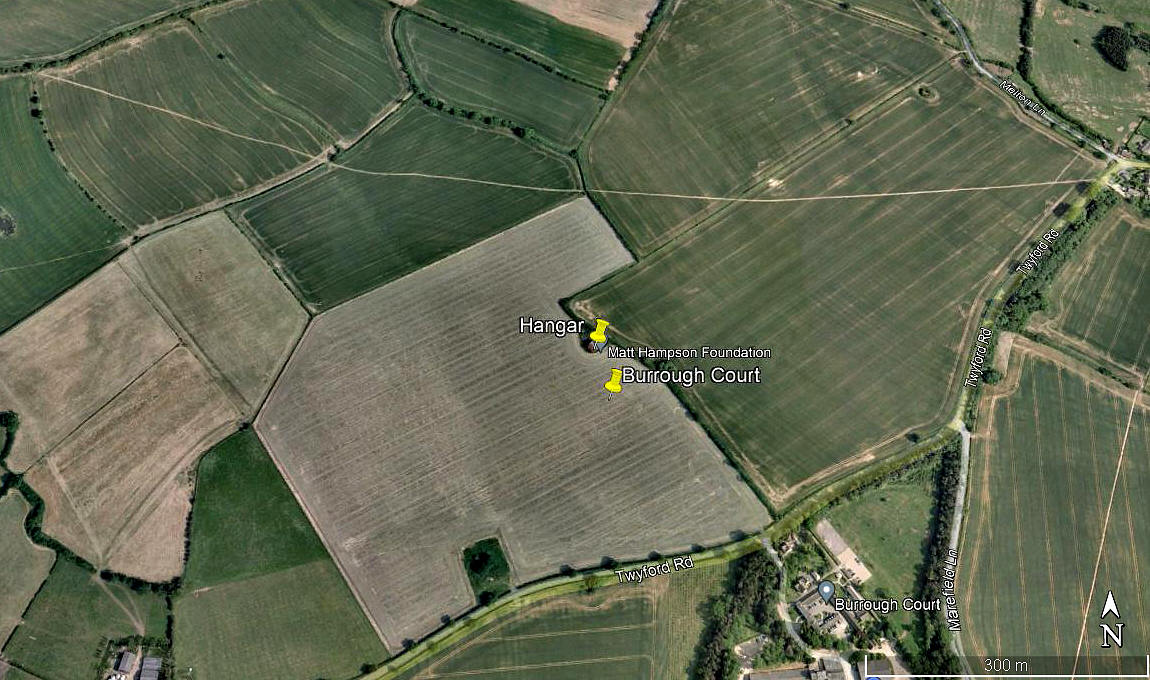
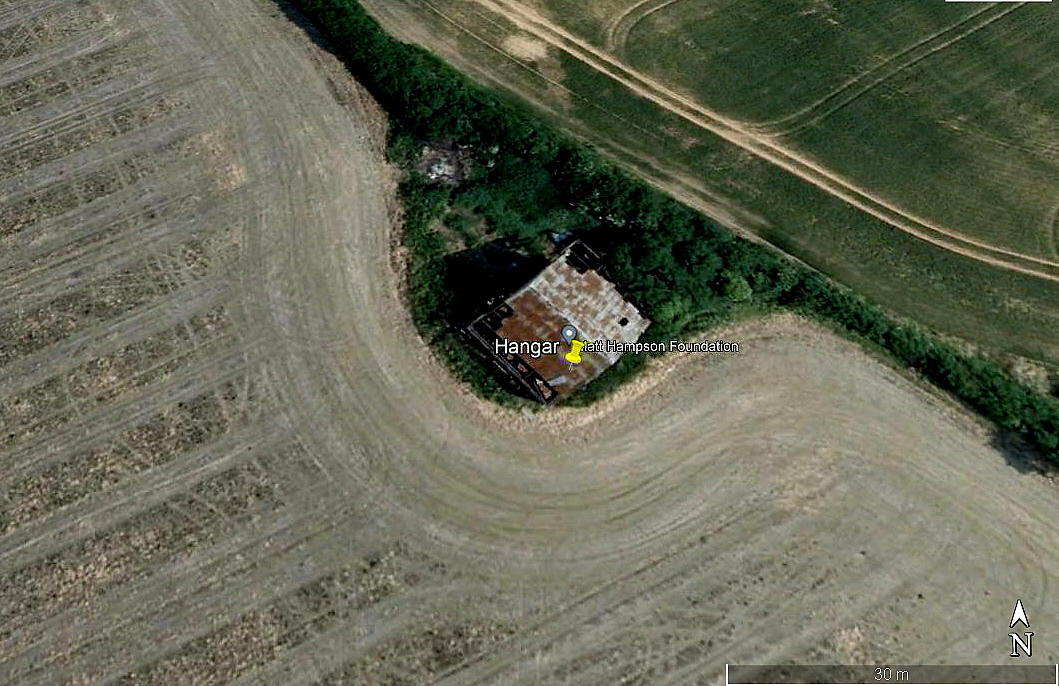
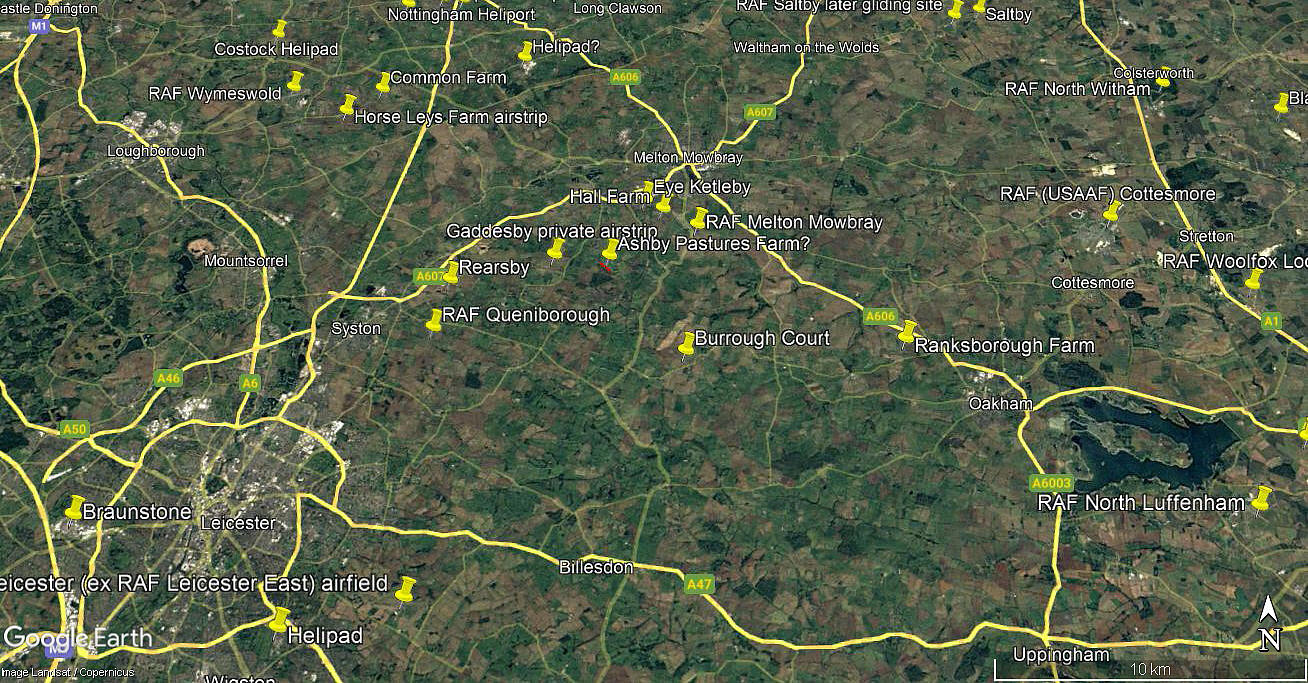
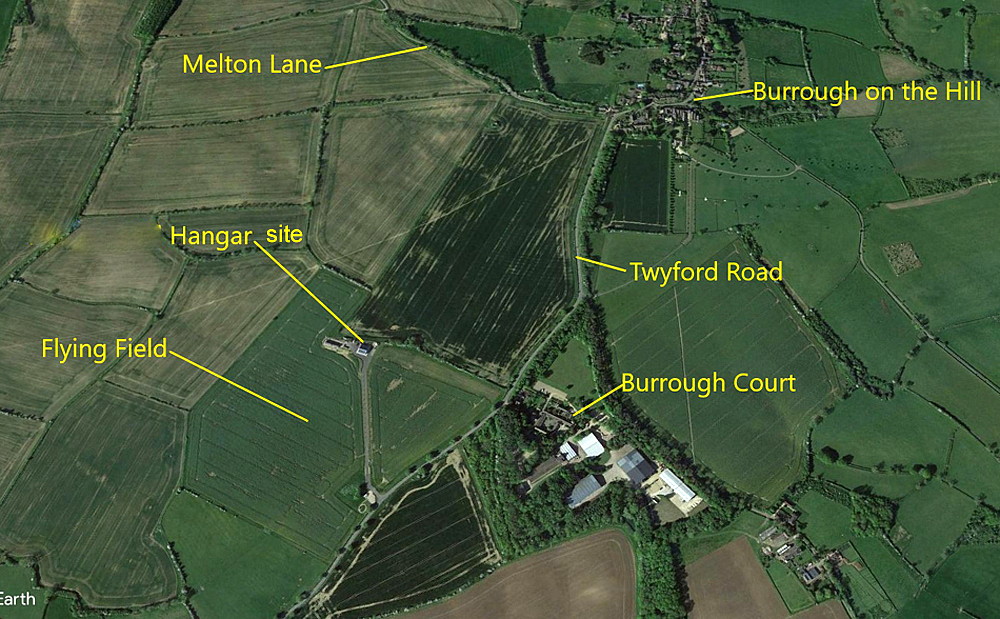
Note: The first two pictures were obtained from Google Earth ©. The area view is from my Google Earth © derived database.
Operated by: Lord Furness
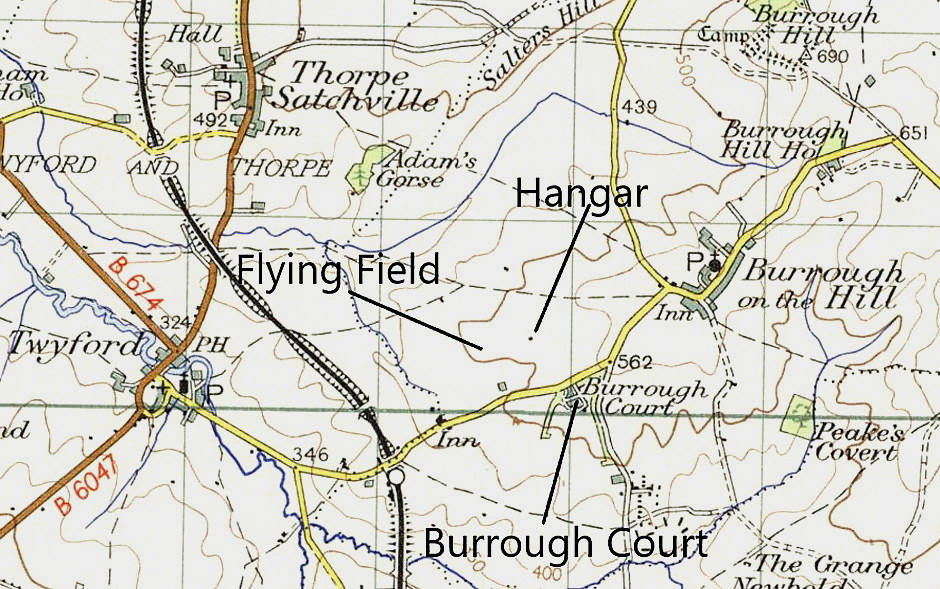
Location: About 5nm S of Melton Mowbray, between and east of Twyford on the B6047 and Burrough-on-the-Hill villages.
Period of operation: 1933 to ?
NOTES: Lord Furness based his de Havilland DH84 Dragon (G-ACIU) and later his Lockheed 12A Electra Junior (G-AEOI) here. The Lockheed 12A was, in those days, very much 'state-of-the-art', and a 'hot ship'. The equivalent, in todays terms, of owning a top of the range exec jet. The type first flew in 1936.
This said, the choice of also owning a DH84 Dragon is interesting. In its day, the Dragon was very much the very latest thing in regional airliners, first flying in November 1932 and coming into service in April 1933. It is therefore plainly obvious that Lord Furness was keen to have the very latest, and best, aircraft at his disposal. Clearly a very wealthy man, he was a shipping magnate, reputed to be one of the richest persons in England. However, his 'exec' version was far from being a standard Dragon, similar in spec to the Dragon G-ACGG owned by the Prince of Wales.
Also, and perhaps not much appreciated in modern times, the Dragon was pretty much a STOL type by todays standards, even more so when operated lightly laden. And, quite capable of operating from pretty rough unprepared fields. So, in effect, he had the very best aircraft to suit all his needs.
A BRIEF HISTORY OF G-ACIU AND G-AEOI
The de Havilland DH84 Dragon 1 G-ACIU was first registered on 05.08.33. Quite soon after the type entered service, and two months after the Prince of Wales registered his Dragon G-ACGG on 06.06.33. Somewhat interesting is that G-ACIU was then registered to Surrey Flying Services based at CROYDON on 29.06.35. Perhaps they operated it for Lord Furness? Seems likely as the Electra didn't come along until nearly two years later. With WW2 being declared it was impressed as X9395 and was abandoned at Mourmelon in France during April 1940.
The Lockheed 12A Electra Junior G-AEOI was registered to Lord Furness from 02.03.37 until 15.12.39. It was then impressed as X9316, and, survived the war! Restored to the UK civil register on 19.02.46, it was later sold to Venezuala as YV-P-AED in April 1948.
A MICHAEL T HOLDER GALLERY
Having started to look into the history of this location, I asked Mike Holder in August 2022, a great friend of this 'Guide', if he would care to have a delve into the subject. In next to no time he came up with a wealth of information, including maps and newspaper reports.
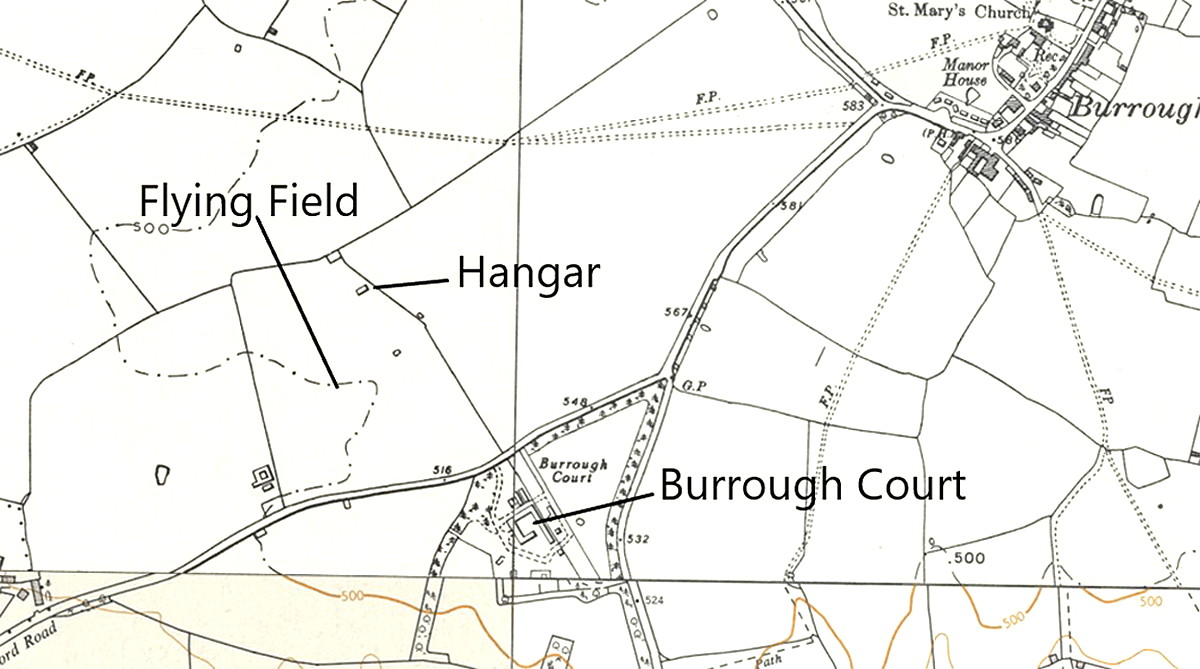
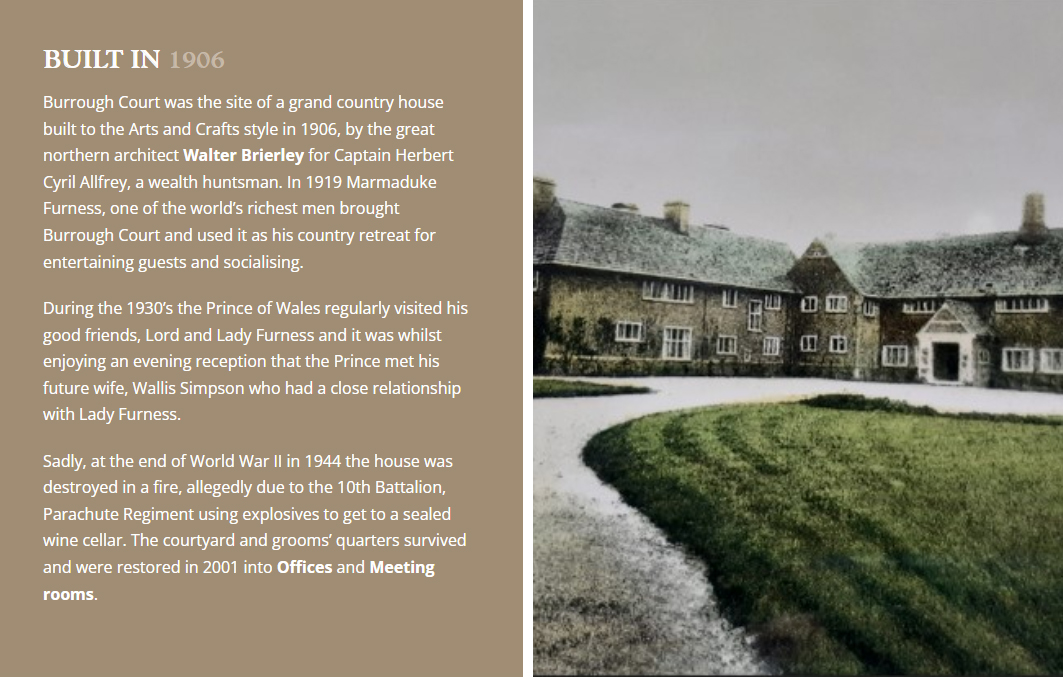
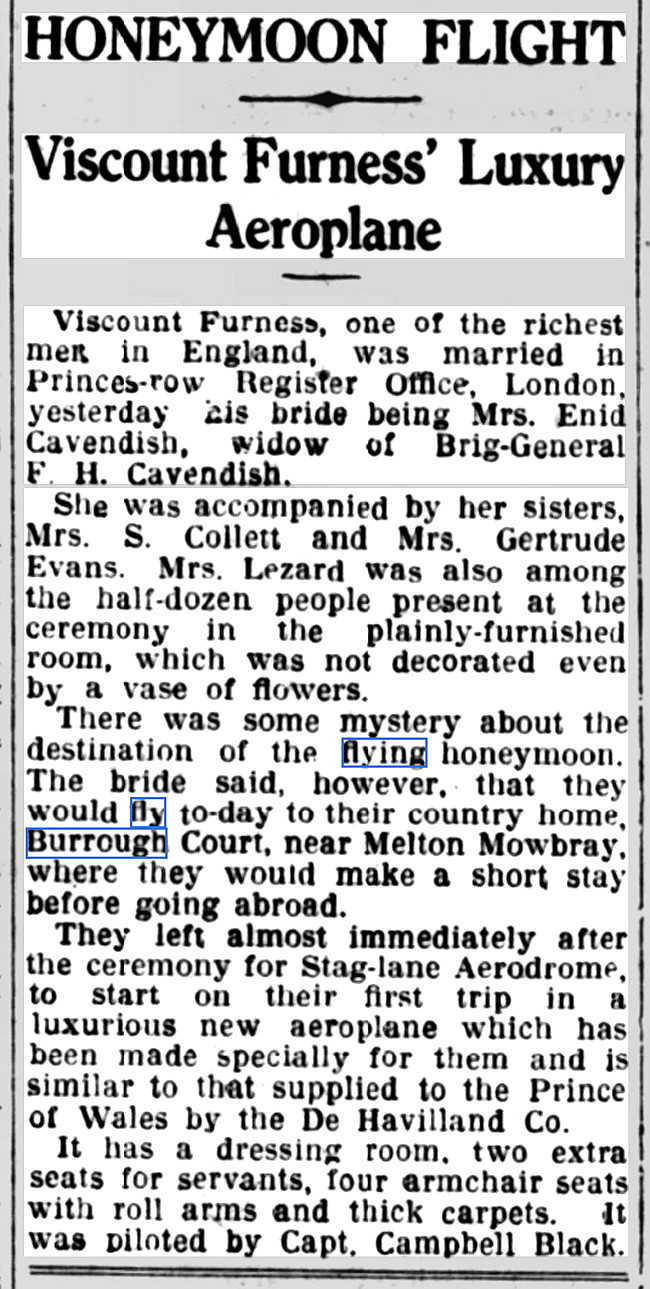
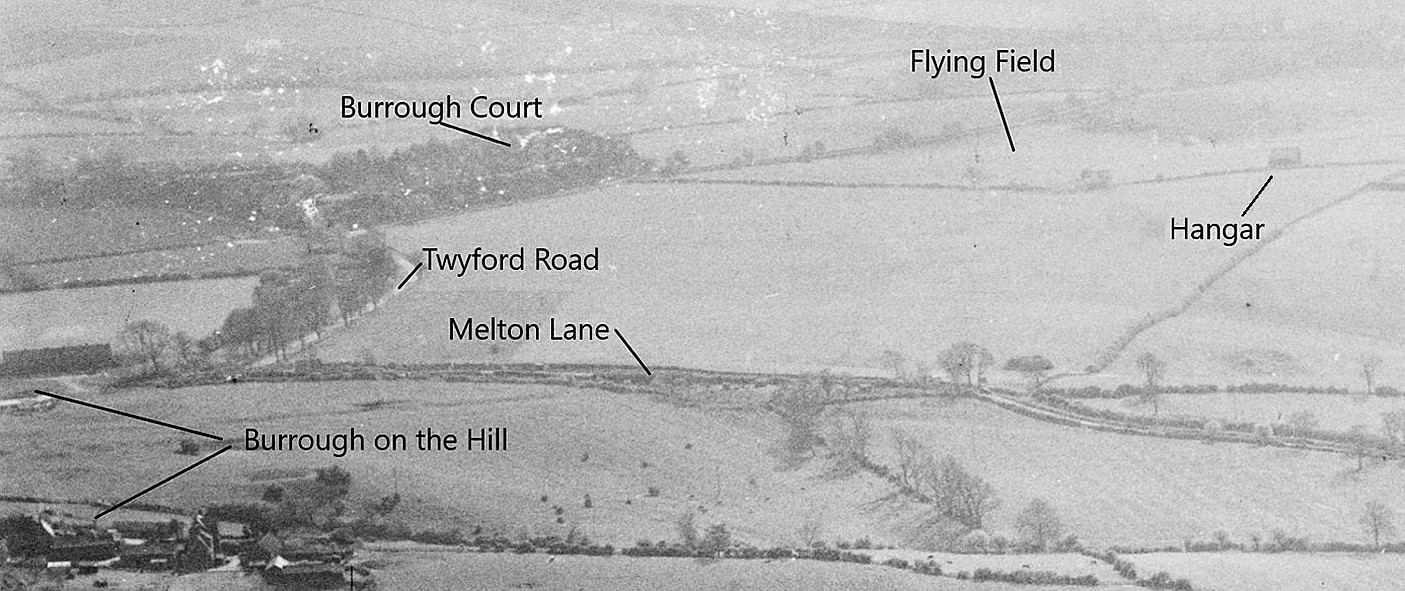
Note: The third item, a newspaper report, was published in the Birmingham Daily Gazette on the 4th August 1933.
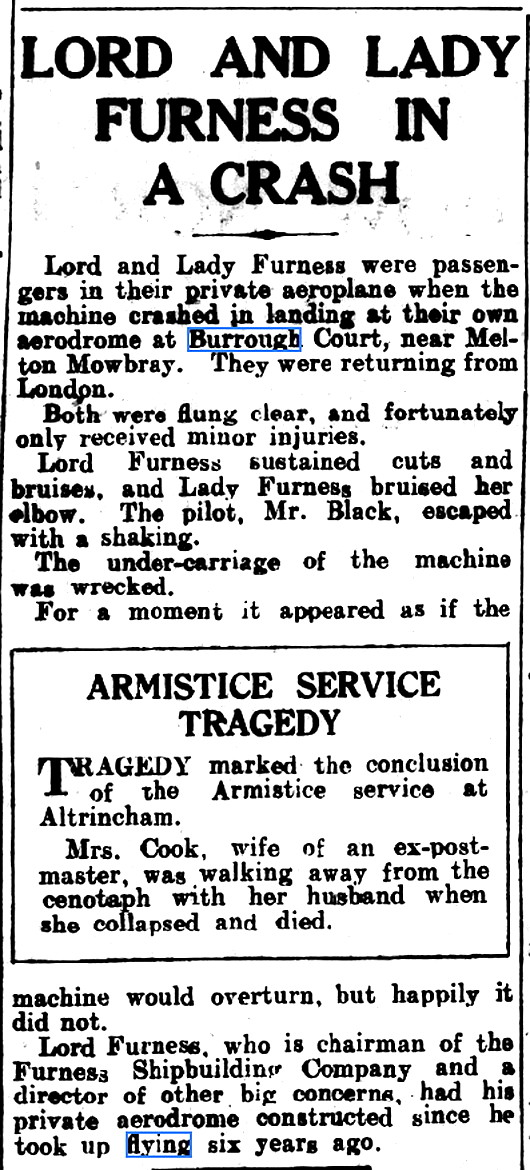
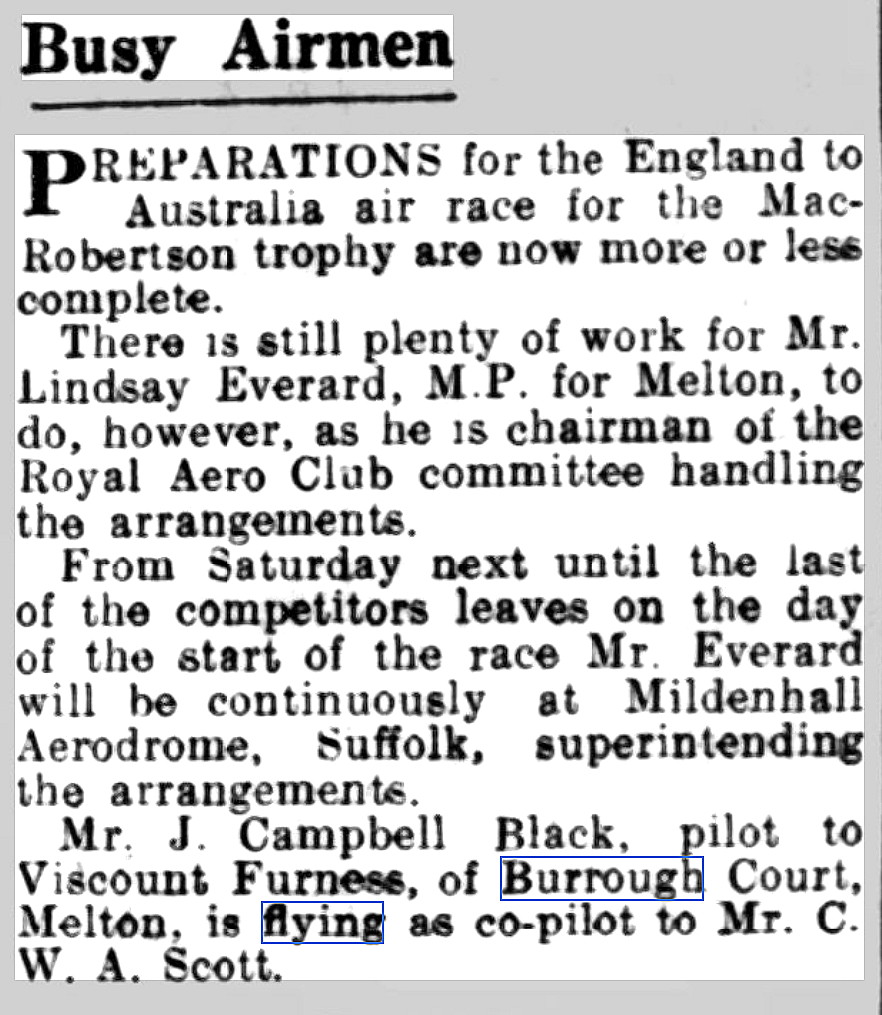
Note: This fifth item, published in the Sunday Sun (Newcastle) on the 12th November 1933 is, as is so often by newspaper reporters, complete rubbish invented to produce copy with no knowledge whatsoever of the subject. (Still the case today of course). Alledging that the two passengers - "were thrown clear". The DH84 Dragon was a twin-engine biplane with the cabin mostly between the wings. Without much if any doubt, they were thrown out of their seats, which, as was normally the case in those days, would not have been fitted with seat-belts.
The seventh item, another newspaper report, was published in the Leicester Evening Mail on the 10th October 1934. Note that the reporter had got Campbell Black's initial wrong - it was 'T' (Tom), not 'J'. Even so it seems well worth mentioning what the result was - teamed with C W R Scott - they won!
Arguably one the most notable aviation events in 1934 was the MacRobertson Trophy Air Race from England tp Australia. Sponsored by Sir Macpherson Robertson, and named after his confectionary manufacturing company, he offered a £15,000 prize to the winner, almost exactly one million pounds today given an inflation index. Although it seems some seventy aircraft were entered, only twenty were at MILDENHALL for the start at 06.30 GMT on the 20th October.
Although not the first away, the de Havilland 88 Comet G-ACSS 'Grosvenor House', piloted by C.W.A Scott and T Campbell Black, started making a lead within the first 24 hours. None of the others got anywhere near them at the end. Incidentally, the de Havilland company designed and built three Comets for this race.
G-ACSS arrived at the finishing point after 71 hours, an astonishing achievement. The next to arrive was the KLM Douglas DC-2 'Ulva' PH-AJU, in 90 hours 13 minutes. But it appears, during much if not most of the route, it was carrying passengers over the already scheduled KLM network.
What we don't know, is if, after the race, Mr Campbell Black continued to fly as the pilot for Lord Furness.
We'd love to hear from you, so please scroll down to leave a comment!
Leave a comment ...
Copyright (c) UK Airfield Guide