





Castle Douglas flying sites
CASTLE DOUGLAS see also GLENSWINTON
CASTLE DOUGLAS: Civil Landing Ground (Aka MAINS-of-GREENLAW)
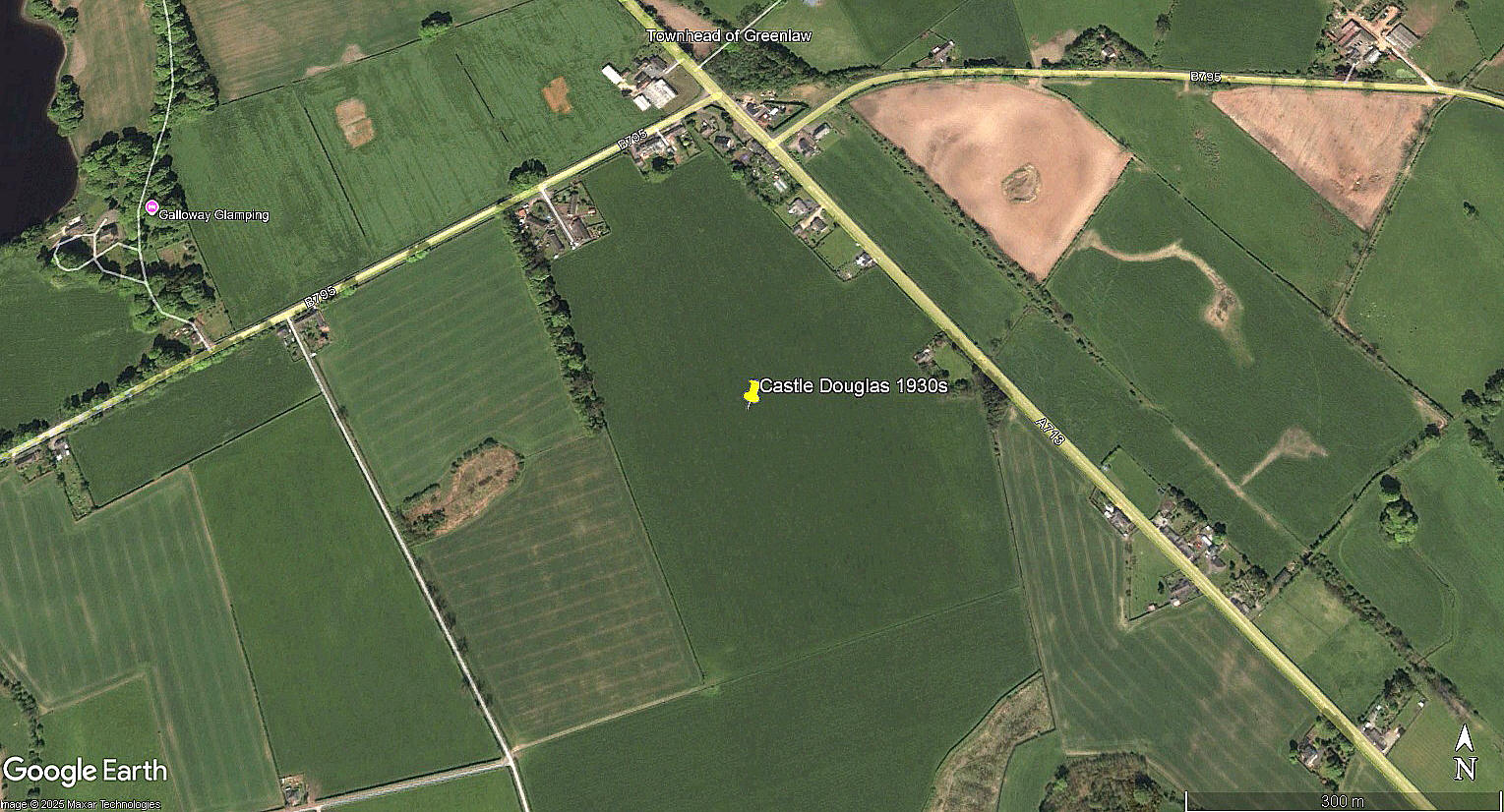
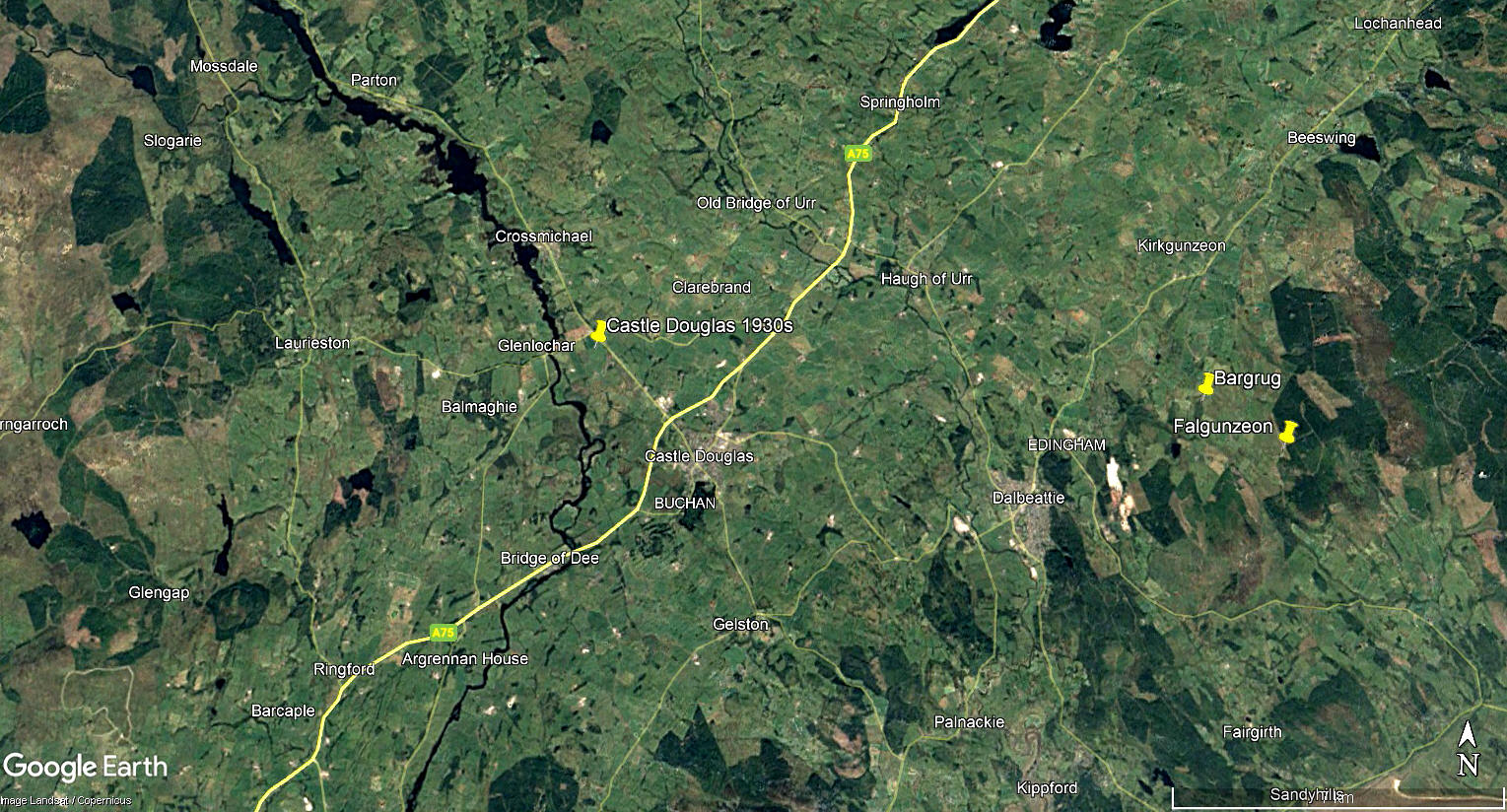
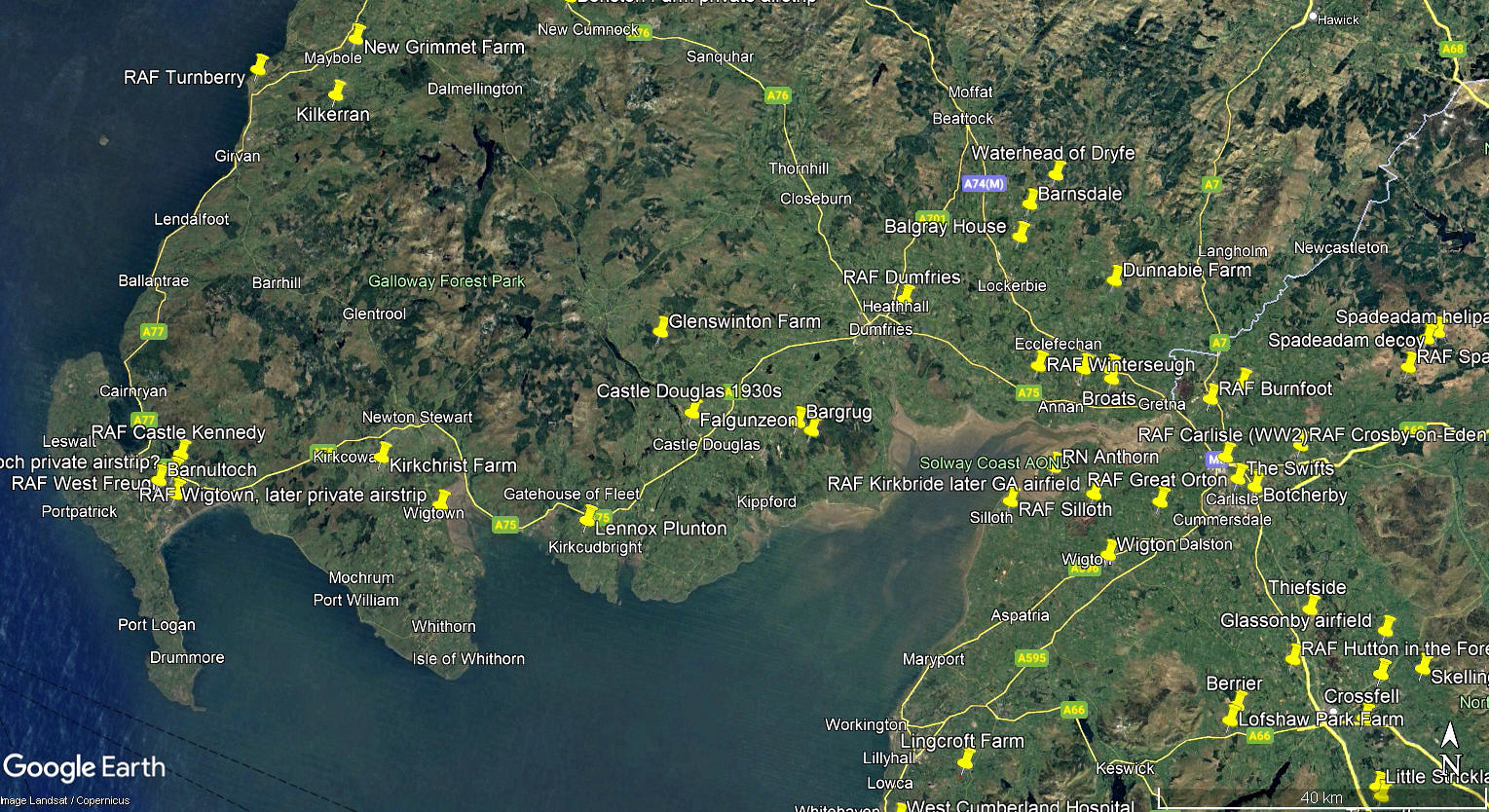
These pictures are from my Google Earth © derived database. Please note that not all, by far, of the locations listed in this 'Guide' are pinned on the database.
Operated by: Mr G Rae
Location: About 2nm NW to NNW of Castle Douglas town centre, just W of the A715, and just S of the B795
Period of operation: 1930s only?
Runway: Max landing run: NE/SW 366 grass
NOTES: The initial information source many years ago, was from: ‘AA Landing Grounds’ publications, 1930s. Later I found in a list published by the Airfield Research Group that the address for Mr G Rae was “Mains-of-Greenlaw” and, the nearest telephone was in his house. Much later, in April 2026, Mike Holder, a great friend of this 'Guide', was investigating the subject of A.A. approved Landing Grounds in the 1930s, and the result follows with several items to illustrate this listing.
A MICHAEL T HOLDER GALLERY
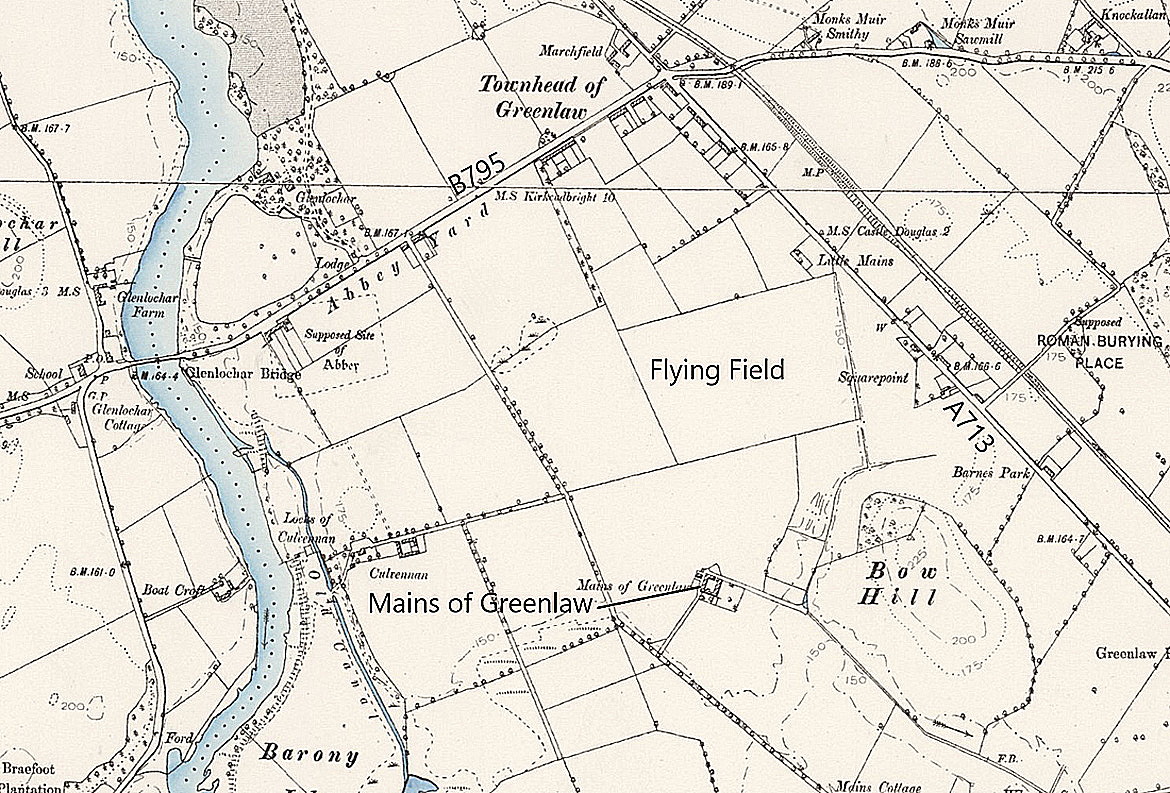
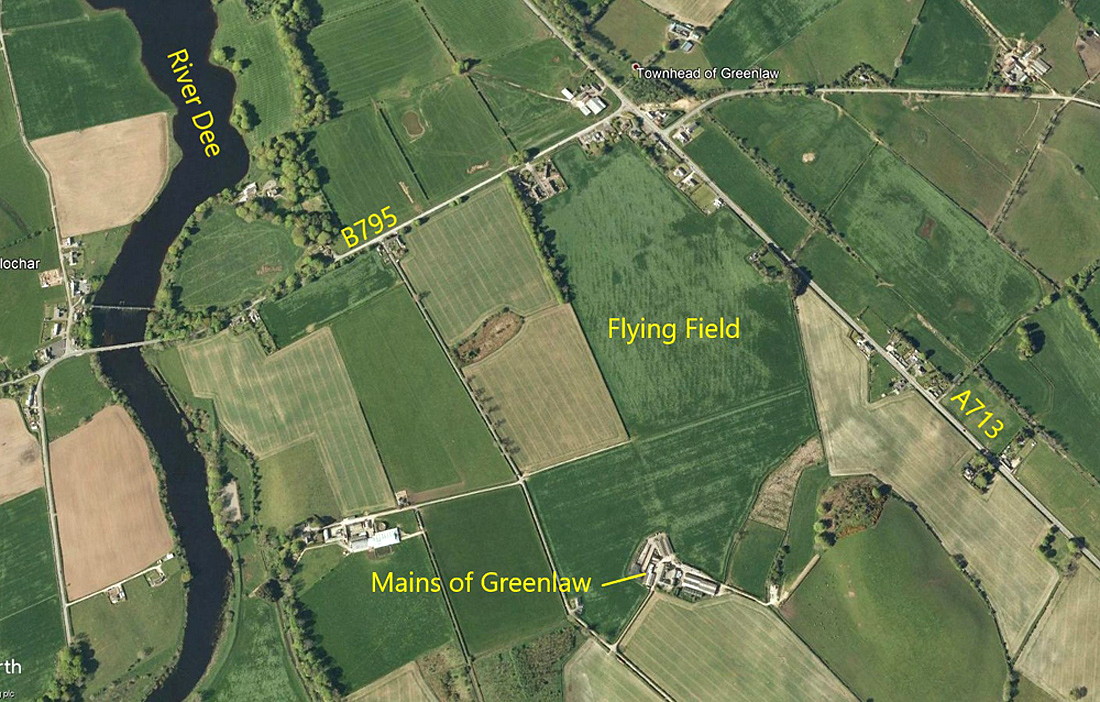
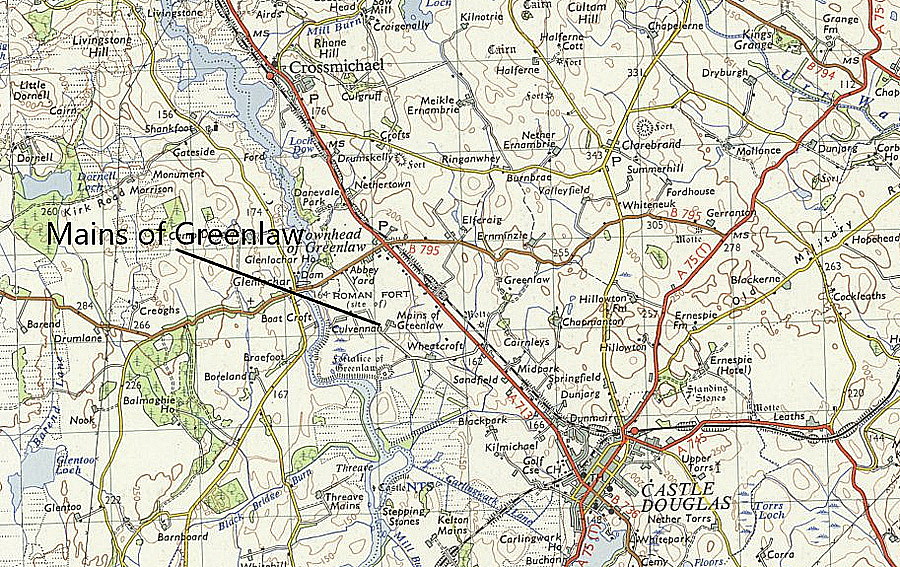
Mike also found these items from the Trecanair project.
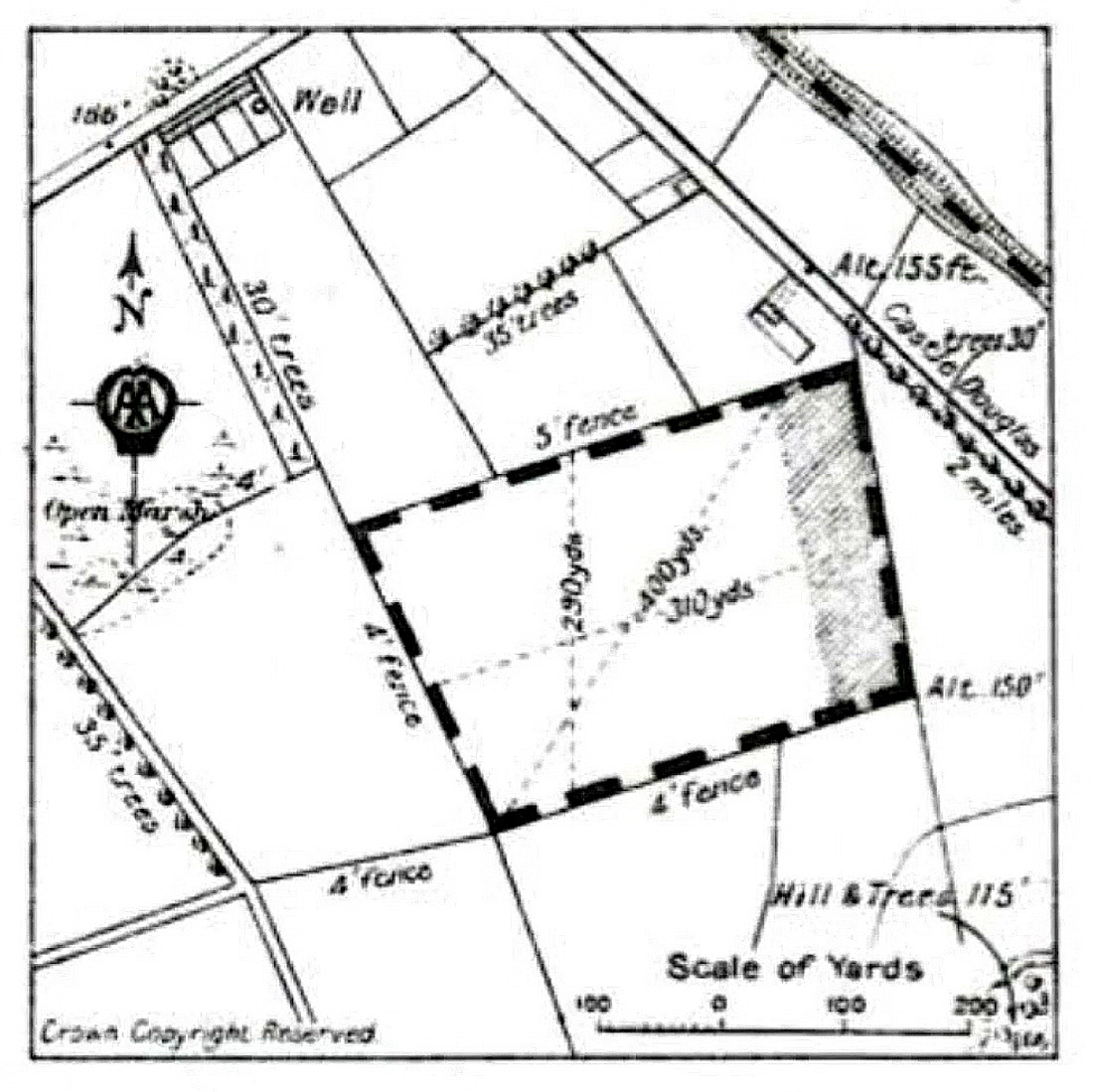
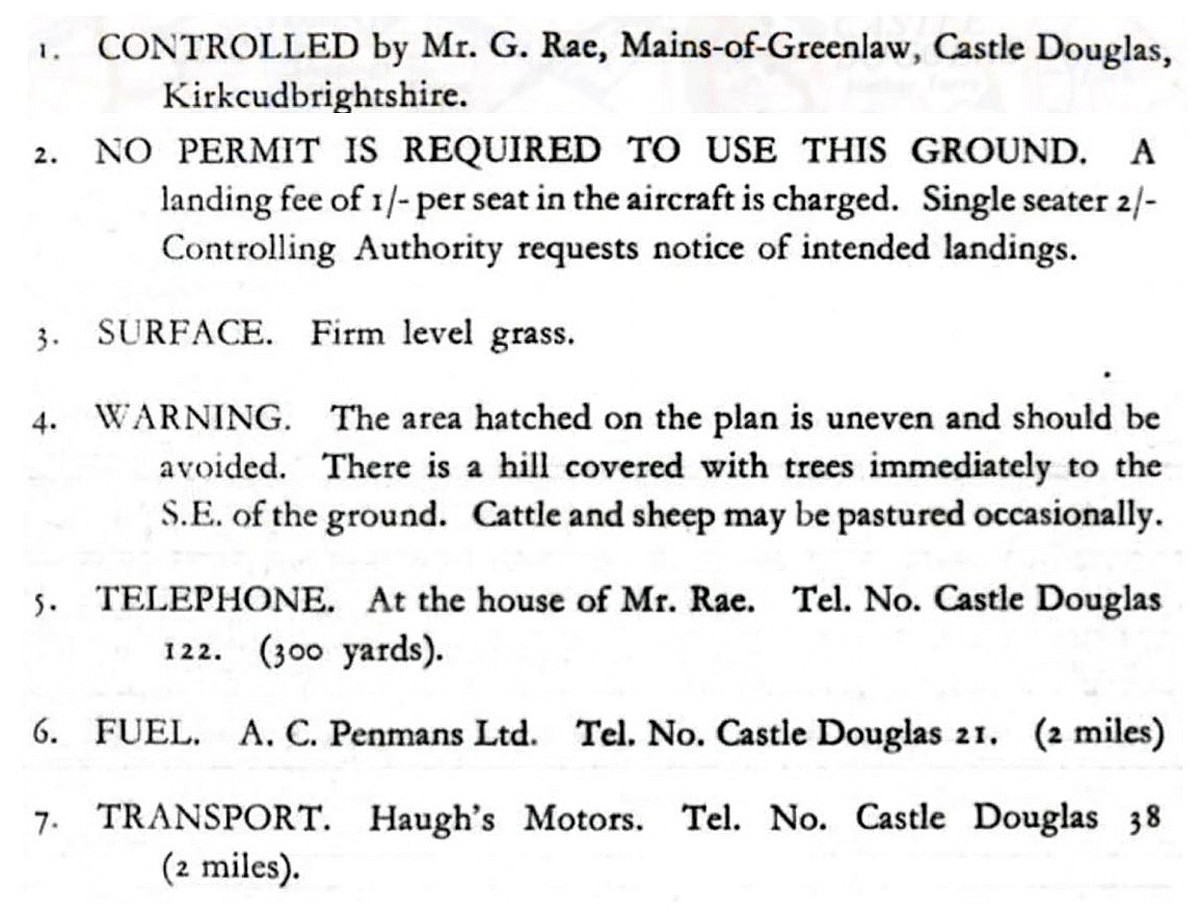
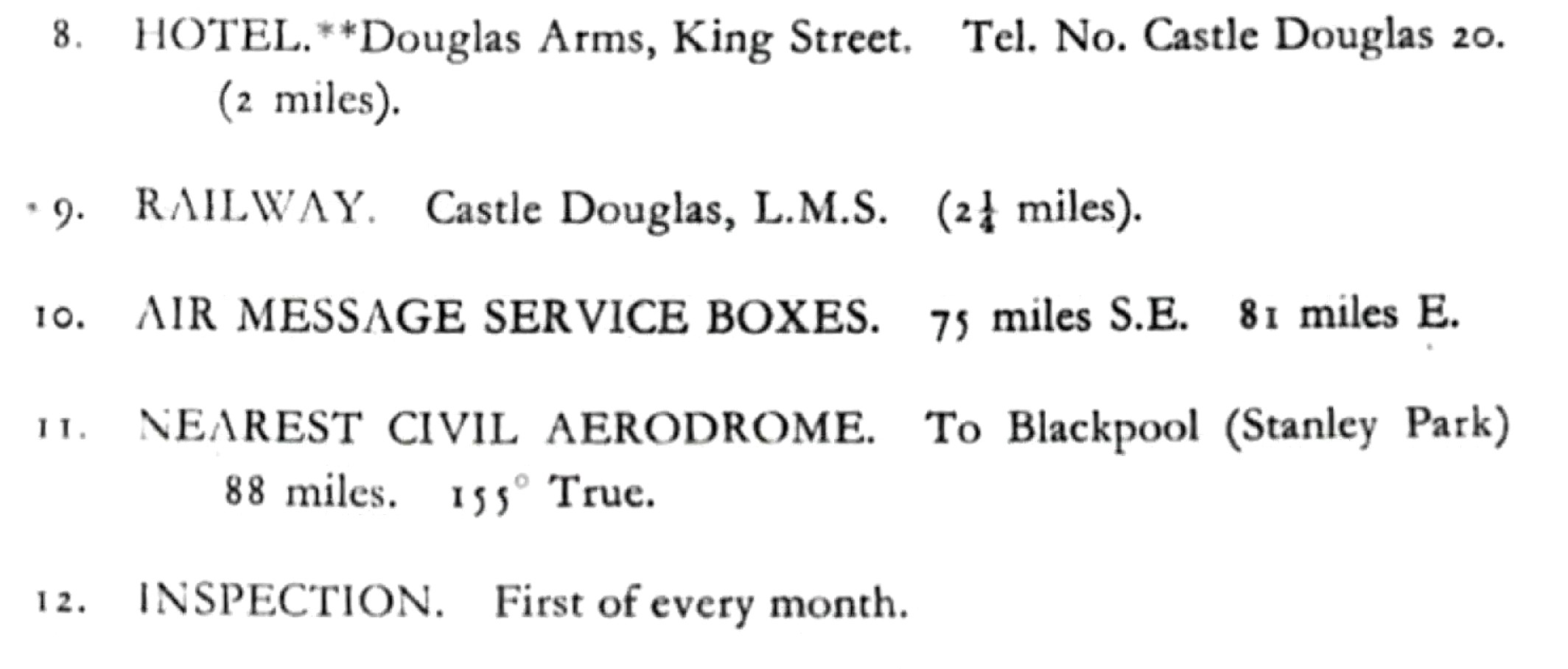
ADDITIONAL ITEMS
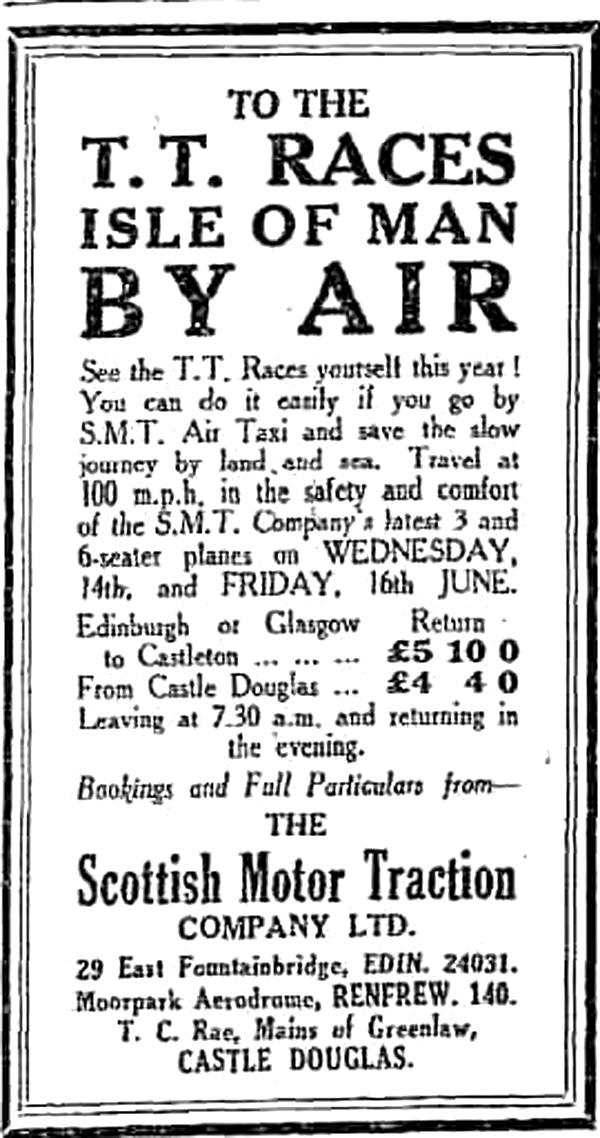
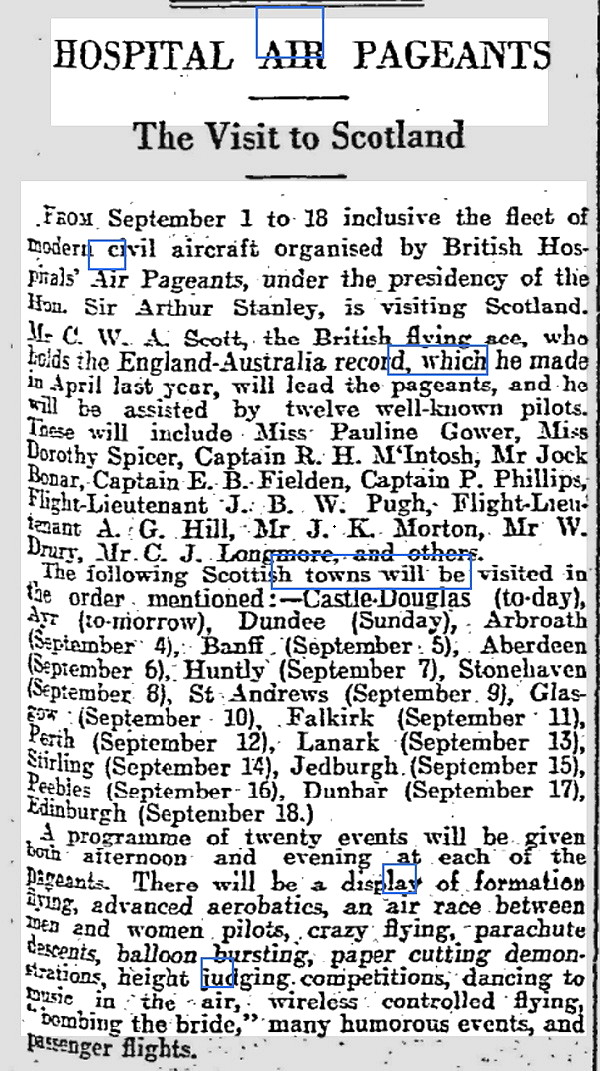
The advert was placed in the The Scotsman on the 13th June 1933. The article also appeared in The Scotsman but published on the 1st September 1933.
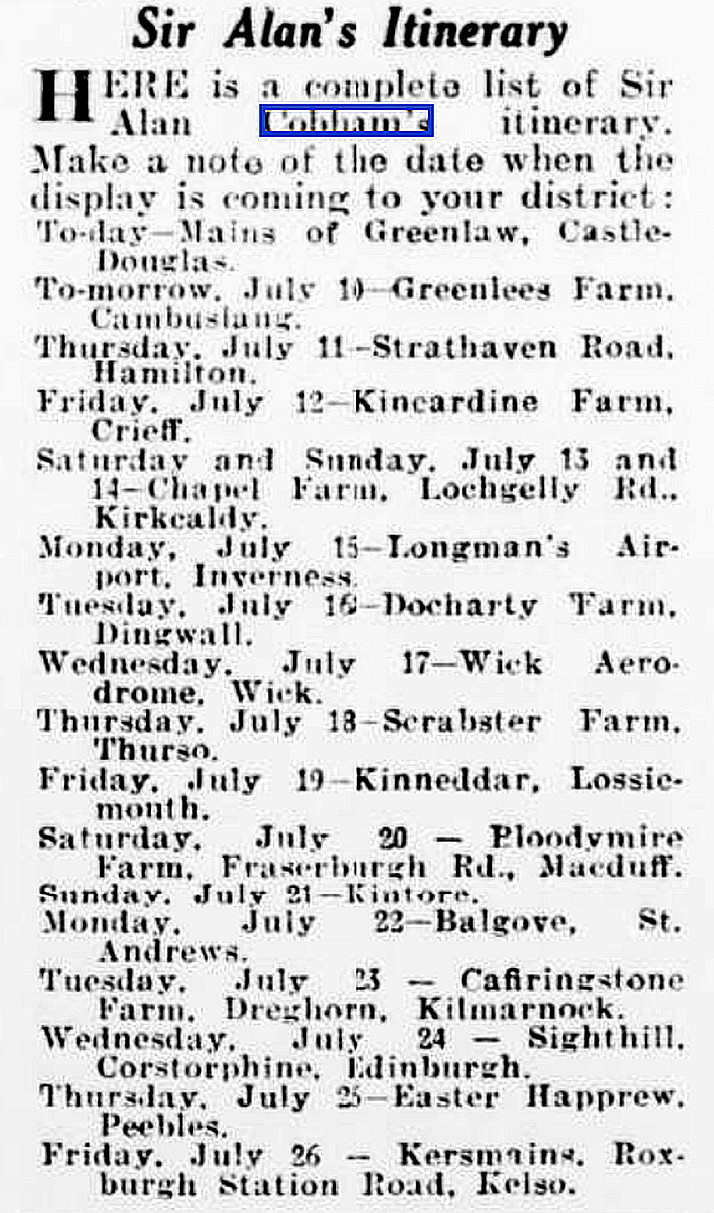
The itinerary for this region by Sir Alan Cobham's National Aviation Day No.2 Tour in 1935, was published the Daily Record on the 9th July 1935.
SOME MORE HISTORY DISCOVERED
CASTLE DOUGLAS also features elsewhere in aviation history. On the 19th April 1918 the famous WW1 fighter ace Capt. James Thomas Byford McCudden, (who had already accounted for 57 enemy aircraft), made a forced landing in this area, (presumably due to poor weather), flying a Bristol built FE.2b after departing from AYR where his immense experience was being used to educate fledgling pilots at the No.1 School of Aerial Fighting.
It would appear that he was simply flying around the area, (perhaps just for fun really, albeit backed up with a serious reason like local area familiarisation?), but he obviously got back to AYR somehow by road, no mean achievement in itself in those days, and flew back to Castle Douglas with Lieut Robinson in an Avro to retrieve the FE.2b the very next day. I only mention this, as elsewhere, to illustrate how very common it was to make forced or precautionary landings whilst en route in the early days of aviation.
They were obviously usually very good at it as damage to the aircraft rarely resulted let alone injury to the pilot. Not so today of course when similar circumstances invariably result in extensive damage and often serious if not fatal injury. It does seem strange that today, (and for many years), forced landings are no longer properly practised, the exercises for this today are pathetic and woefully inadequate…a ‘recovery’ normally being made at 500ft very often, giving little if no idea at all as to the eventual outcome, especially for pilots still undergoing training. But of course the chances of an engine failure today, or a need to land because of a lack of accurate weather forecasting, are fortunately pretty rare.
In fact, just to prove the point, McCudden made yet another precautionary landing on May 3rd that year, this time flying an Vickers prototype F.B.16D collected from HOOTON PARK. This time he landed at Closeburn, 11 miles N of Dumfries, but resumed his flight to AYR later in the day
FLYING CIRCUS VENUES
With the exception of the first example, where the address was given as MAINS-of-GREENLAW, the address for the others was simply CASTLE DOUGLAS. Today (in 2026) it seems that without much if any doubt (?), the venues are on the same location. In chronological order, what has been found so far are:
1st to 12th June 1930: The North British Aviation Company. Based at HOOTON PARK in Cheshire it appears that they started here with just one Avro 504K, but ended up flying three of their four 504Ks: G-EBGZ, G-EBIS and G-EBXA.
28th June 1933. Sir Alan Cobham’s National Aviation Day No.1 Tour displayed.
1st to 18th September 1933. British Hospital Air Pageants. This tour was organised by J McEwan King and A C G Barker and ended with considerabe controversy regarding how much money ended up being given to hospitals?
9th July 1935. Sir Alan Cobham’s National Aviation Day No.2 Tour
END NOTE
Unlike the majority of A.A, approved Landing Grounds, it is clear that this location was much more than being 'just' an airfield provided for use by the occassional visitor. To coin a phrase from the 1930s 'jazz-age' the "Joint was jumping". Well....a bit anyway.
We'd love to hear from you, so please scroll down to leave a comment!
Leave a comment ...
Copyright (c) UK Airfield Guide