





Eaton Bray Model Sportsdrome
EATON BRAY MODEL SPORTSDROME: Model display venue and aerodrome
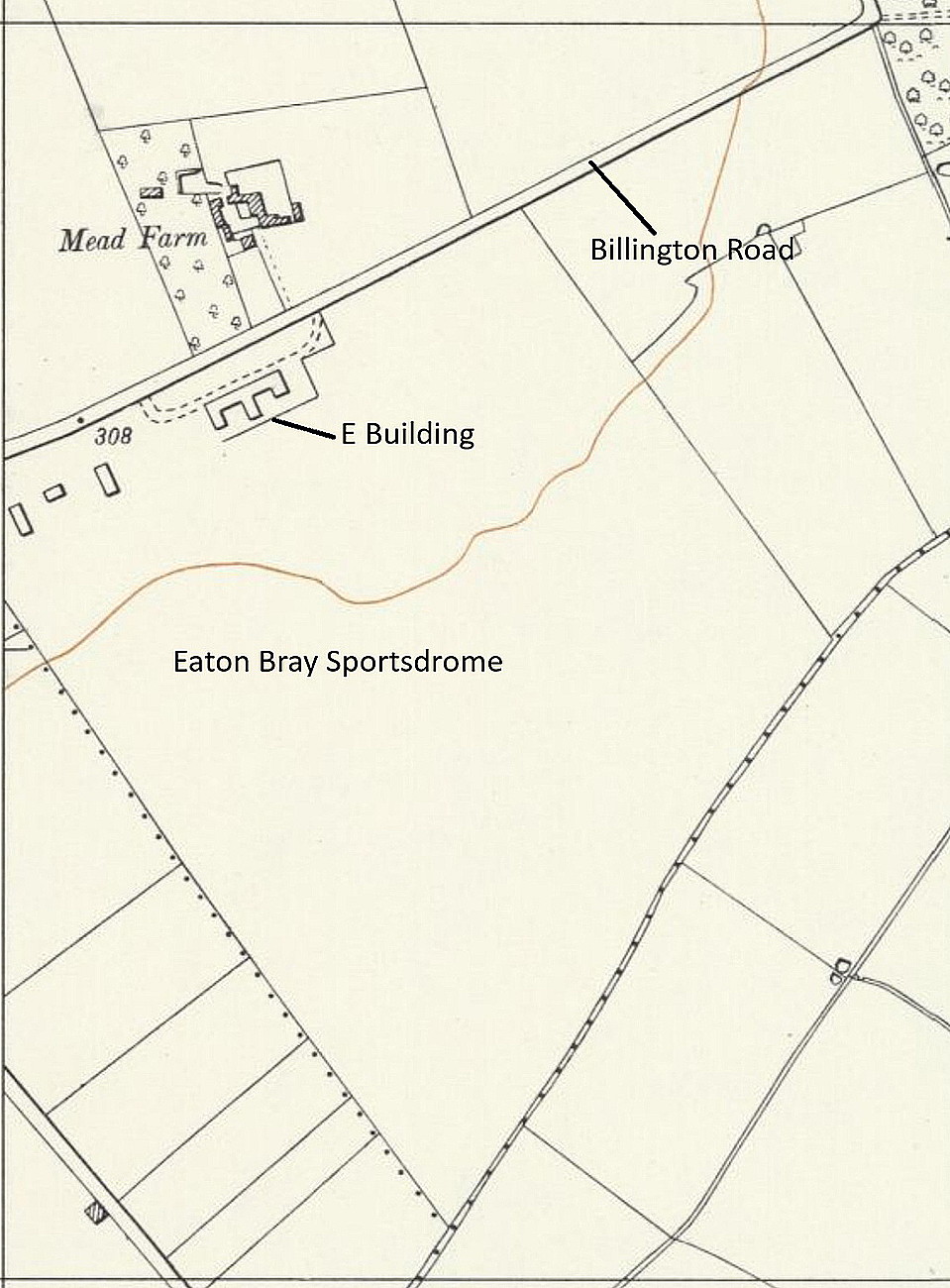
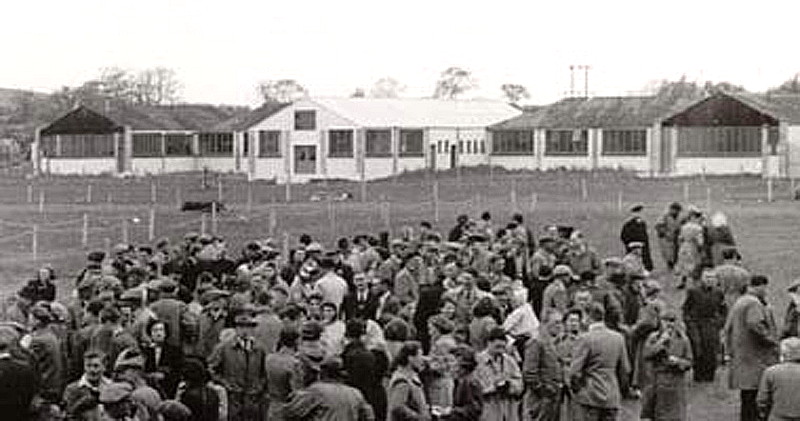
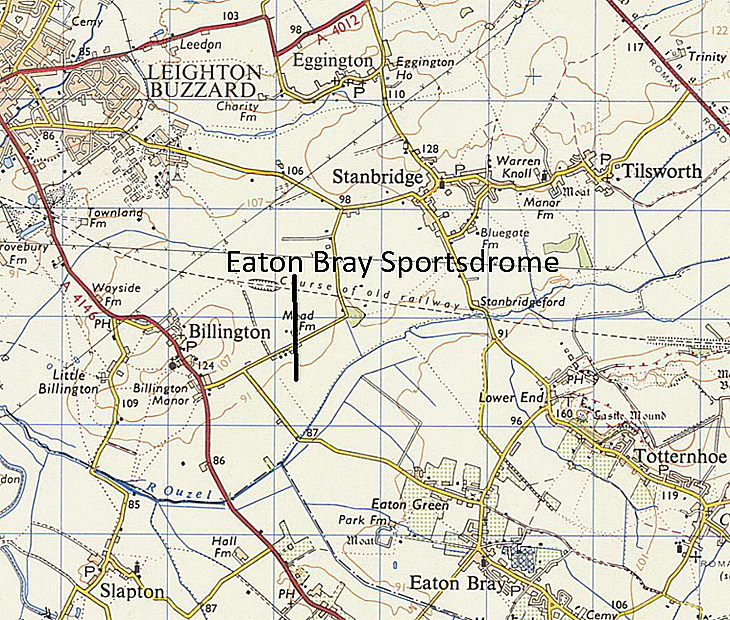
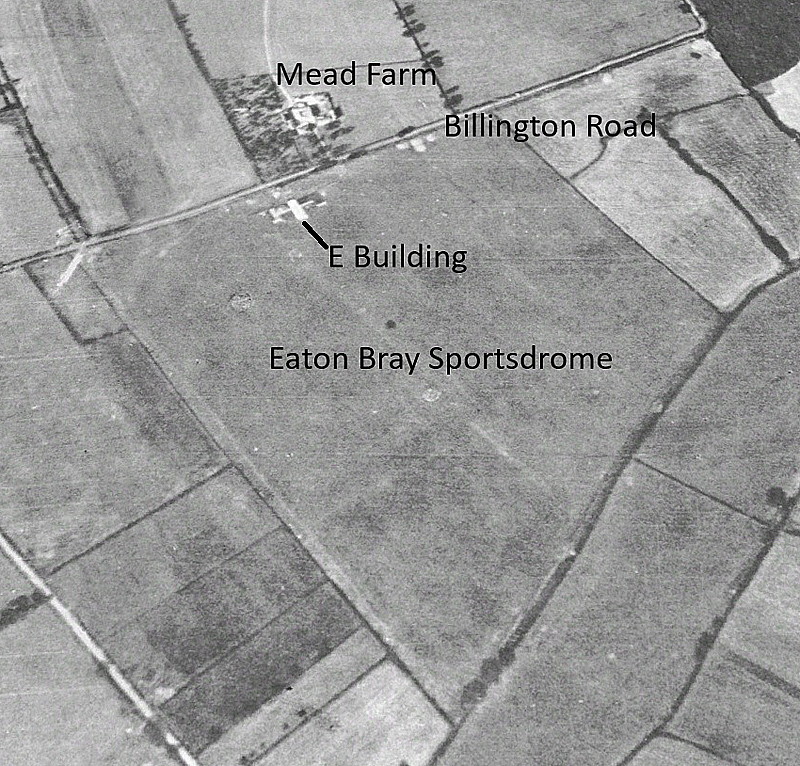
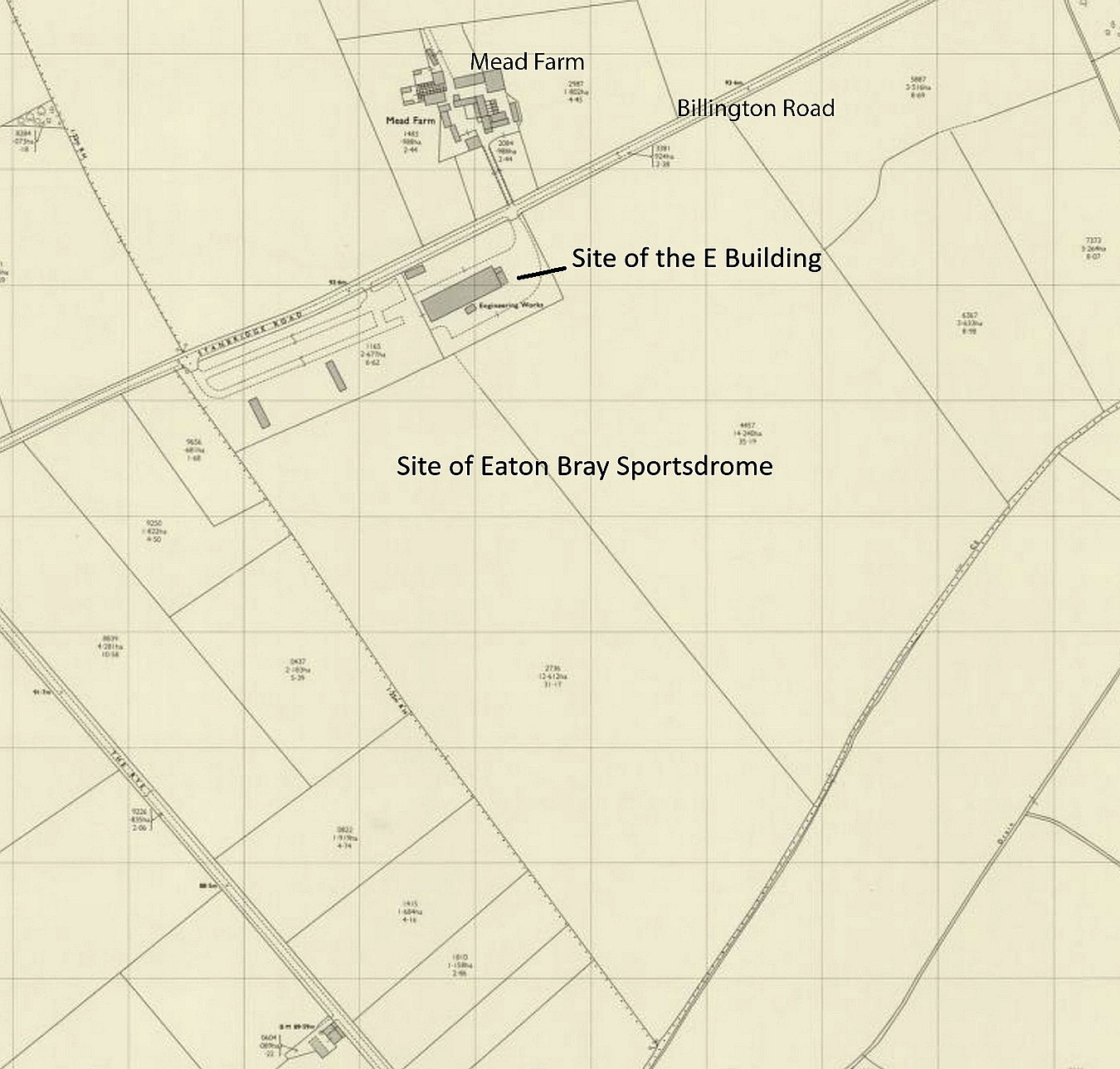
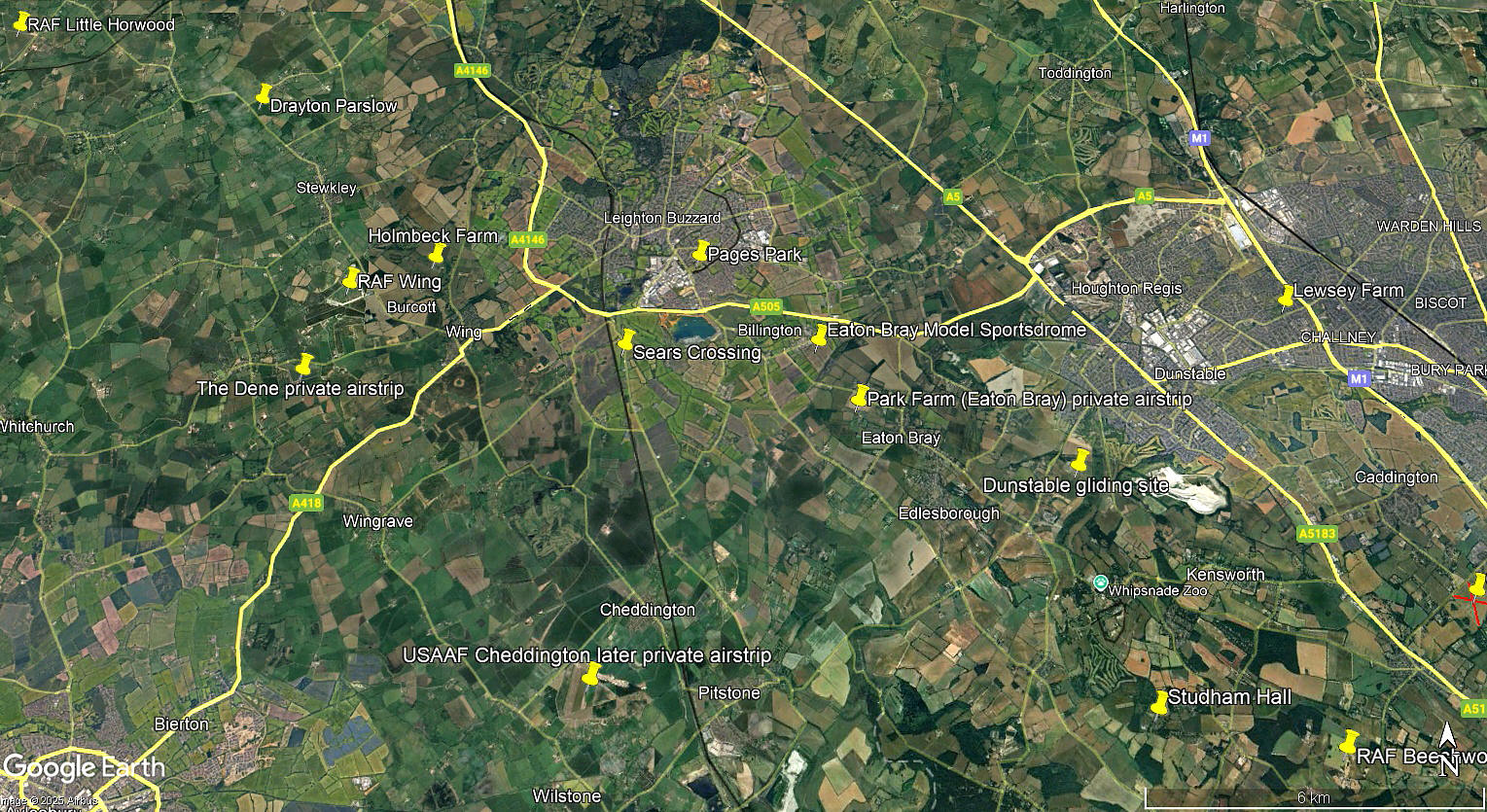
The first five items were kindly provided by Mike Holder, a great friend of this 'Guide'. The local area view is from my Google Earth© derived database.
Location: Roughly just E of Billington village, about 2.25nm SE of Leighton Buzzard town centre
Period of operation: 1939 to around 1952
NOTES: It never ceases to astonish me that after working on this project for over twenty five years, (in 2025), and with well over 7000 flying sites already listed, new major locations are still coming to light! Indeed, we are indebted to Mr Grant Peerless sending me, in September 2025, a copy of an article he has written for the Airfield Research Group.
EATON BRAY MODEL SPORTSDROME
Grant Peerless looks into the history of a short lived but extremely popular facility which was a mecca for model aircraft flying, tethered car racing and also full-size flying for six years after the end of World War Two.
Pre-WW2
Eaton Bray Model Sportsdrome was the brainchild of Douglas Arthur Russell (DAR), a prominent mechanical engineer and model maker born in 1902. He set up the Harborough Publishing Company in 1937 which published several books and magazines (including Aeromodeller ) and DAGRA Engineering Company which produced models for major companies, including Rolls Royce. In 1942 he gave up his employment and turned his hobbies into model making and publishing full time. To further this aim he set up the Association of British Aeromodellers (ABA) in June 1944 and stated that by mid-August 1945 he would open an aeromodeller’s national aerodrome where they could fly. This would become Eaton Bray Model Sportsdrome.
Before this, in 1939 Captain Donald Marendaz, a former WW1 pilot and later a car builder purchased land at Mead Farm, Eaton Bray for the purpose of turning 87 acres (35 hectares) of it into an aerodrome for the use of his Bedford School of Flying which had previously been based at Barton-in-the-Clay and trained around 500 pilots for the Civil Air Guard. He also designed two prototype aircraft, the Marendaz Mk3 G-AFGG and Trainer G-AFZX but neither of these went into production. Hedges were removed, ditches filled in and an Air Ministry licence obtained for what was described as ‘a first class flying ground’. It was a rough square approximately 600 by 600 yards (550 by 550 metres) situated on the south side of Billington Road to the north west of Eaton Bray, two miles (3km) south east of Leighton Buzzard and close to the village of Billington in Bedfordshire. It was proposed to open the Sportsdrome on 1 September 1939 but unfortunately War was declared less than a week later when no civil flying would be permitted.
WW2
Not to be put off Captain Marendaz, through his company General Airports Corporation tried to interest Leighton Buzzard Urban District Council in setting up a factory on the site to manufacture aeroplanes and components but this was not to be. The site was then purchased by an Edward Mitchell who subsequently sold 73 acres (30 hectares) of it to DAR in October 1944 but retained 14 acres (6 hectares) to the north of Billington Road for his own use. The Air Ministry reputedly inspected the site in April 1940 for possible use as an Emergency Landing Ground but no confirmation of this can be found. However, it is reported that an RAF Airspeed Oxford force landed on the field and a Miles Magister landed there but became bogged down. The Bedfordshire War Agricultural Executive Committee (BWAEC) requisitioned the land at the outbreak of WW2 for the grazing of cattle and harvesting of hay and this continued for the duration and well into the post-war period. In December 1944 the Sportsdrome formally came into being with DAR overseeing the development.
1945
The aim of the Sportsdrome was to be ‘Britain’s first air centre for full-size and model aircraft’ and was heralded ‘as a Brooklands, Isle of Man and Donington of the aeromodelling world’. Construction commenced on the main building situated on the north edge of the site in the shape of an ‘E’ using mostly reclaimed materials as new ones were difficult to obtain due to wartme restrictions. This building included a bindery, research & photographic department, editorial & management offices, canteen and toilets. Three concrete circles were provided which were used for tethered car racing and as take-off areas for model aircraft. DAR was architect and foreman for the project but progress was slow and the facility opened provisionally for model flying on 15 September 1945 at weekends only, admission being one shilling (5p), half price after three pm. (Planning permission for model flying had been granted in July 1945.)
1946
The official opening of the Sportsdrome took place on Good Friday 19 April 1946 when a model flying event took place which drew large crowds from all over the country as well as many models. It soon became the mecca for model enthusiasts from far and wide. Arrangements were made for light aircraft to land but it is not clear when the first one appeared: Joan Nayler, a former ATA pilot flew her DH Puss Moth G-ABYP in on 3 July 1947 (this aircraft sadly crashed on the aerodrome the following month and was written off). The next significant event occurred on 2 June 1946 when international model aircraft trials sponsored by the ABA took place, which were followed by regular events for the rest of the year. These included a three day gala over the Whitsun weekend 8-10 June, another gala day on 7 July and a formula day on 21 July.
1947
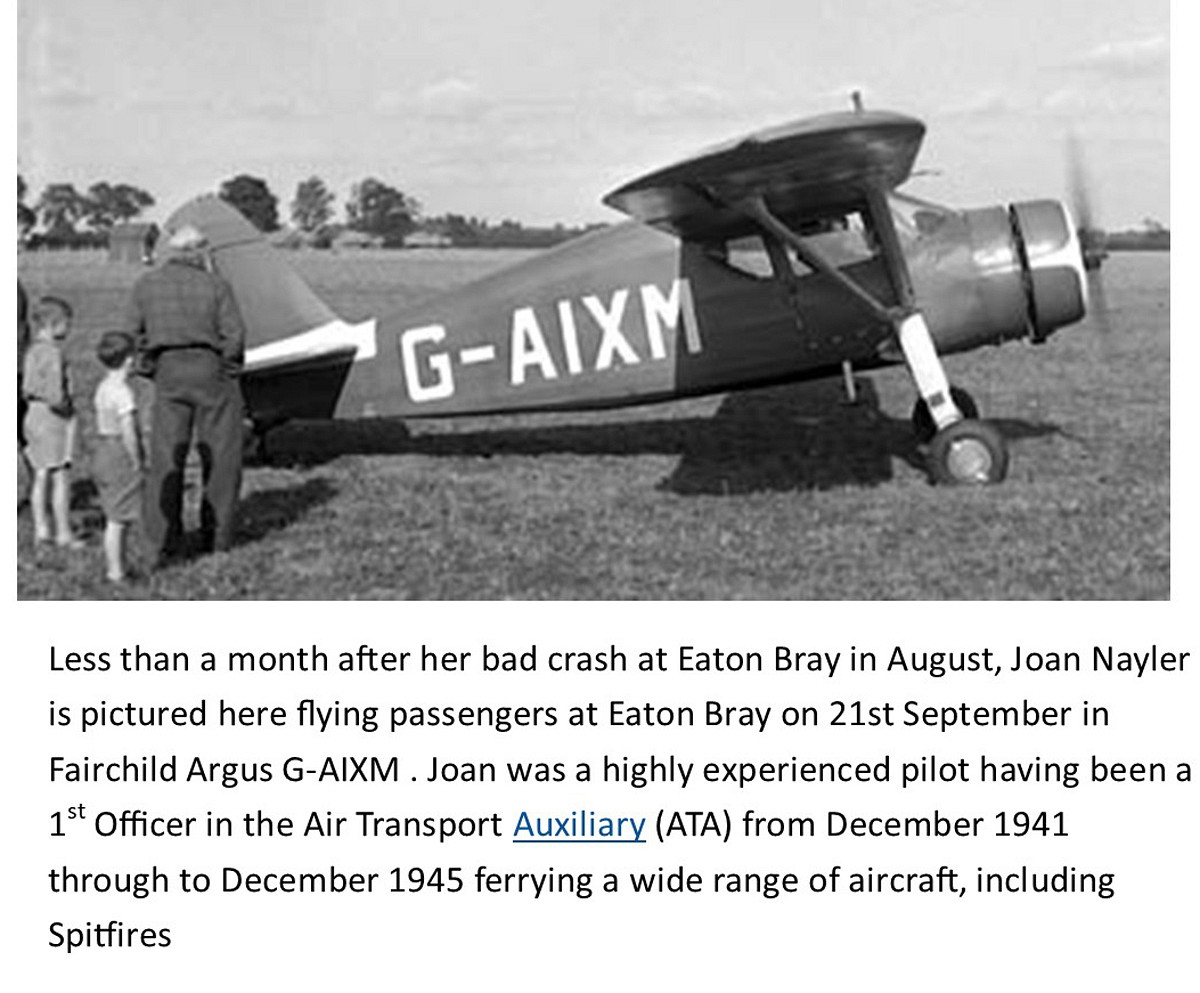
The calendar for 1947 commenced on 5 April and some twelve major model flying events took place at regular intervals until 10 August. The first air display took place on 21 September but although the participants are not known, joy rides were offered in a Fairchild Argus. At a British Model Car Club (BMCC) meeting the following week joy rides were again offered with a Miles Messenger also on hand.
A major setback occurred in October 1947 when DAR was fined £1500 for carrying out building work without a licence, contrary to Defence Regulations. He led a lavish lifestyle which was not sustainable and this, together with the post-war depression and era of austerity had serious implications for him. More importantly Aeromodeller had run into debt and as a result DAR sold Harborough Publishing, which included this magazine, to Argus Press but a condition of the sale was that DAR would continue as Managing Director of Aeromodeller. The Sportsdrome was also struggling financially and in late 1947 Model Accessories Supply Company (MASCO) was formed in order to provide jobs for some of the staff. This company designed the ‘Kitten’ model racing car and built castings for model diesel engines, including the ‘Buzzard’.
1948
On 10 March 1948 a tethered car meeting was held when the ‘Hastings Trophy’ donated to the Sportsdrome by Geoffrey Hastings of 1066 Model Products was competed for. Winners were awarded pleasure flights in an Auster Autocrat but apparently the silver trophy itself was never actually awarded! On 6 April Miles Monarch G-AIDE landed. An air display took place on 1 August but again the participants have not been recorded. Two ‘Nissen’ type huts were erected for aeromodeller’s holiday accommodation and also as workshops for car production and these were not removed until around 1990.
1949
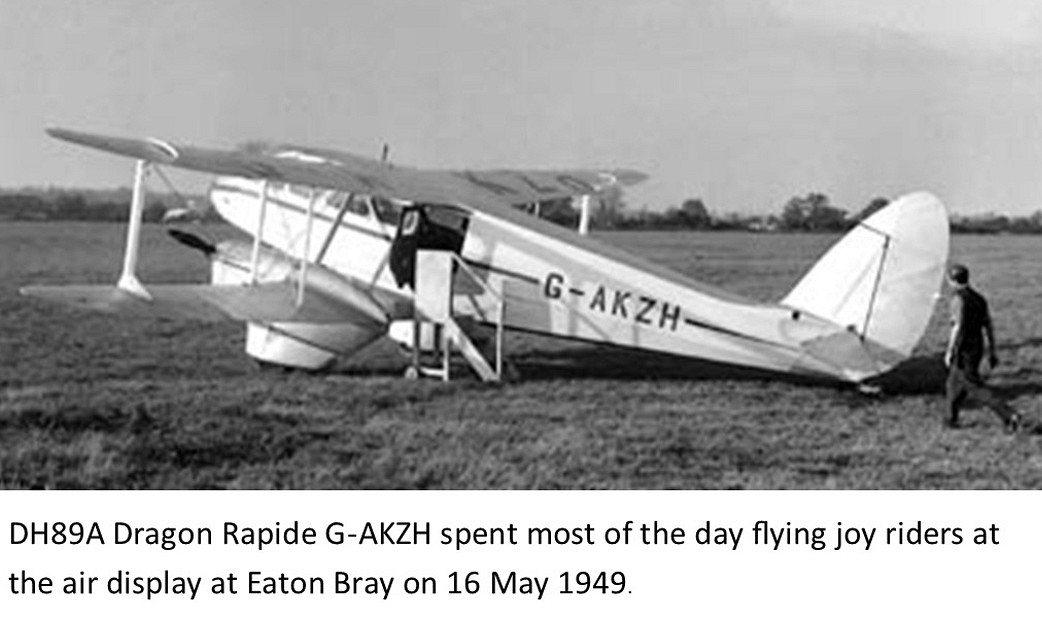
By the 1949 season, starting at Easter, the Sportsdrome was hosting several major tethered car events with trophies donated by major car manufacturers. The first air display of the year took place on Whit Monday 16 May organised by Eddie Riding (see later note) and echoed the barnstorming days of Sir Alan Cobham’s National Aviation Day Displays of the 1930s. Acts included crazy flying and aerobatics by a Tiger Moth, parachute drops, wing-walking, height judging competition, flour bombing and a gliding demonstration by a Zlin 24. A highlight of the afternoon was a ‘dog fight’ between a Hawker Tomtit flown by Hawker test pilot Neville Duke and a DH Tiger Moth. Joy rides were offered in a DH Dragon Rapide. A second display on 6 June featured amongst other events Hawker Tomtit G-AFTA and DH Tiger Moth G-AHRV, which carried out another ‘dogfight’. In August ‘model’ was dropped from the title due to a wider range of activities on offer. The final air display of the year, and also the last one to be held at the Sportsdrome, took place on 21 August, again organised by Eddie Riding and featured many of the events of the earlier one on 16 May but also a demonstration in slow flying by a Zaunkoenig and sharp shooting from a Miles Magister. Joy rides were offered in a Fairchild Argus, DH Dragon Rapide and DH Tiger Moth.
1950-51
The removal of stock fences erected by the BWAEC allowed horse racing to take place and the first meeting was held on Easter Monday 10 April 1950. Other equestrian events followed including gymkhanas, show jumping and American style ‘sulkies’ but these were abandoned a year later. By 1950 the core concept of the Sportsdrome as a modelling venue was under threat and this year saw the fourth and last International Aeromodelling Week take place. The popularity of tethered car racing was also beginning to wane as other purpose built tracks were brought into use and the final meeting took place on 23 September 1951. It is not clear exactly when flying ceased but the aerodrome was still active during 1950.
1952-55
By 1952 the Sportsdrome was in decline, as were several of DAR’s various companies and business interests. In March Argus Press relocated its publishing business to Watford which left the site without a tenant or income and as a result the Sportsdrome enterprise was placed in receivership. DAR’s family fortunes were at rock bottom and everything was sold, including their home. However, after several moves DAR set up Harleyford Publications in 1954 and this company produced thousands of books until closure in 1971. DAR died on 9 April 1973 at the age of 70.
Winding up of the Sportsdrome took place in November 1953 but the company finally ceased to exist in April 1955. The land reverted to Mead Farm and the north side of the site where the ‘E’ building once stood is occupied by a small industrial estate and recycling plant, whilst the remainder of the land is used for arable farming and is mostly unchanged, apart for new hedges and trees.
Eddie Riding
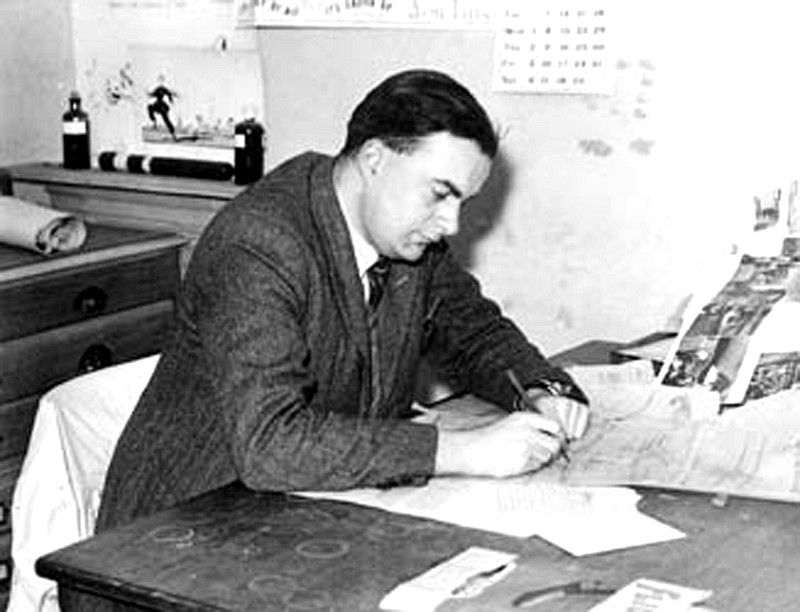
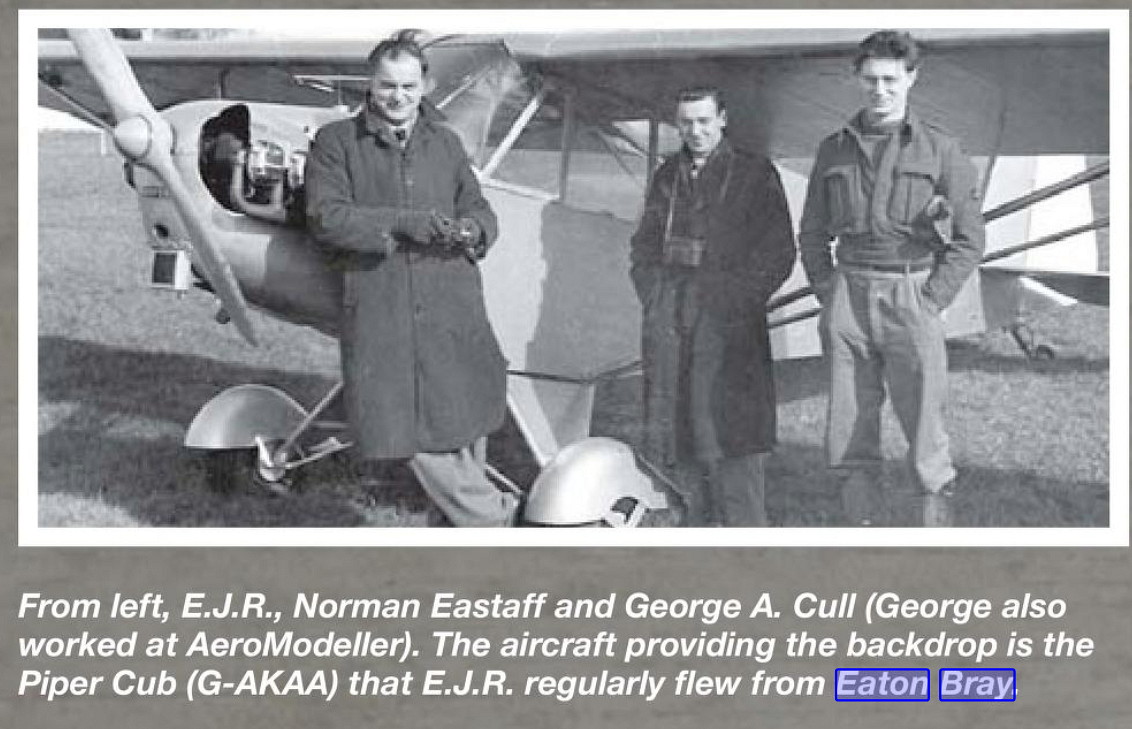
E J ‘Eddie’ Riding, the well-known aviation photographer and journalist joined the staff of Harborough Publishing on 1 March 1946 as Chief Draughtsman and a member of the editorial team, based at the Sportsdrome. He produced dozens of articles for Aeromodeller magazine as well as working on other aircraft books. He organised several flying displays at the Sportsdrome and wrote and illustrated the programmes for the events. He gained his private pilots licence in November 1949 and made many visits to Eaton Bray from Elstree in Piper Cub G-AKAA, as well as giving flights to Harborough staff. Several of his enormous collection of photographs illustrate this article. He sadly died in a flying accident in April 1950; he was only 34 years old.
His son Richard followed in his Father’s footsteps and became an aviation photographer, later joining the staff of Flight magazine and subsequently setting up and editing Aeroplane for 25 years. He co-wrote with this author books on Elstree and Leavesden aerodromes as well as writing many books and articles on aviation and other topics. He died prematurely in 2019.
Other airfields in vicinity
About a mile (1.6km) to the north of the Sportsdrome was an earlier airfield known as Scott’s Field which was used by Morgan & Company from 1916 to 1919 to test fly approximately 500 aircraft built locally at Linslade. These included Airco DH6s, Avro 504s, Sopwith 1 ½ Strutters and Vickers Vimy’s. It saw some use after WW1 and Sir Alan Cobham’s National Aviation Day display visited on 25 April 1932, the venue being described as ‘The Flying Ground, Billington Road, Leighton Buzzard’.
Another airfield in the area is an unlicensed grass strip about a mile (1.6km) south of the Sportsdrome at Park Farm Fisheries which is home to around a dozen aircraft, predominantly microlights.
Not an airfield but some two miles (3km) northwest of the Sportsdrome was RAF Stanbridge, also known as ‘Q Central’, a non-flying station opened in 1939 which for the majority of its life served as a major communications centre. In its latter years it had a logistics and supply role but it was declared surplus to military requirements by the MoD and closed in 2013. It is now occupied by a housing development known as Page’s Park and several streets on this development have aviation connections, including Hawker Close, Roundel Drive and Gibson Drive. There is no evidence to suggest that an airstrip existed on the site: senior personnel and other visitors presumably flew into nearby RAF Cranfield, ten miles (16km) to the north, probably in aircraft belonging to no.23 Group Communications Flight.
NOTE: Please see my listing for RAF STANBRIDGE which, hopefully, does support my contention that there was indeed an airstrip used.
Acknowledgements
On the Wire website
Leighton Buzzard and District Local History Society
Airfield Research Group
The Aviation Historian magazine, keeper of the E J Riding archive
AND YET MORE
Later Mike Holder discovered an article, "On The Wire", published in Aero Modeller in 2016 by E J Ridings son, Richard Riding.
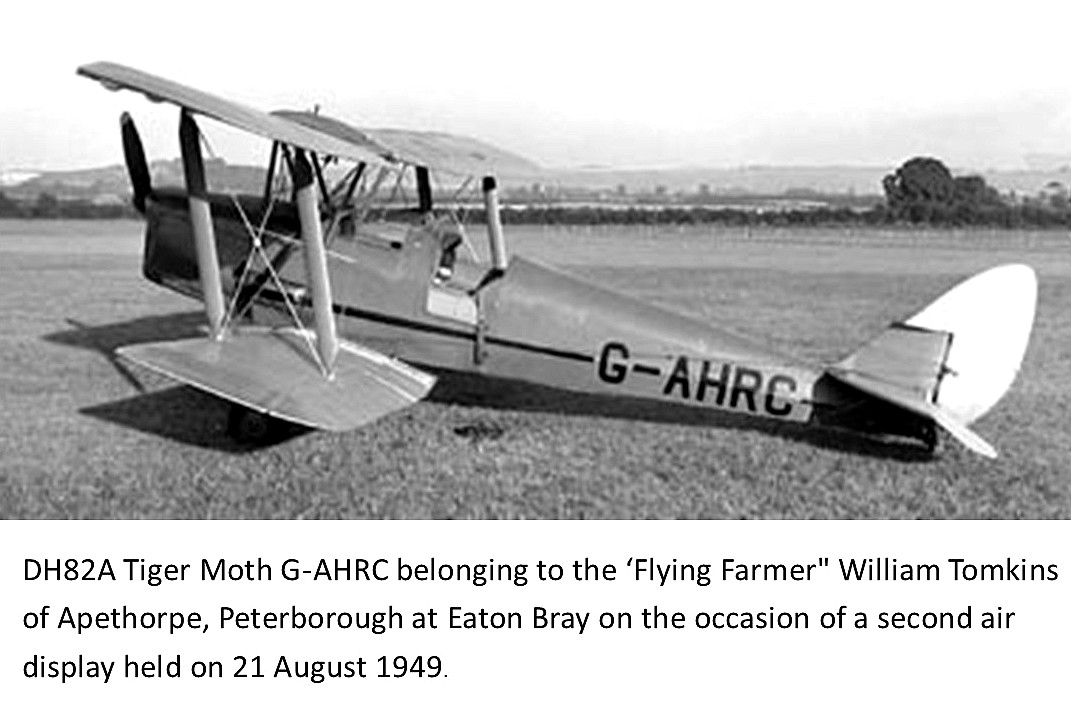
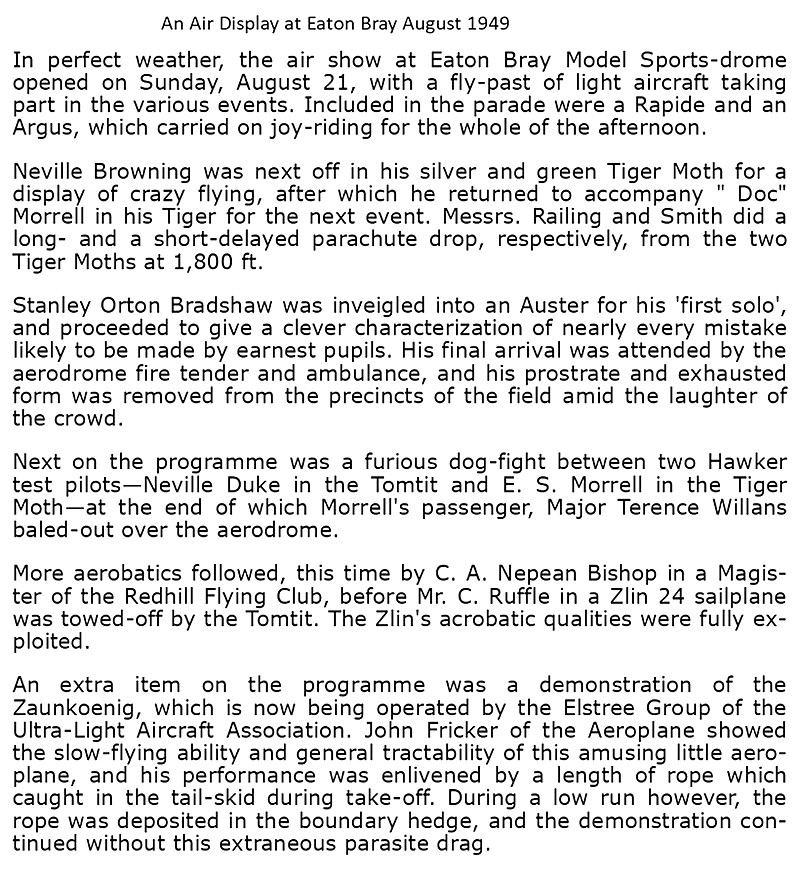
NOTES: Regarding the caption for the DH82A Tiger Moth G-AHRC (ex T6064), I would beg to differ. Mr Tomkins had G-AHRC registered to him from 25.05.56 until 08.08.68. So, I reckon this was a visit when it was registered to The Leicestershire Gliding Club from 29.05.46 until 31.01.56.
As for the Piper L-4H Cub, G-AKAA (ex 43-29489) which is claimed E J Riding often flew, this was registered to Airborne Taxi Services based at Elstree from 23.06.47 until 24.09.51.
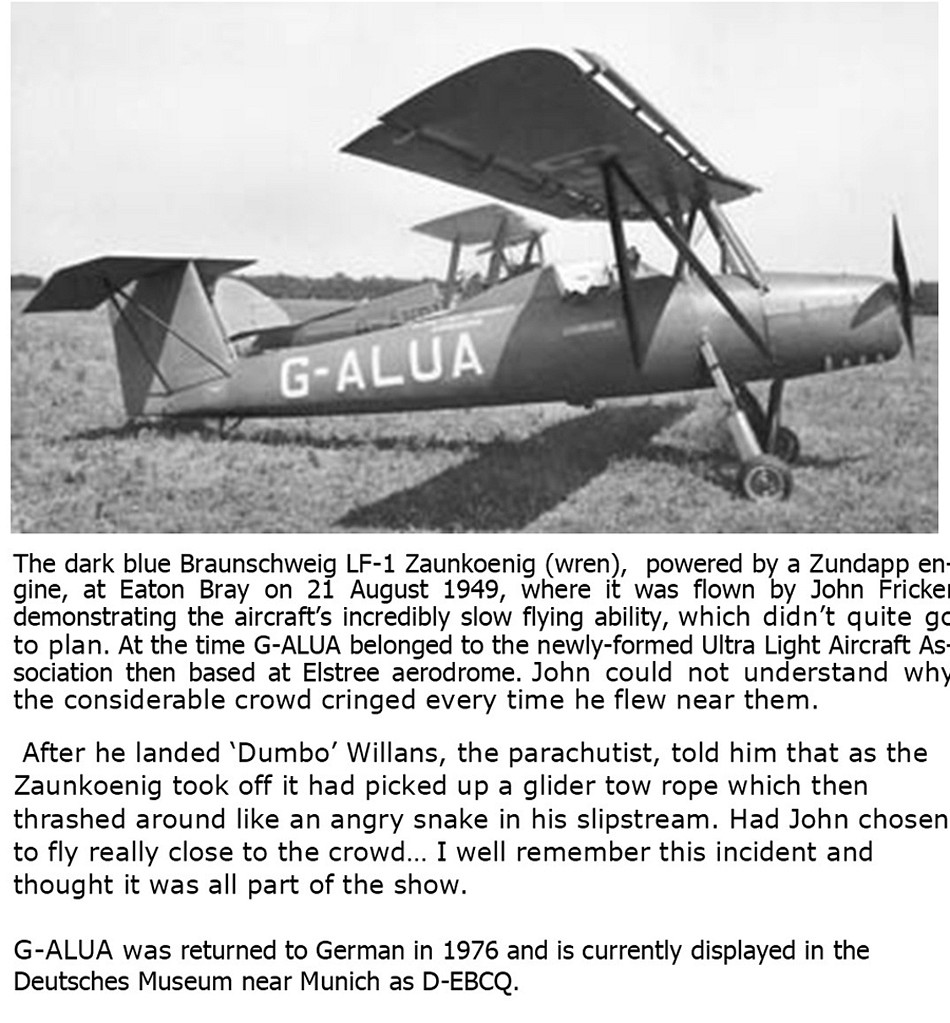
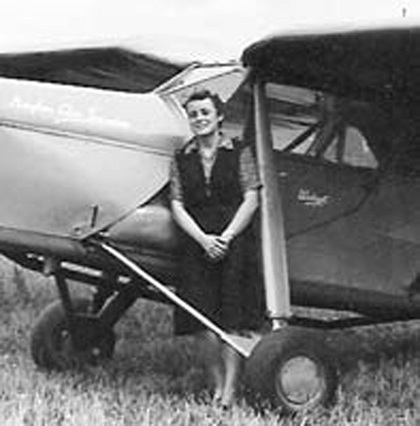
The Brunswick Zaunkoenig G-ALUA, (ex VX190), was registered to the Trustees of the Assets of the Ultra Light Aircraft Association from 28.06.49 until 13.04.51. It then went to Ulair, (associated with the ULAA), from 13.04.51 until 01.04.53 when it was exported to Eire as EI-AYU.
The Fairchild F.24W-41A Argus 2, G-AIXM (ex HB619), was registered to two private owners, one in Suffolk the other in Belgravia, London SW1, from 09.12.46 until 03.10.47 before going to an owner in East Lothian before being exported to Australia in February 1952 as VH-BLB.
Also having a previous military serial number, the de Havilland DH89A Dragon Rapide G-AKZH (ex X7369), was registered to the Herts and Essex Aero Club at BROXBOURNE from 19.05.48 until 20.08.49 when it went to Kenning Aviation from 08.09.49 until 07.05.52. It was then exported to Portugese West Africa as CR-GAJ. I also find it interesting that all three of these aircraft ended up being exported. Official records show that after WW2, as more ex-military aircraft came onto the civil market, there was indeed a very brisk export trade from the UK.
A VERY SERIOUS ACCIDENT
Mike Holder also found this information.

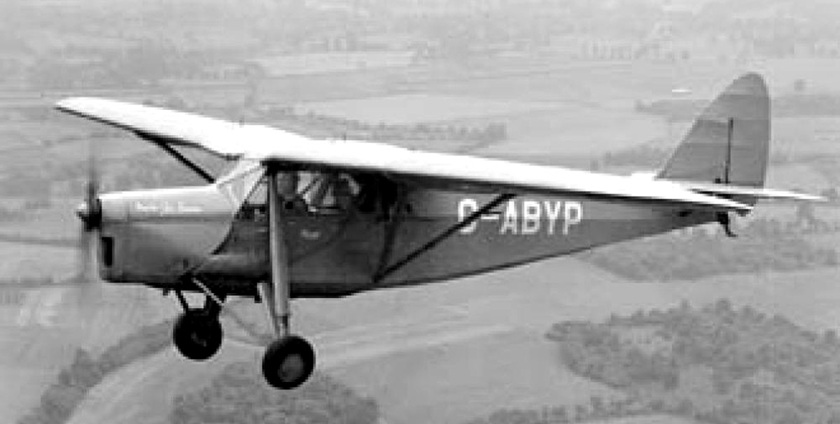
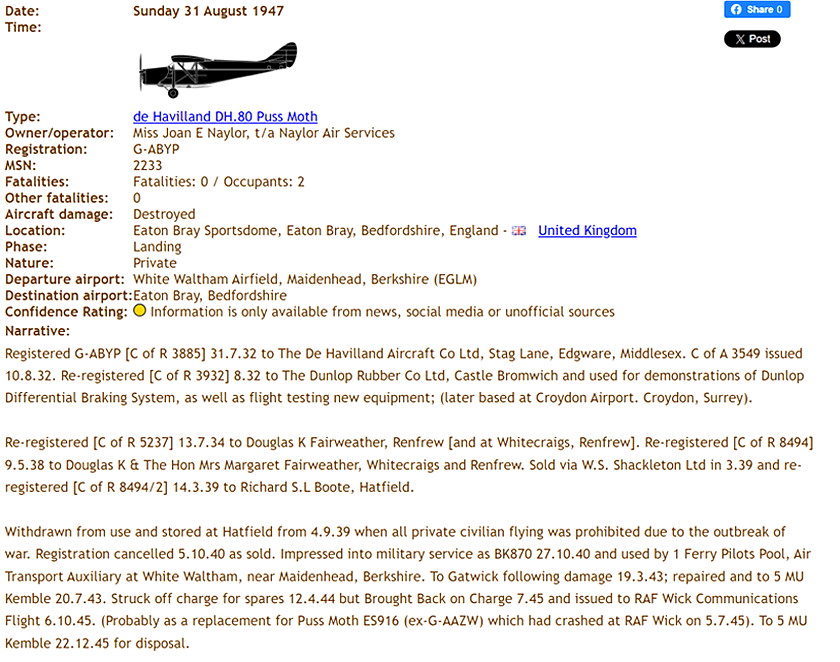
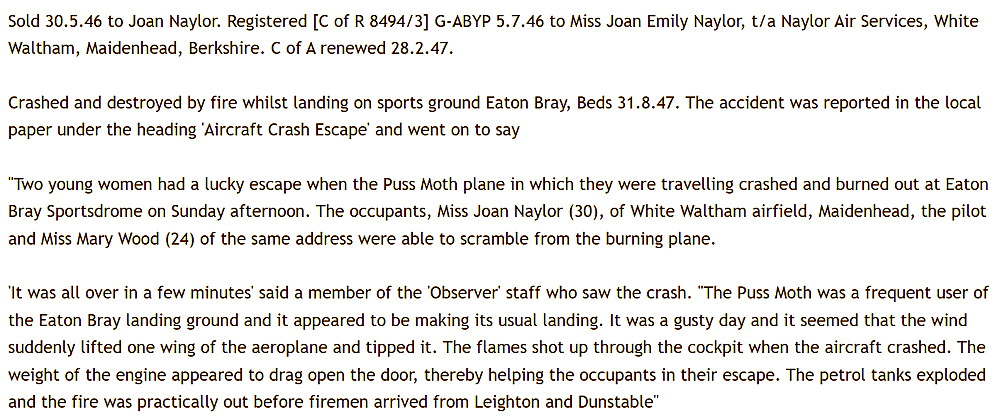
The excerpt is from the Bureau of Aircraft Accidents Archive. The Report in two parts is from the Flight Safety Database.
MY NOTE: It has long interested me to notice, over many years, just how many accidents involving light aircraft have been piloted by people with a great deal of experience flying much larger, heavier and faster aircraft, like airliners. I suspect, but with no proof of course, that there might well be a tendency to regard comparitively simple machines as being just that - simple - so not needing any type training or need to study the type in any depth.
Bit like me having driven many large trucks over many years, getting a hire car on holiday. Indicators, lights, wipers etc, let's go. But, light aircraft can easily bite if you are not aware of the 'gotcha's'. Perhaps, possibly, the case here? Who knows.
We'd love to hear from you, so please scroll down to leave a comment!
Leave a comment ...
Copyright (c) UK Airfield Guide