





High Ercall
HIGH ERCALL: Military aerodrome
Note:Pictures by the author.
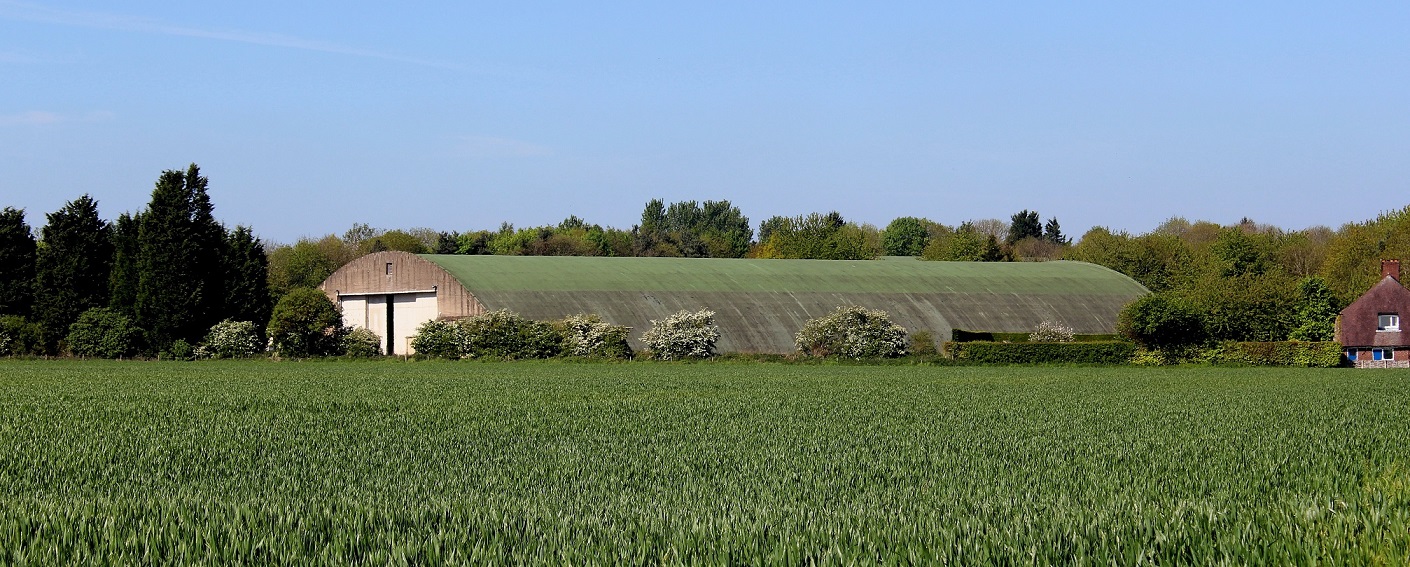
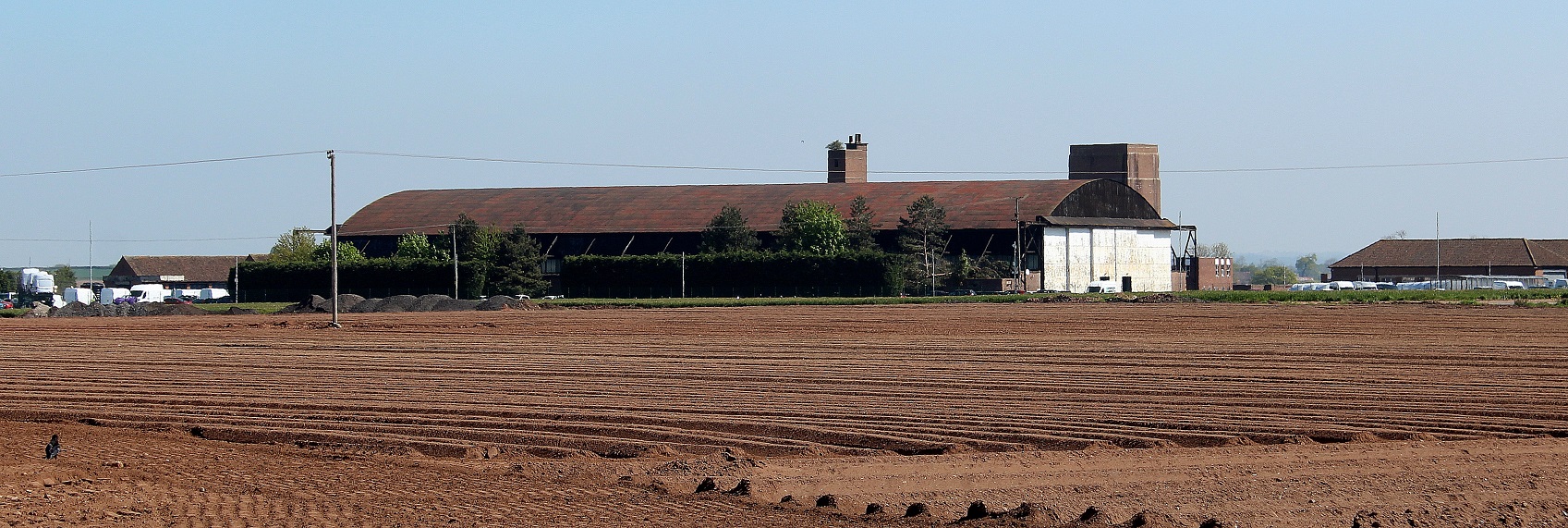
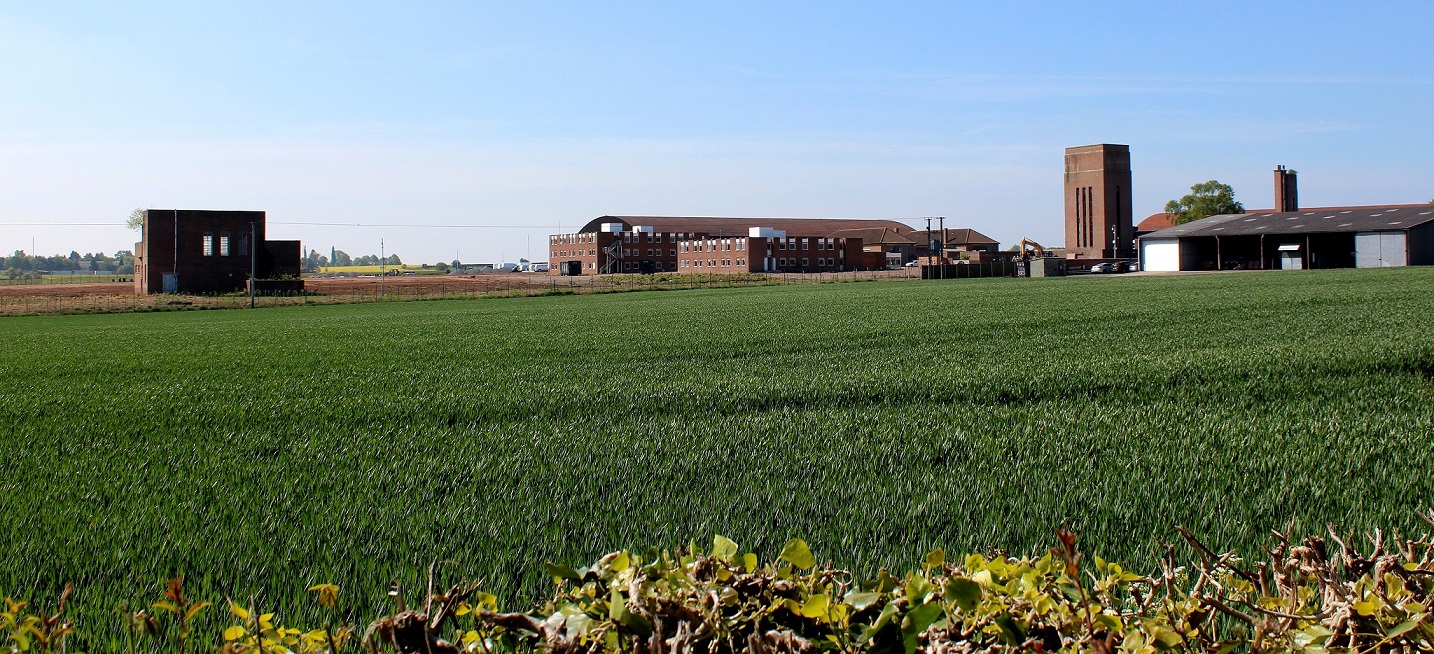
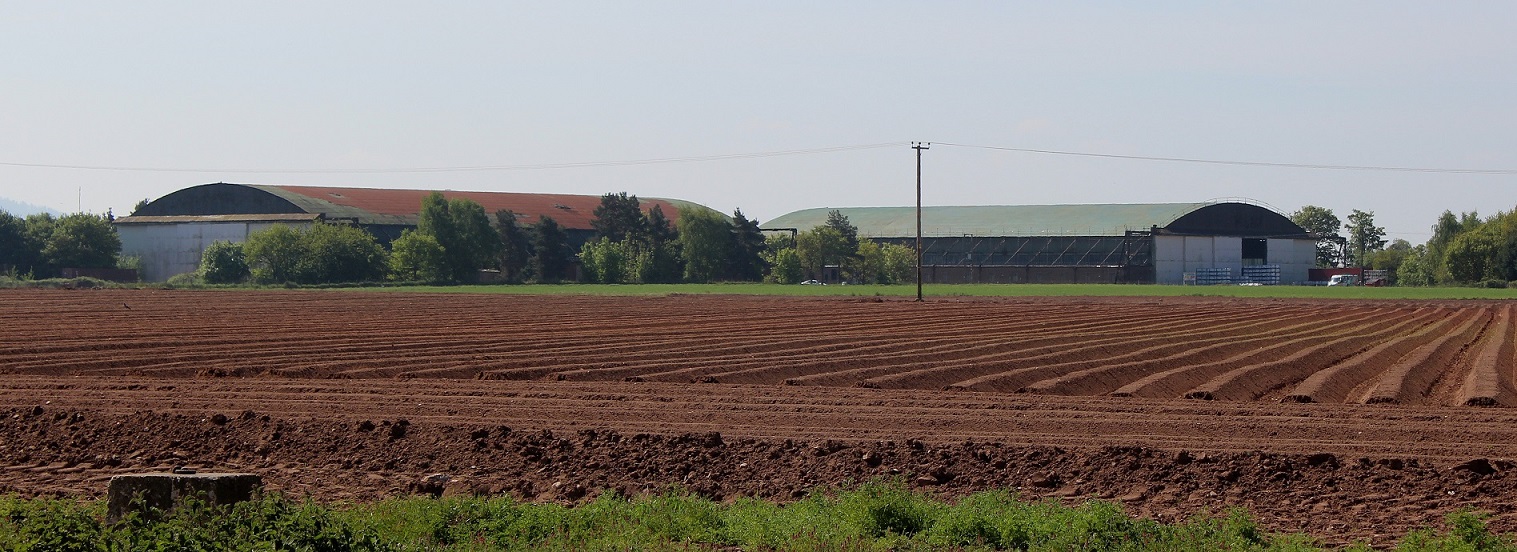
HIGH ERCALL PICTURE GALLERY IN MAY 2017
Military users: WW2: RAF Bomber & Fighter Commands
41 Sqdn (Vickers-Supermarine Spitfires)
68 Sqdn* (Bristol Blenheims later Bristol Beaufighters)
247 'China British' Sqdn (Bristol Beaufighters & Hawker Typhoons)
255 Sqdn (Possiibly Bolton Paul Defiants, almost certainly Bristol Beaufighters)
257 Sqdn (Hawker Typhoons probably?)
285 Sqdn Note: This squadron was it appears non-operational, employed for providing targets for anti-aircraft gun facilities. It seems difficult to discover exactly what types were employed at HIGH ERCALL, but they might well have been flying Airspeed Oxfords, Bristol Blenheims, Bolton-Paul Defiants, Lockheed Hudsons and Westland Lysanders. If anybody can kindly offer advice, this will be most welcome.
1456 (Turbinlight) Flight Note: This is very interesting - until 2017 I had no idea that Turbinlight Flights and Squadrons were based this far south, and west, within the UK. 1465 Flight late became 535 Squadron flying the Douglas Havoc and Boston. But it seems they also had Hawker Hurricanes, presumably for daylight defensive duties?
The radar-equipped aircraft in Turbinlight project, which was designed to shine a massively powerful searchlight onto an enemy aircraft, in conjunction with night-fighter types flying nearby to shoot the intruder(s) down, was largely unsuccessful and obviously very difficult to perform in the night. Airborne radar proved to be the solution.
Note: It has to be remembered that although being based at an unlikely airfield, well away from the 'front line' as this airfield was, squadron detachments were often sent to other airfields situated closer to 'the action'.
309th Fighter Squadron, USAAF (As far as I can make out, it seems probable they were flying Vickers-Supermarine Spitfires when based here?)
12 Group
60 OTU (Beaufighters later DH Mosquitos)
OTHER UNITS
No.3 Aircraft Delivery Flight
29, 99, 222 & 236 MUs (Maintenance Units)
Location: NE of High Ercall village, N of B5062, 5nm NNW of Wellington
Period of operation: 1941 to 1962 (listed in 1975 as still being a satellite of TERNHILL)
Runways: WW2: 11/29 1474x46 hard 05/23 1259x46 hard
17/35 1144x46 hard
NOTES: Also in WW2 used as an Aircraft Storage Unit
*68 Squadron was a night-fighter operation.
SOMETHING TO NOTE I SUPPOSE?
On a visit to this location in May 2017 I was struck by the fact that all the surviving hangars, nine in all it seems, appeared to be from the 'Cold War' era. Semi-circular in section and typically designed to escape an atomic bomb exploding relatively nearby. I suppose this makes sense as it is pointless providing a maintenance and storage facilty if the contents cannot be protected. This of course contrasts with many main fighter and V-bomber bases who often used hangars built in the 1930s - but of course - they would have been primary targets for the USSR.
Therefore, given a direct strike by a nuclear bomb or missile, even if anything material did survive, it would be rendered completely useless due to huge radioactive contamination. But, as history is now proving, there were many 'blind-spots' in the reasoning employed. And HIGH ERCALL is a good example. The fact of the matter is that, if an all-out nuclear war had occurred, having storage facilities like this would have been rendered useless, simply because virtually the entire UK, and England especially, would have been totally disfunctional at every level - including the military forces.
By that time the sheer destructive power of nuclear weapons had far exceeded the comparatively puny devices dropped on Japan at the end of WW2, and indeed, it was estimated that just forty 'high yield' nuclear bombs hitting the UK, on major military bases and major cities would render it pretty much annihilated for a very long time. So, one might wonder today, who exactly were the people who saw the justification in building these hangars at HIGH ERCALL?
ANOTHER PURPOSE
During the 1960s to the 1990s HIGH ERCALL was used by MOTEC (Multi-Occuptational Training and Education Centre). This included the major training centre for truck drivers run by the now defunct RTITB (Road Transport Industry Training Board). I had my HGV training with a RTITB school based just a stones throw away from, (if not on), the old Handley Page CRICKLEWOOD aerodrome, (once an international airport), and factory. In fact the UK road transport industry generally has ‘adopted’ many disused airfields which suit them perfectly, for both closed storage using the hangars, and open storage.
Roger Mitchell
This comment was written on: 2018-07-24 17:19:51just to say thank you, for the first time I have been able to find anything about High Ercall during ww2. I can't add any more history I'm afraid, because I was born in September 1939, and we lived in Wellington from 1941 until 1948. My father answered a call for Fitters, and did a course at Letchworth before being posted to Wellington. The only photographs I have are him with his mates standing by aeroplanes, and the only tales he ever told were humorous ones of the good times they had. By the time I got interested in what he had done during the war, he was no longer with us, and your article is the first mention of High Ercall I have come across. Thanks again, you've made my day ! Roger Mitchell
Malcolm Craik
This comment was written on: 2019-07-30 21:46:11Just a small point, all the remaining hangers were built during the period 1938-1940, the concrete ones being Type L hangers. Malcolm.
We'd love to hear from you, so please scroll down to leave a comment!
Leave a comment ...
Copyright (c) UK Airfield Guide