





Loughborough flying sites
Note: The map only locates Loughborough within the UK.
LOUGHBOROUGH: Temporary aerodrome
Operated by: B C Hucks (Daily Mail sponsored Tour)
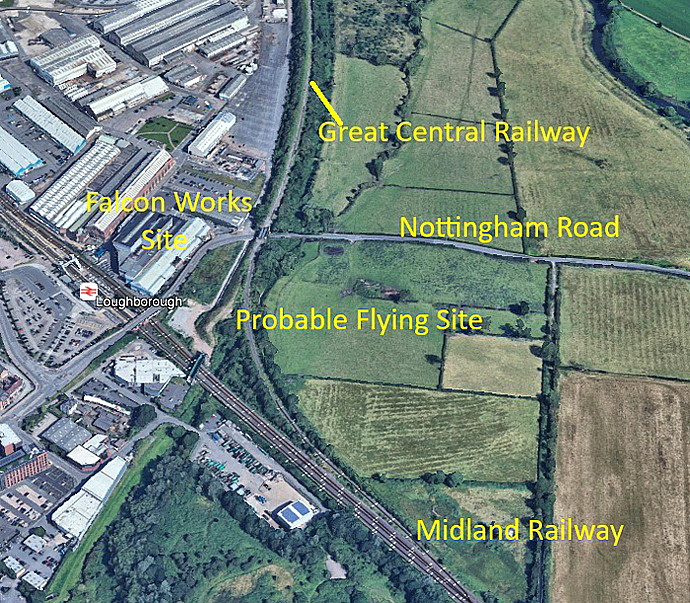
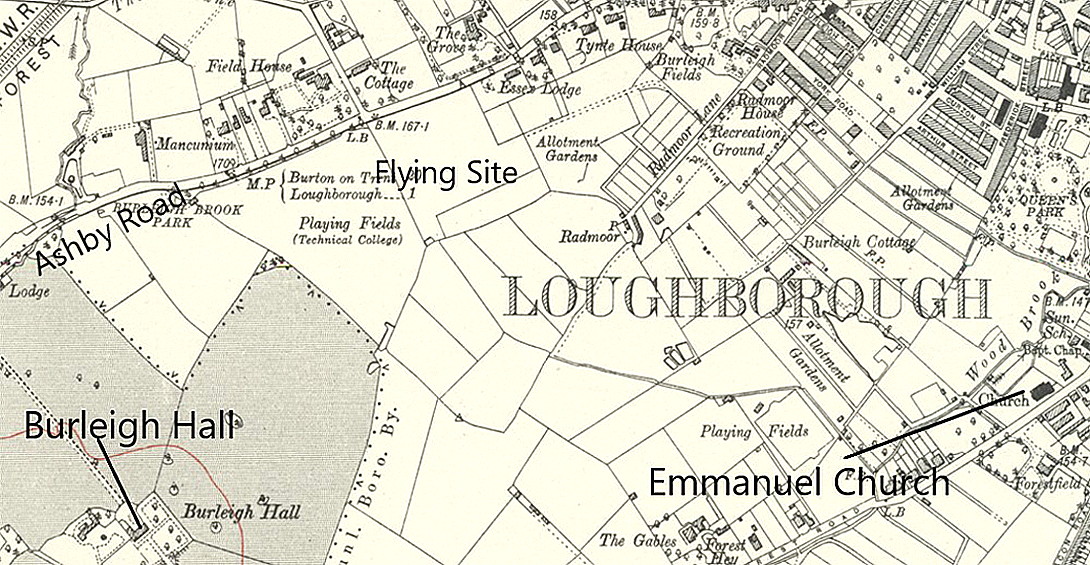
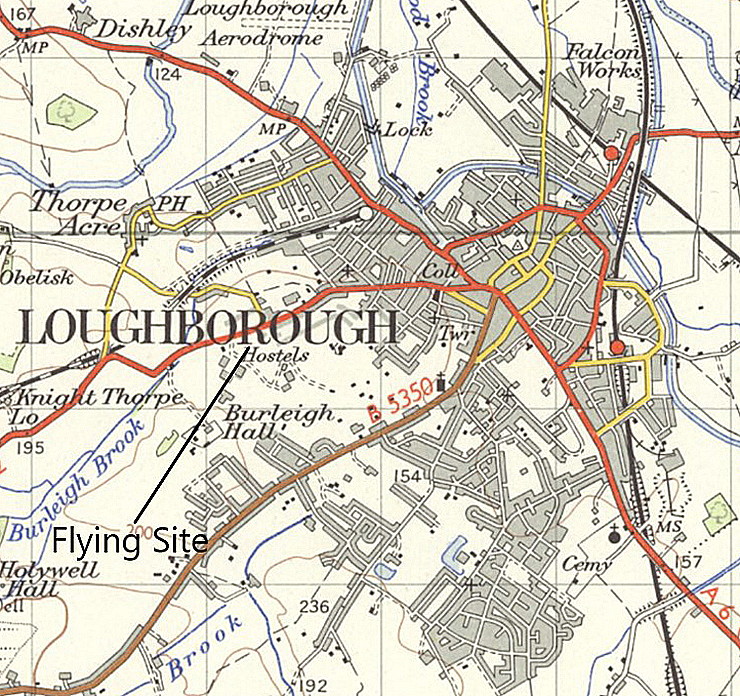
Location: Close to the A60 Nottingham Road, just NE of Loughborough town centre
Period of operation: 24th to possibly 27th July 1912
A MICHAEL T HOLDER GALLERY
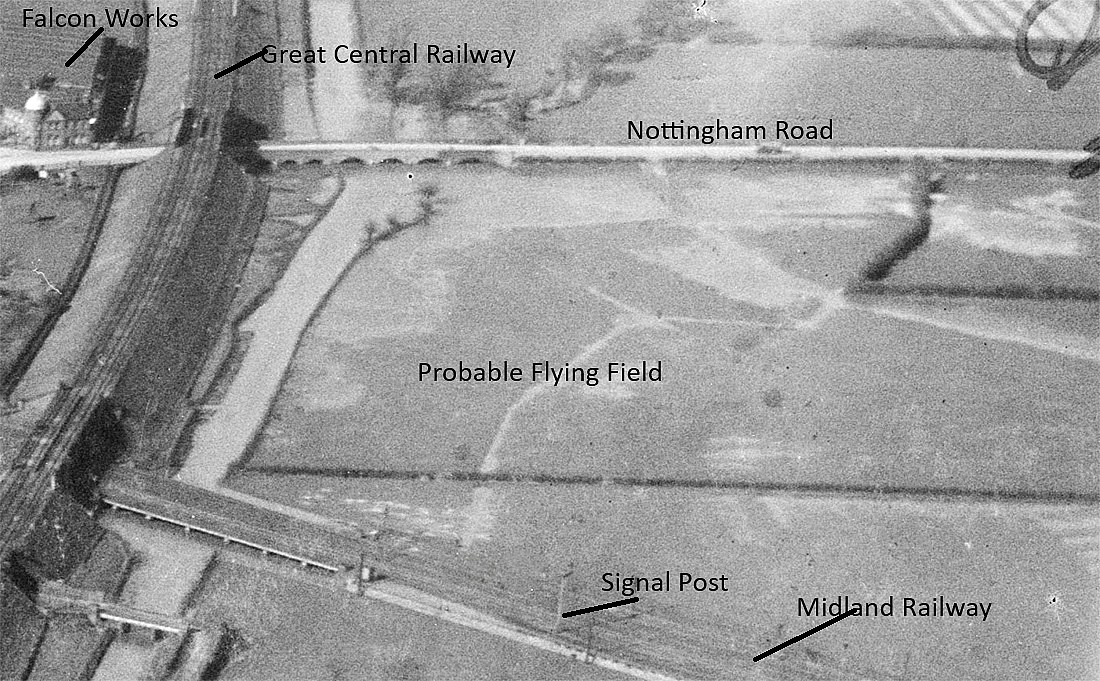
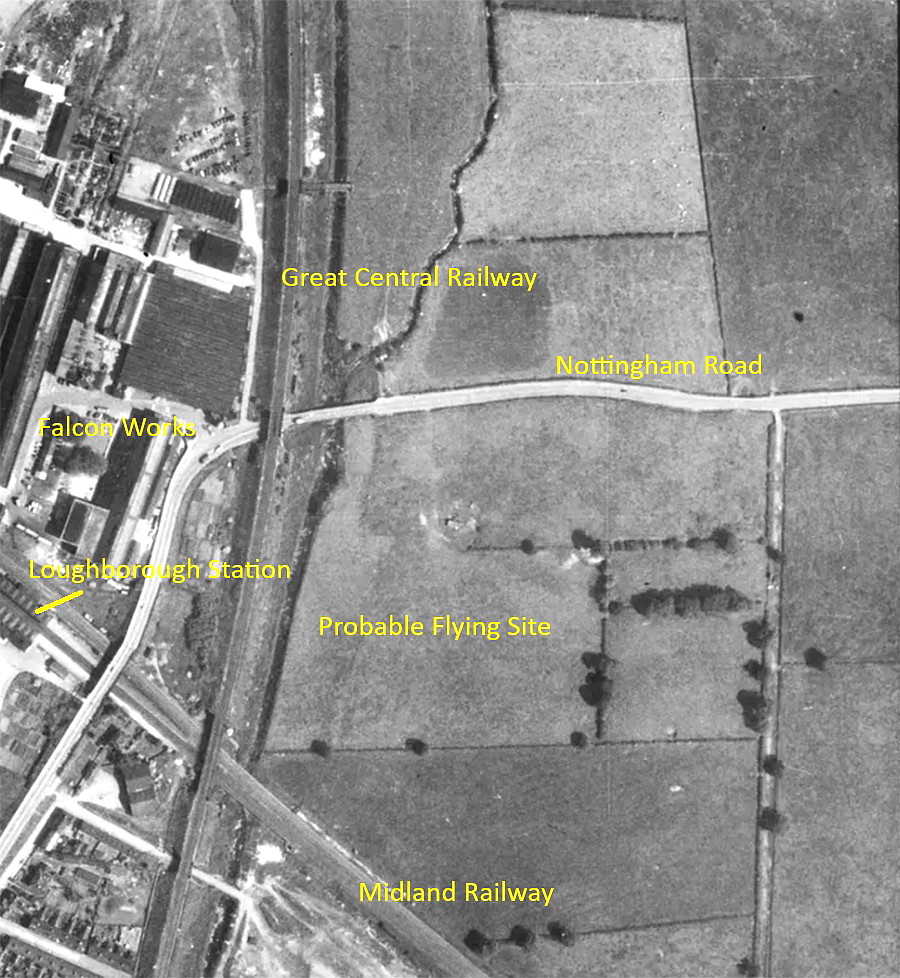
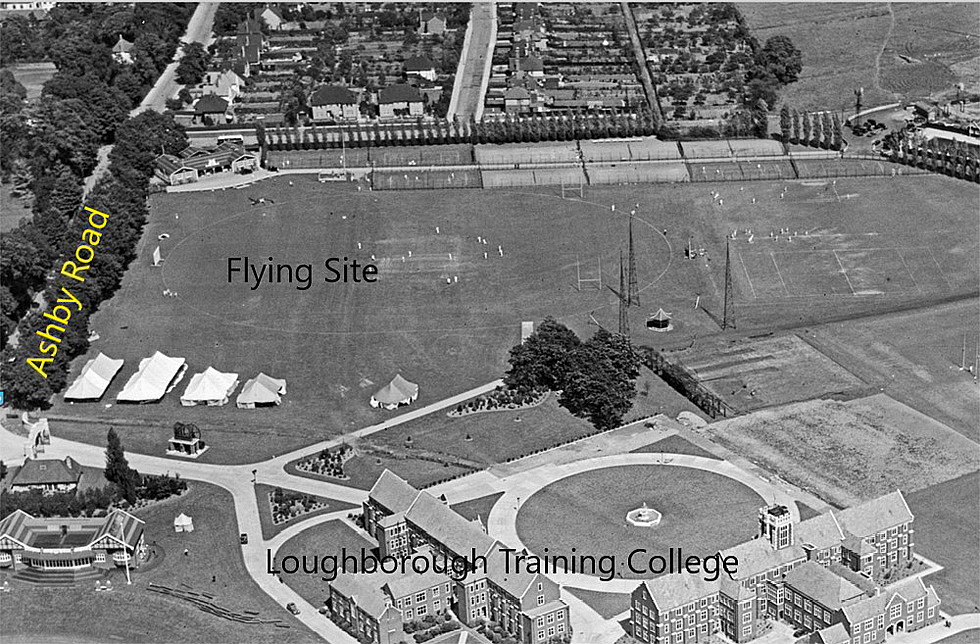
We have Mike Holder, a long term friend of this 'Guide', to thank for the following items. As he points out, to date (in October 2025), no positive proof of the exact field used has been found, but, looking at the 1914 map below, it seems very likely indeed that the field Mike has nominated is the obvious choice.
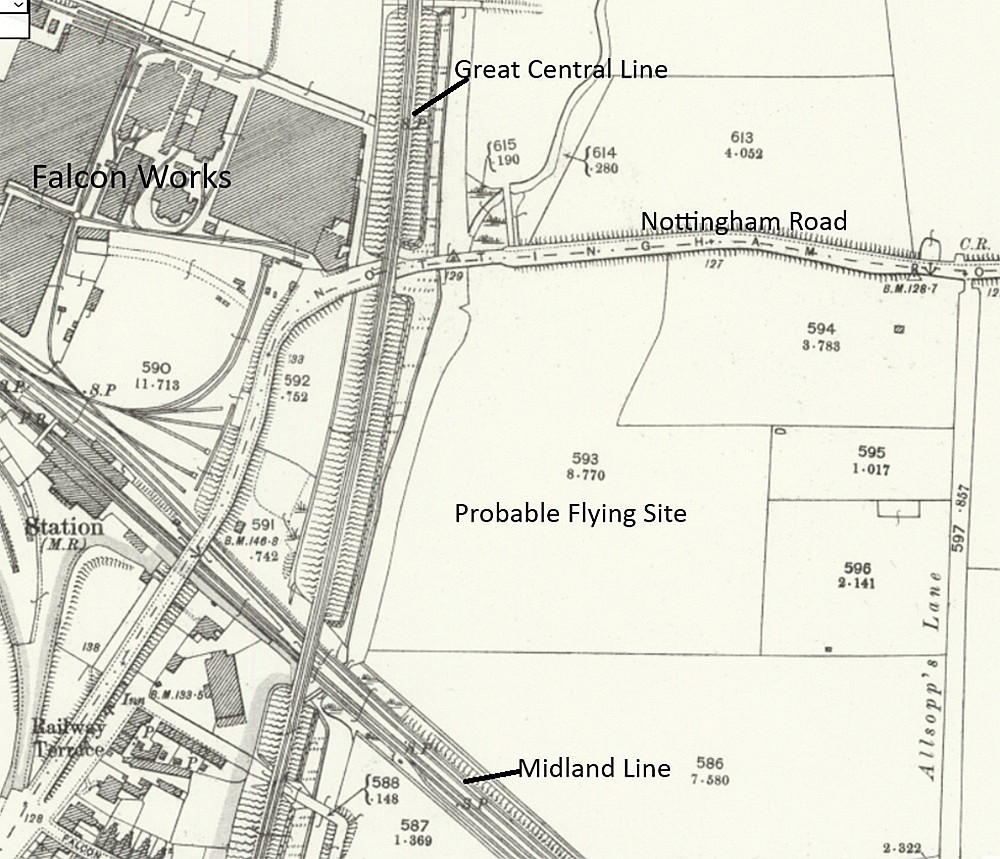
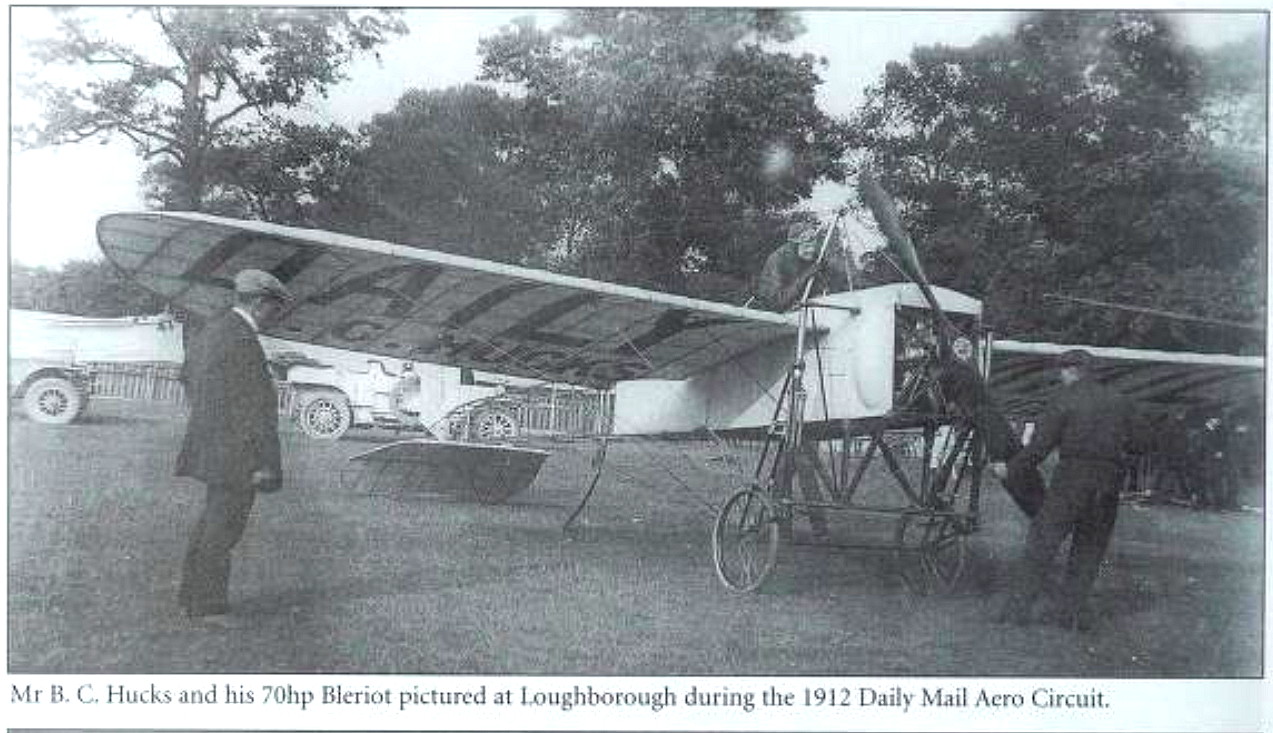
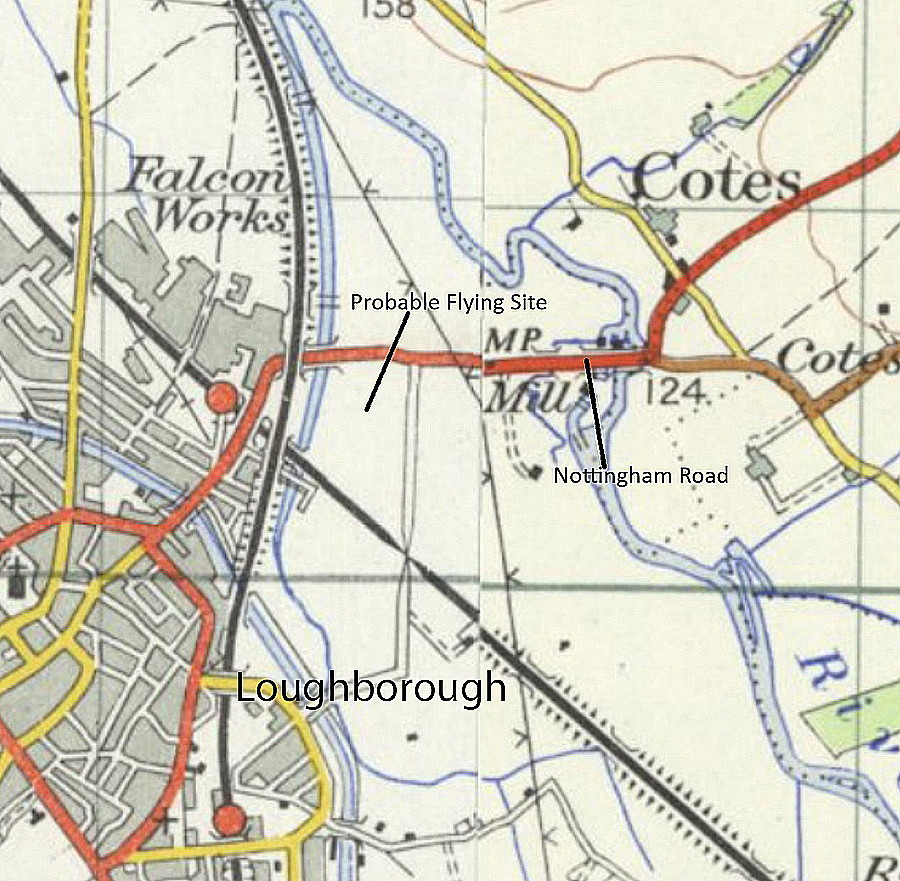
Photo One was obtained from Images of Loughborough.
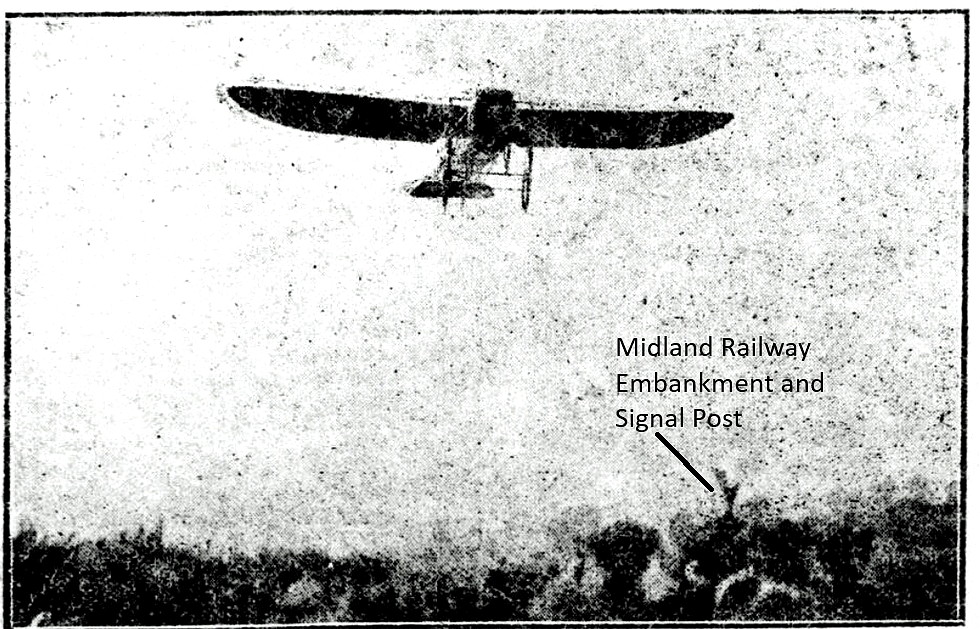
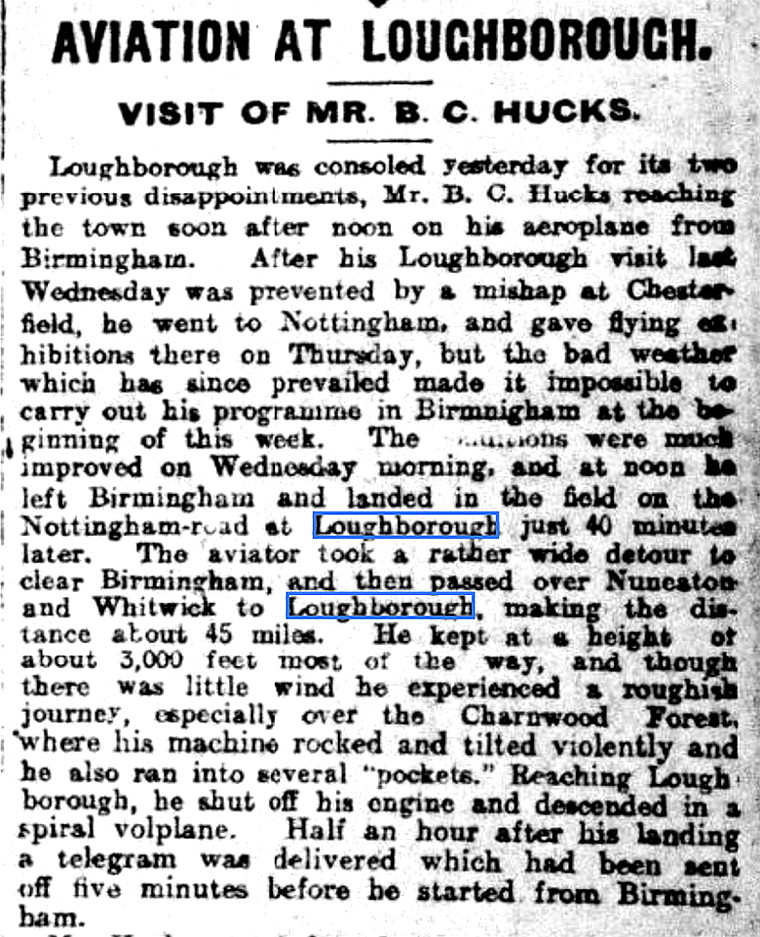
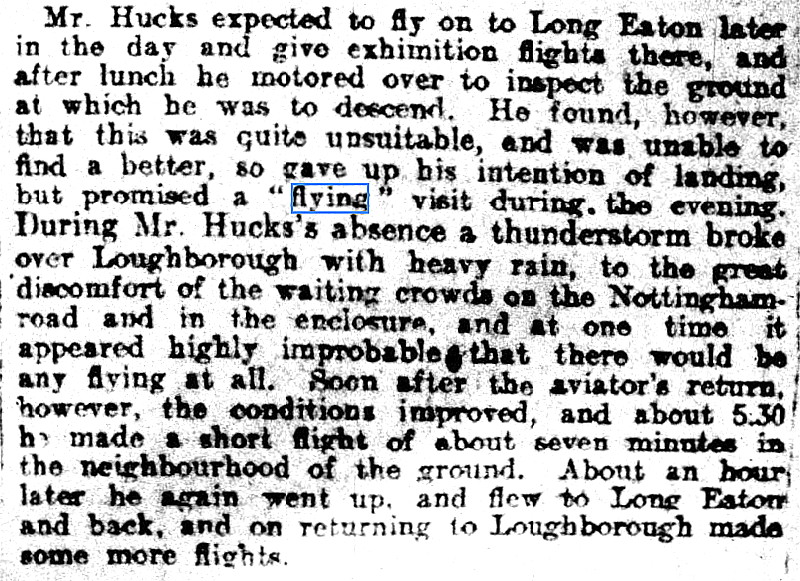
Photo Two was published in the Loughborough Echo on the 26th July 1912. The article in two parts was published in the Leicester Daily Mercury on the 25th July 1912.
LOUGHBOROUGH: Very temporary aerodrome
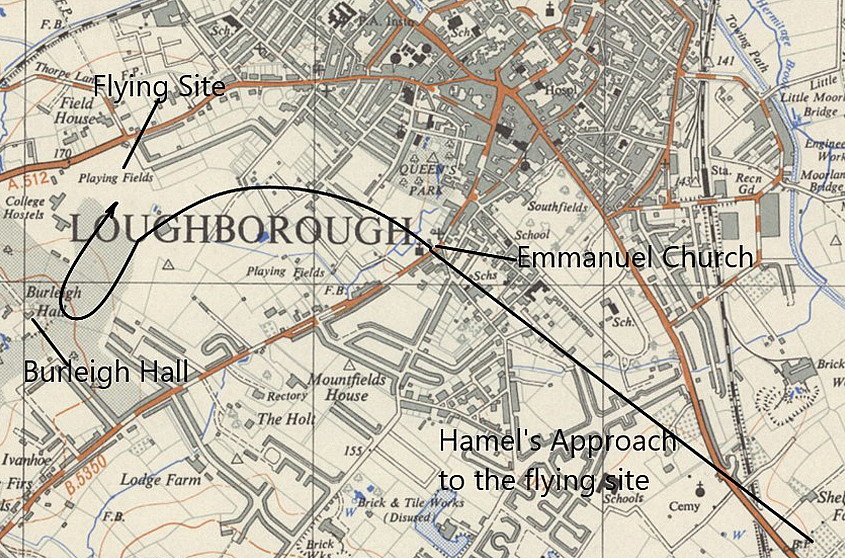
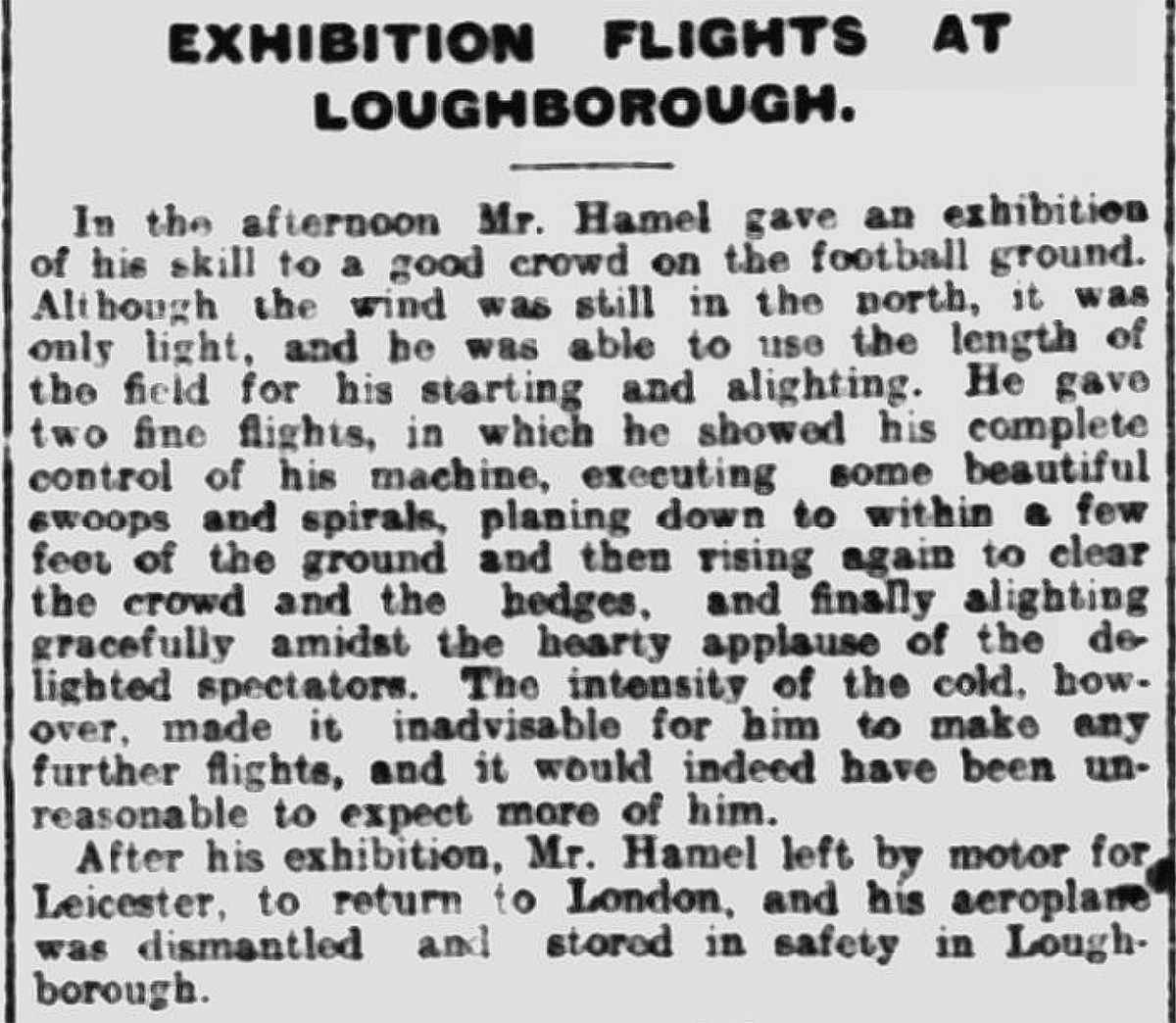
NOTES: It appears that Gustav Hamel, soon to become the 'Star turn' on the aviation scene before WW1, arrived to give an 'exhibition of flying' on the 30th November 1912.
A SECOND MIKE HOLDER GALLERY
ARTICLES FROM THE LEICESTER DAILY POST
The Leicester Daily Post really went to town after Gustav Hamel had displayed on the 30th November, publishing three seperate articles all on the 2nd December. This said, although I cannot verify it, many if not most major regional newspapers issued three editions daily. This being of course before the BBC started broadcasting radio programmes to the nation.
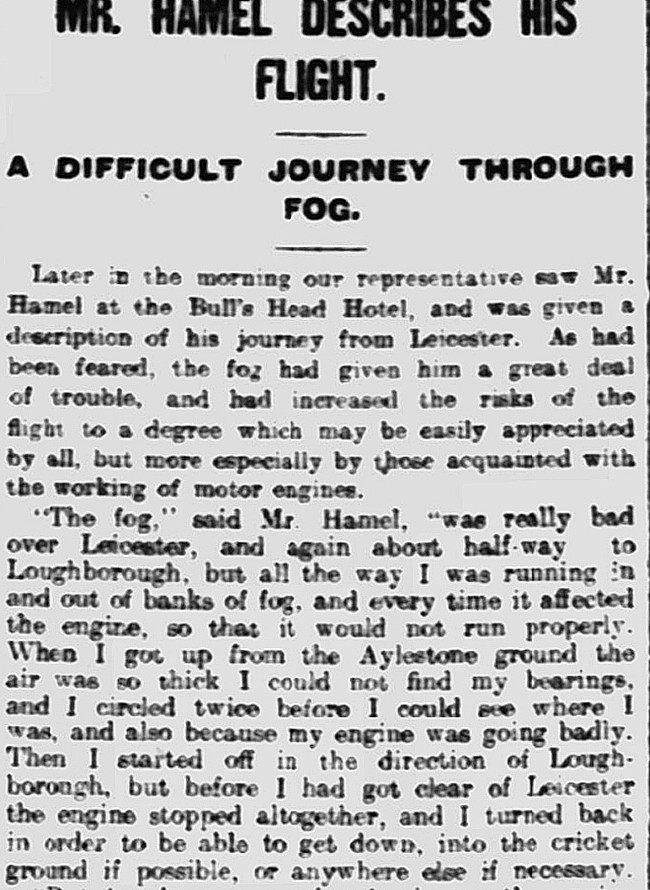
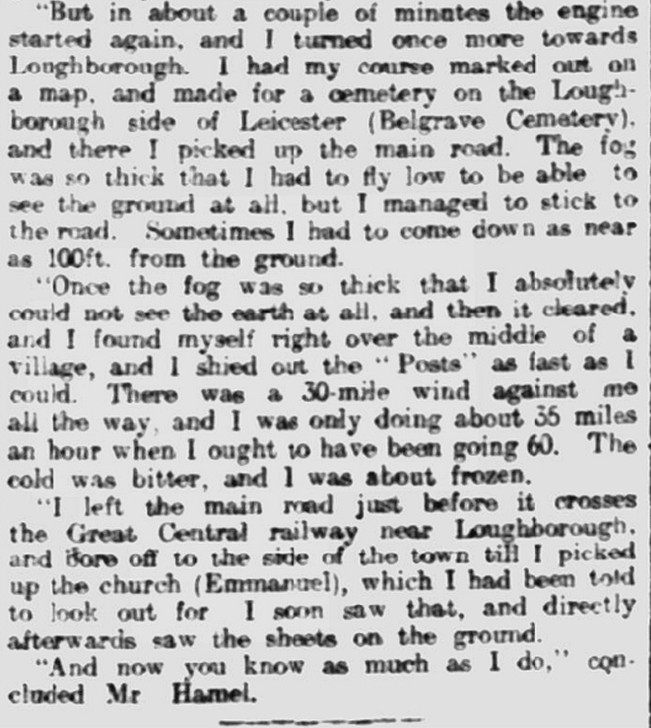
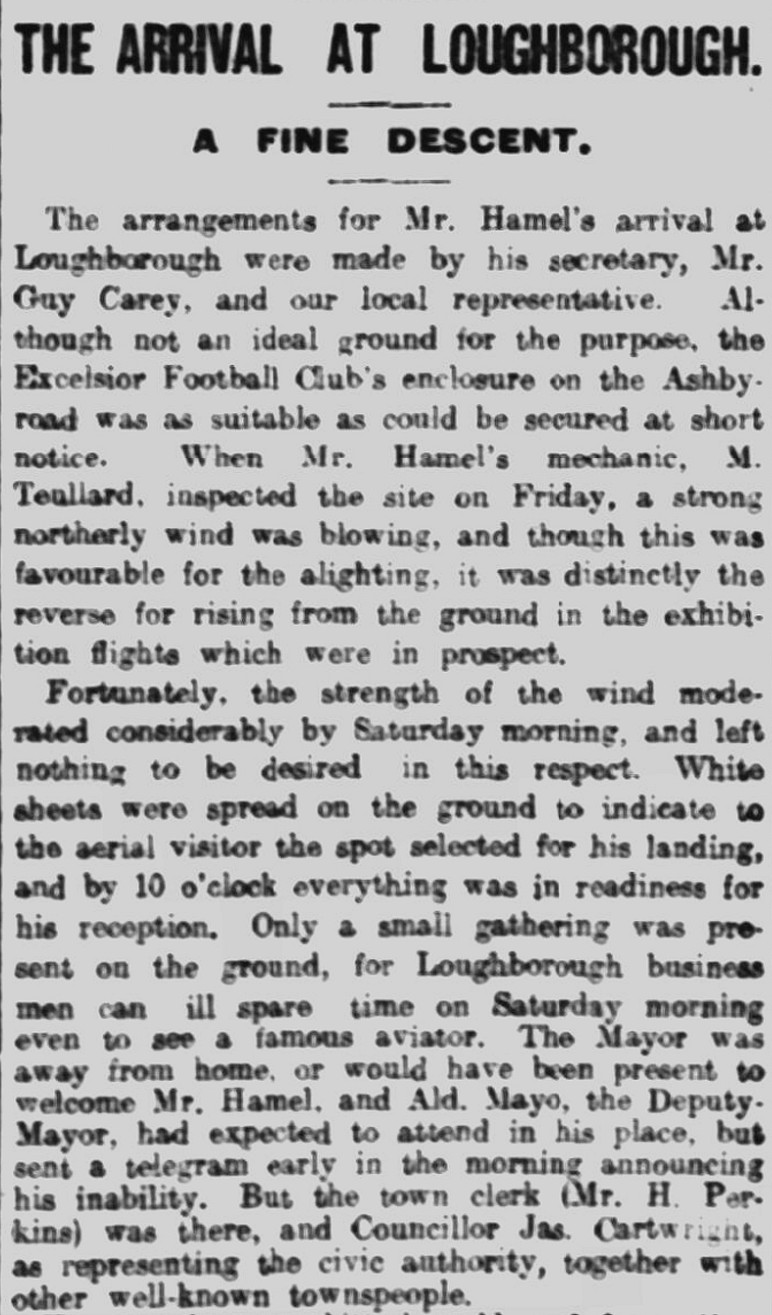
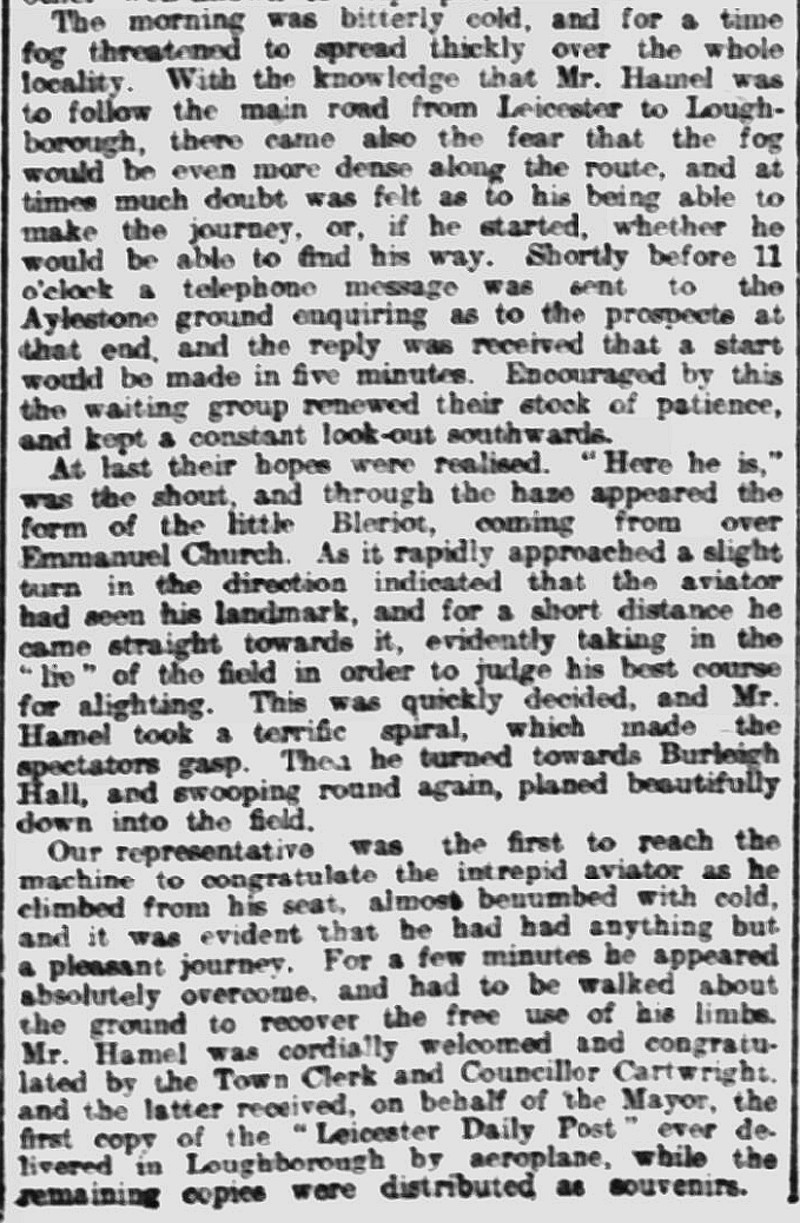
LOUGHBOROUGH: Temporary aerodrome
Operated by: Berkshire Aviation Company
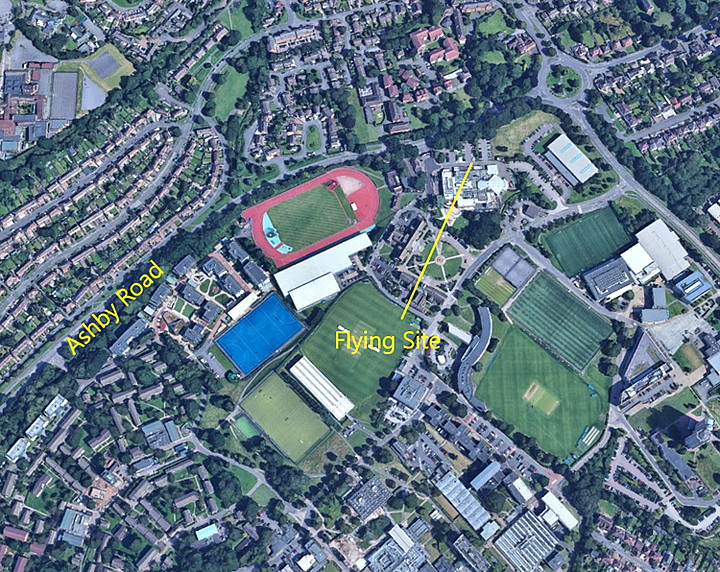
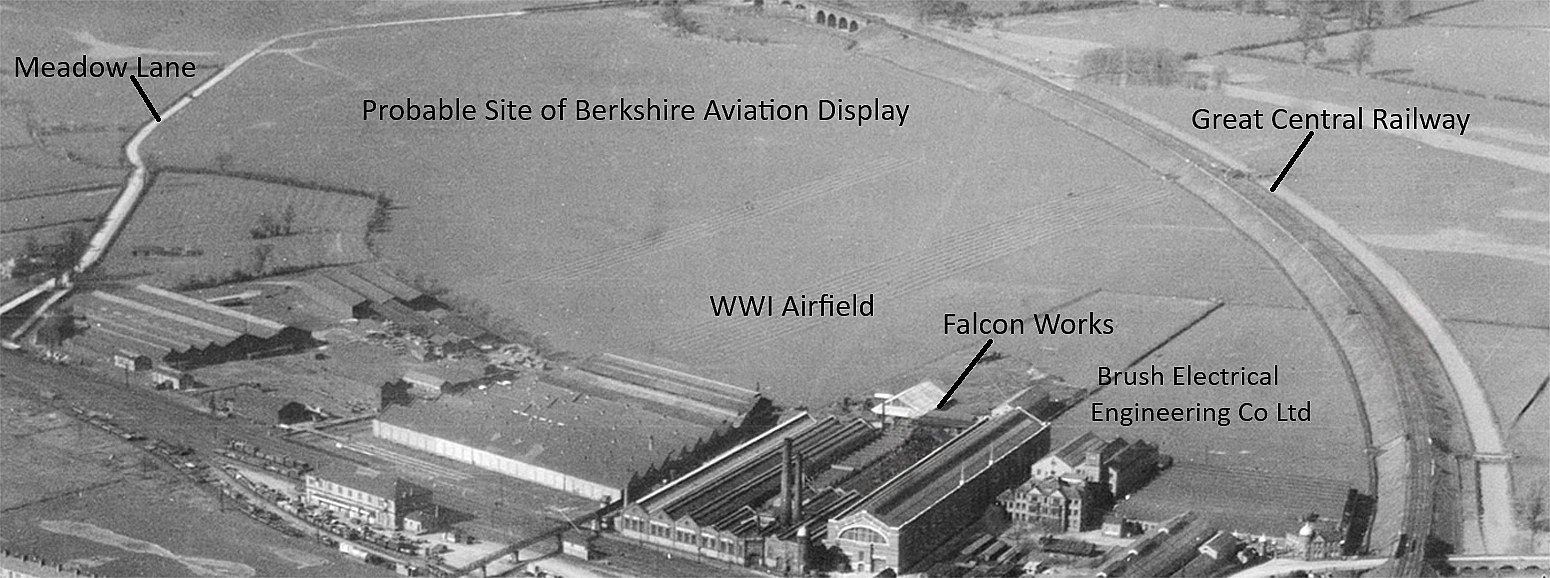
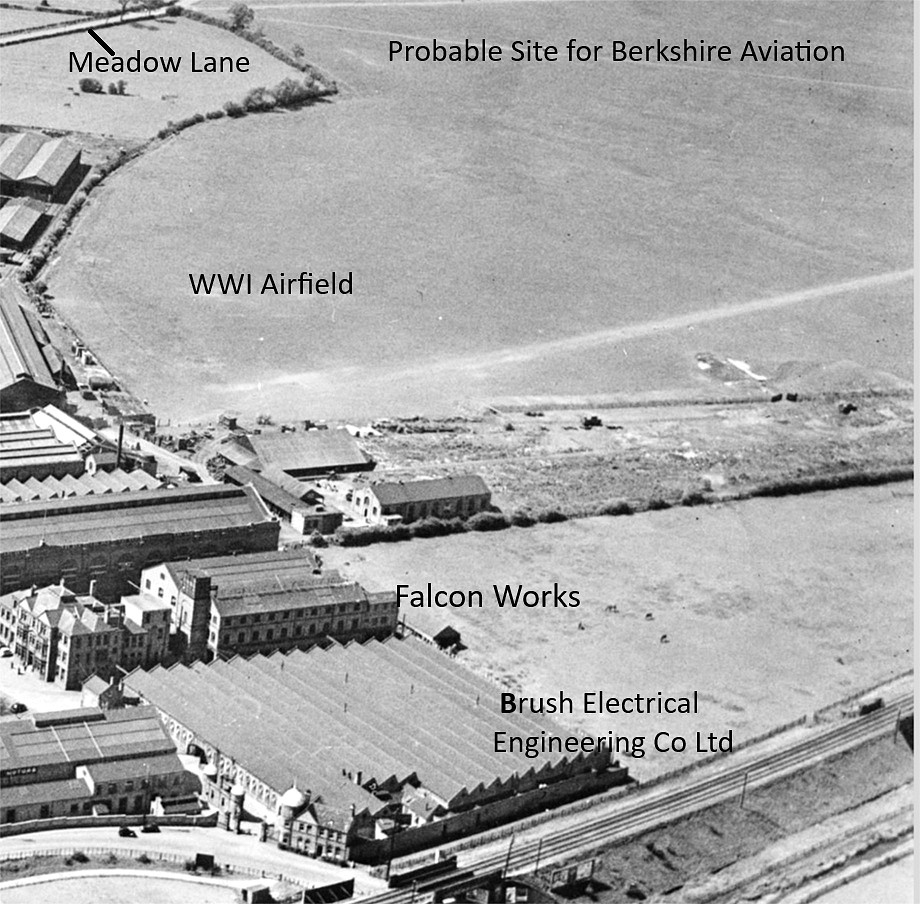
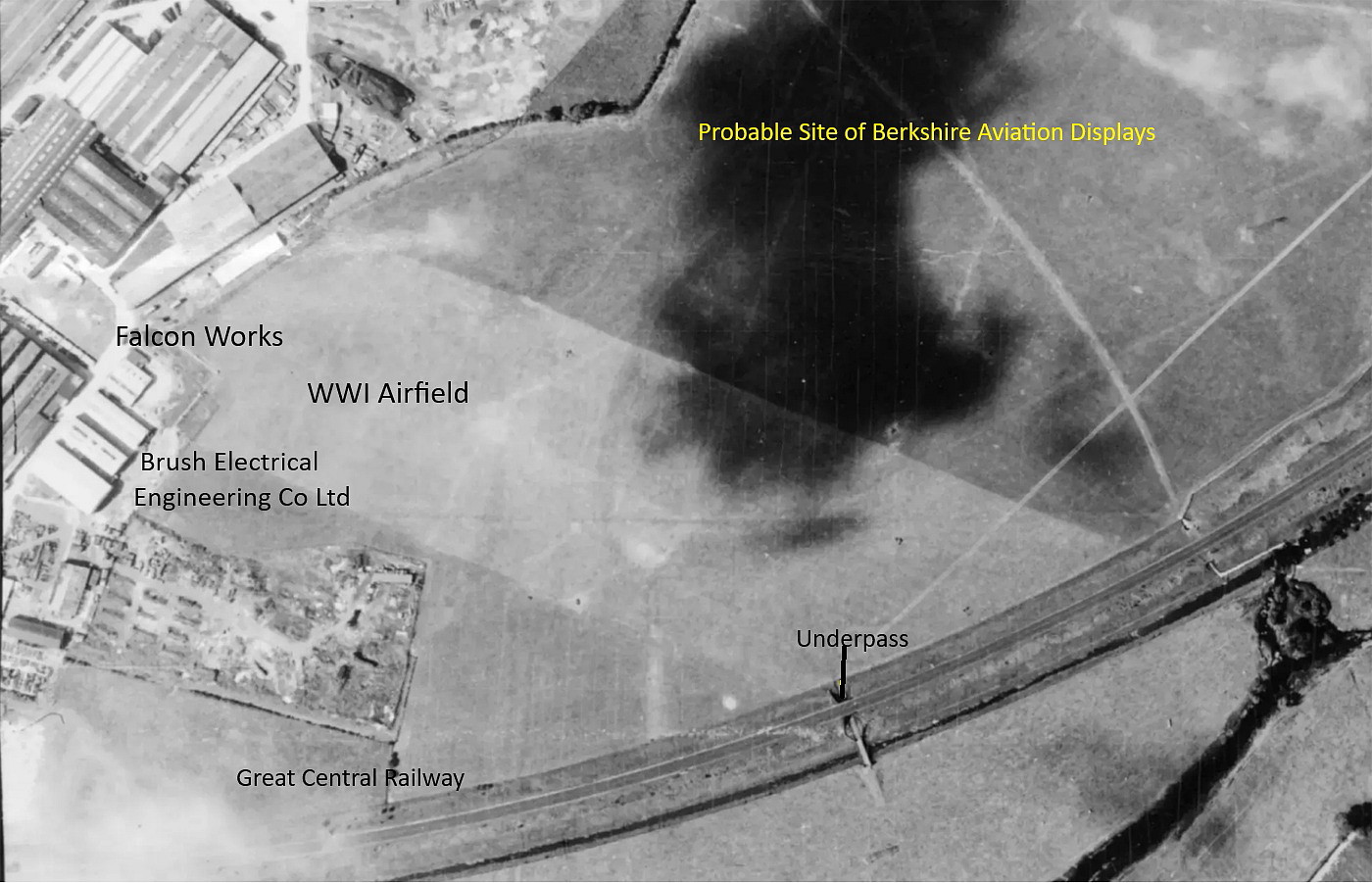
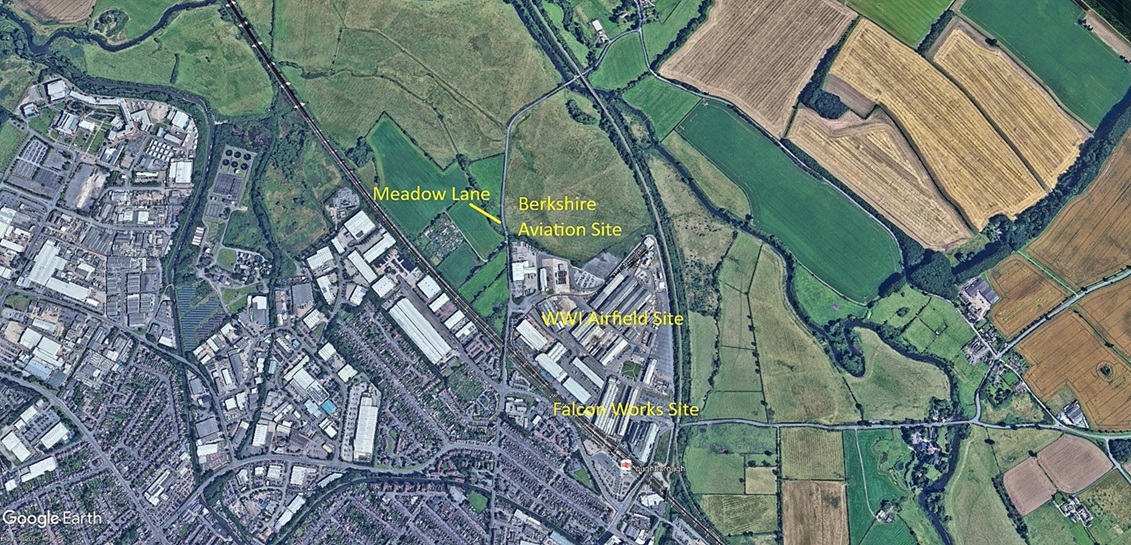
Location: Probably just N of, if not part of the WW1 aerodrome
Period of operation: 6th to 9th August 1919
A THIRD MICHAEL T HOLDER GALLERY
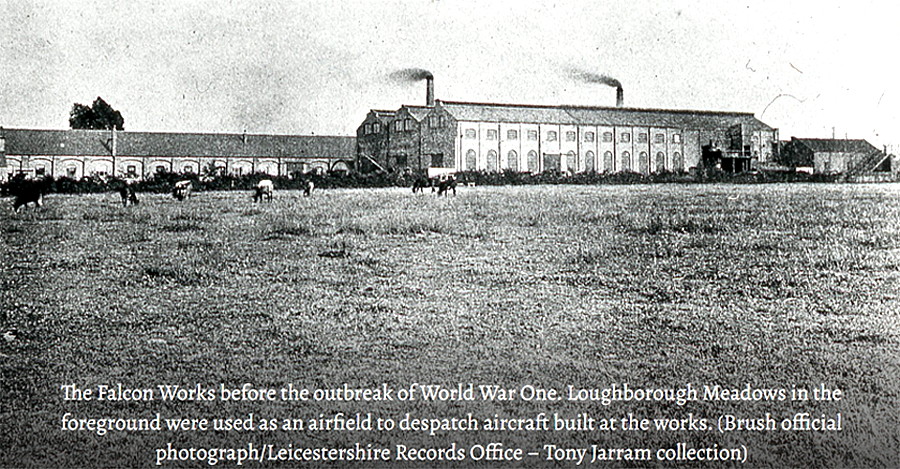
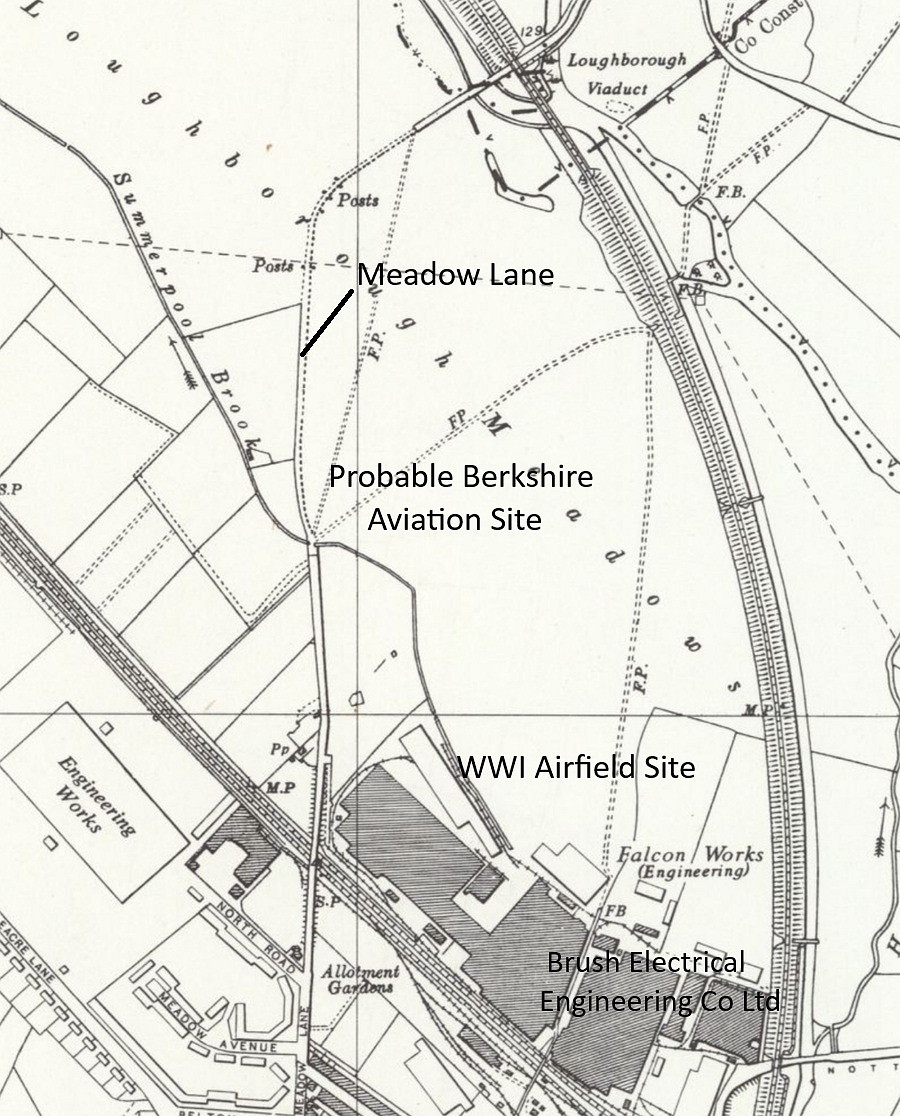
The photo is from the Loughborough History and Heritage Network.
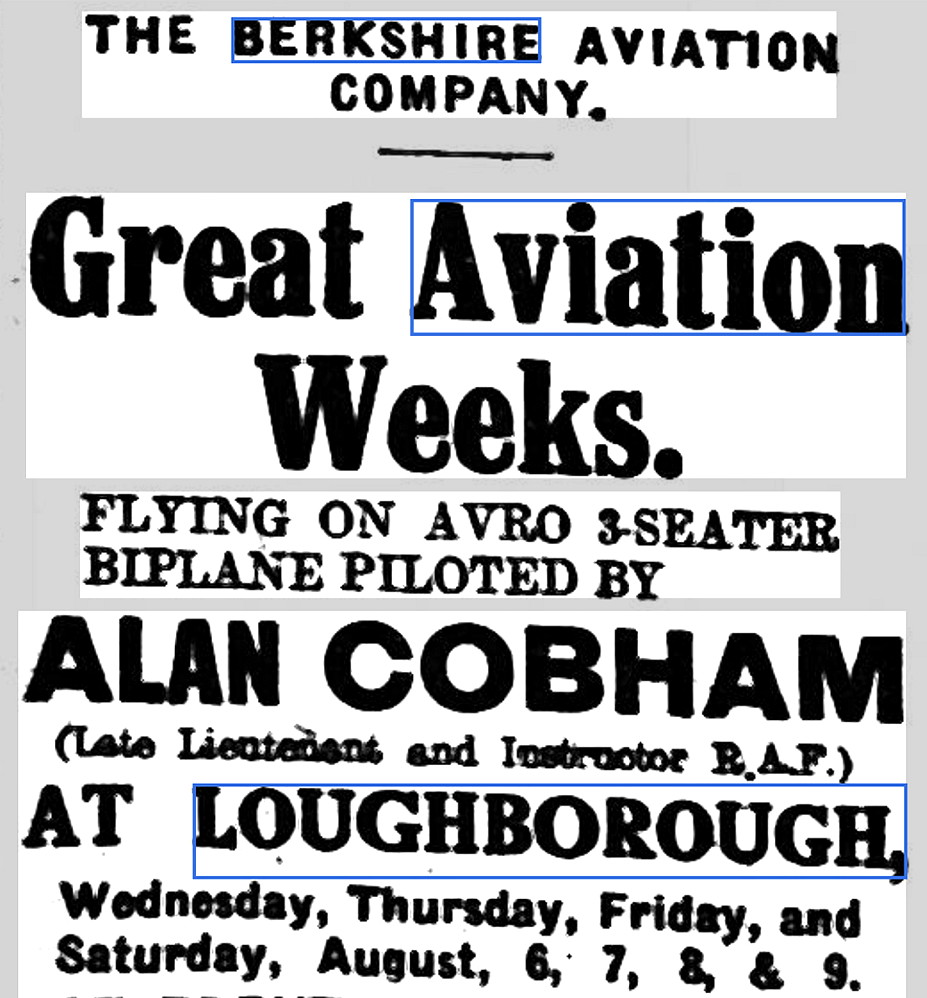
The advert was placed in the Nottingham Journal on the 4th August 1919.
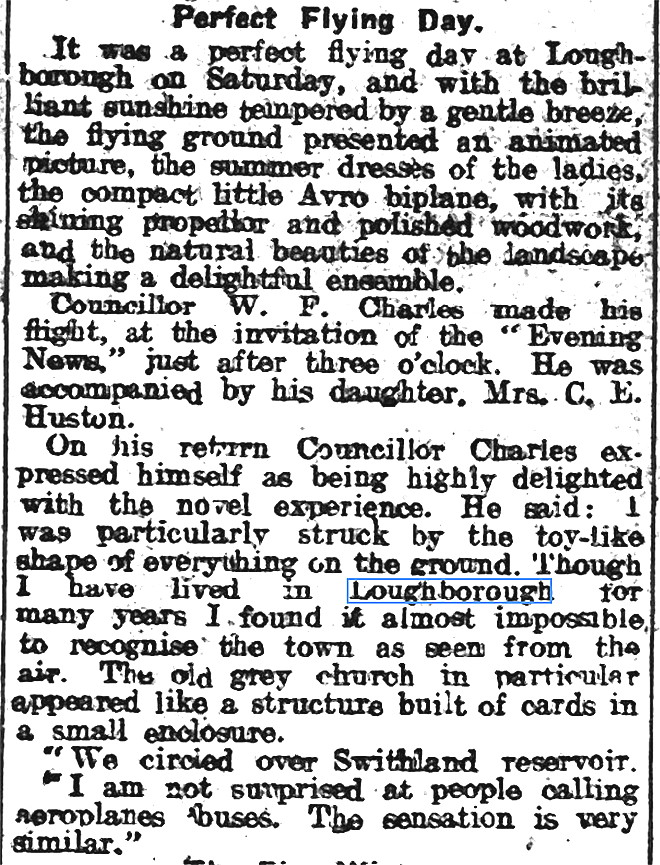
The article was published in the Nottingham Journal on the 11th August 1919.
LOUGHBOROUGH: Temporary Landing Ground then later temporary aerodrome
NOTES: Alan Cobham’s 1929 Municipal Aerodrome Campaign Tour visited Loughborough, (his 46th venue), as did his 1933 No.1 Tour displaying on the 1st August. Does anybody now know the exact location(s) used?
LOUGHBOROUGH: Civil airport project later company airfield in WW2
Operated by: Brush Electrical Company
Also: Loughborough College for their Department of Aeronautical Engineering with a 21 year lease starting in 1938?
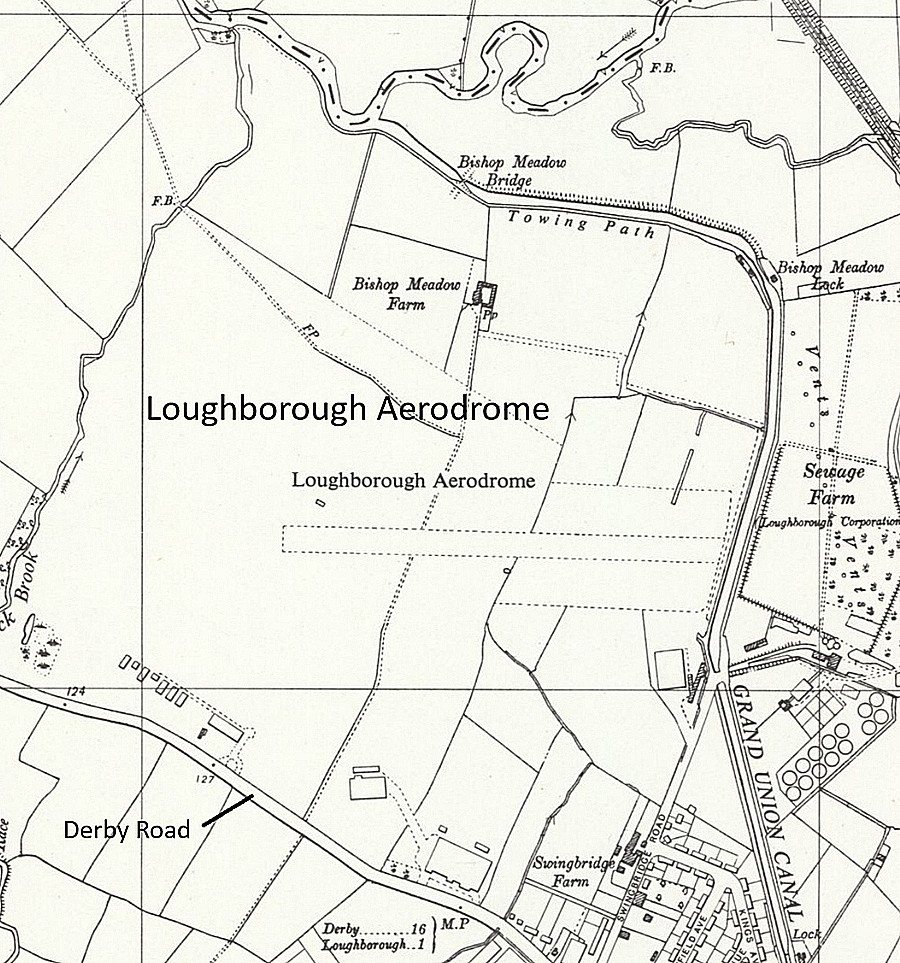
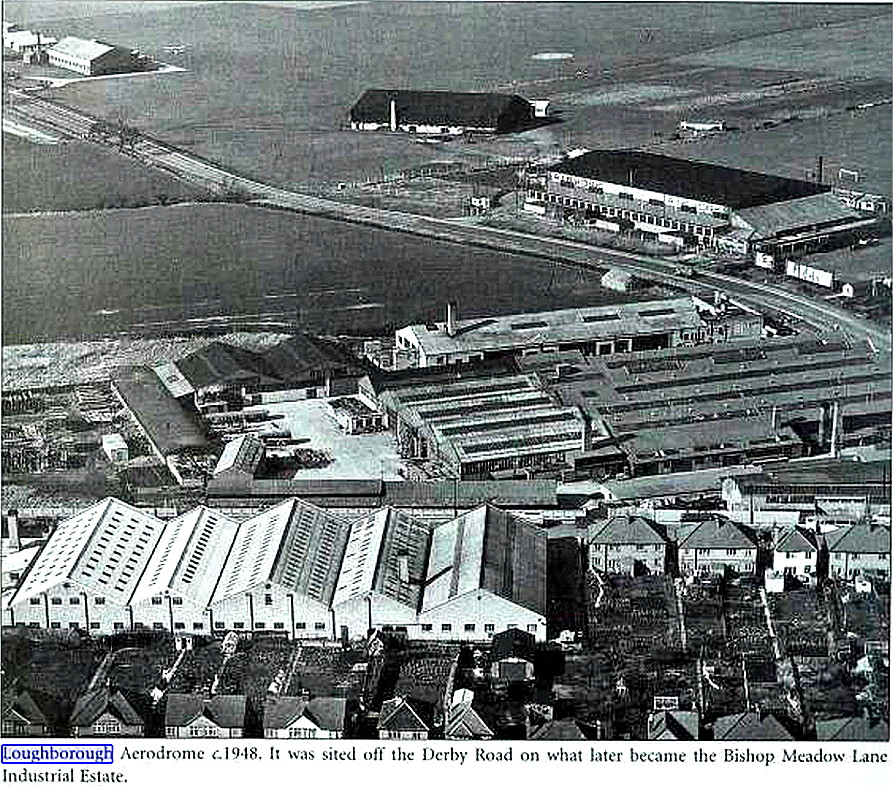
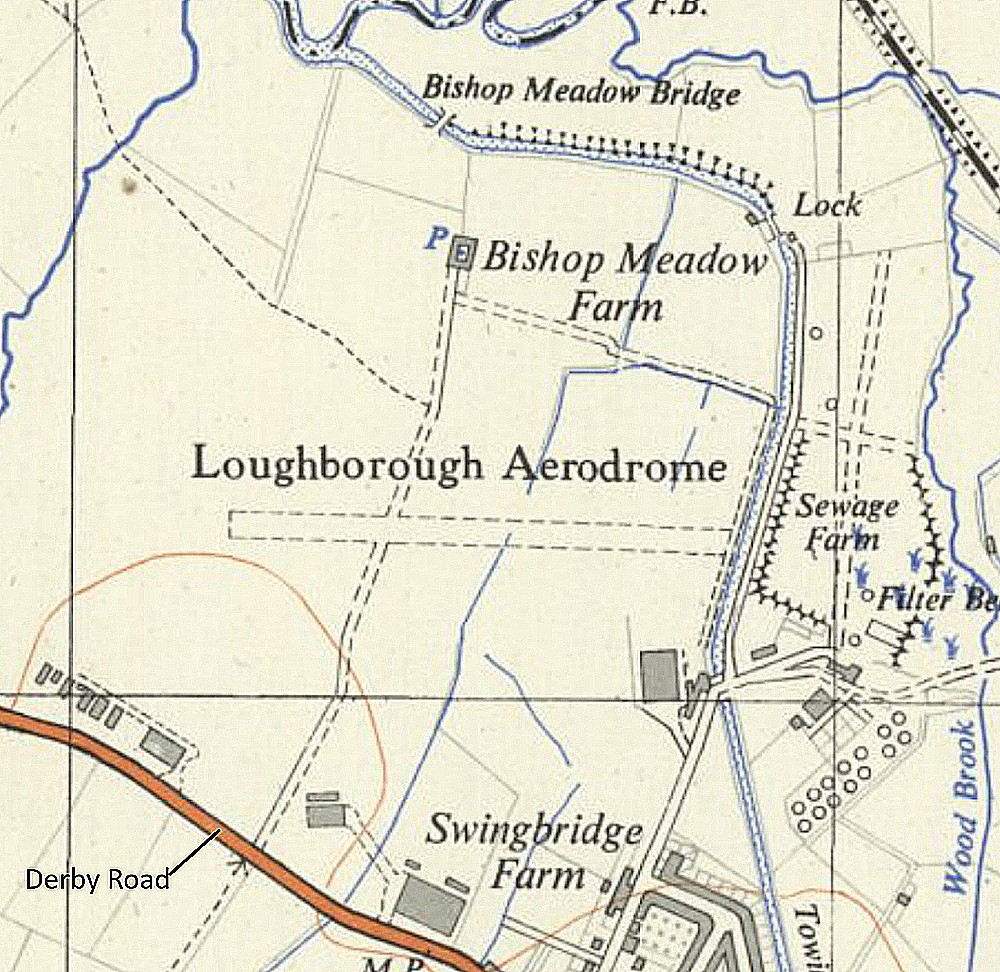
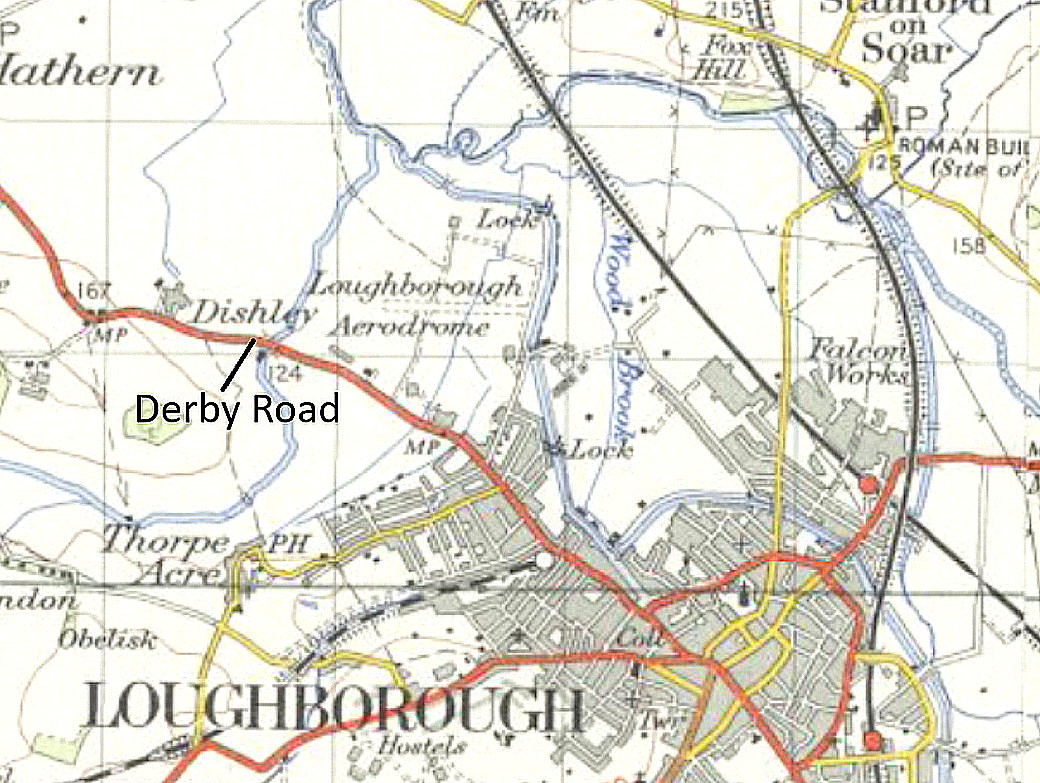
Note: We also have Mike Holder to thank for providing these six items.
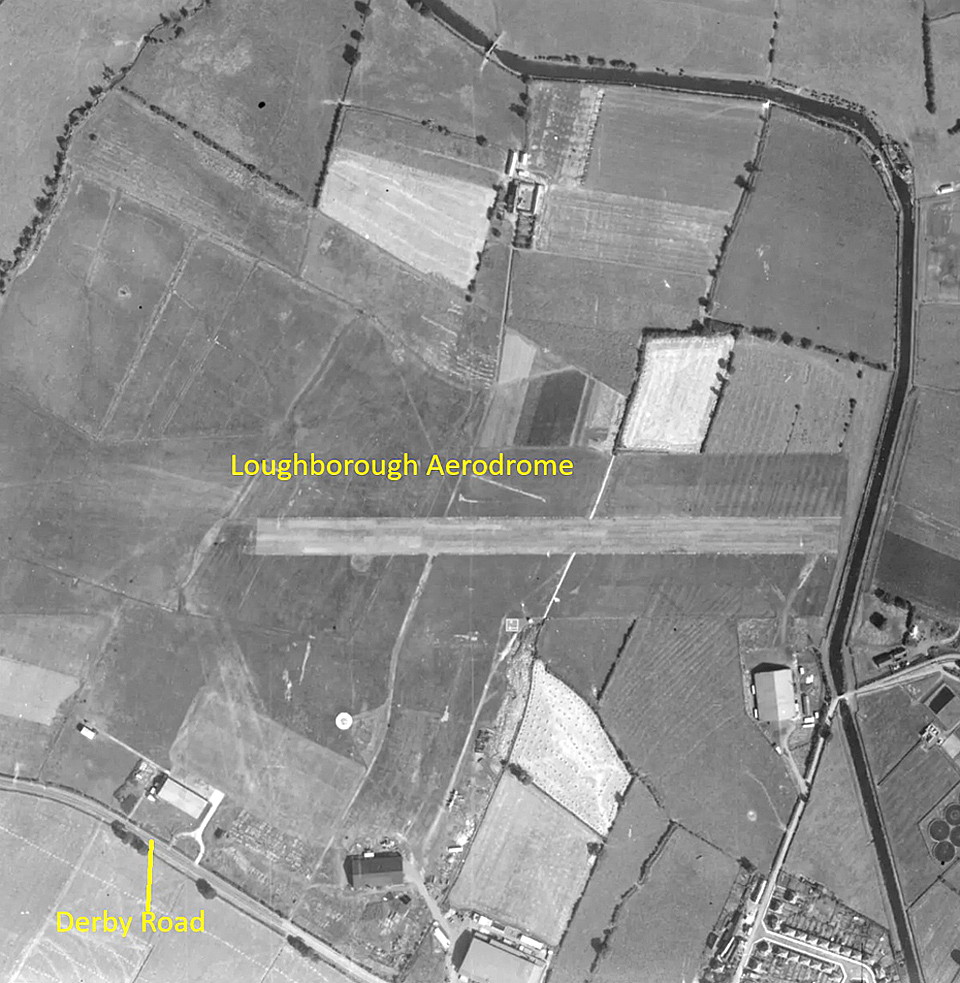
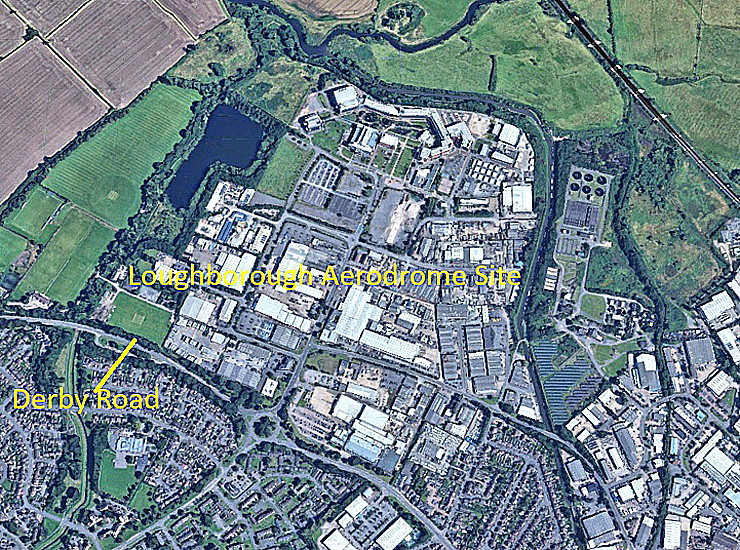
Charter users: Post 1945: Olley Air Services
Gliding: WW2: ATC units 1942 to 1944 M42 Gliding School
Maintenance/overhaul: WW2: Airwork 1942 to 1945
Manufacturing: WW2: Brush Electrical Company
Location: NNW of Loughborough town centre
Period of operation: 1942 to 1961?
Runway: 1942: 10/28 1005 grass/hard (621x36 hard at eastern end)
A PICTURE GALLERY
Over the years it has been a constant problem as to how to update listings as more information, pictures and maps become available. Especially, as in this case, the pictures show two distinct periods where two airfields were involved, during WW1 and later during WW2. So, I have left this in place.
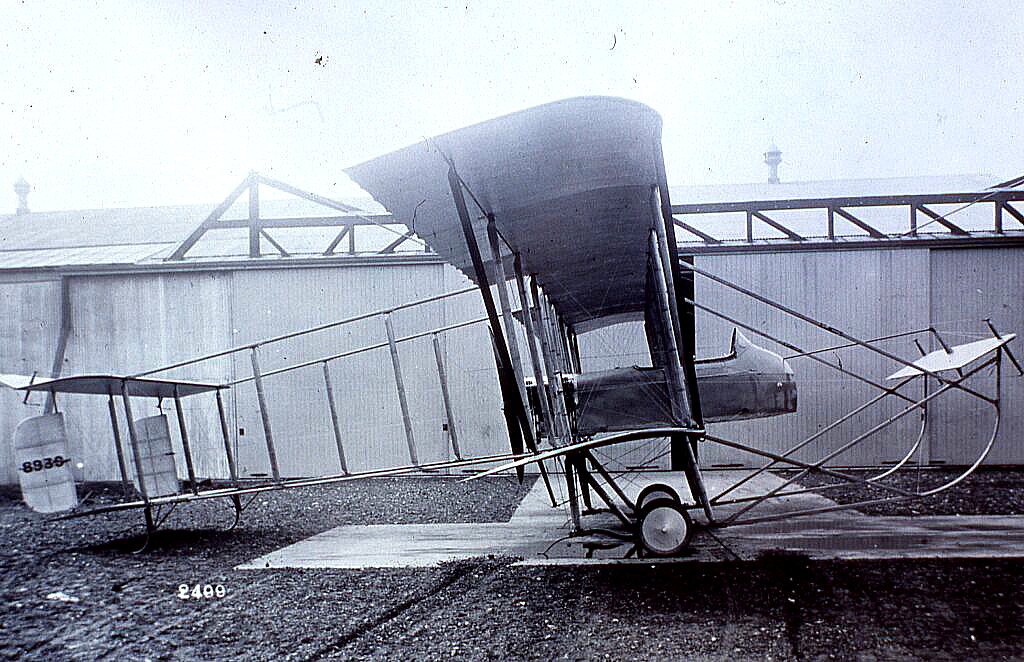
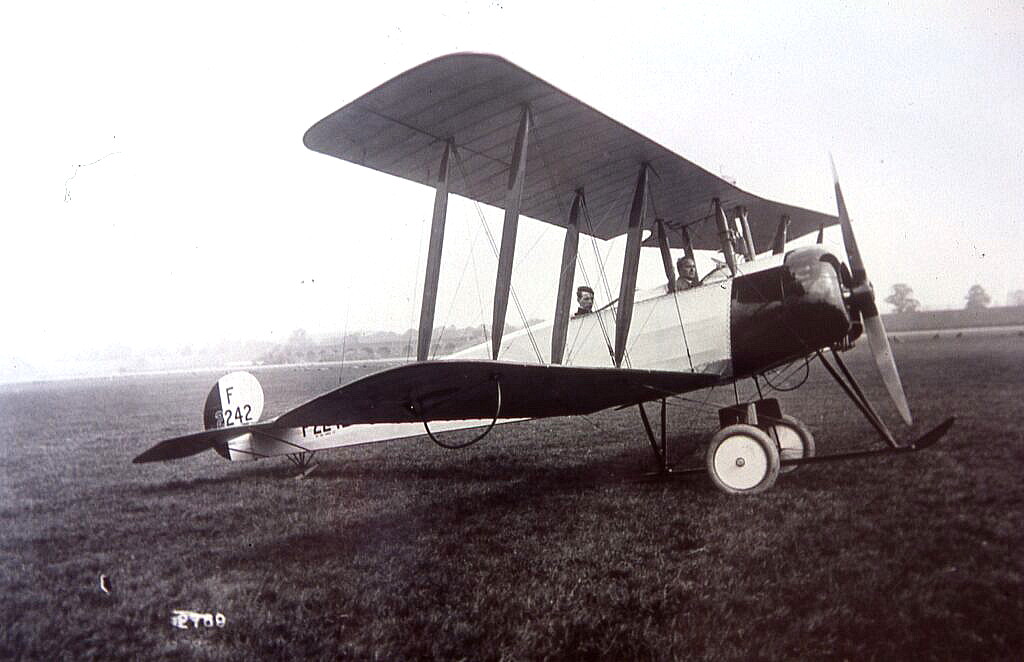
These great pictures are from Brush official photograph, Leicester Records Office - Tony Jarram collection.
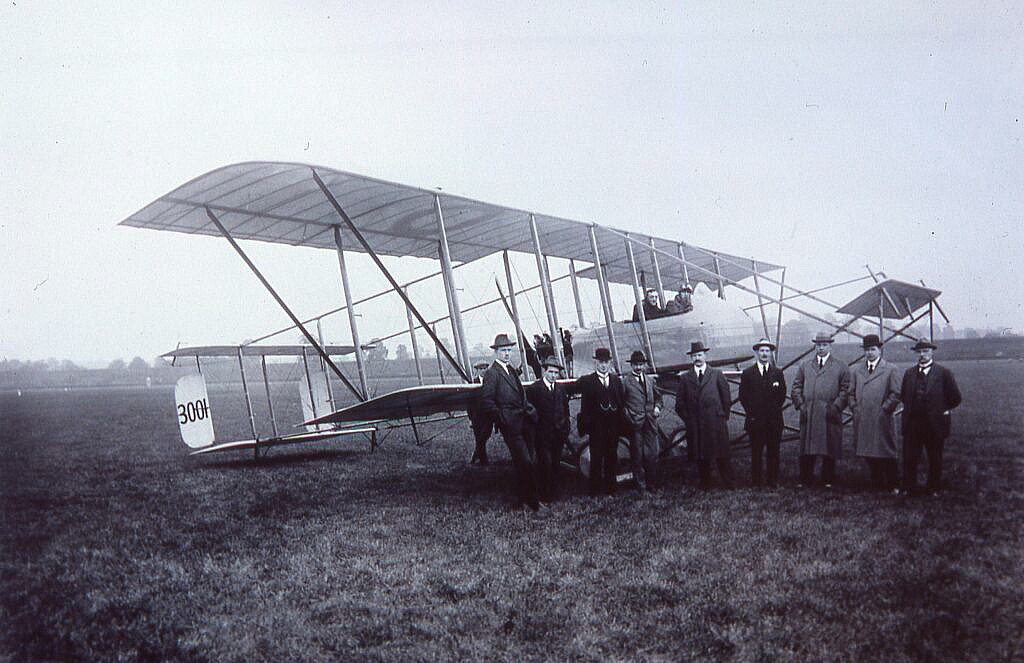
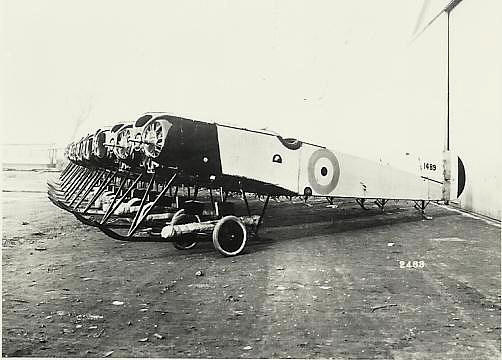
Picture One: This Maurice Farman S.7 Longhorn, 3001, was the first aircraft produced by Brush Electrical in 1916.
Picture Two: The Farman S.7 Longhorn 8939. By this stage in the war, no doubt destined for initial pilot training duties.
Picture Three: A line up of eight Avro 504C fuselages.
Picture Four: The Avro 504K, F2242.
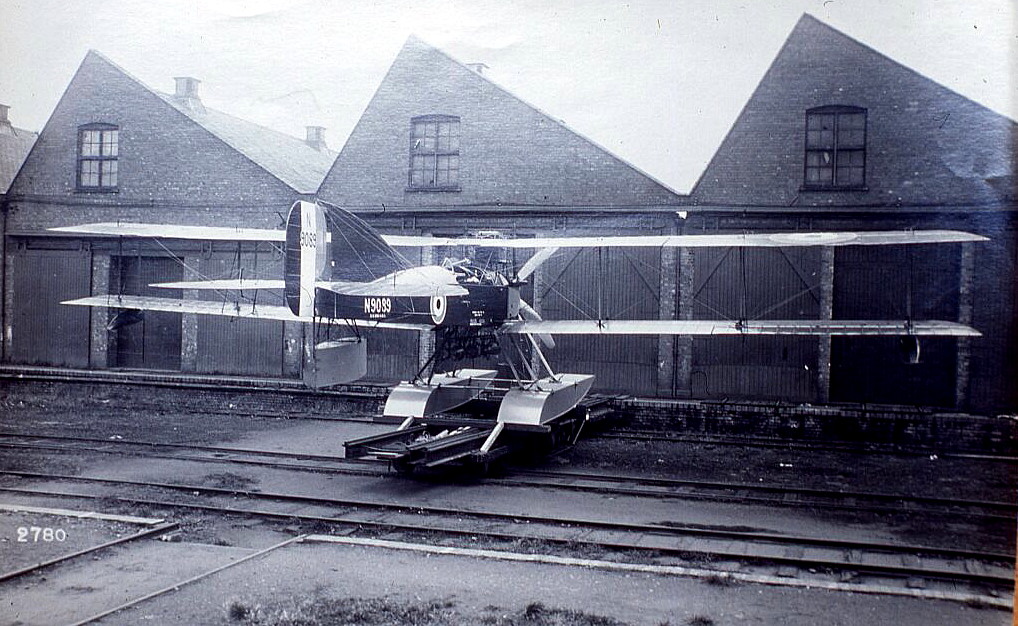
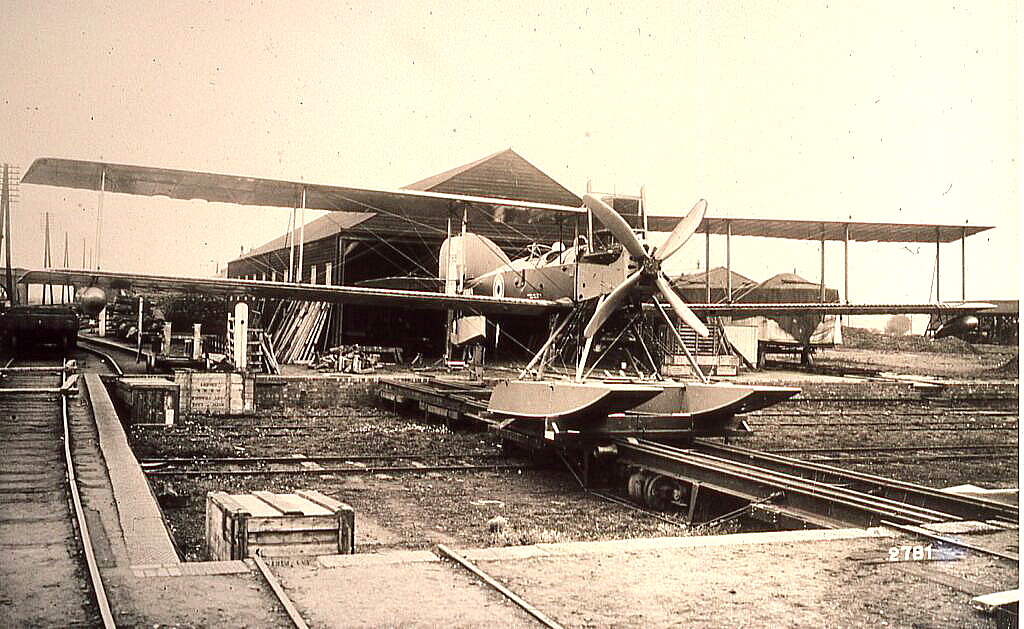
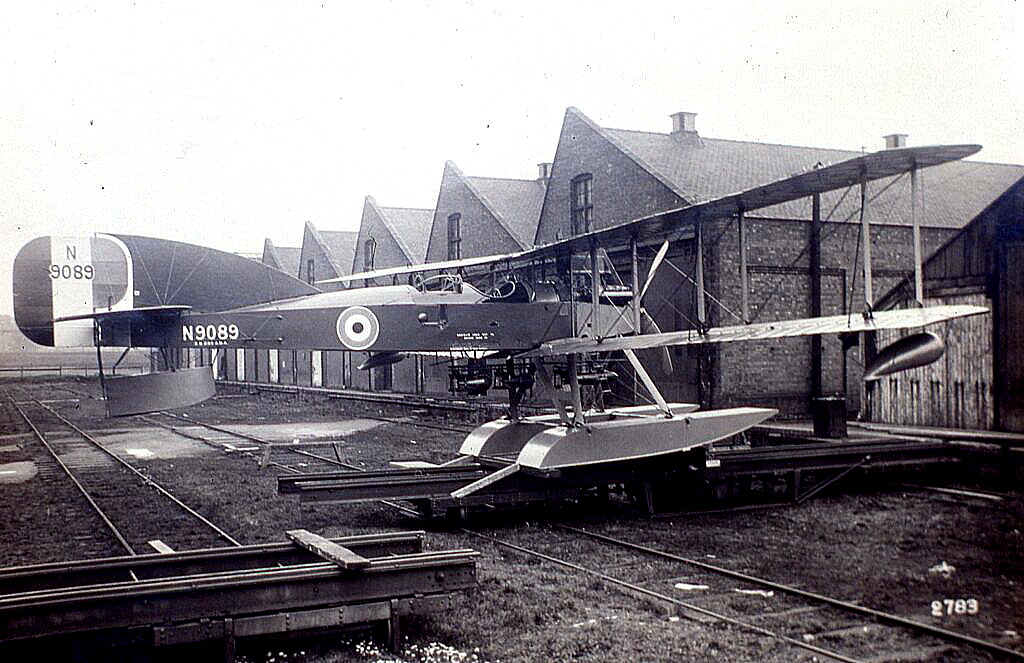
Pictures Five, Six and Seven. Three views of the Short 184, N9089.
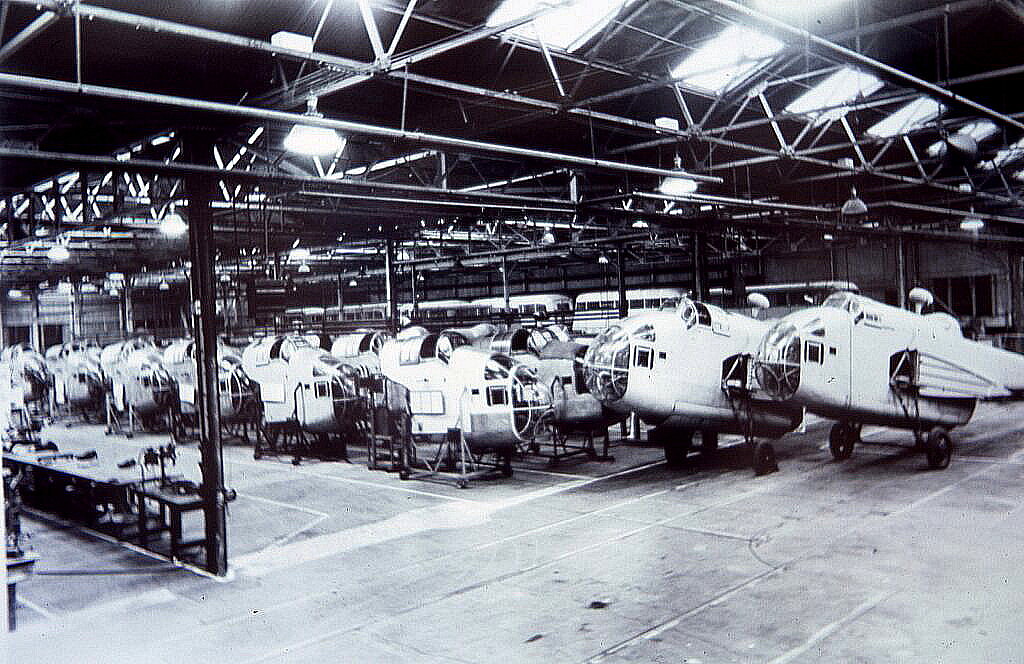
Picture Eight: The production line of Handley Page Hampden bomber fuselages. Until the four-engine bomber types came along, The Short Stirling, Handley Page Halifax and Avro Lancaster, the Handley Page HP.52 Hampden, (first flight 21.06.36), and Bristol Blenheim bomber, (first flight 12.04.35), of which there was a fighter version, were, although obsolete, bearing the brunt of daylight bombing raids against Germany. Hopelessly under-defended they bore virtually no chance of surviving an attack by a fighter, such as the Messerschmidt Bf.109.
Although of the same era, the Vickers Wellington, (first flight 15.06.36), was far more capable and a different class of machine. Much better defended, and due to its geodetic fuselage construction able to much better absorb battle damage, it was larger and capable of longer range night flying missions. To some extent, but less capable was the Armstrong Whitworth A.W.38 Whitely, (first flight 17.03.36), which served quite well in other spheres of operations.
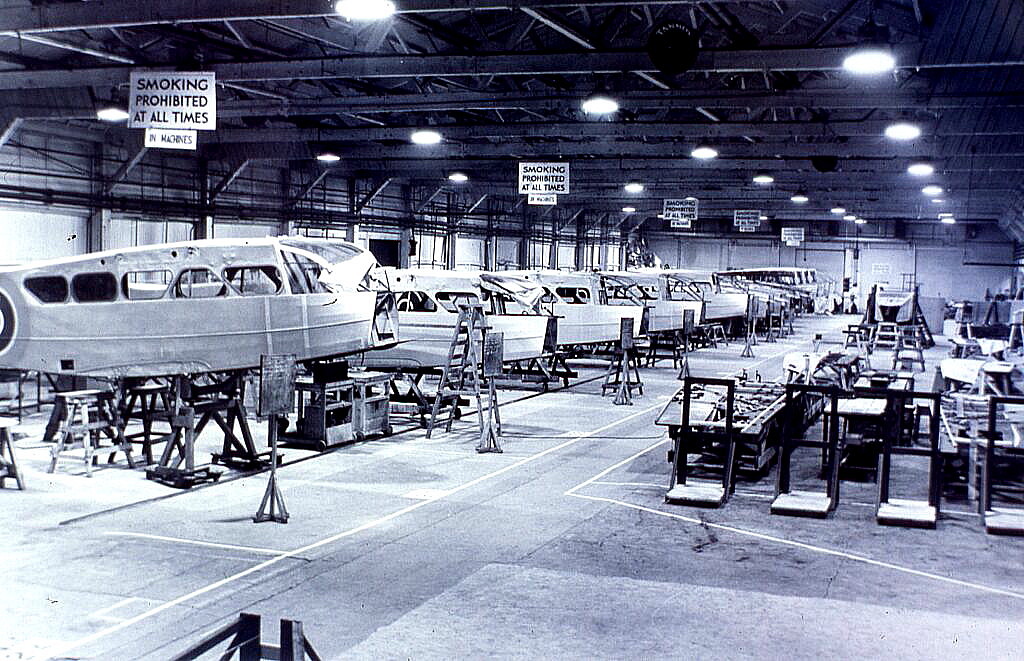
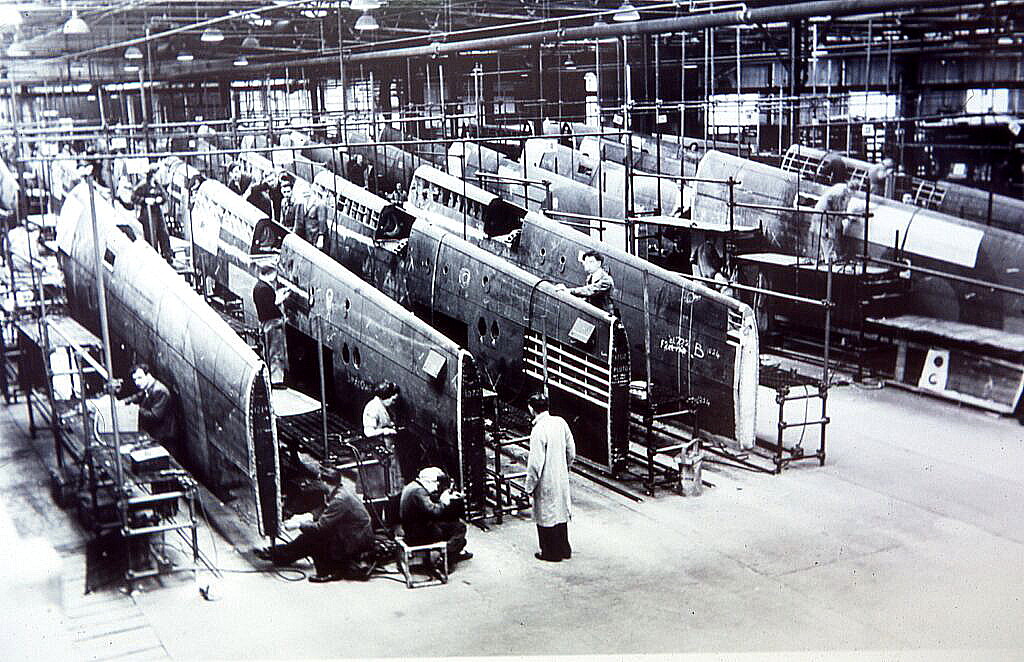
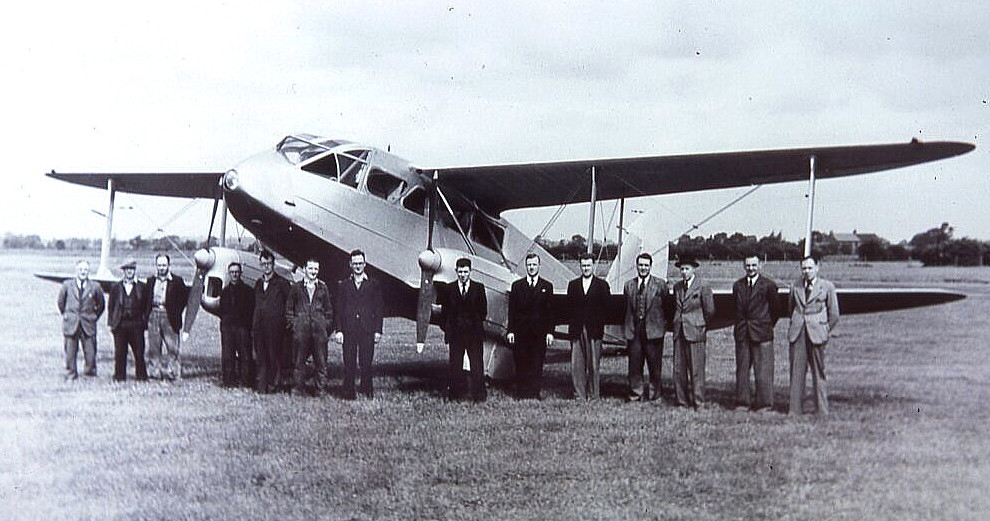
Picture Nine: The de Havilland DH89 Dominie production line. A military version of the Dragon Rapide regional airliner, which first flew in 1934, the Dominie was mostly used in training and communications duties.
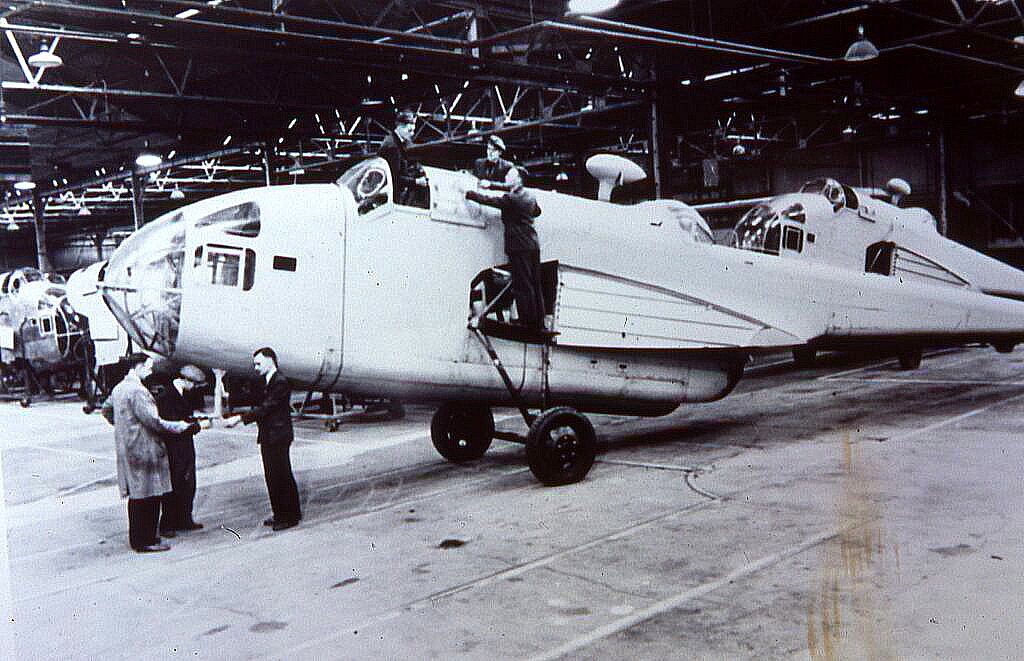
Picture Ten: Hampden fuselage.
Picture Eleven: Avro Lancaster wing production. During WW2 aircraft production was widely outsourced to a great many engineering companies.
Picture Twelve: The last DH89 Dominie produced, TX319.
NOTES: Under construction when WW2 intervened, completed in 1940. Airwork were employed here in 1942 to overhaul Douglas Boston/Havoc aircraft for the RAF during WW2 and most of the airframes arrived by road in bits! On completion most if not all of the air tests were performed by Peter Clifford who carried out the first air test on 8th June 1943 and his last on 29th June 1945
1942 Brush started building DH89 Dominies at their Falcon works which were transported by road, (the fuselages being towed), for final assembly and flight testing here. The last aircraft departed in July 1946
LOUGHBOROUGH COLLEGE INVOLVEMENT
Also in 1942 Loughborough College obtained a contract to teach Fleet Air Arm aircraft engineers and a Grumman Martlet 1 was used as an instructional airframe. Other examples of instructional airframes used here by Loughborough College, (some previously based in the old Premier dance hall), were the Armstrong Whitworth Atlas, Blackburn Baffin, Blackburn HST.10, Blackburn Shark, Bristol Bullpup, Douglas Boston, Fairey S9/30, Fairey Long Range Monoplane, Gloster AS.31 Survey, Hawker Hart, Hurricane IV and Sea Hurricane, Supermarine Spitfire Vc and a Vickers Wellington XVI.
A Handley Page Halifax B.VI was promised but crashed on landing here. On their later site near the west side of Loughborough they have used a British Aerospace (SEPECAT) Jaguar GR.1, a British Aerospace EAP, Hawker Hunter F.4, Hunting Jet Provost T.1 and a Payne Knight Twister.
AIRPORT PLANS THWARTED
In 1947 attempts were made to re-establish the site as an airport but despite being awarded a Ministry of Aviation license in 1949 little happened, the most frequent visitors being Tiger Moths from Nottingham University Air Squadron.
LOUGHBOROUGH MEADOWS: Company aerodrome
Operated by: Brush Electrical Engineering Co Ltd
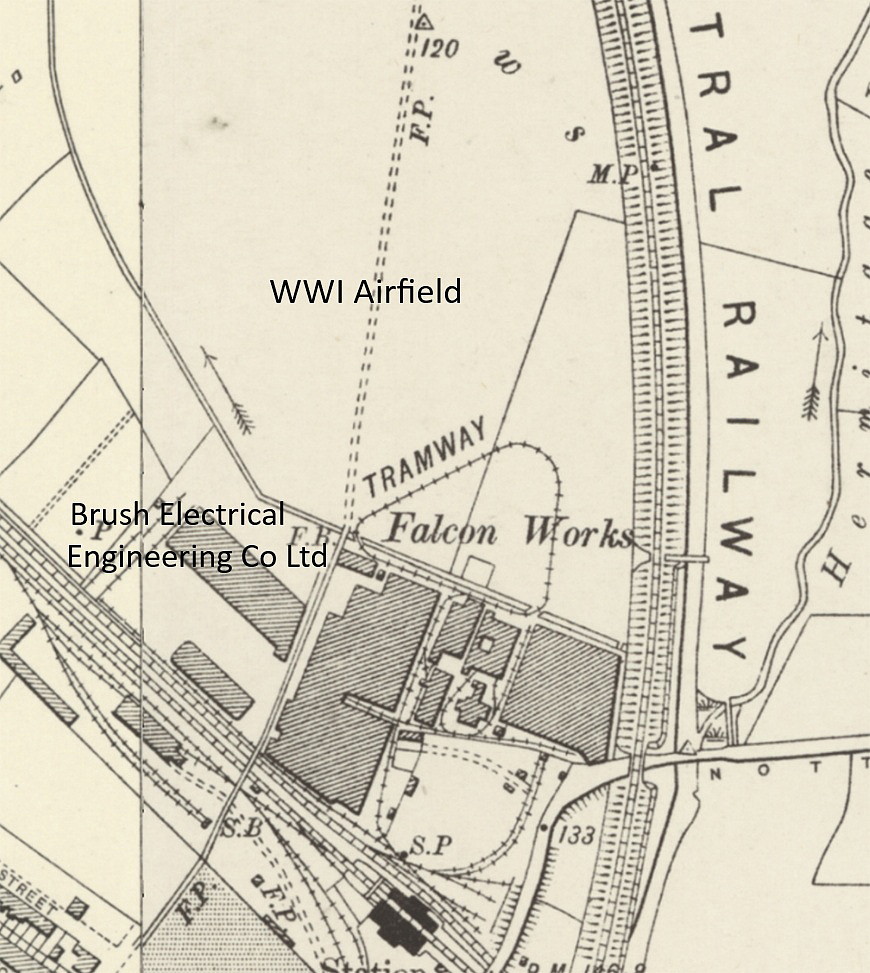
Location: Close to the Brush Falcon works between the River Soar and A.6 Derby Road about 1nm NW of Loughborough town centre
Period of operation: 1915 to 1919
NOTES: Flight testing of Brush built aircraft for the RFC and RNAS
LOUGHBOROUGH COLLEGE: Private airfield/aerodrome
Operated by: Loughborough College of Aeronautical Engineering
Location: Alongside the A6 Derby Road about 1 to 1.5nm NW of Loughborough town centre
Period of operation: Late 1940s/early 1950s only?
LOUGHBOROUGH: Private helipad
Operated by: Willowbrook International Ltd?
NOTES: As pointed out many times elsewhere private helipads are ten a dozen today, (and only a few are listed in this 'Guide'), but back in the mid 1970s they were still a rarity. Hence this inclusion where it seems the Agusta-Bell AB-206B JetRanger 2 G-BEHG was based. Does anybody now know where this helipad actually was?
Jeff paton
This comment was written on: 2017-12-28 14:01:13I was born in loughborough 1940 and remember the RAF airfield I was about three when we use to visit a Lancaster crash site, an overshoot I think it was.just about where the golf club is
Paul Gregg
This comment was written on: 2020-12-15 12:36:03Interesting . The above comment refers to a Lancaster crash. Many years ago I learned of a Havoc crash where the modified twin engined Douglas Havoc (Boston in some varieties) failed to 'unstick' from the short unpaved runway and demolished the parapet of a brick built bridge on the Derby Road. I have never seen photos but did record its serial which I'll have somewhere. Due to its limited size and poor surface, Derby Rd airfield would have posed a considerable challenge to anything but an exteremely lightly equipped and minimally fuelled Lancaster in anything but very dry ground conditions. Maybe a Lanc pilot had that experience. Certainly a Halifax had undercarriage damage and was written off on arrival as reported above. What a shame it didn't become a Technical College project!.
We'd love to hear from you, so please scroll down to leave a comment!
Leave a comment ...
Copyright (c) UK Airfield Guide