





Monkmoor
MONKMOOR: Flying exhibition venue later military airfield later civil temporary aerodrome? (Aka MONK MOOR))
Military users: RFC/RAF Training Depot Station, Aircraft Repair Depot and Storage Station
(Airco DH.4s & DH.9s, Royal Aircraft Factory BE.2s, RE.8s, & Bristol Fighters)
(It later become a RAF Maintenance Unit in WW2)
Civil users: Berkshire Aviation Co, later called Berkshire Aviation Tours, held displays here from the 10th to 16th November 1919. The pilot was a WW1 veteran by the name of Alan Cobham! Knighted for his pioneering Empire route surveys, a name that should these days perhaps be rightly regarded as the ‘father’ of British civil aviation especially with regard for promoting regional aerodromes/airports. Cobham resigned from Berkshire Aviation in May 1920.
The Holmes Bothers, of Berkshire Aviation Tours, also used this airfield as a base for their ‘joy-riding’ flight operations, moving here in 1927.
Location: Roughly 1.5nm NE of Shrewsbury town centre.
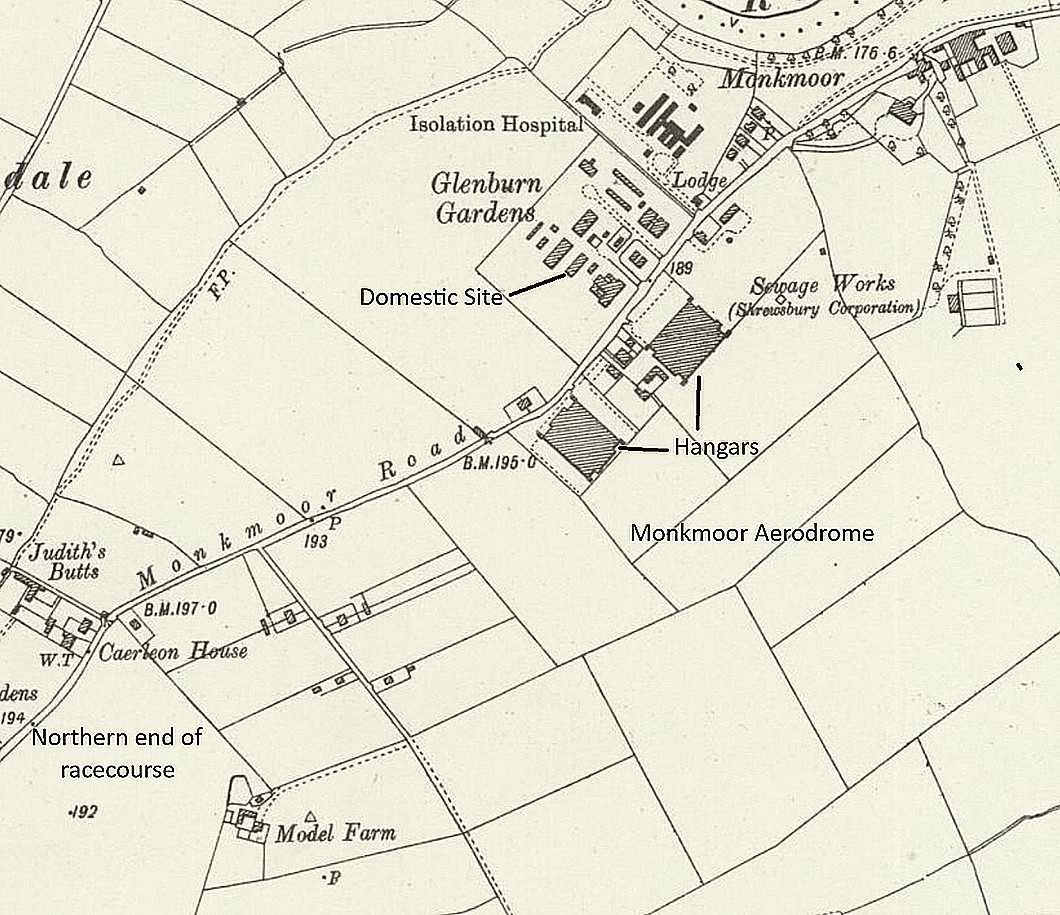
The WW1 airfield is reported to have been 500 yards N of the original flying sites
Period of operation: 1917 to 1919 (RFC mainly?) Then civil again from 1927/28 to 1937?
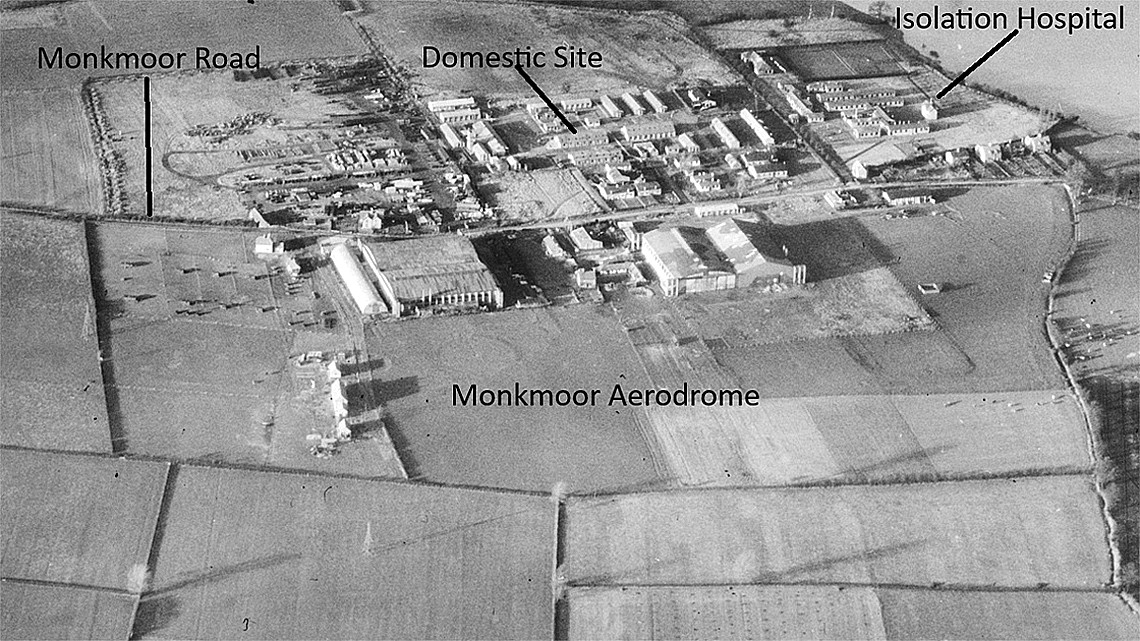
Runways: Grass landing area 914 x 457 (However, it does seem pretty certain flying also took place from a large field across the Monksmoor Road from the ‘official’ airfield)
Site area: In late WW1 listed as 106 acres 777 x 503 grass
A MICHAEL T HOLDER GALLERY
We have Mike Holder, a long term friend of this 'Guide', to thank, once again, for providing the following items to illustrate this listing, together with maps and pictures he has annotated for our benefit.
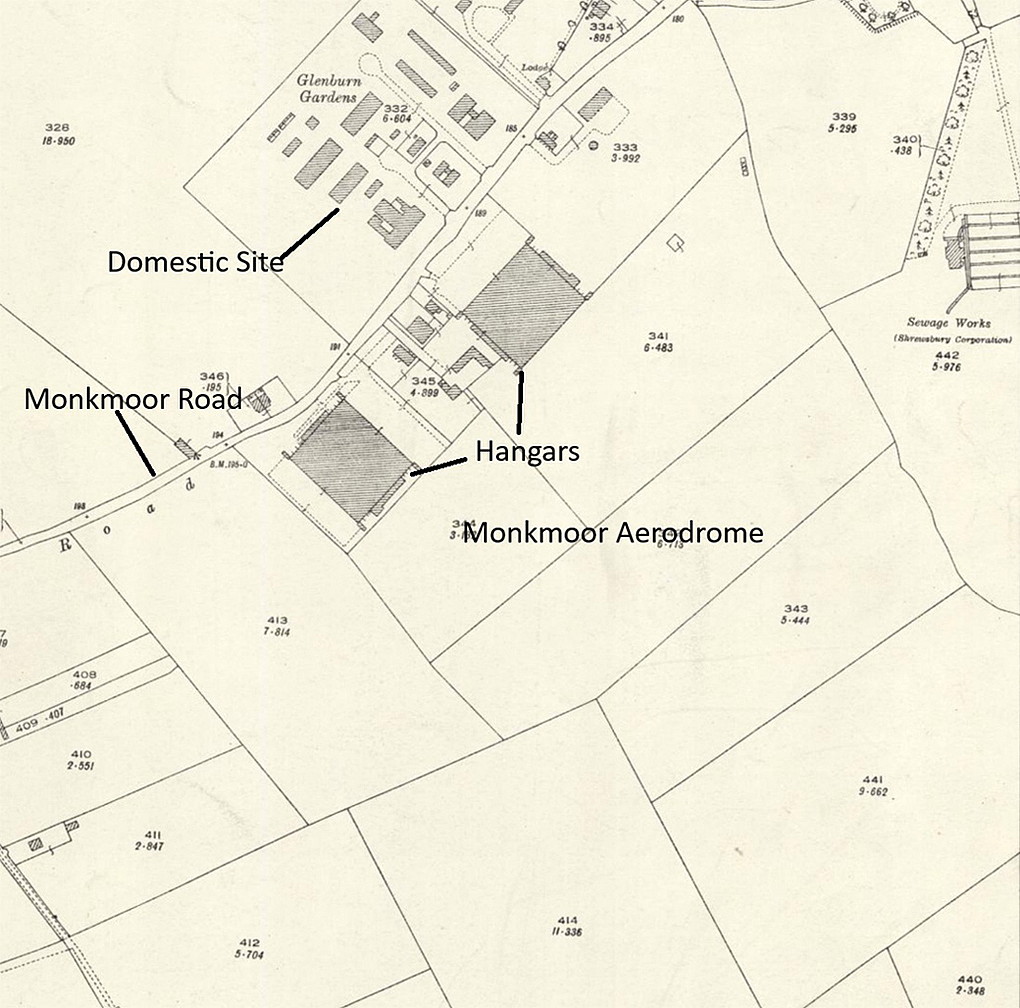

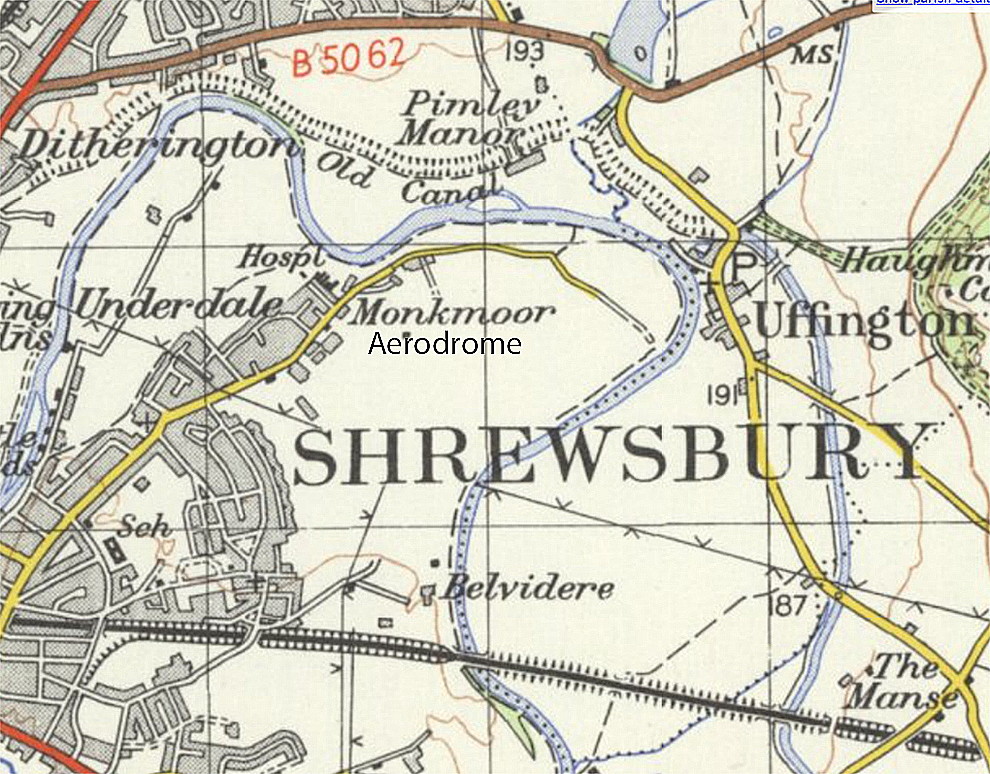
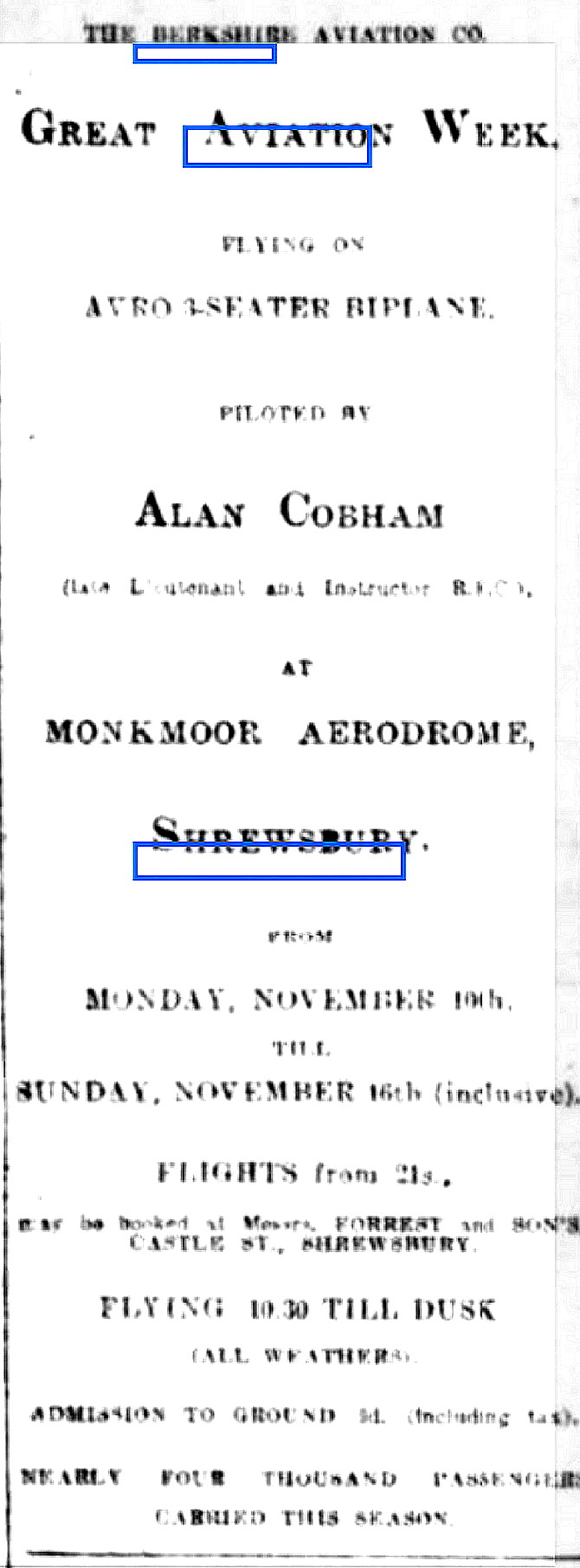
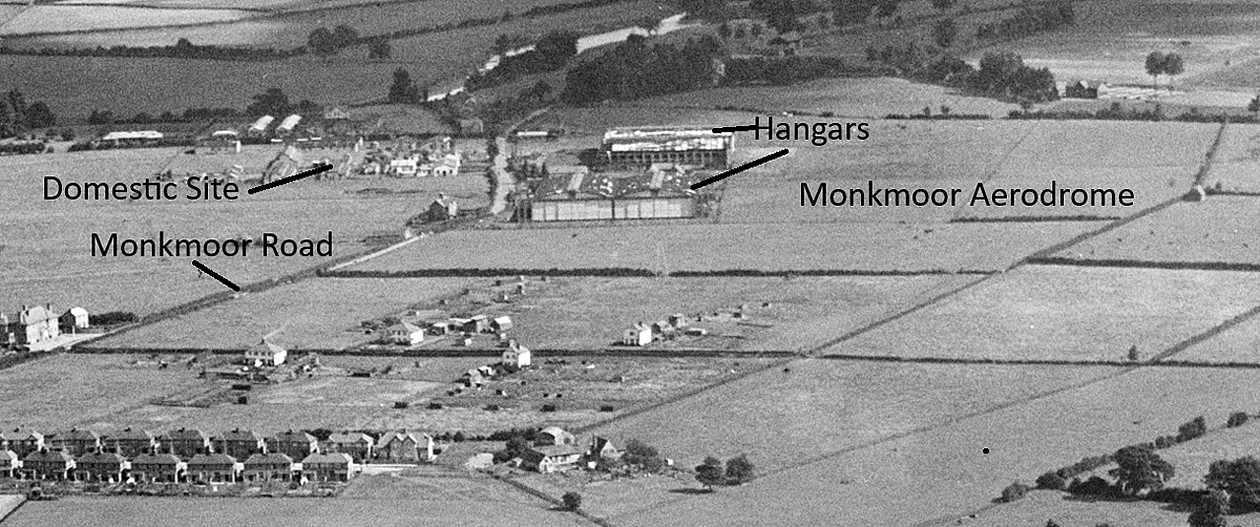
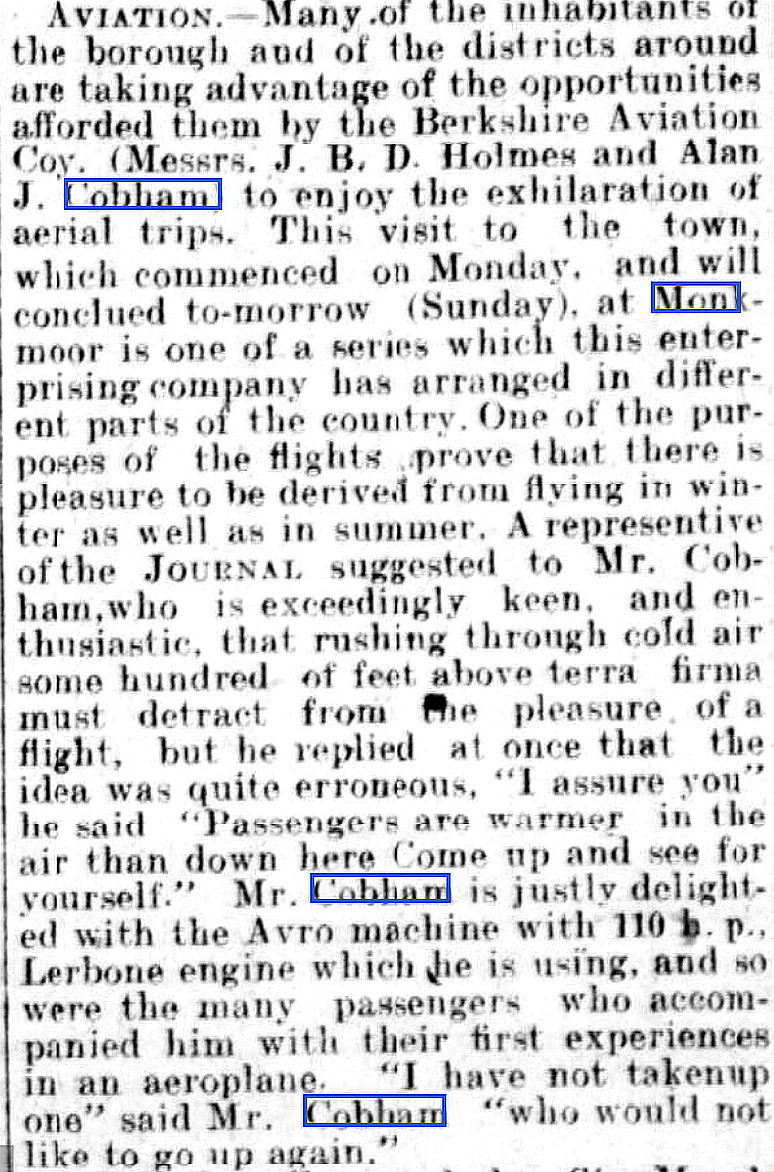
The advert was placed in the Wellington Journal on the 8th November 1919. The article was published, also in the Wellington Journal, on the 15th November 1919.
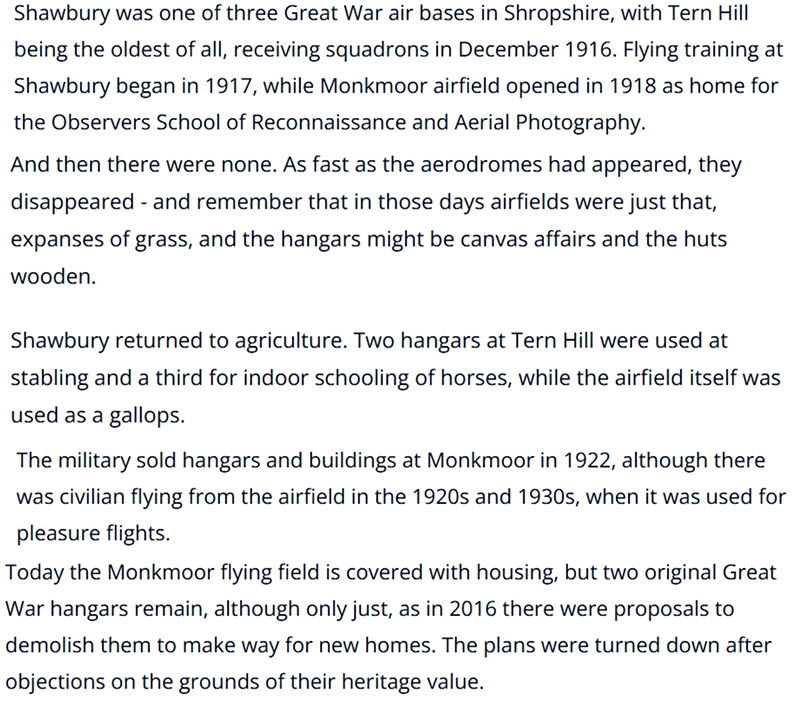
The excerpt is from 100 years of the RAF, by Toby Neil, published in the Shropshire Star on the 30th March 2018.
A COUPLE OF MEMORIES FOUND
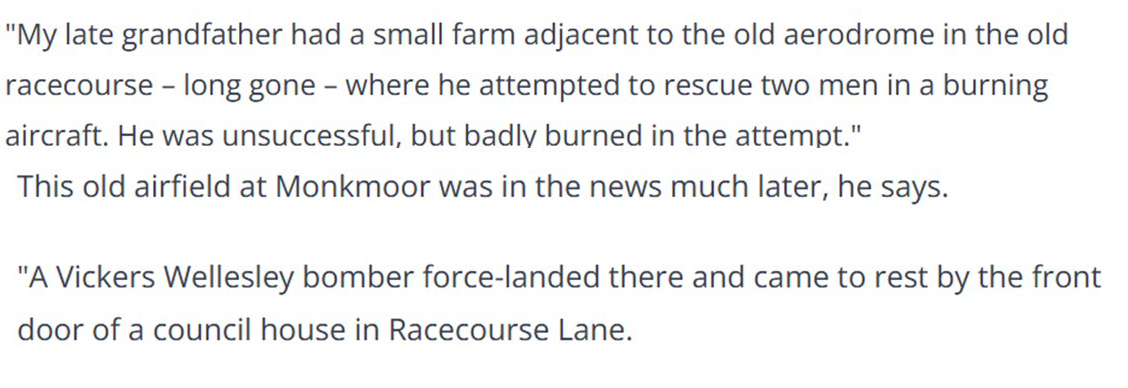
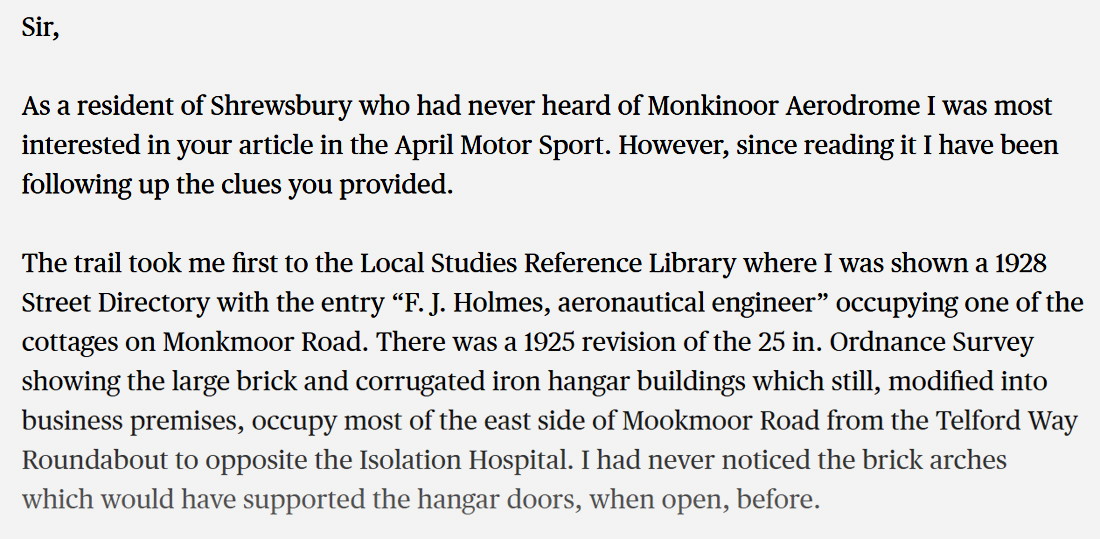

Letter One from Peter Short was published in the Shropshire Star on the 9th January 2021.Letter Two was sent to Motor Sport magazine, date unknown. The excerpt is from the Forum, Airfield Research Group.
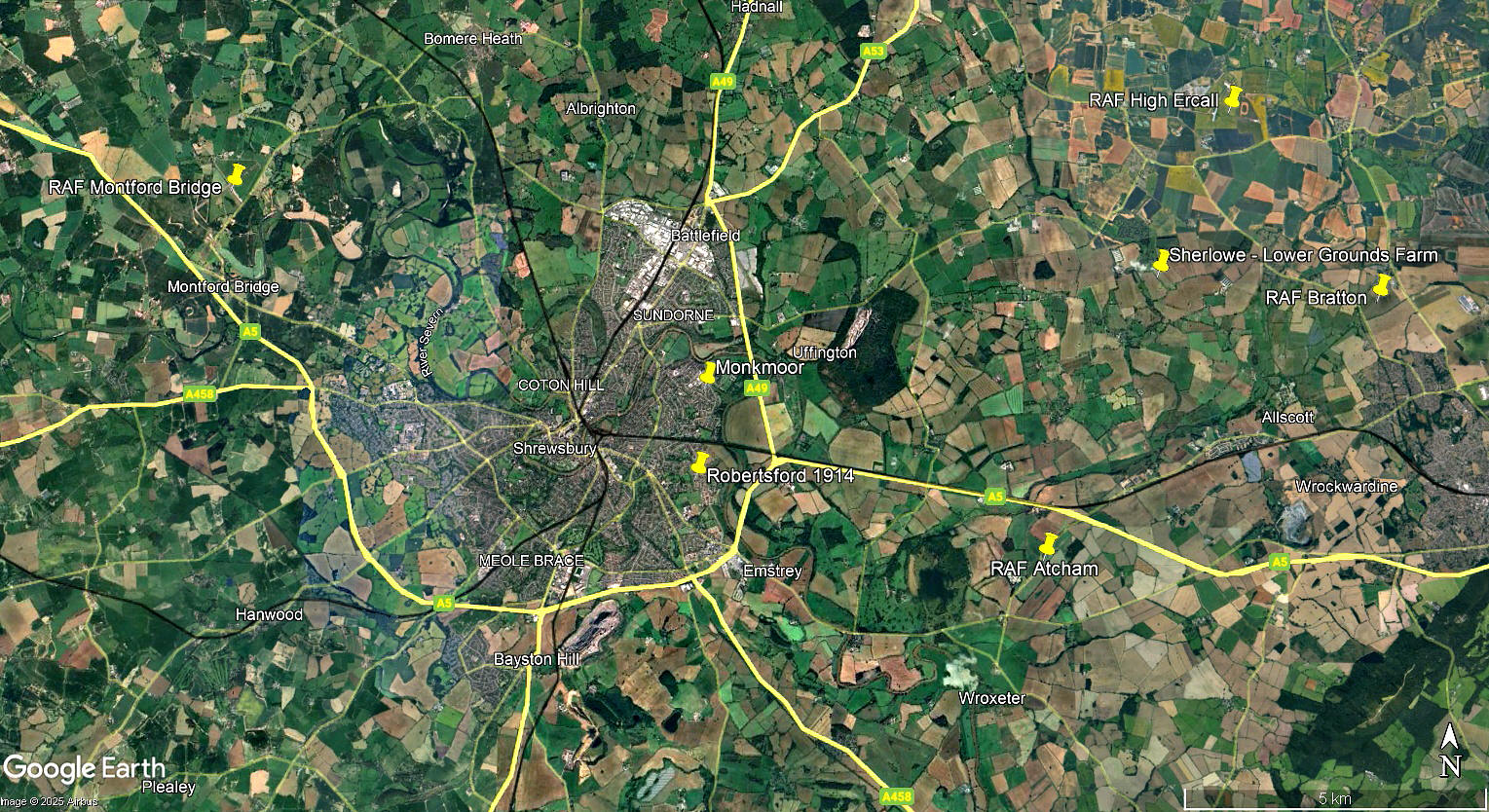

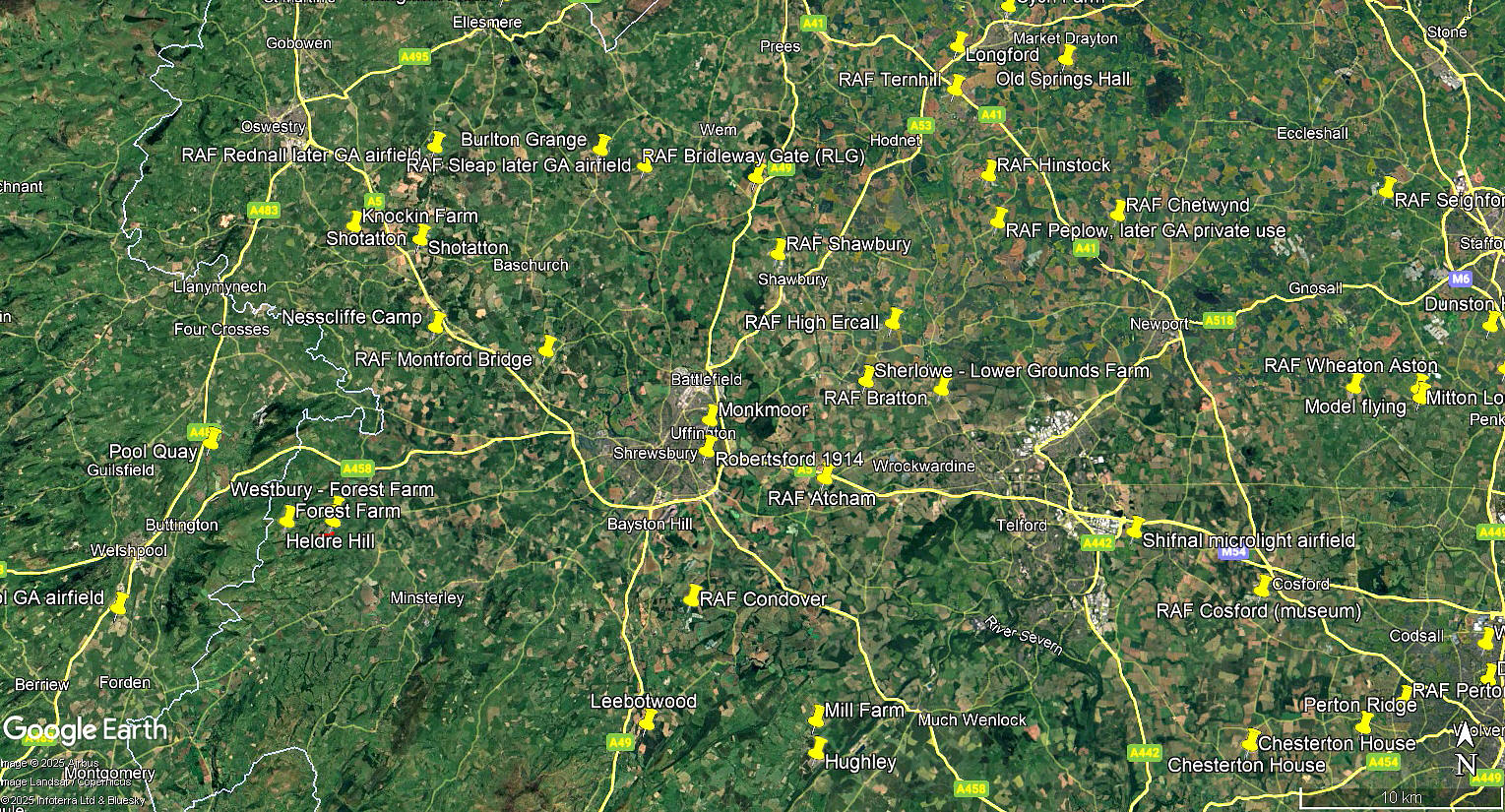
The local area and area views are from my Google Earth© derived database. Please note that not all listings are pinned on this database.
NOTES: Gustav Hamel appears to have performed flying exhibitions at nearly every town in the UK from 1911 to 1913 and Shrewsbury was no exception!
His display here was on the 7th November 1912 and 6,000 people attended. Being a Thursday it seems the day was accorded Public Holiday status and the town even struck a Gold Medal to award Hamel. On the day gusty winds prevailed producing considerable turbulence but faced with such a large crowd Hamel performed his normal three flights routine.
The local paper carried the healines “Thrilling Moment! Aviator’s Narrow Escape”. What probably occurred was that he encountered rotor effect as winds blew around buildings and tall trees; the aircraft suddenly plummeted but of course in those days they didn’t even wear a seat belt let alone a proper restraining harness! I’d certainly call that a ‘Thrilling Moment’ but I’d use somewhat different language to describe it to my friends!
It’s well worth pointing out that by this time the Blériot XI was proving itself to be a very robust flying machine and the 50hp Gnome rotary engine was very reliable. (For those days!) This display was at the racecourse, just south-west of the WW1 aerodrome.
ANOTHER ASPECT
According to Derrick Pratt & Mike Grant in their fbook of Wings Across the Border, “MONKMOOR would appear to have been one of a few airfields that were split by a road and needed simple ‘level crossing’ procedures and precautions as aircraft taxied from the hangars through the gap in the opposite hedge on the airfield, i.e. a man with a red flag held up such traffic as used this country track which gave access not only to Monkmoor Farm and Hall but also to the much-frequented passenger ferry across the Severn to Uffington”.
This is undoubtably true in respect of having two airfields or landing areas separated by a road but having traffic flow disrupted due to aircraft needing to manoeuvre or even land and take-off is quite common. Take BLACKBUSHE for example when traffic on the main A30 trunk road was often held up in the 1950s at least as aircraft were taken from maintenance facilities to the airport ‘proper’. Even today in west London traffic is often delayed on the busy A4180 West End Road, by aircraft landing at NORTHOLT on runway 25.
JUST A NOTE
There are many similar examples of course. On the other hand I have landed at several small airfields and private airstrips both in the UK and in Europe which don’t measure up to having traffic lights installed but where, when on short finals to land, the passing of a big truck, bus or large farm tractor with a trailer, for example, on a road just before the threshold - can create enough turbulent air to very seriously threaten my safety!
In these cases it’s entirely up to the pilot to ‘go-around’ if they feel it desirable. Given that highly turbulent air is invisible, why can’t traffic lights always be installed? Answer: Far too expensive of course. This said, I visited a highly popular airfield in Bavaria, (Germany), with a very short runway where exactly this applies. The person in the control tower activates them.
With private ‘farm strips’ very few rules apply and in many ways I have loved this type of ‘full on’ flying. Use the Mark One eyeballs. Easily said , but when the gap to land is between high trees on either side of the road, beware! Try to approach high.
THE BERKSHIRE AVIATION CO
Used by Berkshire Aviation Co for their ‘Flying circus’ venue in Sepember 1919. It must be recorded that, by 1929 and by then using at least three Avro 504Ks, (G-EAKX, G-EBKB and G-EBKX), there seems to have been a fourth too, they had carried aloft at least 55,000 passengers without injury!
In December 1927, (some say 1928), Berkshire Aviation Tours moved here from WITNEY in OXFORDSHIRE. It would appear from some sources that Berkshire Aviation probably used a field alongside the original WW1 Airfield.
ADVICE SOUGHT
Can anybody today offer advice on this?
YET MORE APPEARS
Later Mike Holder found these items in November 2025, the first four items being from Wings across the Border by Derrick Pratt.
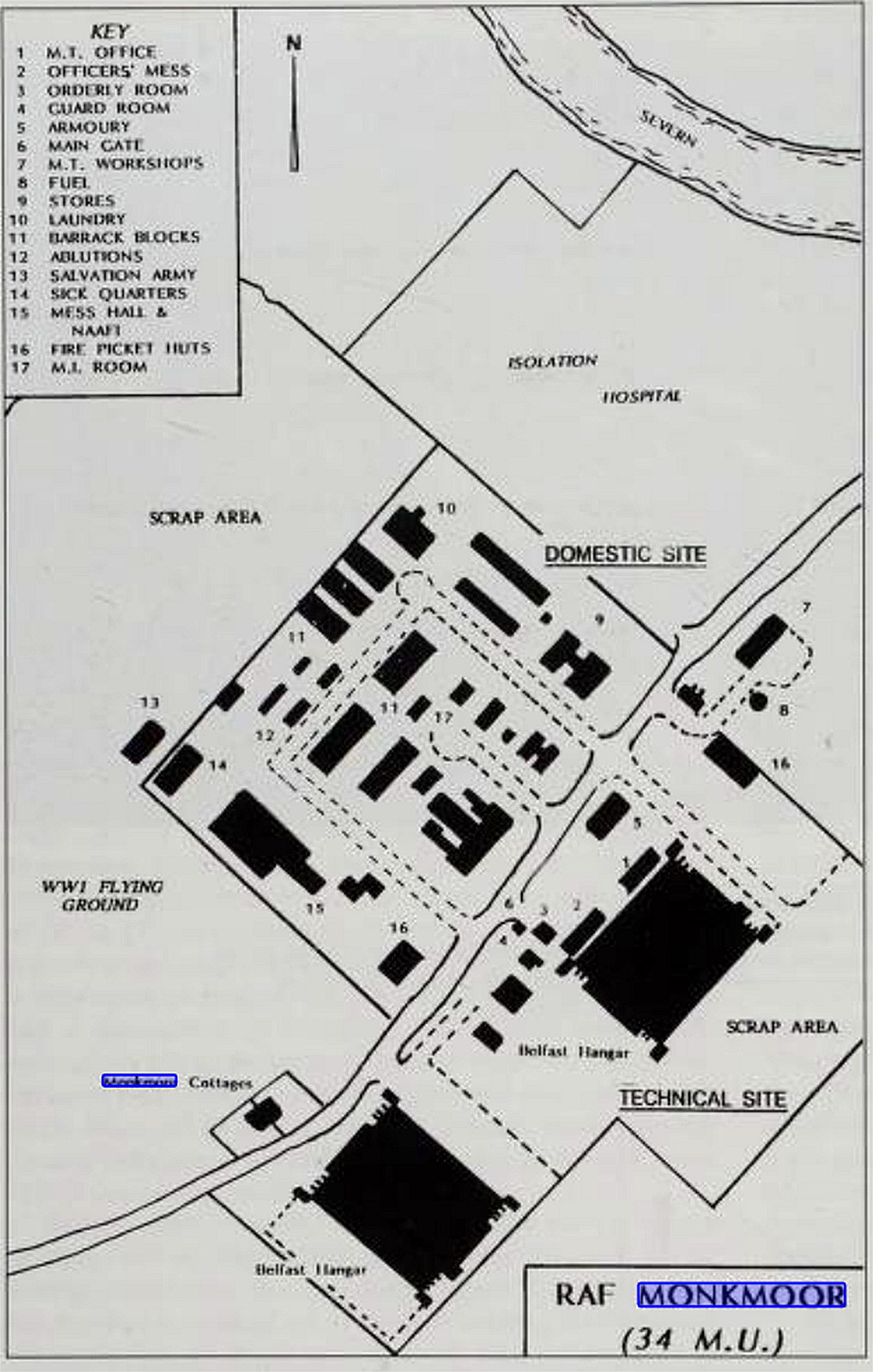
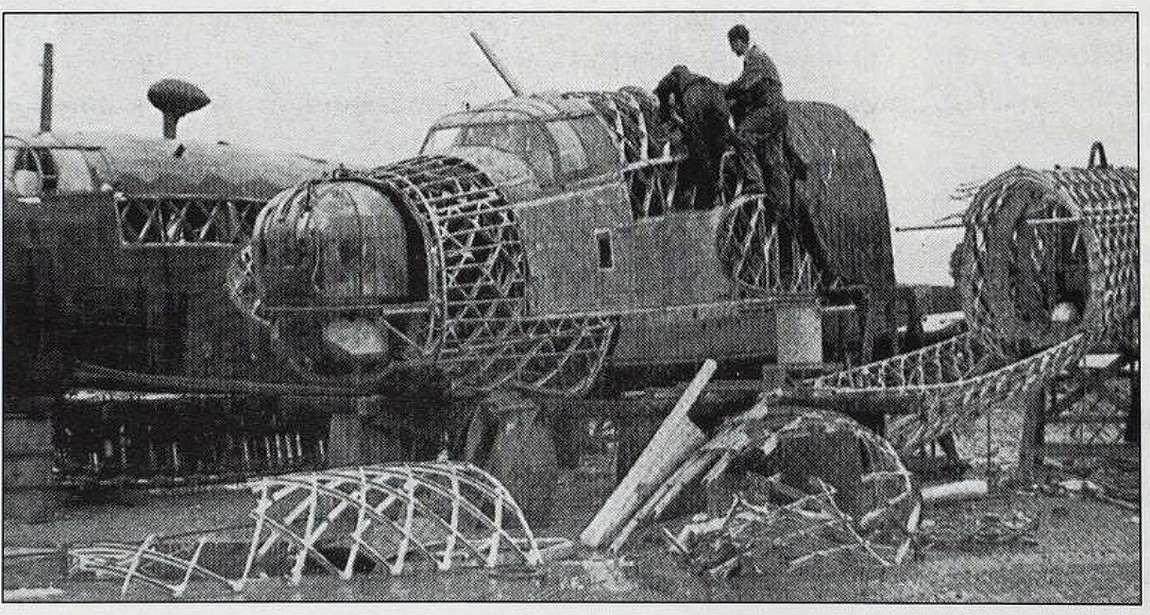
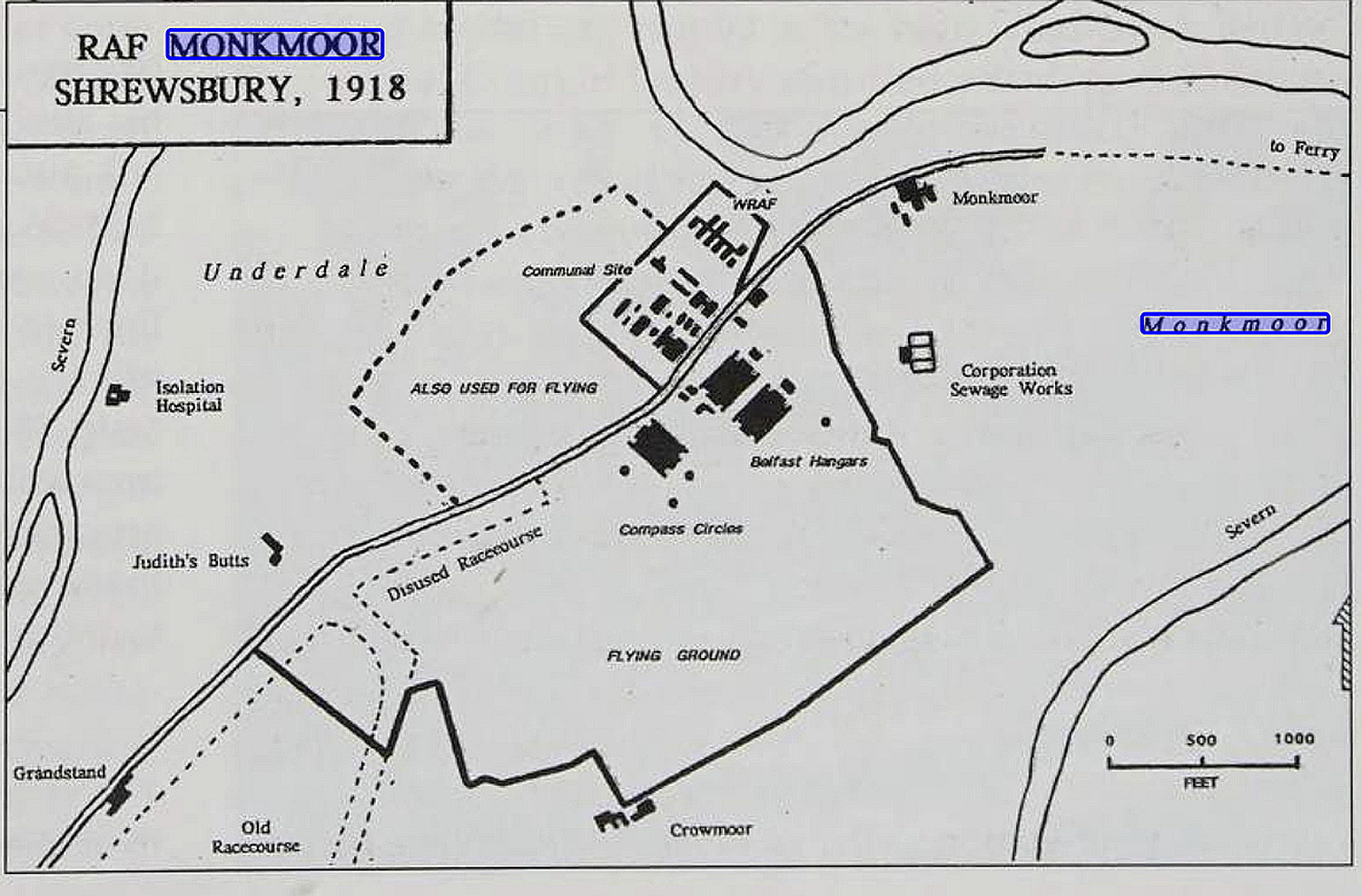
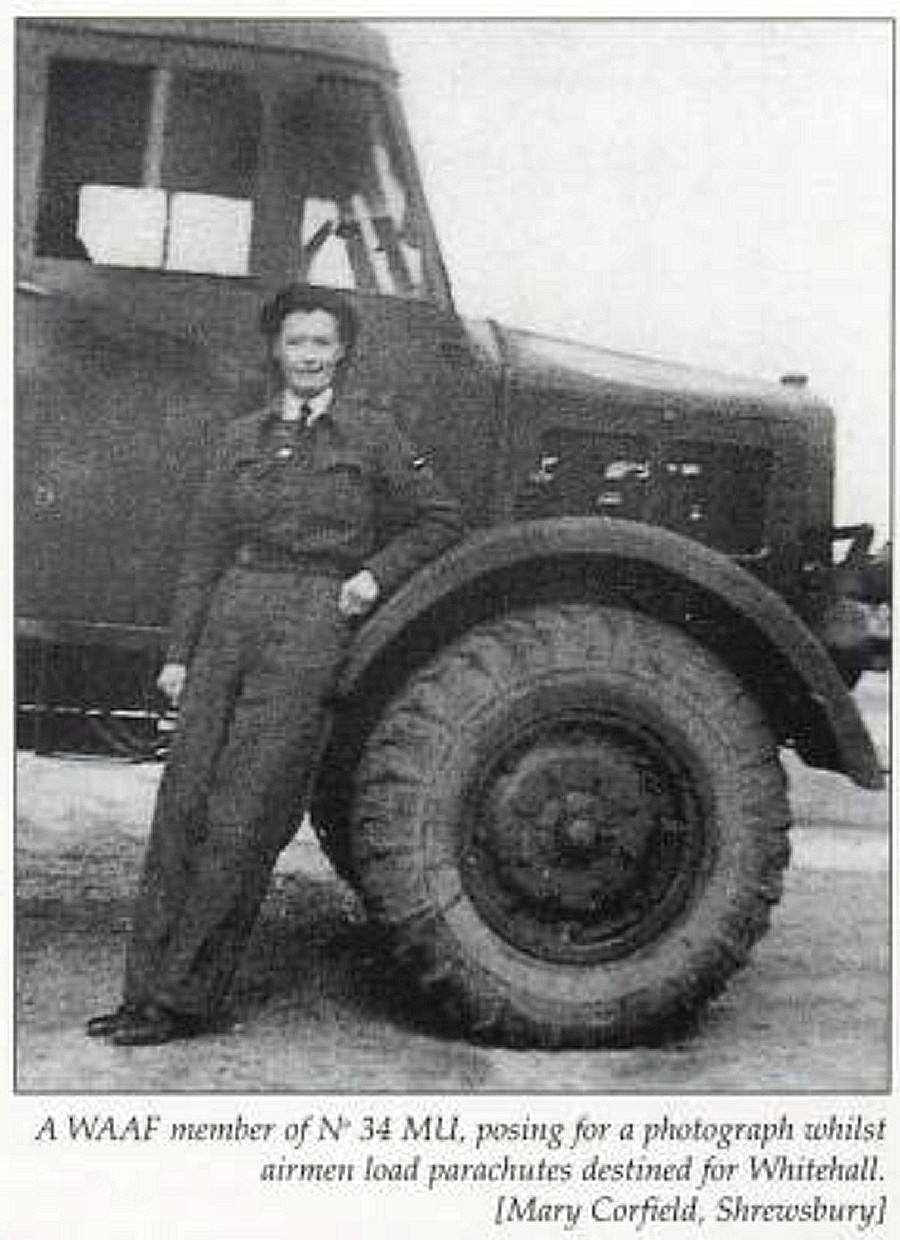
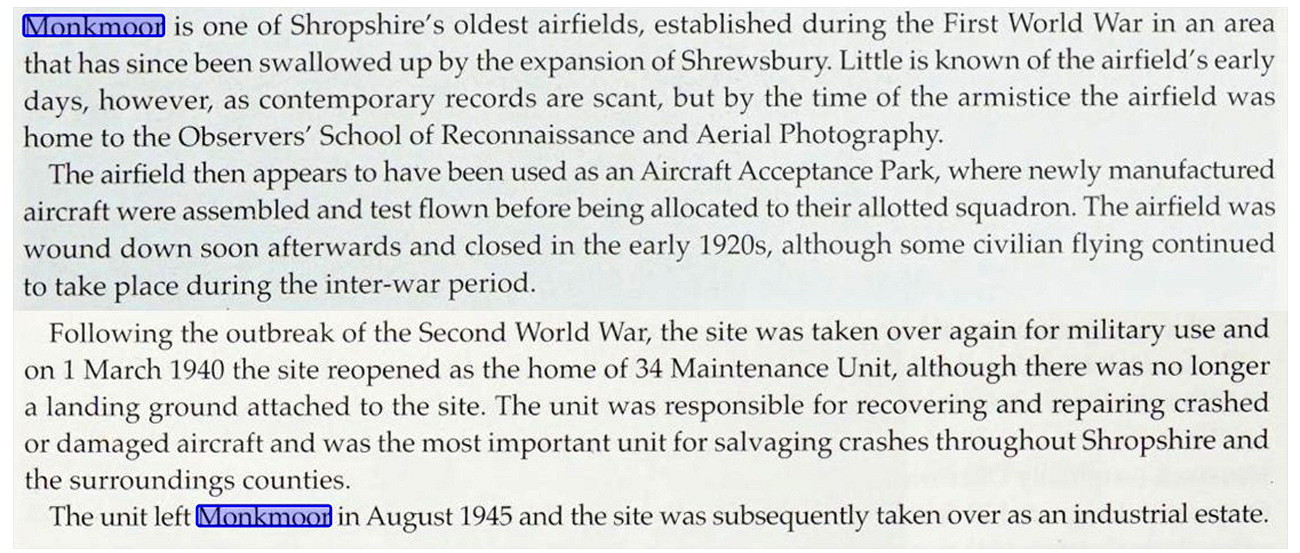
The excerpt is from Pancakes and Prangs by Thomas Thorne. Always, as is only to be expected, all emphasis in aviation is focused on flying, but so much goes on behind the scenes in a huge multitude of aspects. From design to manufacturing, provision of aerodromes with facilities, pilot training and so on. The list is nigh on endless.
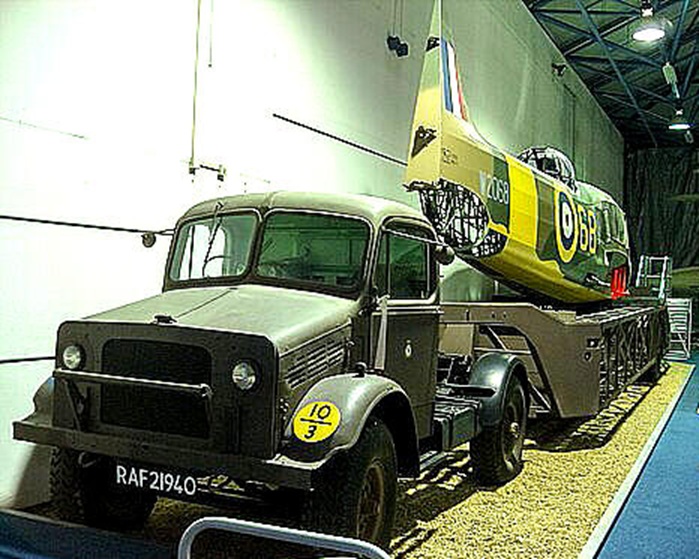
THE 'QUEEN MARY' STORY
One small but crucial aspect is how are large airframe components moved around? Not just when new from factory to aerodrome, but also when damaged and unflyable but well worth repairing or used for salvage. Not all aircraft have been manufactured at factories near to aerodromes. In the early days the airframes were often towed by road to a location to be assembled, or transported by rail. As aircraft got larger the problem reached epidemic proportions during WW2 and Tasker Trailers of Andover came up with a then very novel solution which came into service in 1943.
A long and very low trailer, (ground clearance around 12 inches (30mm), solved most of the problems. Indeed, when my mother and father who had served in the RAF during WW2 and came home to "a land fit for heroes", they were given a pre-fab near Brent Cross on the North Circular Road in northwest London. Up on the hill to the south was the Handley Page factory and I can still remember, (just), seeing 'Queen Mary's' coming down the hill loaded with large airframe sections for RADLETT, not that I knew where they were going in those days.
Trucks and trailers having air suspension hadn't even been dreamt of in those days, and I can also remember when I started driving, now over nigh on sixty years ago, often seeing signs on roads with humpty-back bridges, warning, "Not suitable for Queen Mary's."
Michael Holder
This comment was written on: 2020-05-11 12:58:03Britain from Above has several photos of RAF Monkmoor 34MU - EAW017235 and EAW012621 dated 1948 - show the hangars in great detail.
We'd love to hear from you, so please scroll down to leave a comment!
Leave a comment ...
Copyright (c) UK Airfield Guide