






Monmouth flying sites
Note: This map only shows the position of Monmouth town within the UK.
MONMOUTH see also UPPER CAE GARW FARM
MONMOUTH: Balloon ascent location, temporary experimental Flying Ground, very short lived Landing Ground and finally a venue for an exhibition of flying.
A MICHAEL T HOLDER GALLERY
We have Mike Holder, a great friend of this 'Guide', to thank for investigating the history. I had no idea that C.S. Rolls, of the Rolls-Royce car company, had been involved in ballooning before changing over to powered aeroplanes.
THE BALLOONING ERA - AS OPERATED BY THE HON. C. S. ROLLS
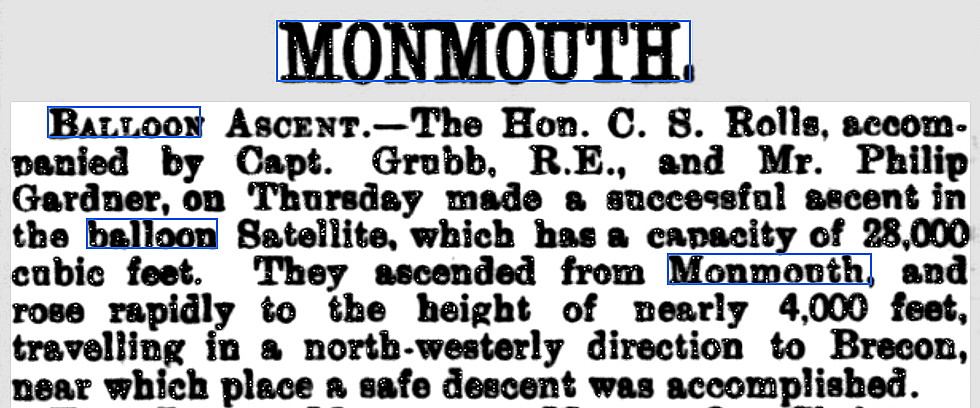
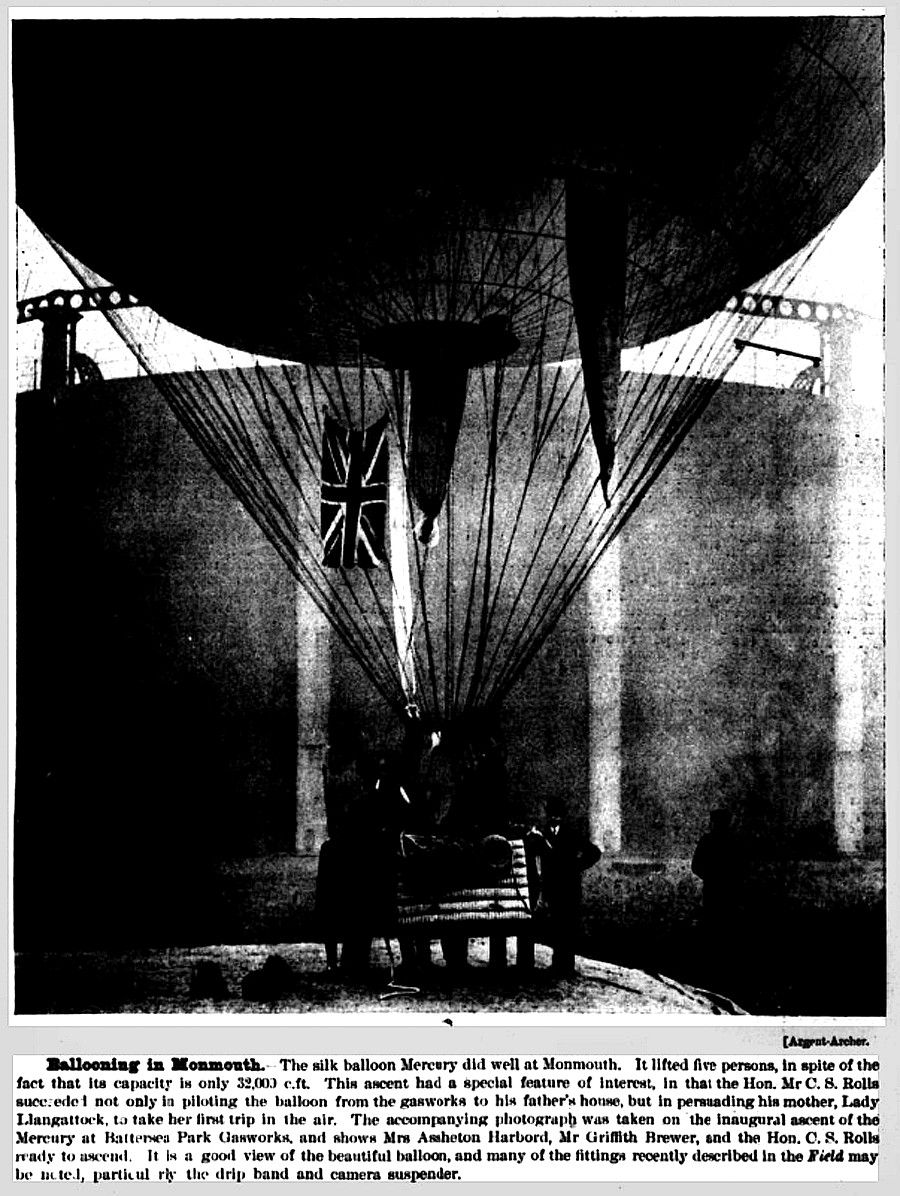
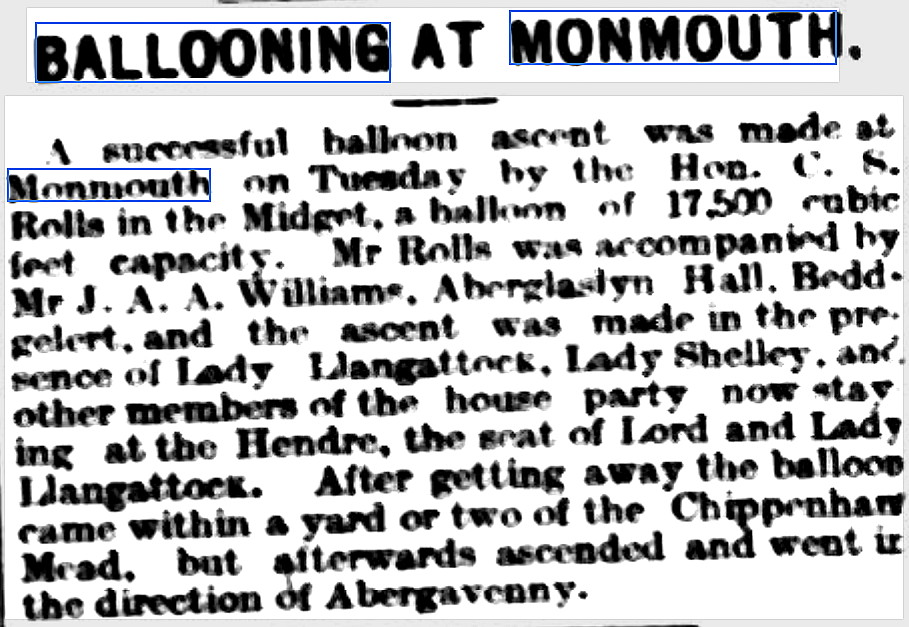
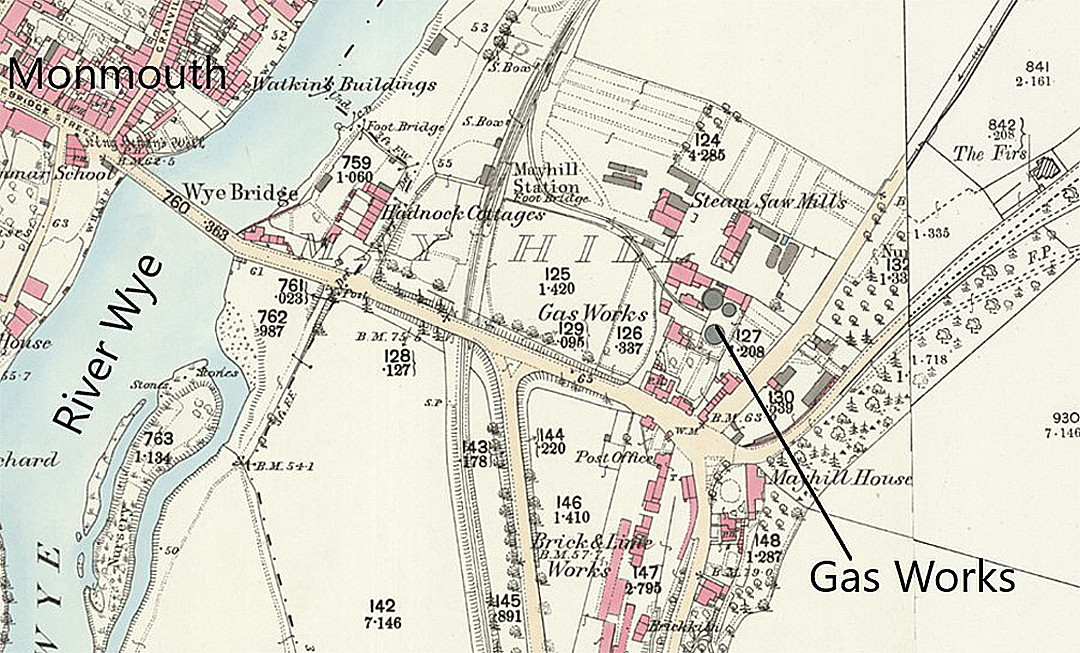
The Short article One about the balloon ascent of the 26th December 1907 was published in the Ross Gazette on the 2nd January 1908. The photo and caption was published in Field magazine on the 2nd January 1909. The Short article Two, regarding the balloon ascent on the 1st December 1908 was published in the South Wales Daily News on the 2nd December 1908.
Coal gas is not a very efficient lifting agent for balloons, compared to helium and hydrogen, but thanks to the U.K. pioneering the industrial revolution, it was relatively cheap and accessible. The local map shows the location of the gasworks, roughly just south east of Monmouth town centre.
C.S. ROLLS MAKES HISTORY
Sadly, not in a way he would have wished for, being reported as the first person to die in the U.K. in a powered aeroplane accident. This occuring at SOUTHBOURNE east of Bournemouth at a flying display on the 11th of July 1910. (See SOUTHBOURNE listing). As a tribute to him, a memorial has been erected in Monmouth.
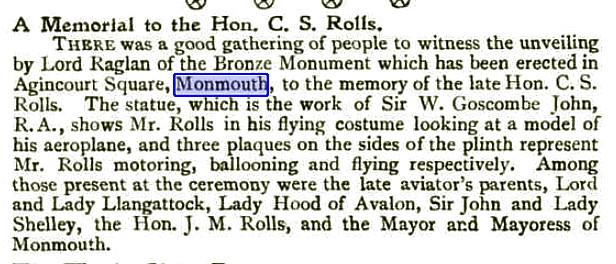
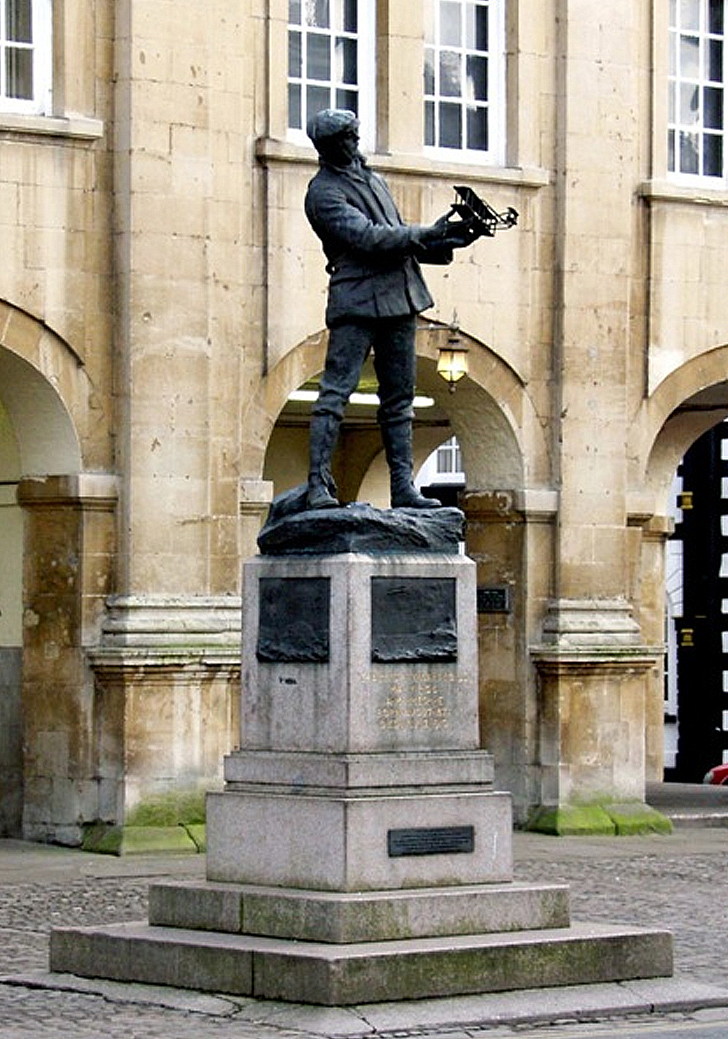
The Short article Three was published in Flight magazine on the 28th October 1911. The picture of the memorial was obtained from Wikipedia.
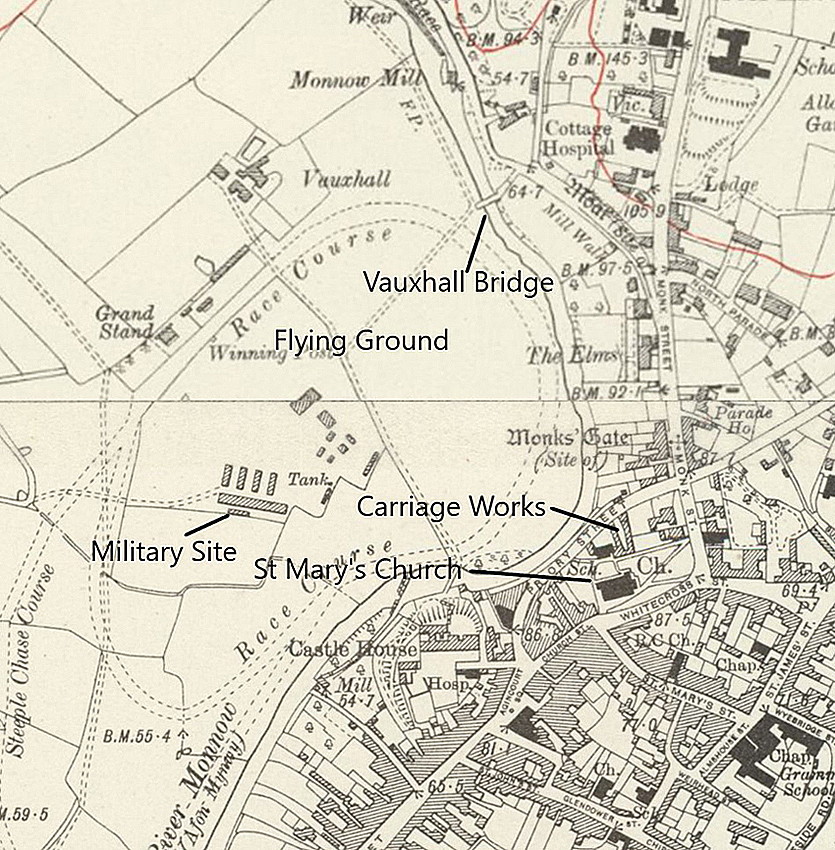
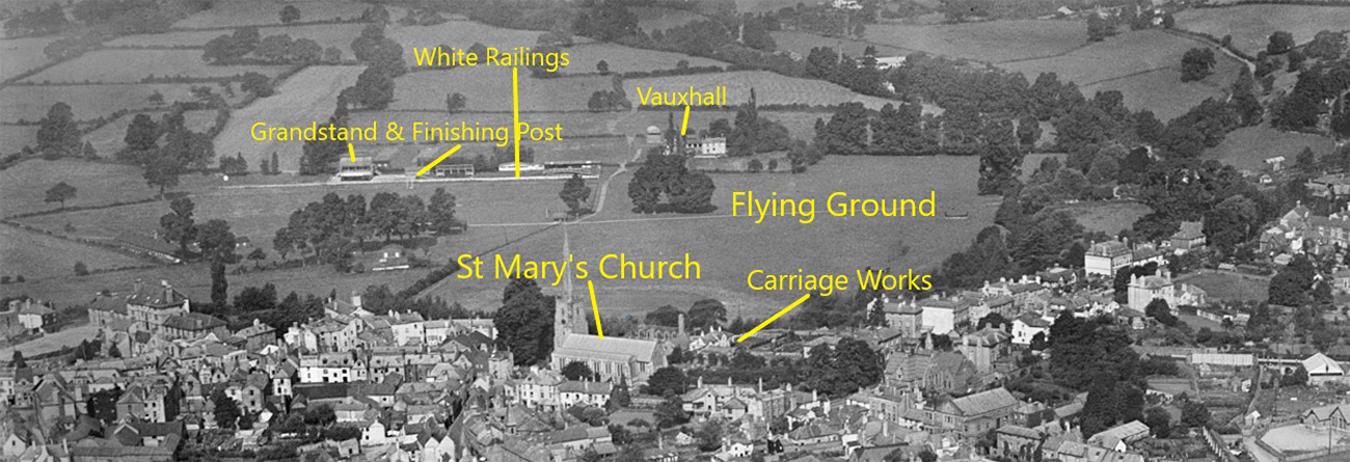
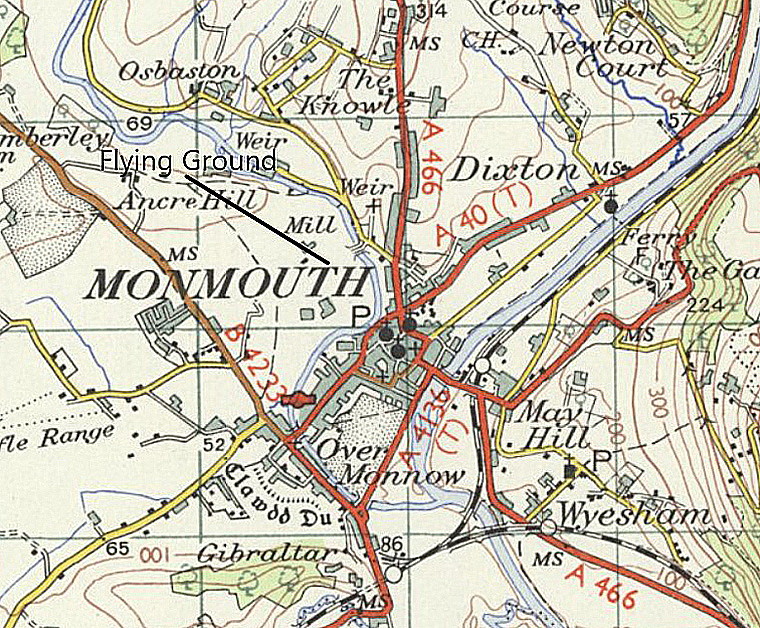
THE CHARLES H PARKES ERA
I find this very interesting. Monmouth in those days can hardly be described as a place you would expect anybody to be designing their own aircraft, but several others were, in equally 'remote' areas of the U.K.
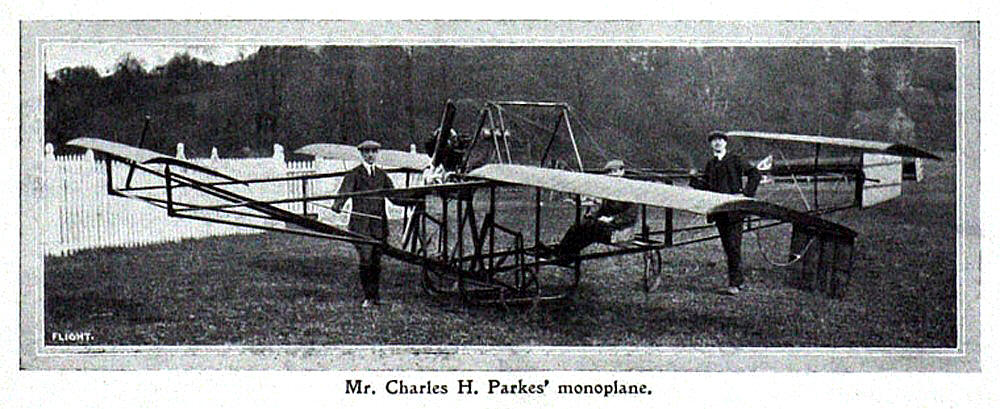
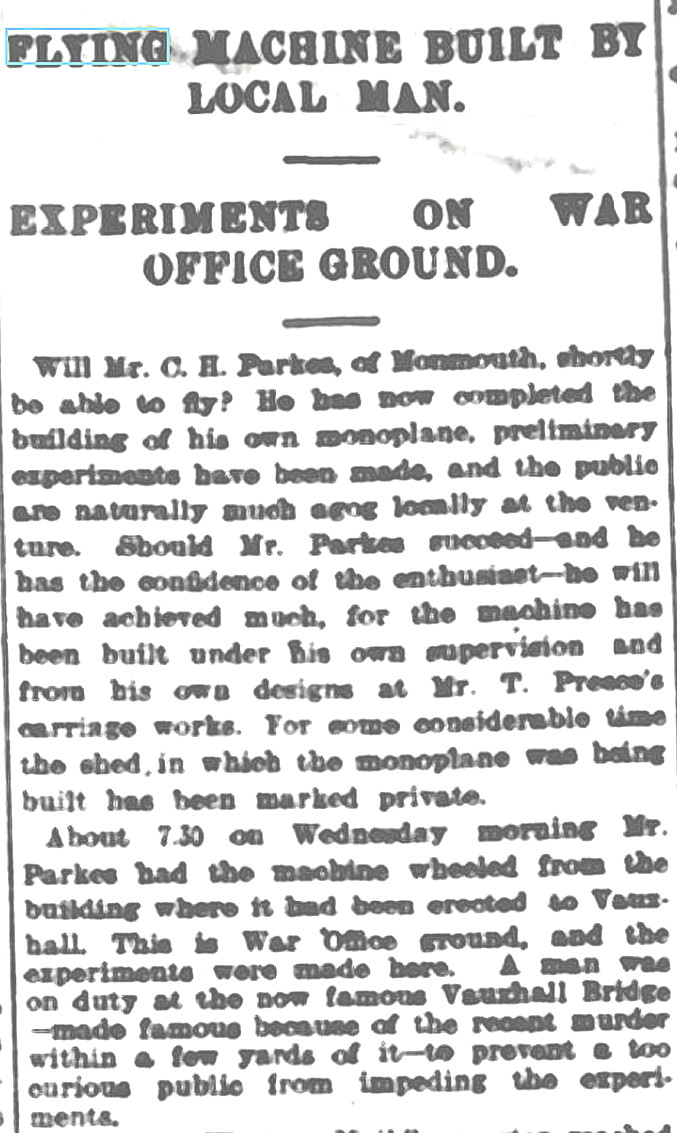
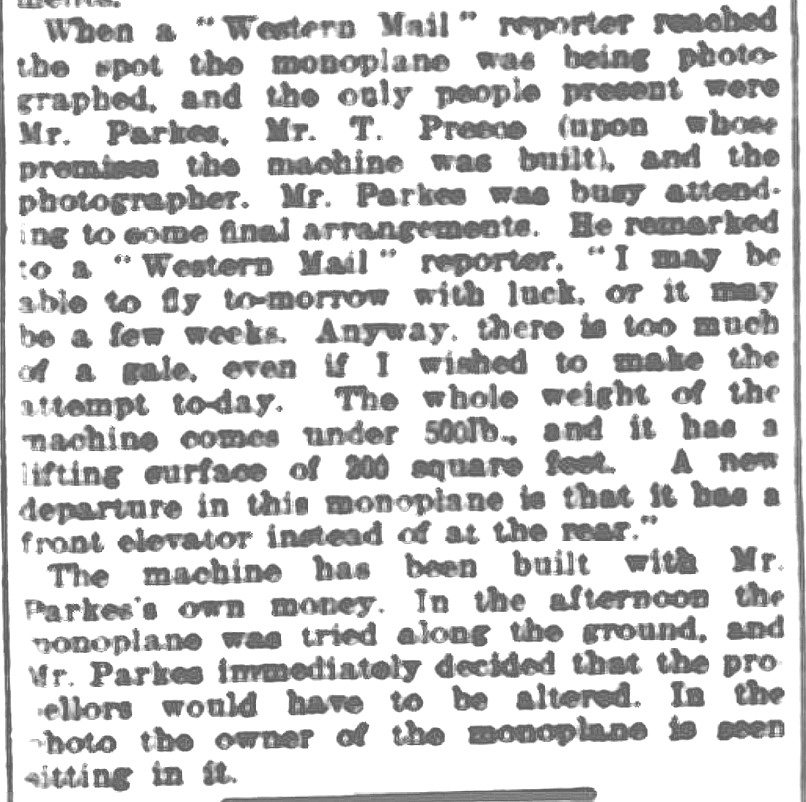
This article in two parts was published in the Western Mail on the 10th March 1910.
This is, I think at least, very interesting. Parkes had oringinally designed a monoplane. Without any doubt the way forward for the future of course, but in those days aerofoil design especially and structural concerns did not bode well for a designer and experimenter in flight based so far away from where the latest developments were taking place. And indeed, even before WW1 many if not most had decided that a biplane was the best option.
Anyway, one way or another Mr Parkes had come to the same conclusion, so designed a biplane.
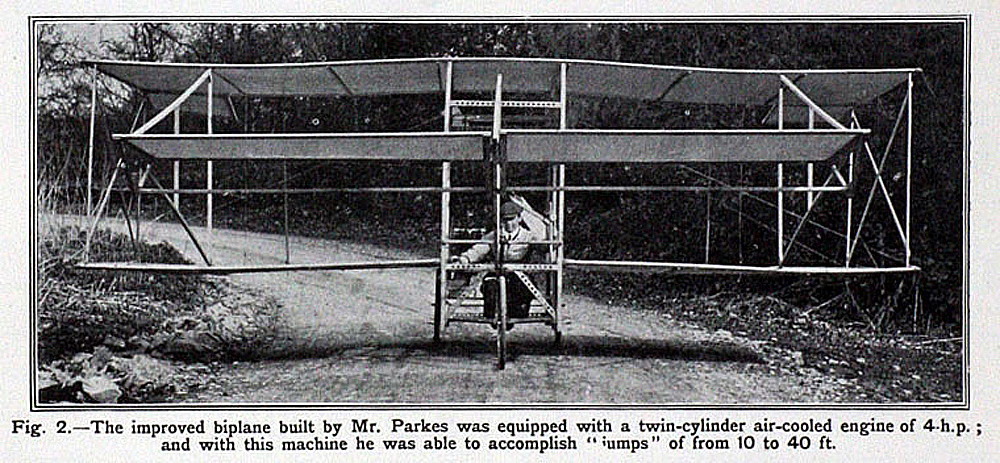
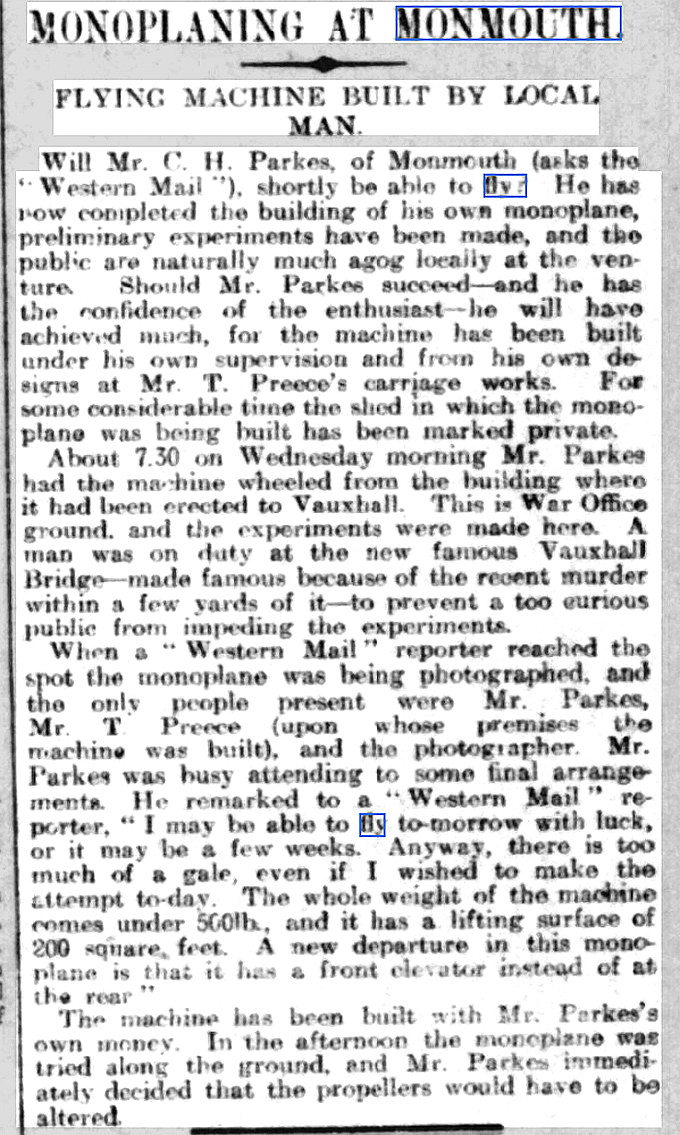
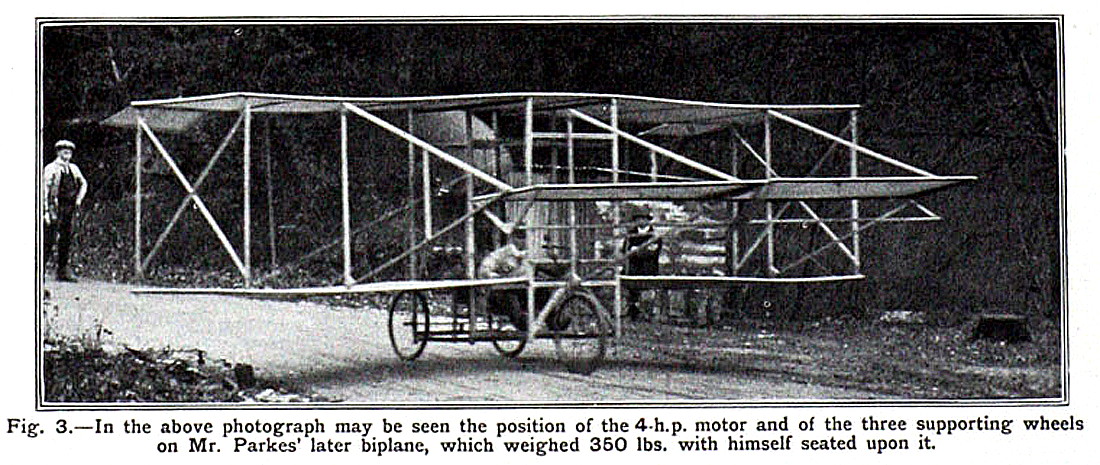
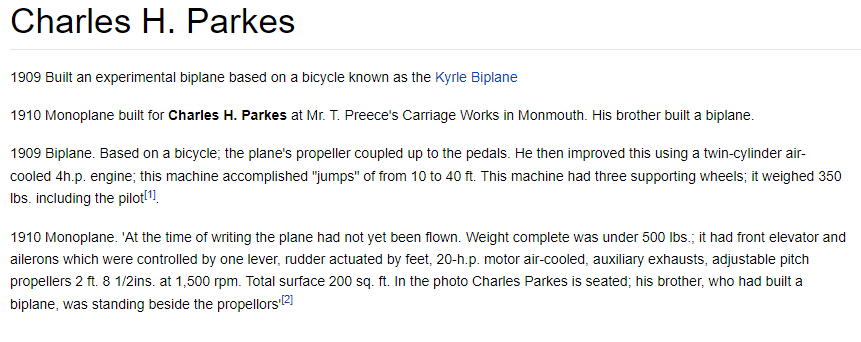
Article Two was published in the Hereford Journal on the 12th March 1910. Article Three is from Grace's Guides. Without much if any doubt his flying experiments were carried out at the Monmouth race course at Vauxhall, which is where the picture of his monoplane version was taken. Clearly what he had not realised was the relationship between engine power and thrust produced by a propeller. 4hp was way too little. Who knows, if the design was stable in flight (?), probably unlikely as it vaguely resembled the Wright Flyer, given about 30hp it may well have flown, if Mr Parkes could control it. Again unlikely as it seems he had no flying instruction, which was available in 1910.
A NOTABLE FIRST VISIT BY AN AEROPLANE
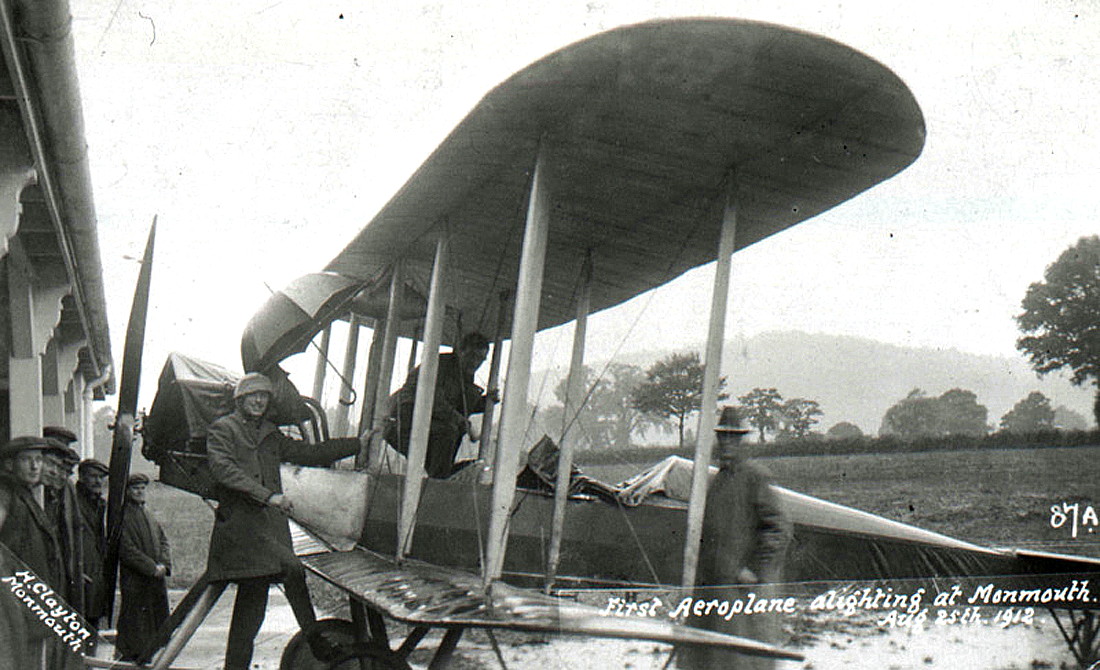
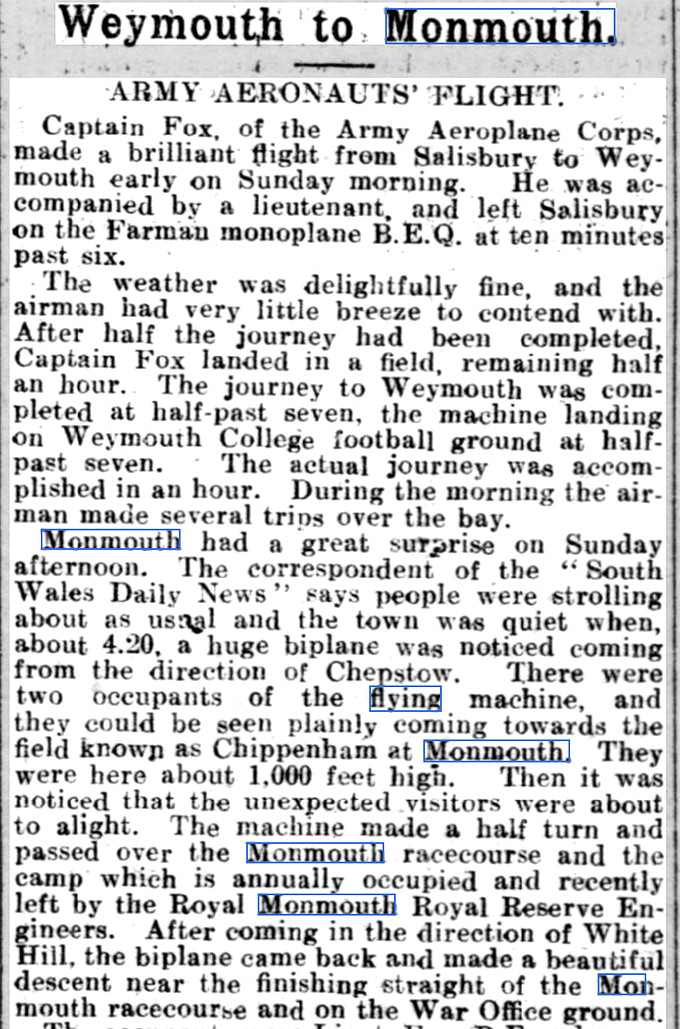
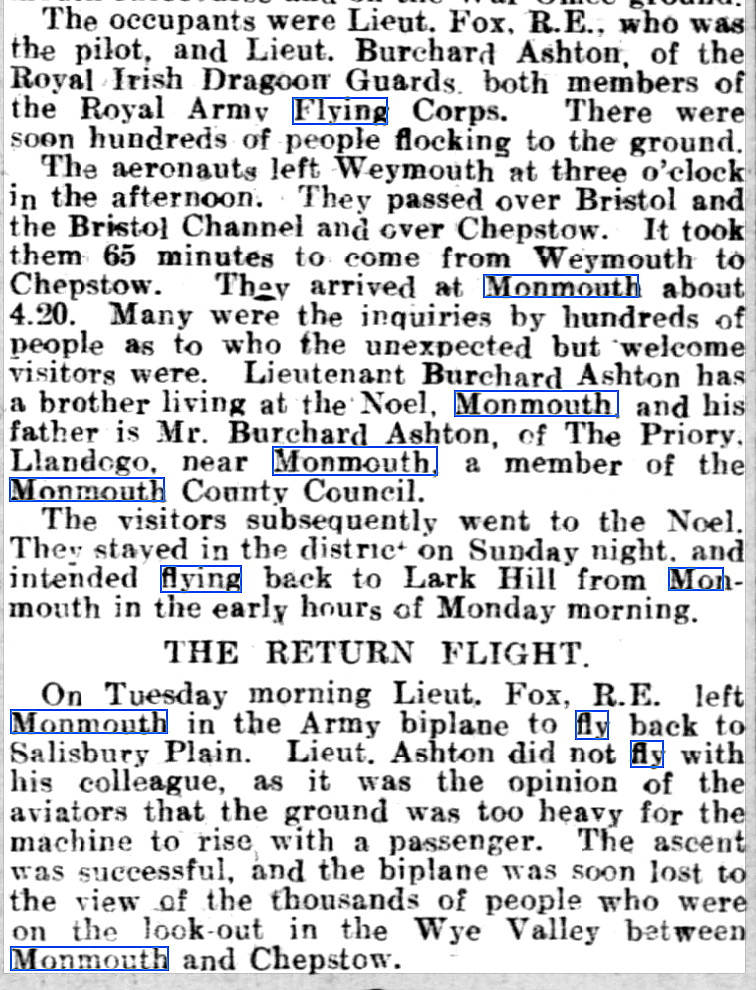
The photo shows the first visit of an aeroplane piloted by Captain Fox of the Army Aeroplane Corps on the 25th August 1912. I am no expert but think it is a Royal Aircraft Factory B.E.2.
The article in two parts was published in the Gloucester Journal on the 31st August 1912.
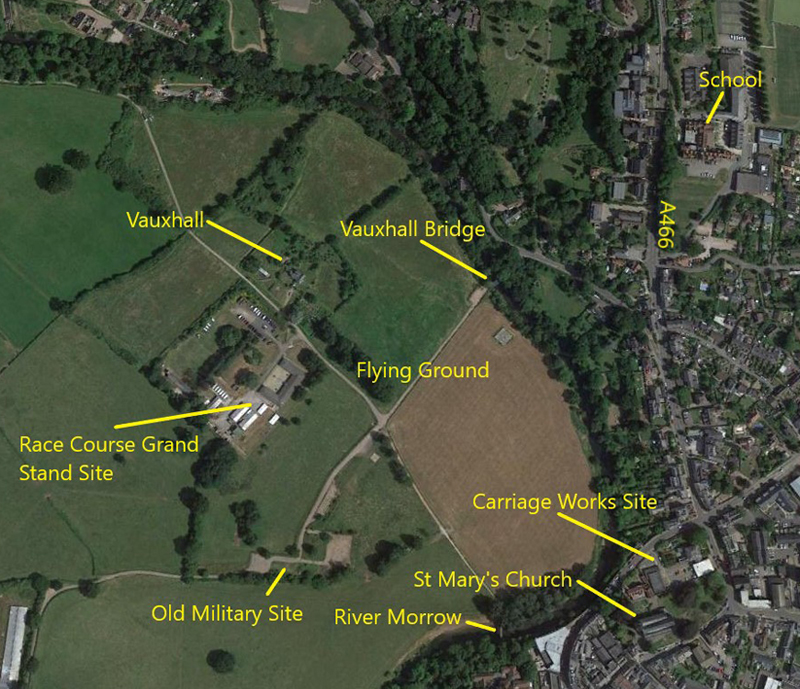
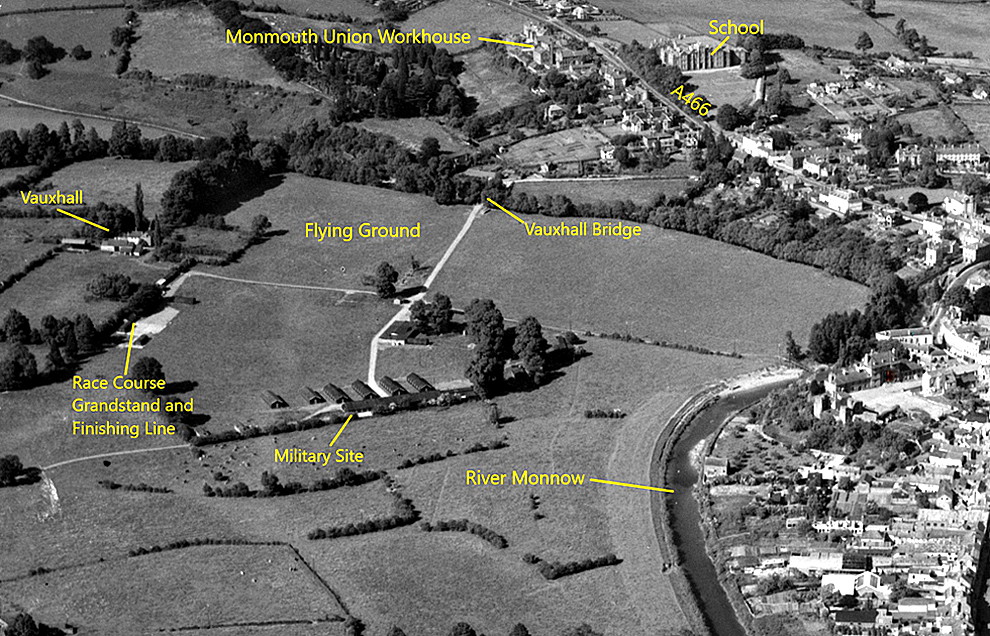
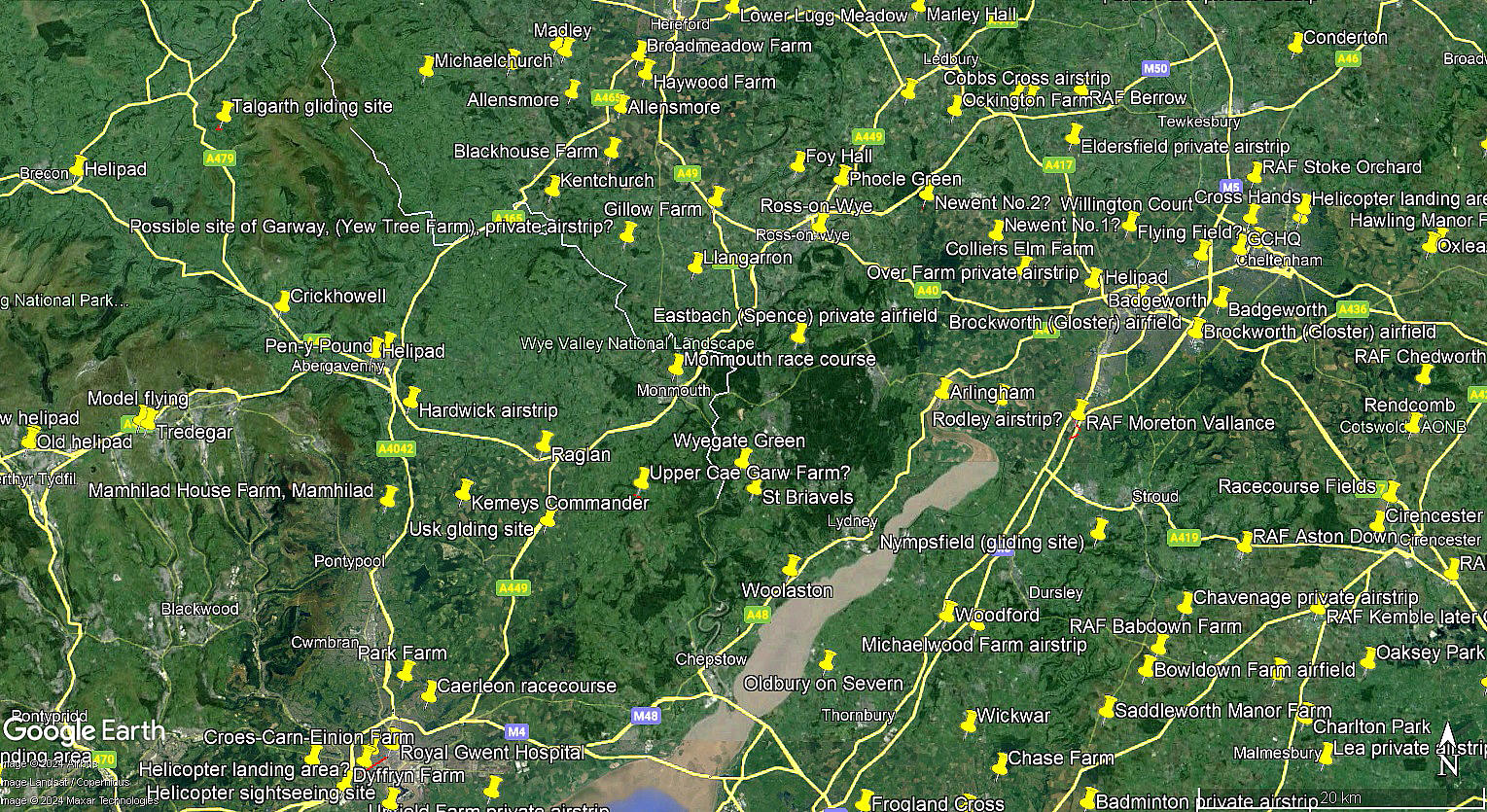
The area view is from my Google Earth © derived database.
NOTES: In his excellent book British Built Aircraft Vol.5 Ron Smith gives some details, (under the heading MONMOUTH), about the Parke's 1910 monoplane, which he says was reported to have flown on the 7th July 1910. Did the ‘machine’, (as they usually called aeroplanes in those days), fly near Monmouth? Well no, it didn't, but did perform 'jumps' as those early aviators called their barely airborne experiments. The Wright brothers so called 'First flight' was also just a 'jump' performed in ground effect.
MONMOUTH: Temporary flying display venue
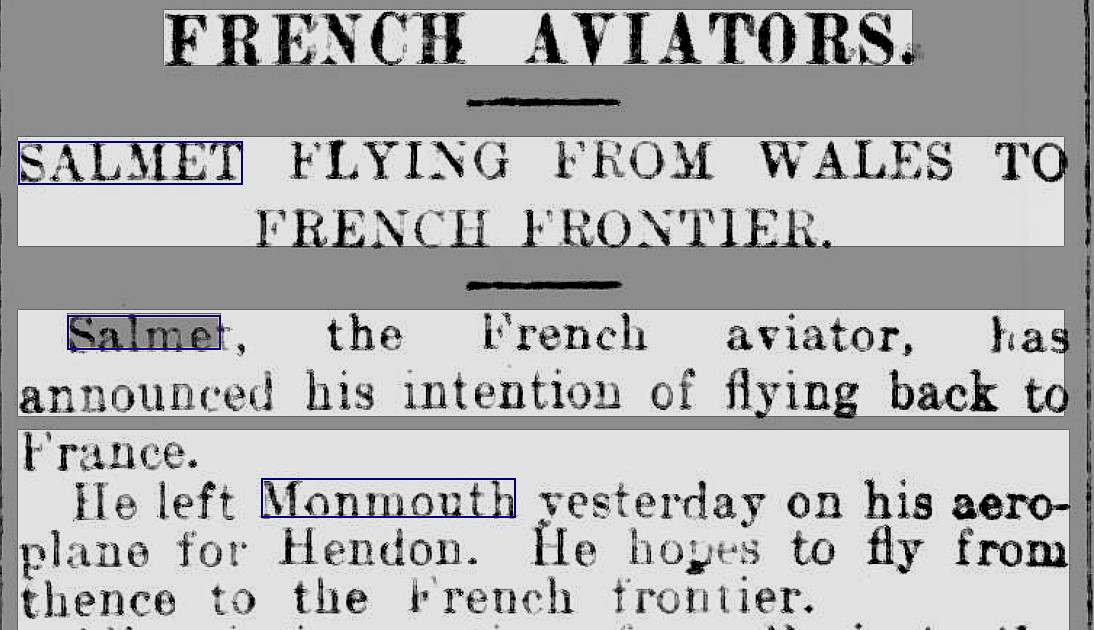
The notice was published in the Evening Despatch on the 4th August 1914.
NOTES: During the August Bank Holiday, 1st to 3rd August 1914, Henri Salmet gave a display of flying in or near Monmouth with a Blériot monoplane. Is it not known where this display took place? Probaly the race course? If so, any advice on this will be much appreciated.
SOMETHING TO THINK ABOUT?
Due to the expectation that war would be declared a ban on all flying outside a three mile radius of an aerodrome was imposed on the 3rd August but Salmet was unaware of this, so he flew back to HENDON (LONDON). It had been his intention to then fly back to France to offer his services but this wasn’t allowed. Consequently he, along with other French pilots in the UK, had to make the journey by train and boat.
Banning pilots of our principal ally for the forthcoming war from flying home strikes me as being very odd and indeed the three mile restriction makes no sense at all. Hardly surprising I suppose when I discovered a study which claimed that, using the modern IQ test, a great many senior civil servants and military top brass etc of the era, had an IQ in the category: Moron! I had no idea that 'Moron' was a specific category in IQ tests.
This appears to explain rather a lot about the history of those times which now seems so utterly baffling to many of us living in the 21st century. And, I trust you will agree, that even now many of us still find the actions, opinions and actions of our masters and leaders baffling? Despite the fact that most of them have a very high IQ score. But, does the IQ test really measure intelligence, which combines at the very least wisdom with knowledge, or rather just cleverness? I suspect the latter is the case?
We'd love to hear from you, so please scroll down to leave a comment!
Leave a comment ...
Copyright (c) UK Airfield Guide