





Mynachdy Farm
MYNACHDY FARM: Early experimental flying site (Also nearby WHITCHURCH COMMON)
Operated by: Charles Horace Watkins
Location: In Maindy, (previously spelt Maendy), SSE of the A48 and A470 junction, roughly 1nm NNW of Cardiff city centre
Period of operation: Unknown exactly, reports vary considerably. Probably 1907 to ?
THE BASIC STORY
It is reported that in or around 1907, Mr Charles Horace Watkins designed and built, from scratch at MYNACHDY FARM, (including the engine and propeller), a monoplane he called the 'Robin Goch' (Robin Redbreast), it being painted red. The general arrangement of which bore a marked resemblance to the later Blériot XI in which Louis Blériot flew across the English Channel in 1909. Mr Watkins was clearly up to speed on developments in aviation, as his design featured ailerons, (invented by the French), although the Blériot XI still used wing-warping for lateral control. It also featured weights on two strings, one 20ft long, the other 10ft long, in order to judge his height when landing.
There are accounts that this aeroplane did eventually fly successfully, possibly in 1909 or soon after? See British Built Aircraft Vol.5 by Ron Smith. If it had achieved this in 1907, as opposed to doing extended 'hops' in ground effect, surely the general press would have been taking a considerable amount of attention at that time? It appears that he built the Robin Goch at MYNACHDY FARM and probably, (possibly?), conducted some initial 'hops' there. Before towing it to nearby Whitchurch Common, a much larger space, for proper flying experiments.
A MICHAEL T HOLDER GALLERY
We have Mike Holder, a long term friend of this 'Guide', to thank for investigating what is available, (in 2025), to illustrate this listing.
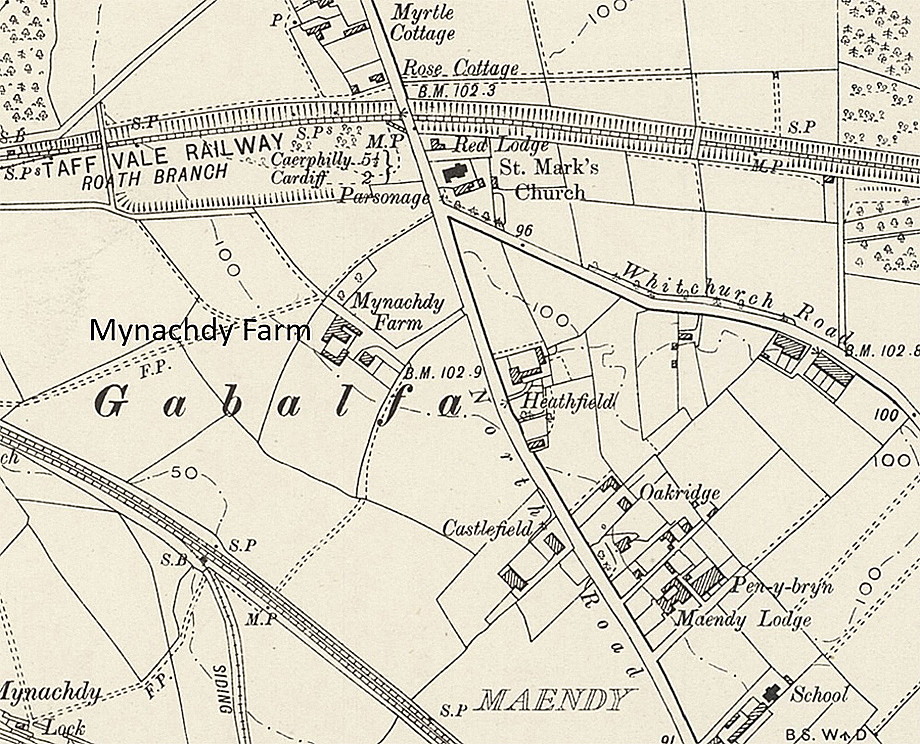
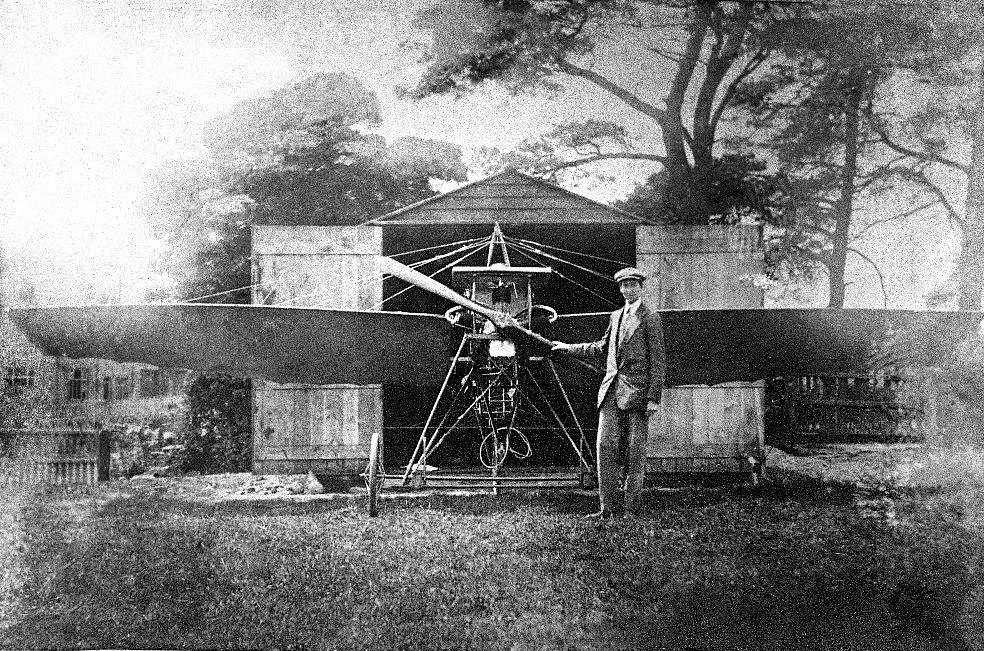
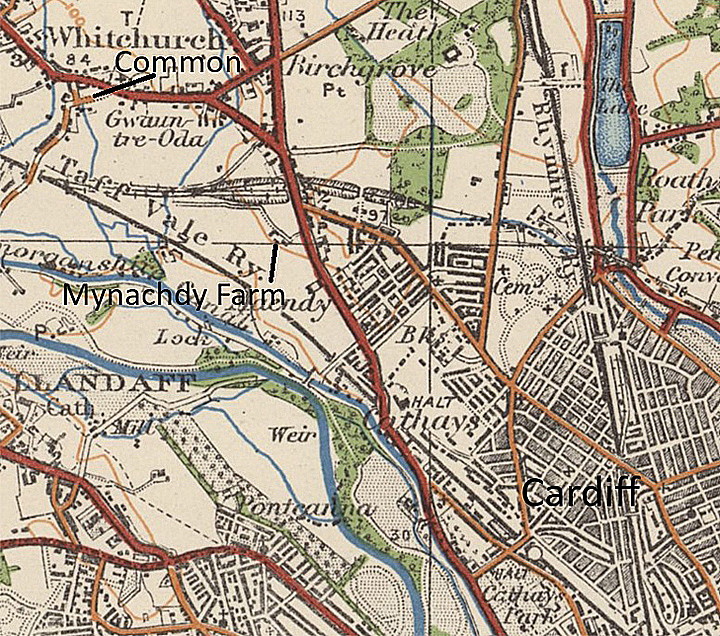
Photo One shows Mr Watkins with the 'Robin Goch' at MYNACHDY FARM.
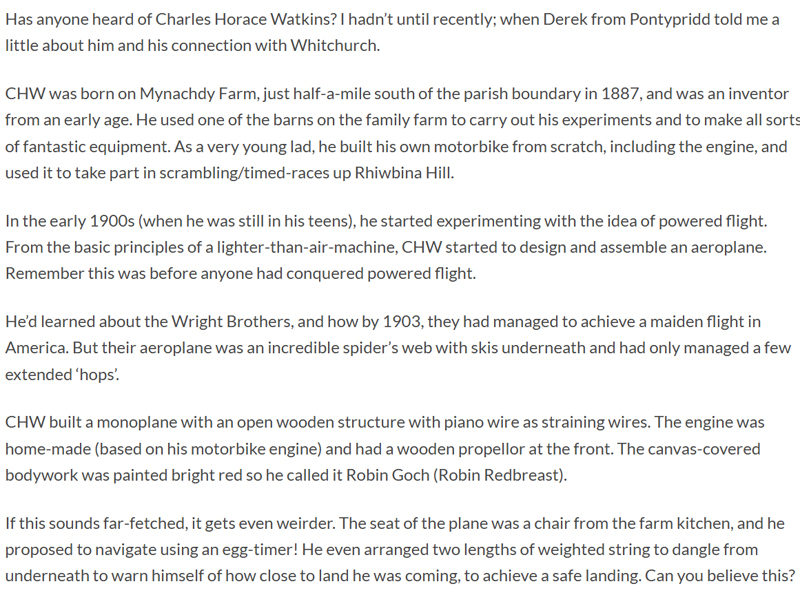
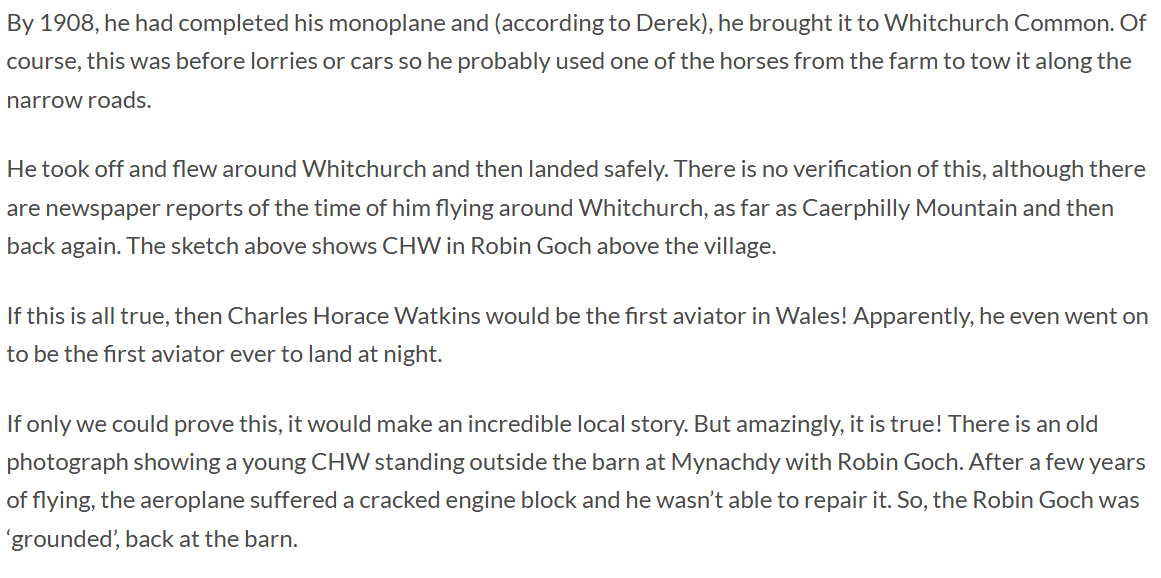
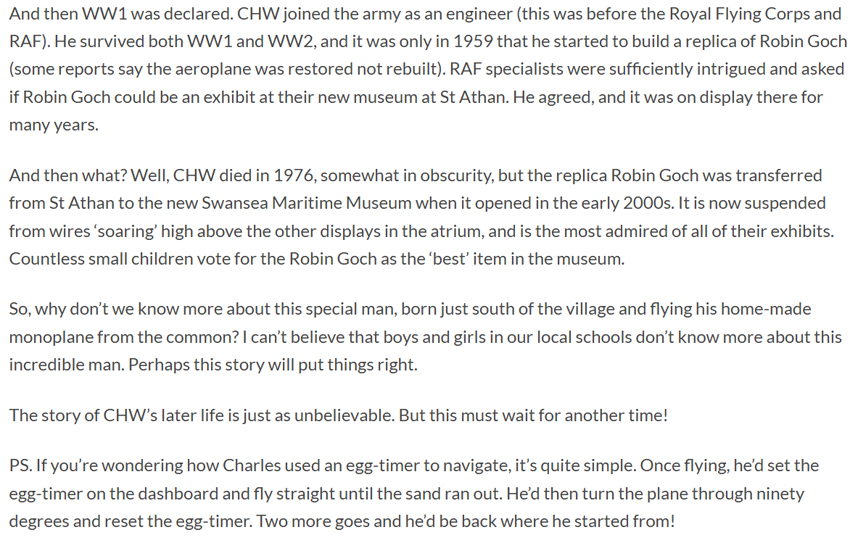
This article, in three parts, is from Living Magazine, Cardiff, 22nd February 2025, by Nigel Lewis.
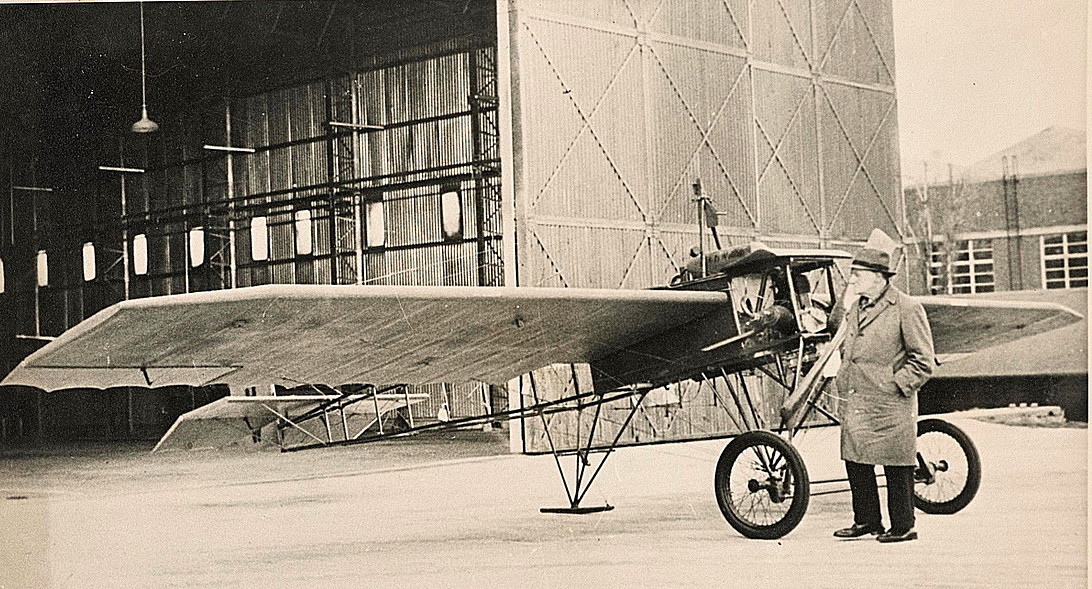
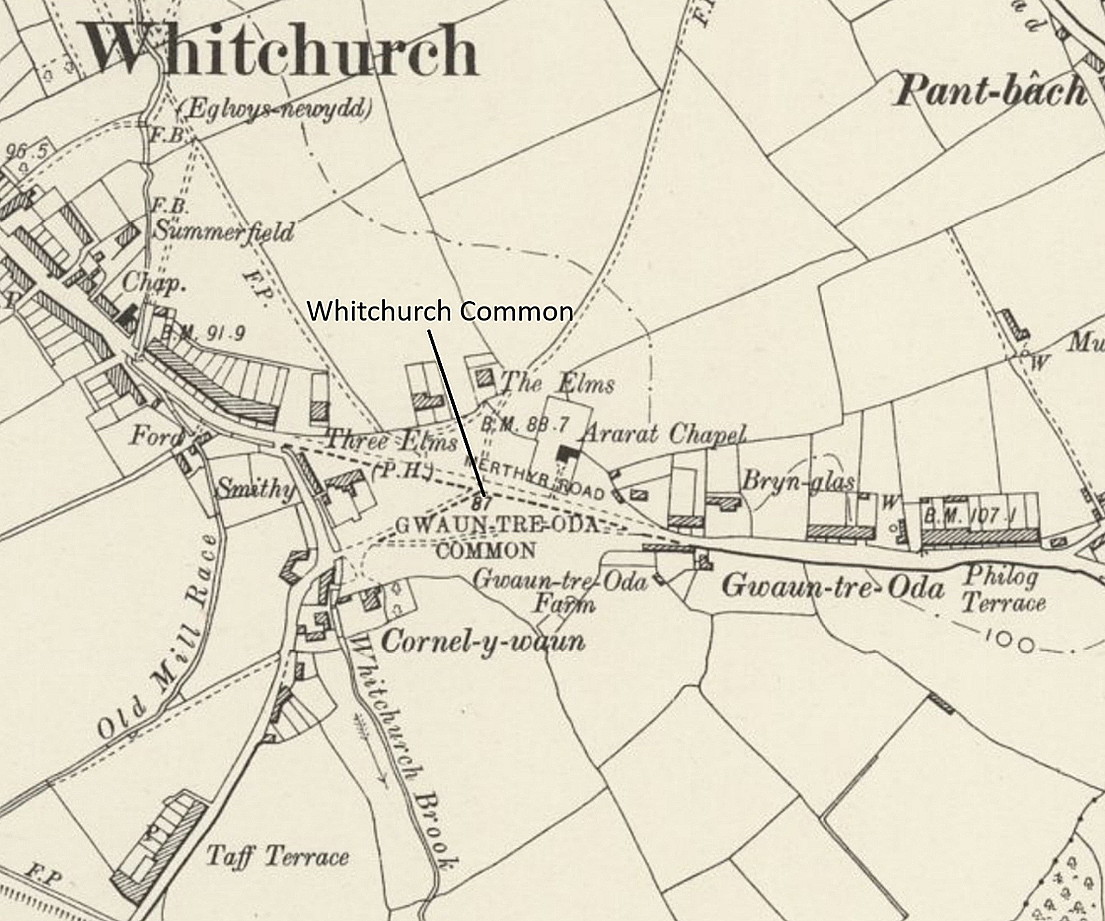
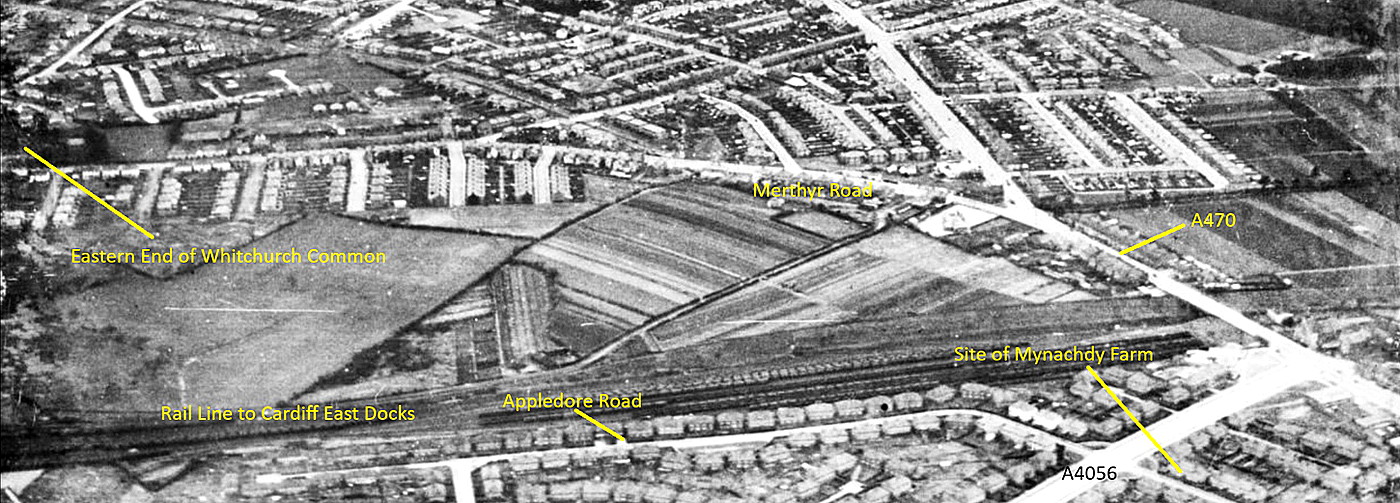
Photo Two from Facebook shows Mr Watkins with his Robin Goch as St Athan after it had been restored.
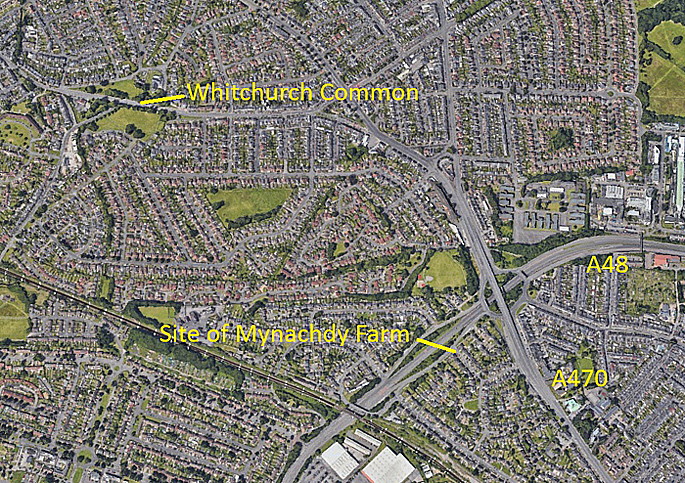
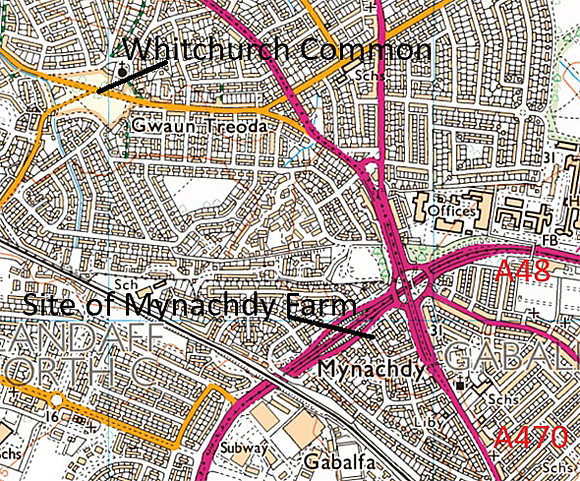
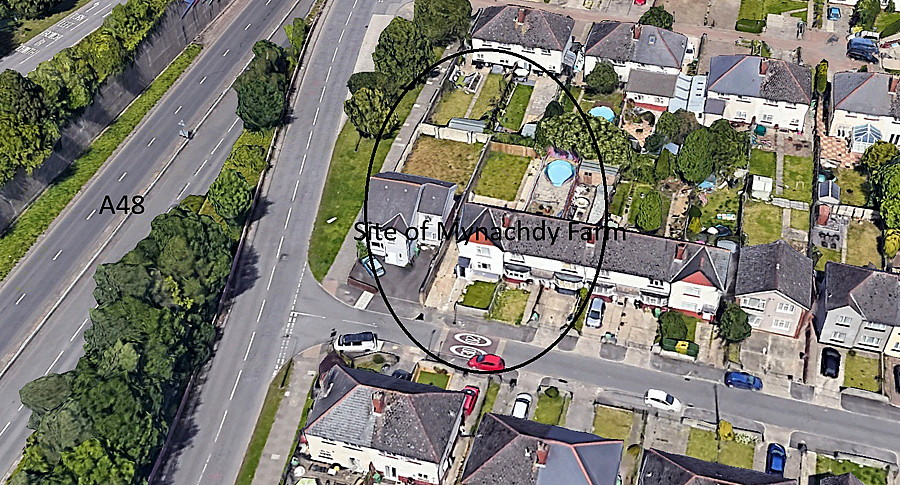
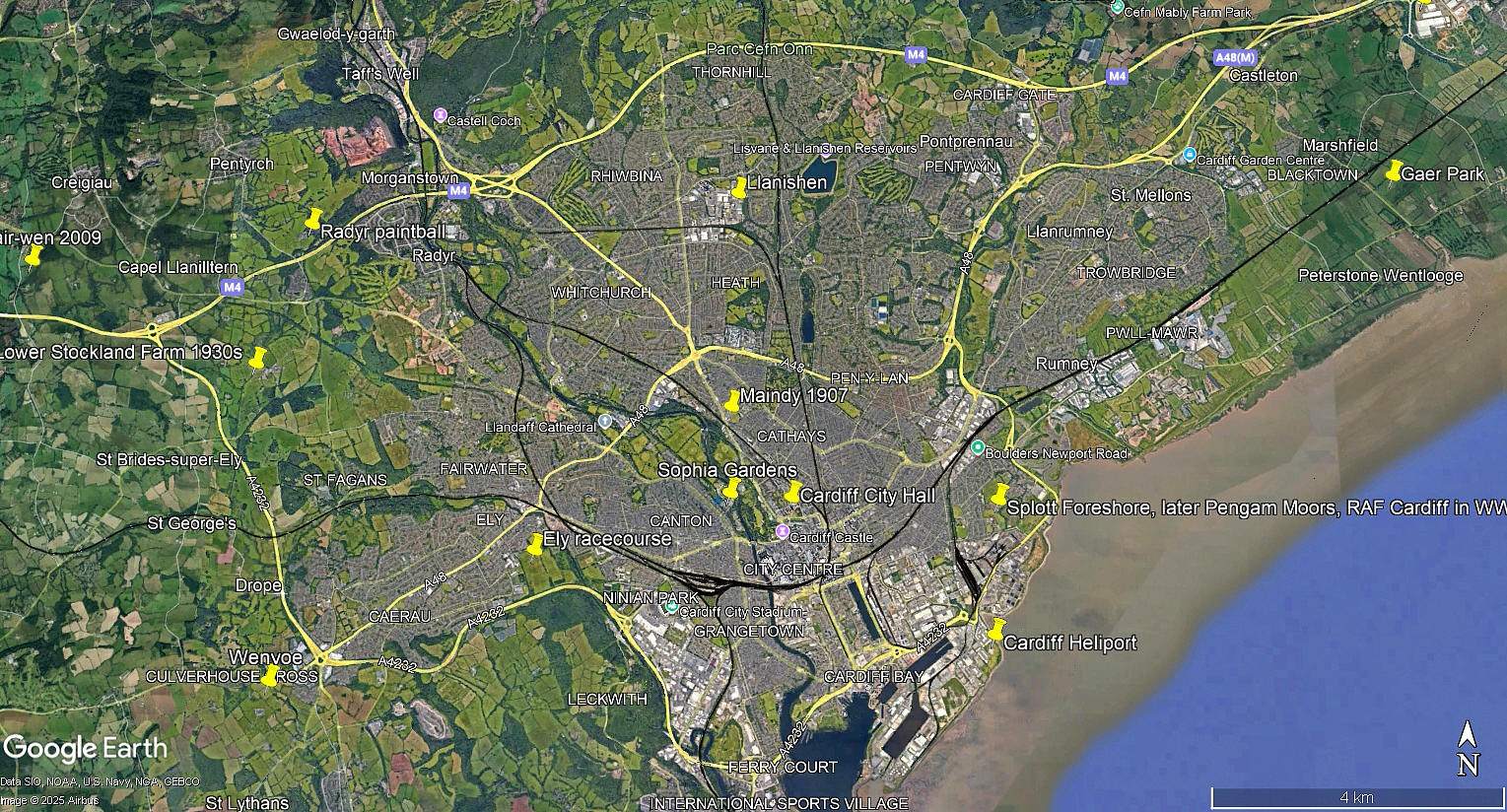
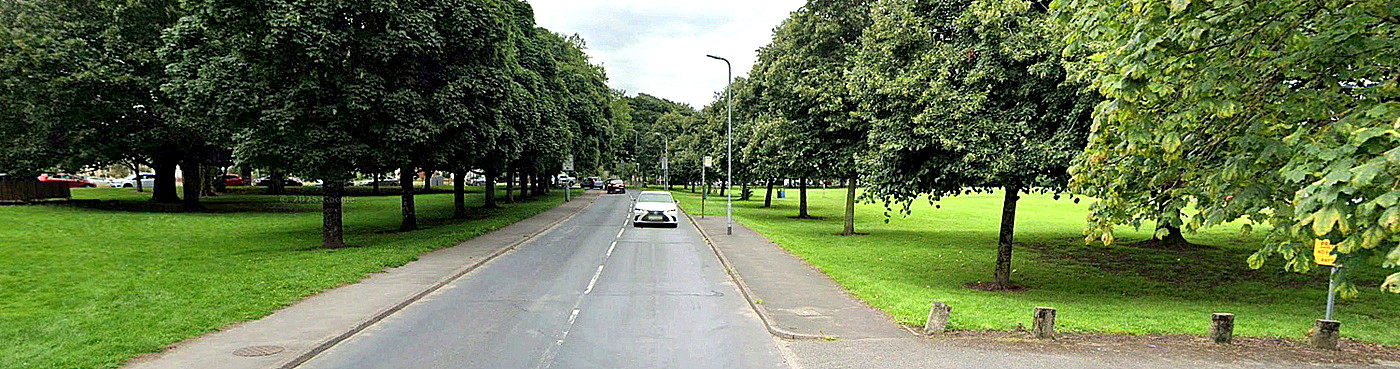
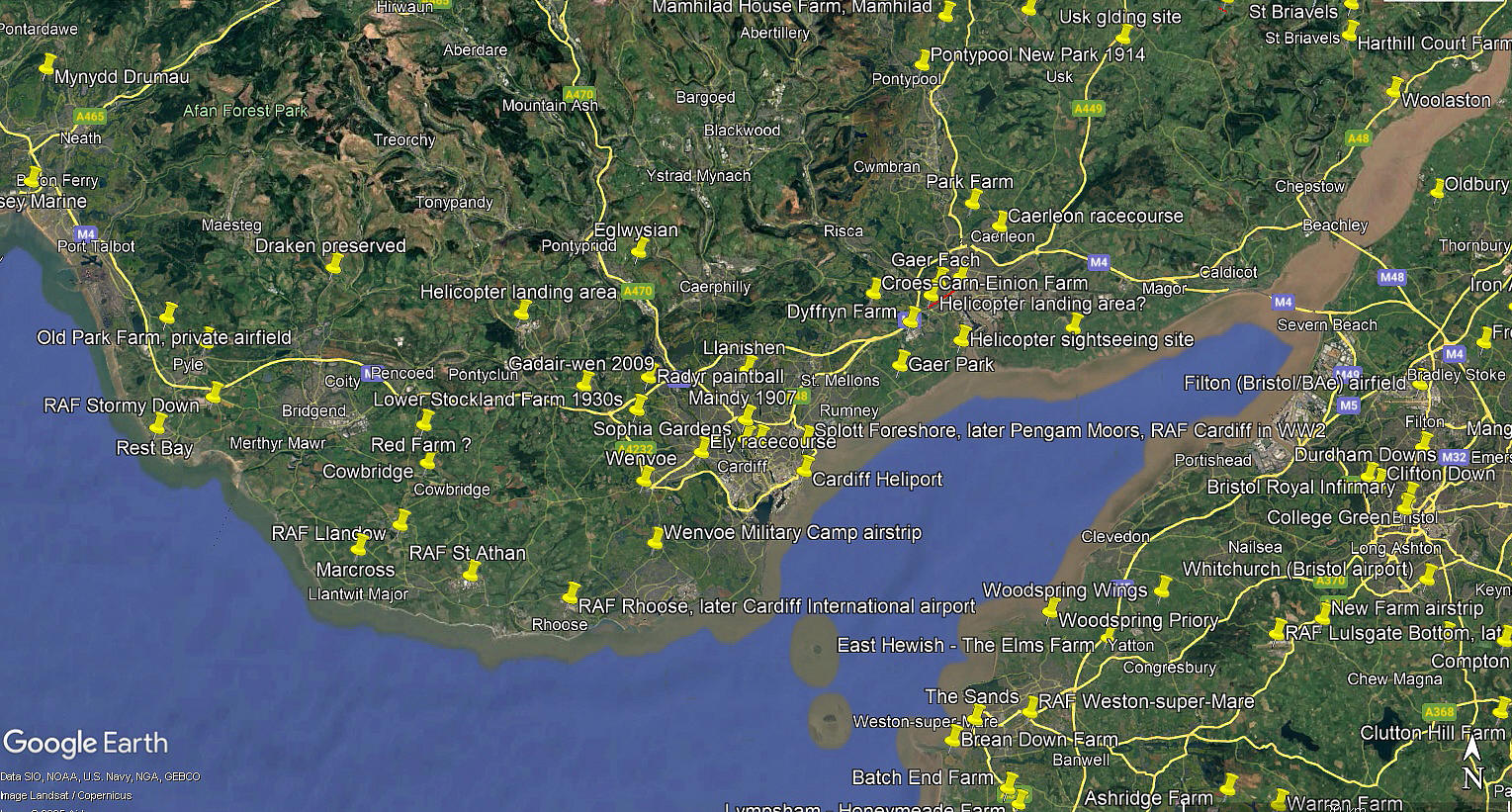
The Google Street View is of Whitchurch Common and the local area and area views are from my Google Earth© derived database.
SO, DID IT FLY?
Having studied this aircraft closely, now on display (2025) at the National Waterfront Museum in Swansea, I would be reluctant to agree that it did. It is still a common misconception that just because a machine is airborne, it must be flying. I could drive my car at speed over a humpty-back bridge, fast enough to get it airborne, but clearly it would not be flying.
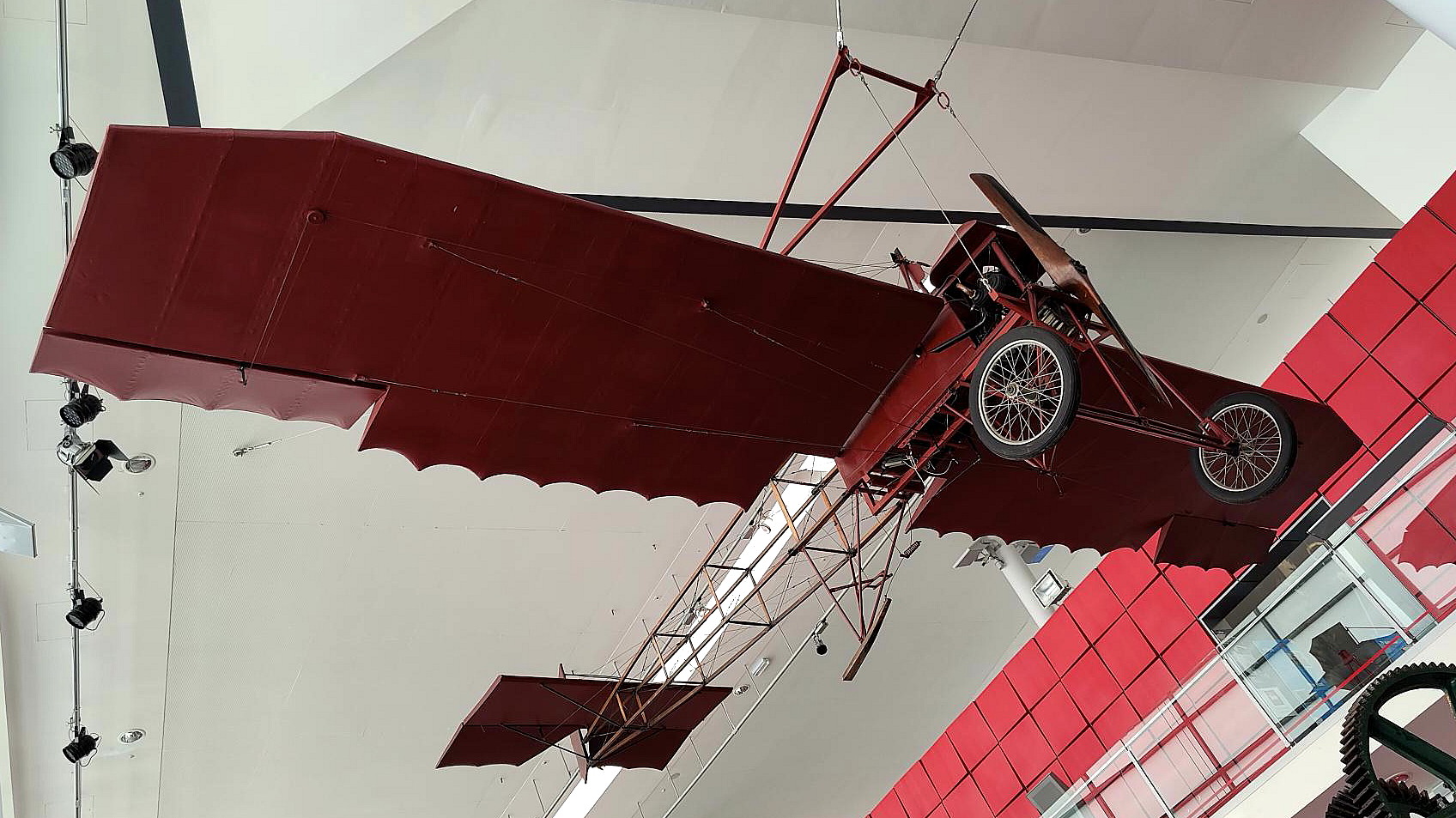
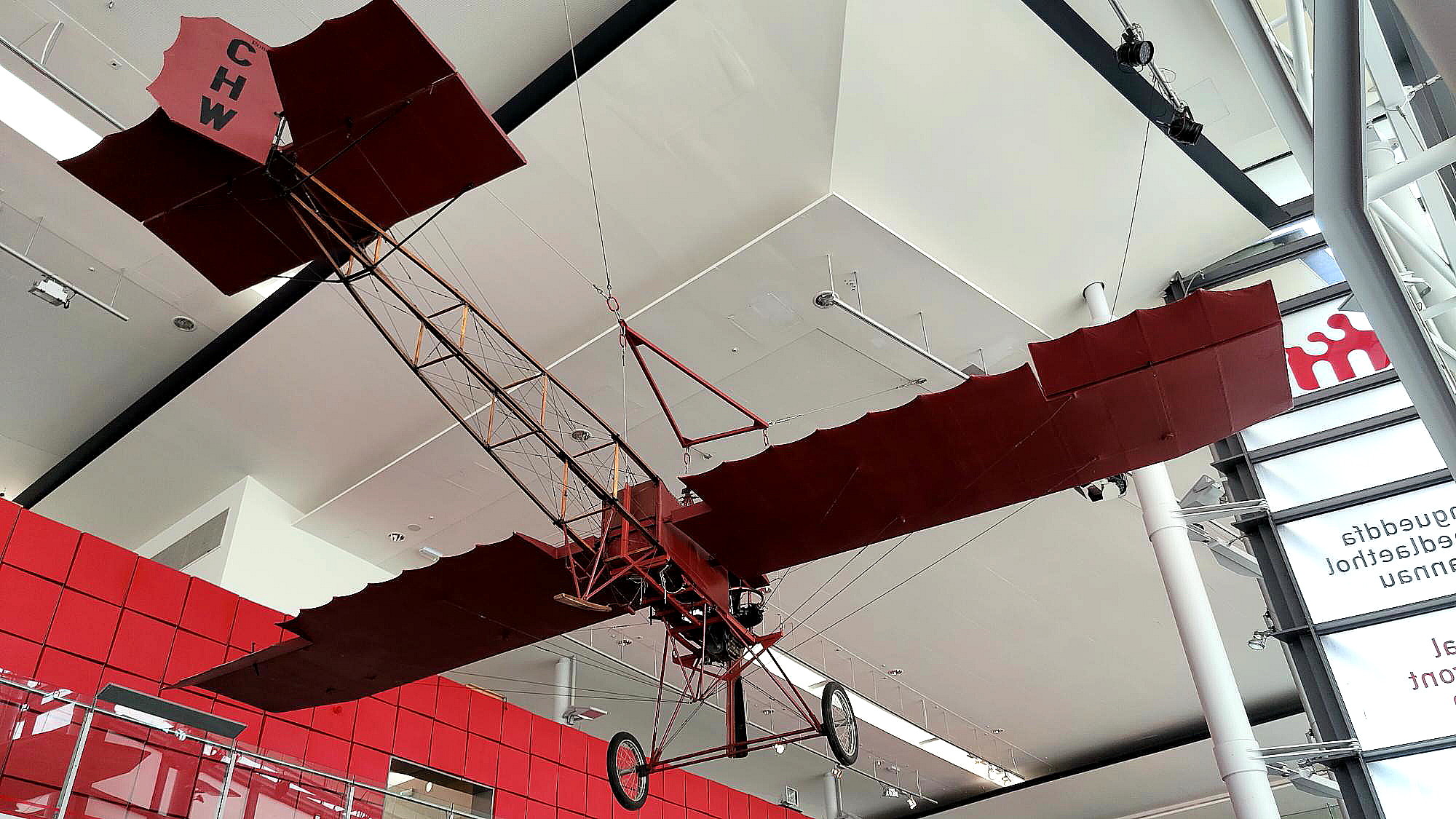
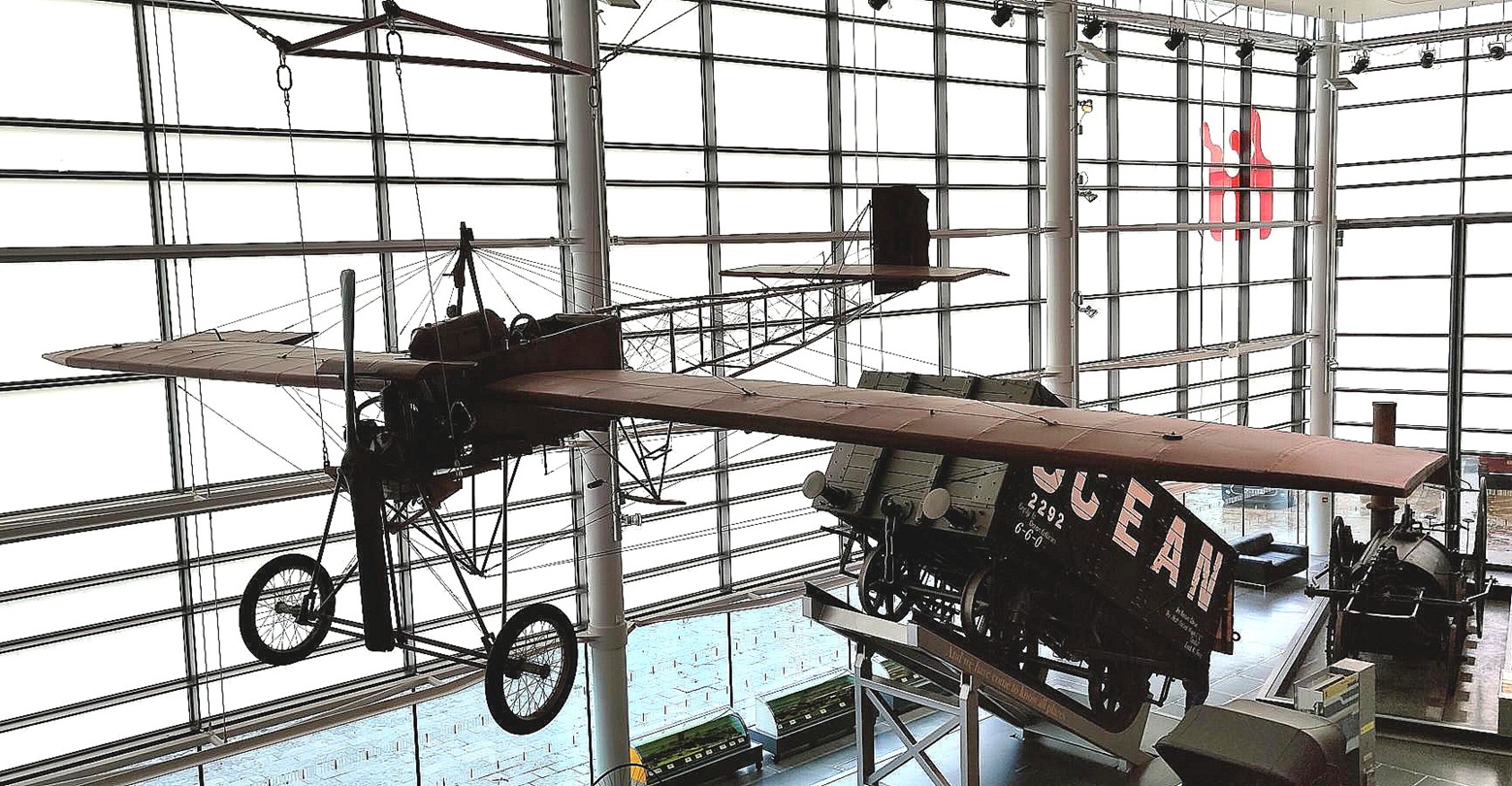
Photos by Lewis Greaves.
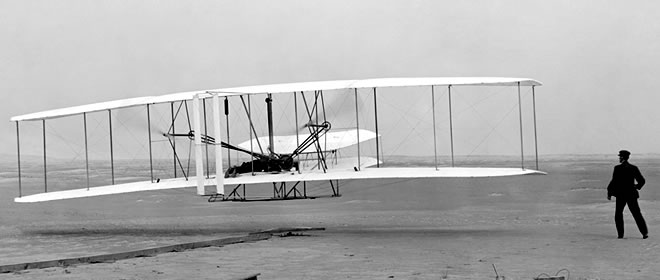
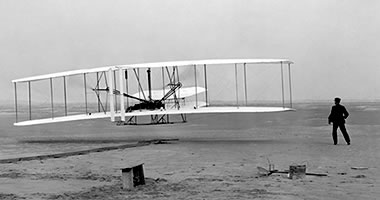
Being a pilot myself I am prepared to be very pedantic about this subject. That very famous picture of the Wright brothers 'Flyer' making the first "flight" is largely responsible for the consequent misunderstandings. It was merely a 'hop' in ground effect. In the early years countless pioneers made similar 'hops' and I have never come across another claiming them to be a flight. The Wright brothers were incredibly greedy, up to the point of trying to patent the 'aeroplane'. Clearly not understanding that you cannot patent a concept.
To return to the subject I will maintain that to be flying, as opposed to being airborne, the machine, (as aeroplanes were usually called back then), must have enough thrust from the propeller, and the wings developing enough lift, to climb out of ground effect. Plus, preferably of course, had enough aerodynamic control authority to exercise controlling the machine in all three axis. Pitching, yawing and rolling. Which is why, even today, a first solo flight is normally a rectangular circuit proving that the student pilot can indeed maintain control in all three axis.
The means to do this are all present on the Robin Goch, including the wings having ailerons. The engine and propeller were designed and made by Mr Watkins, but we do not know how effective the combination was. This said, most of the earliest machines which could climb out of ground-effect, could only barely do so. Indeed, the reason Blériot had to land in Northfall Meadow, just east of Dover in 1909, (which he had fully realised), was because his aeroplane was incapable of climbing high enough to land on top of the cliffs. Roughly 500ft high.
We'd love to hear from you, so please scroll down to leave a comment!
Leave a comment ...
Copyright (c) UK Airfield Guide