





Westminster Air Port
WESTMINSTER AIR PORT: Intended seaplane/flying boat airport
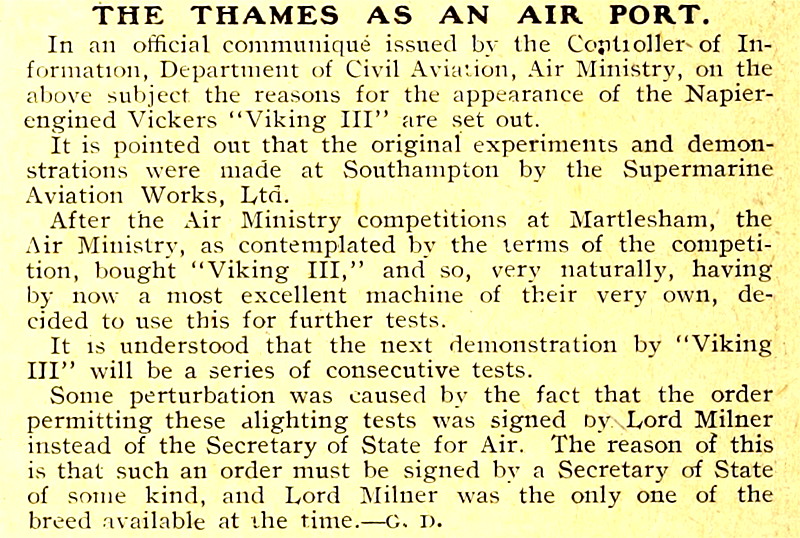
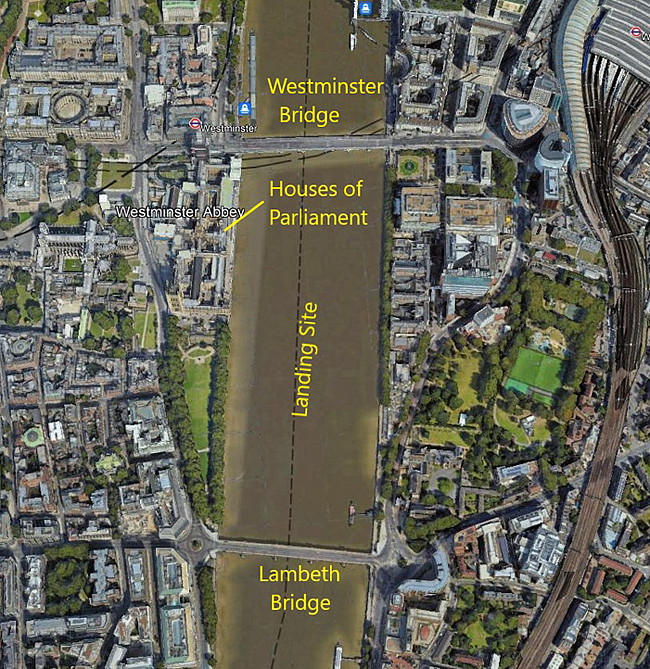
In 1921 the idea was put forward to establish an 'air port' on the Thames, by the Houses of Parliament, and indeed trials did take place. Using amphibians like the Vickers 83 Viking III did take place, but only one flight to Paris? It appears that the idea was to have an aircraft capable of serving most destinations in the UK, and indeed around much of western Europe, easily reached without stopping to refuel. Or so it seems. Performance figures published on Wikipedia for the Viking III are pretty much a nonsense regarding range and endurance, and I cannot find more reliable figures.
Even so, the project did appear to be a very practical proposition. But by whom, and for whom? Without any doubt the development of large flying boats was making huge progress - but - one capable of long range well loaded, being able to take off between the bridges on the Thames was never achieved.
A MICHAEL T HOLDER GALLERY
Mike Holder, a great friend of this 'Guide', discovered this information. Which of course provides us with a great insight to what was happening soon after The Armistice ending WW1.
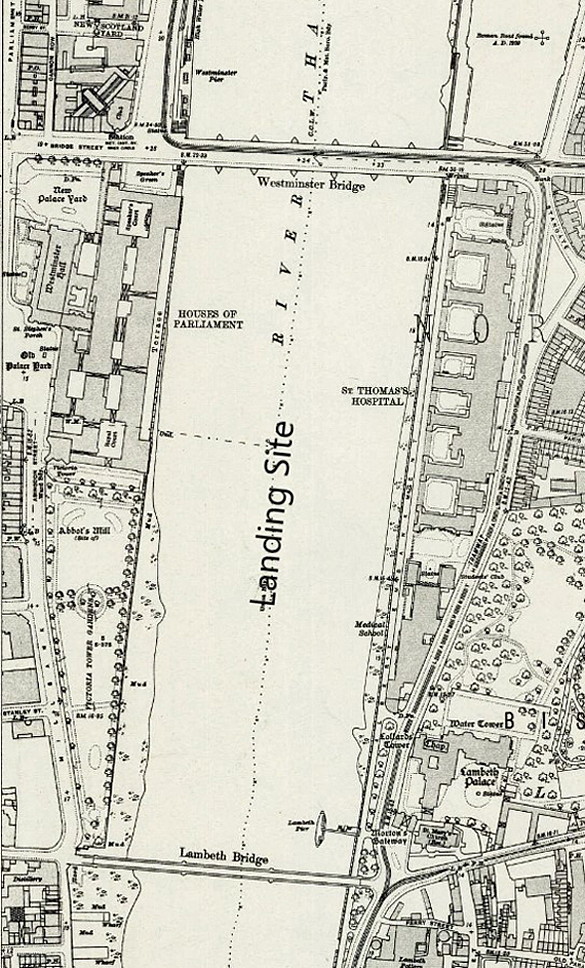
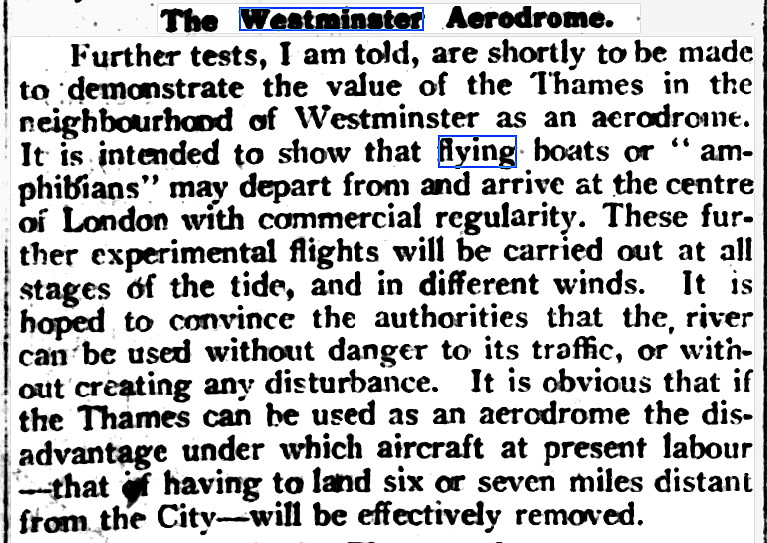
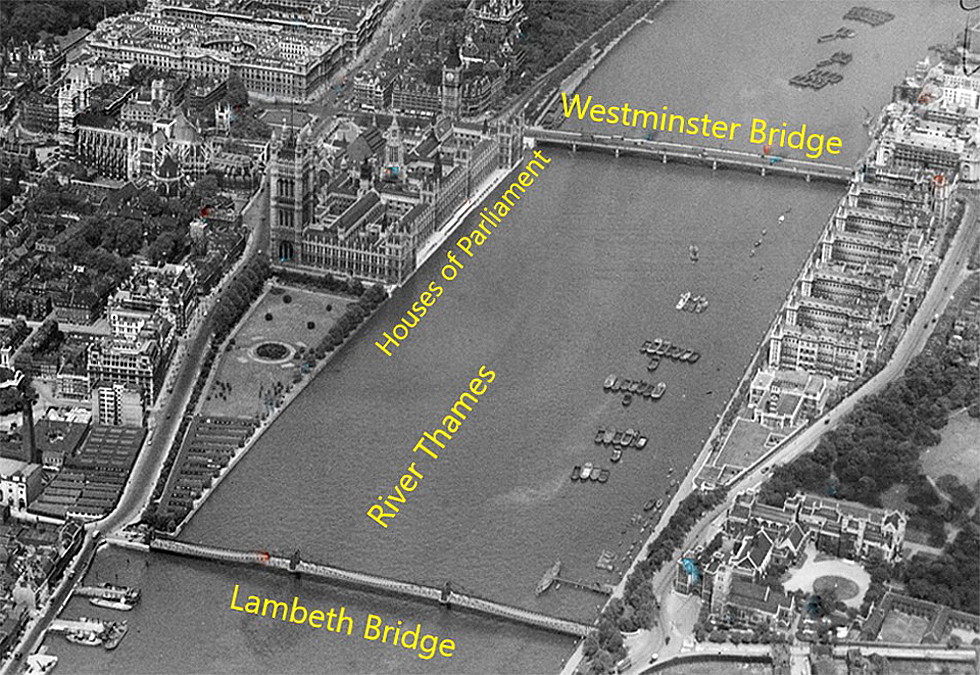
The article was published in the Westminster Gazette on the 19th April 1921.
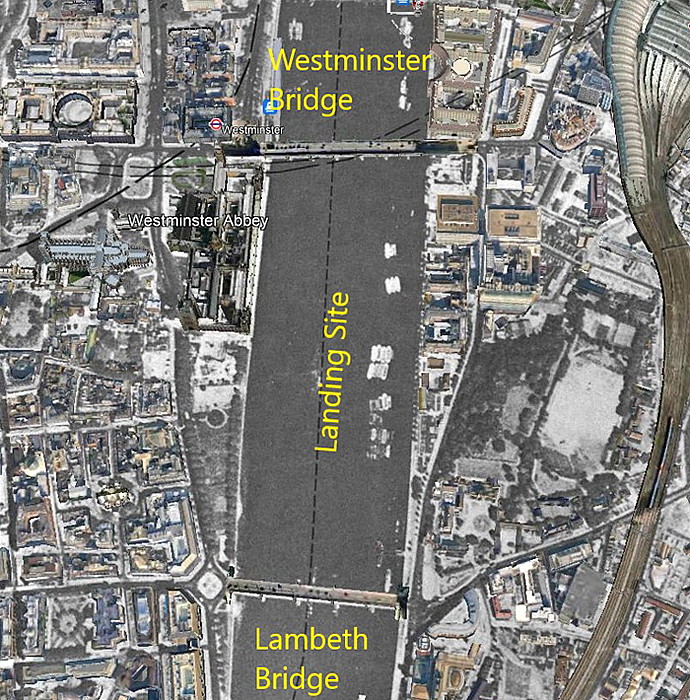
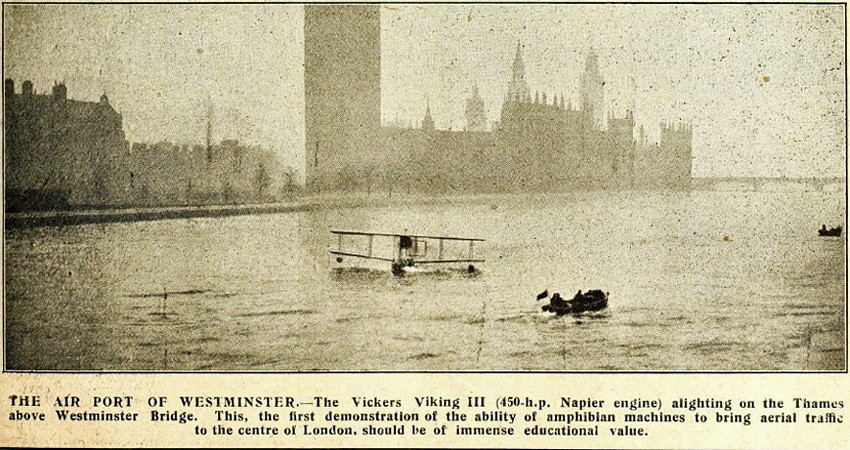
The article together with a captioned picture of the Vickers 83 Viking III, G-EAUK, landing on the Thames, was published in The Aeroplane on the 16th February 1921.
LATER INFORMATION
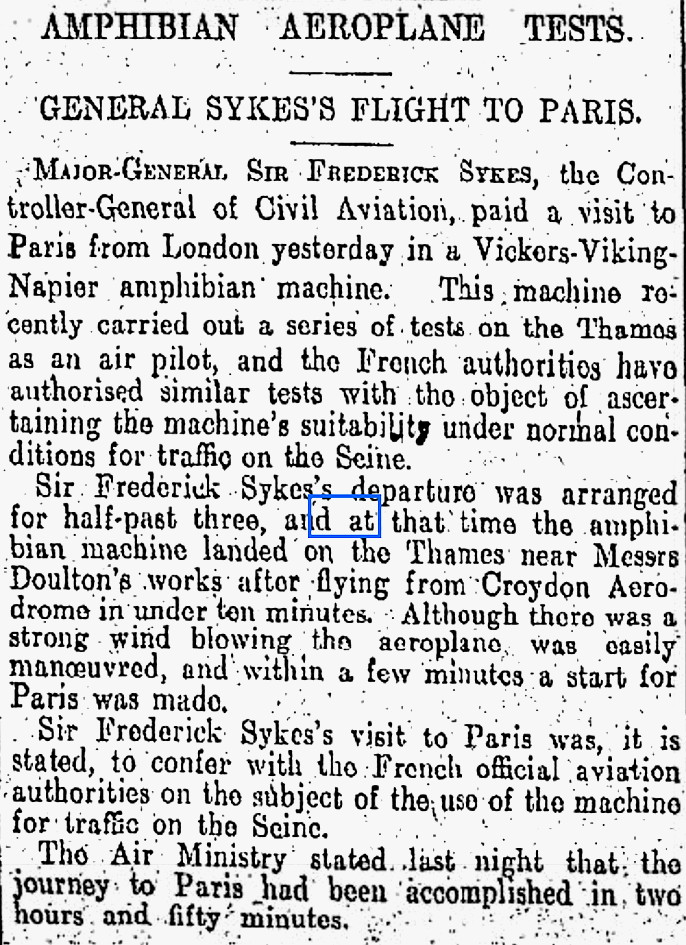
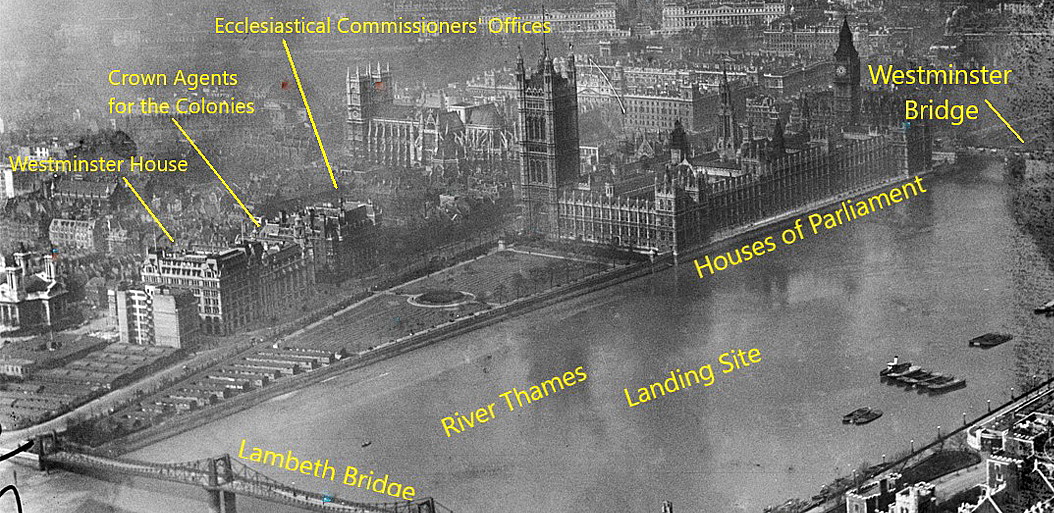
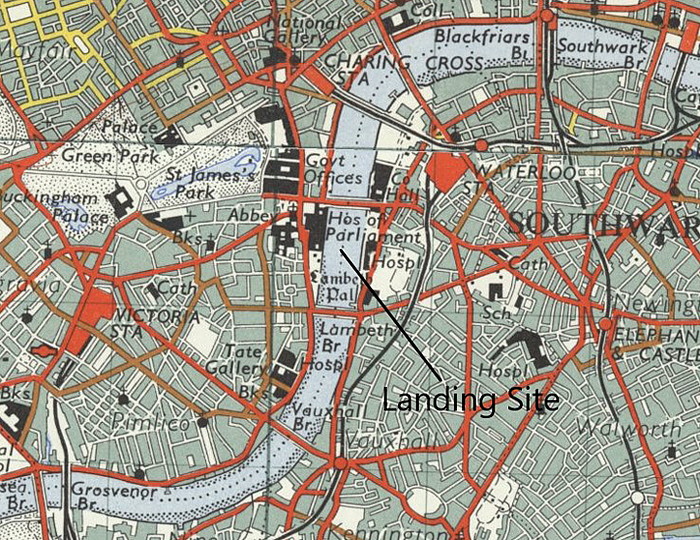
This article was published in The Scotsman on the 30th April 1921. Mike Holder later discovered more information about the flight arranged on the 29th April 1921 for Major-General Sir Frederick Sykes, (then Controller of Civil Aviation), using the Vickers Viking III amphibian, G-EAUK, for a proving flight from Westminster to Paris, landing on the River Seine. The now known details of which change the picture about the extent of the Thames being used is extended.
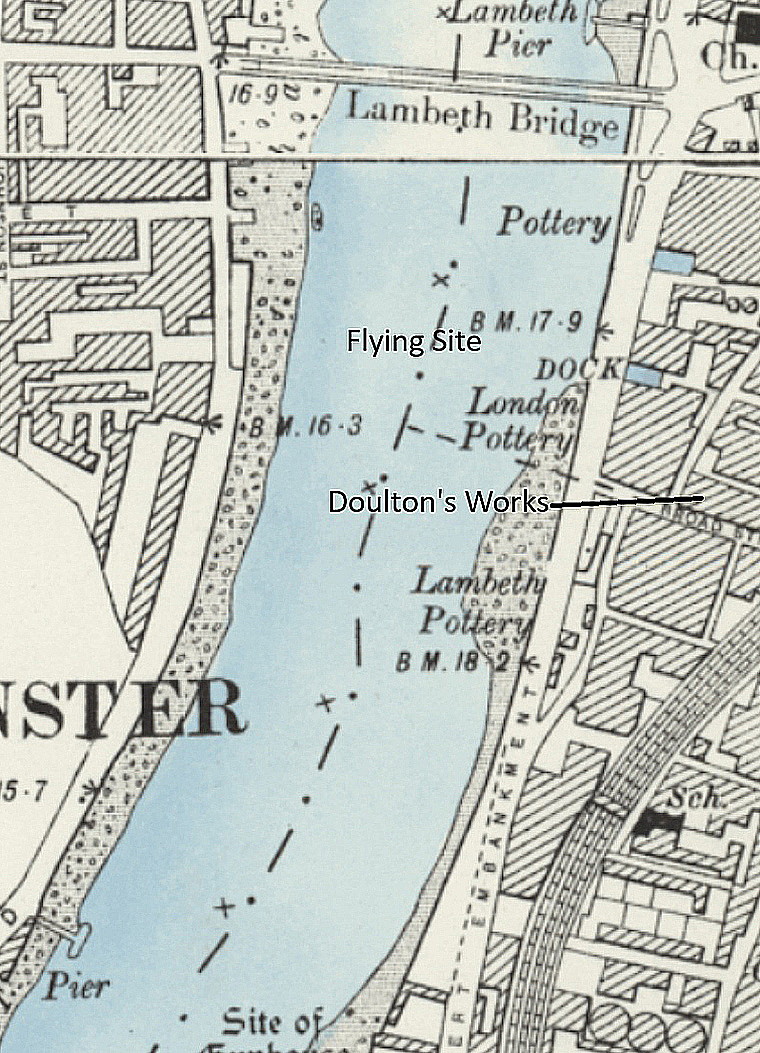
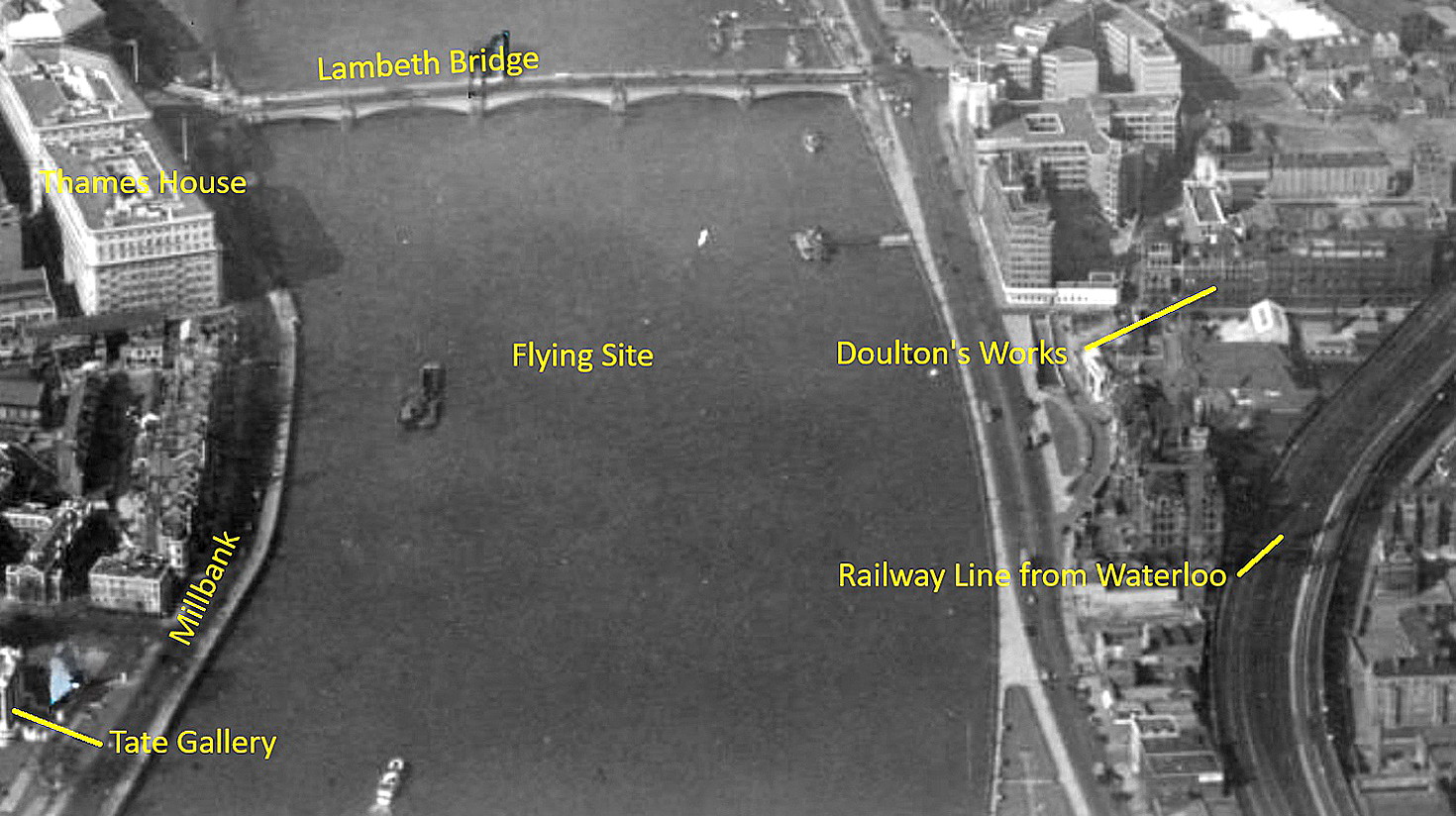
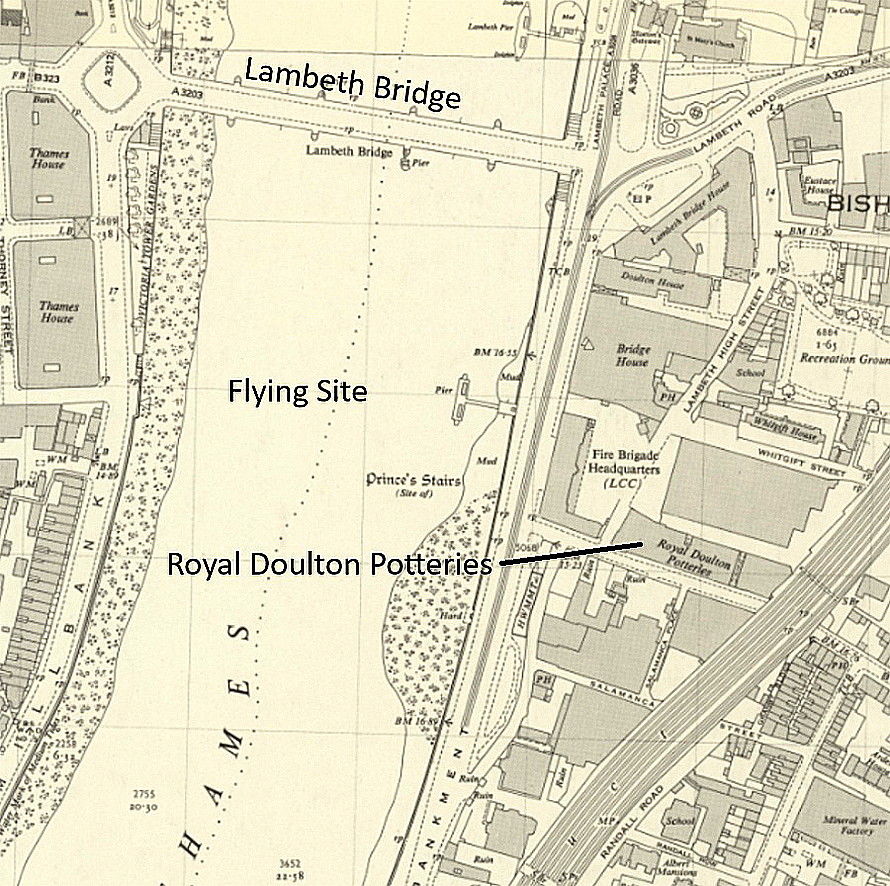
The picture of G-EAUK shown above is misleading as, after landing it is shown back-tracking to its parking spot on the foreshore adjacent to the Royal Doulton factory. A picture exists on the inter-web showing it here. Mike tells us that on this day an ENE wind of 15 to 18mph was blowing, so a take-off on the Thames south of Lambeth Bridge, where the Thames bends around to the south-west, was clearly the best decision by the pilot.
Putting on my anorak seems to show a discrepency? G-EAUK was registered to the Air Council from 19.01.21 until 25.11.25. But, another well respected source states it was sold to the RAF on the 2nd February 1921 as N147. As said so often, thank heavens I decided from the start, to call this project just a 'Guide'.
NOTES: I find this all rather interesting. In those days, travelling by air between cities, both in the U.K. and into Europe, was only for the wealthly, senior government ministers, top civil servants and the top brass in the armed forces. Cost was beside the point, barely if at all, a consideration. Nor was the time taken in travelling much of an issue either. The main emphasis was to travel in the utmost luxury available. Nothing much has changed since of course.
Air services from PLOUGH LANE, CROYDON, were commencing at this time, and 'silver service' meals were served on flights to major destinations such as Paris, Brussels and Amsterdam by some operators. Plus, the aircraft could be boarded in a most seemly fashion - another important consideration - especially by the ladies. Clambering onto a smallish amphibian by the banks of the Thames would have been a most unattractive proposition for most of them, even if it did save a few hours.
Hence, with little customer interest if any, the WESTMINSTER AIR PORT project died stillborn.
We'd love to hear from you, so please scroll down to leave a comment!
Leave a comment ...
Copyright (c) UK Airfield Guide